Shkodër Walking Tour: A Self-Guided Route Through the Old Town
A self-guided Shkodër walking tour: Rruga Kolë Idromeno, Ebu Beker Mosque, the Marubi museum and the climb to Rozafa Castle, with ticket prices.
On this page
A Shkodër walking tour fits comfortably into a single day, and you can do the whole thing without a guide: start on Rruga Kolë Idromeno, take in the Ebu Beker Mosque and the Marubi National Museum of Photography, then climb to Rozafa Castle for the views over Lake Shkodra. Allow at least two full days if you want the city plus a bike ride out to the lake, and longer if Shkodër is your base for onward trips.
This route puts an order on the stops rather than listing sights, marks the castle climb as the demanding part, and separates what you can walk from what needs wheels. Prices appear as the sources give them, in lek, and opening hours are left to the museum and castle themselves.
What a Shkodër walking tour covers
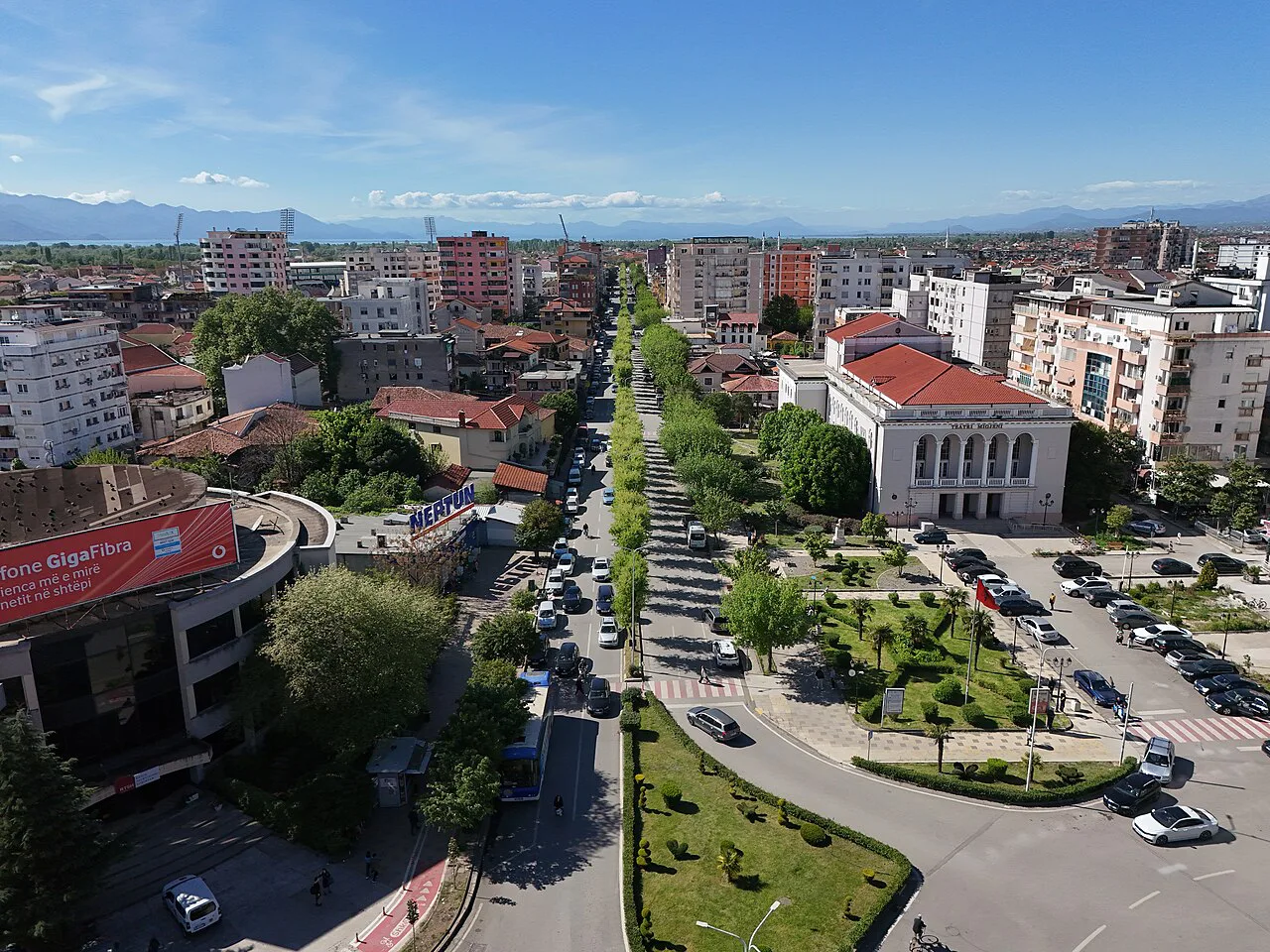
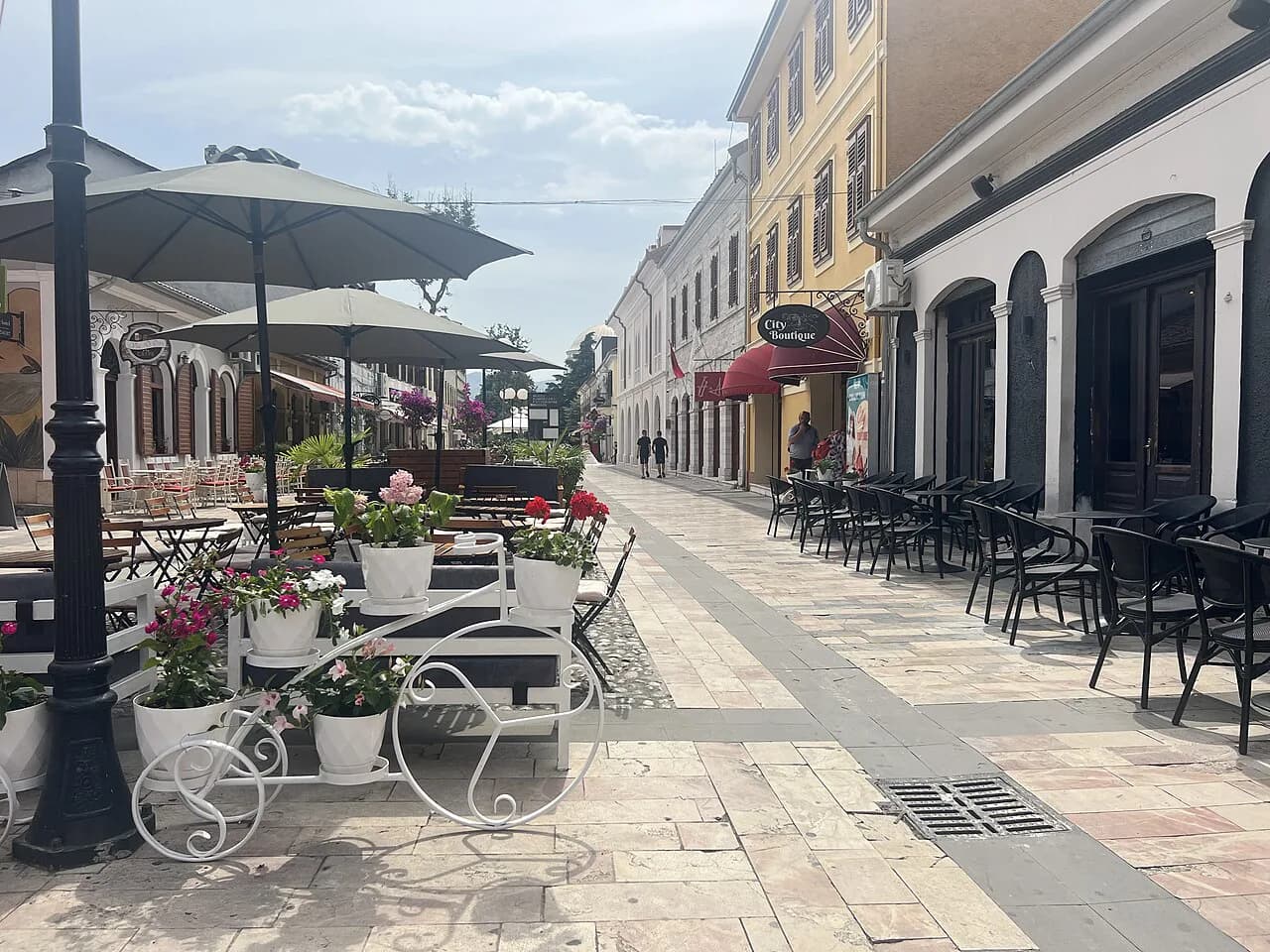
The walkable core is small: a pedestrian street running roughly north to south, the mosque at its southern end, and the old town streets around them. Rruga Kolë Idromeno is the spine of the city centre, lined with coffee shops, boutiques and restaurants, and it turns busy in the evening when the outdoor tables fill up.
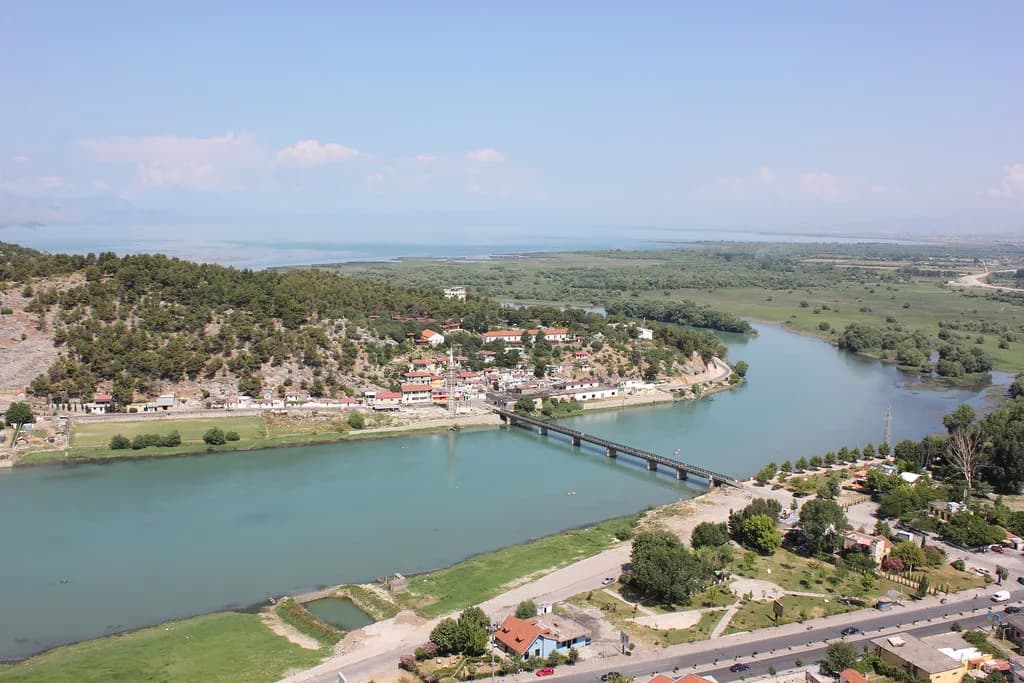
Rozafa Castle sits outside that core, on a hill above the confluence of the Buna and Drin rivers, looking west over Lake Skadar, north over the city and east across open country. That position is what makes it the finish of the day rather than a stop in the middle, since you arrive tired and leave with the best light.
The route at a glance
Walk Rruga Kolë Idromeno from north to south, pausing at the Marubi National Museum of Photography about halfway along. At the southern end you reach the Ebu Beker Mosque, then head out to Rozafa Castle for the walls, the small museum inside and the viewpoints.
If you want more city before the castle, slot in the Shkodër History Museum, the Site of Witness and Memory and the Migjeni Theatre. The Marubi museum tells the city's story through photographs, which makes it a useful primer before you look at buildings; our guide to the museums in Shkoder sets out what each collection actually covers.
Start on Rruga Kolë Idromeno
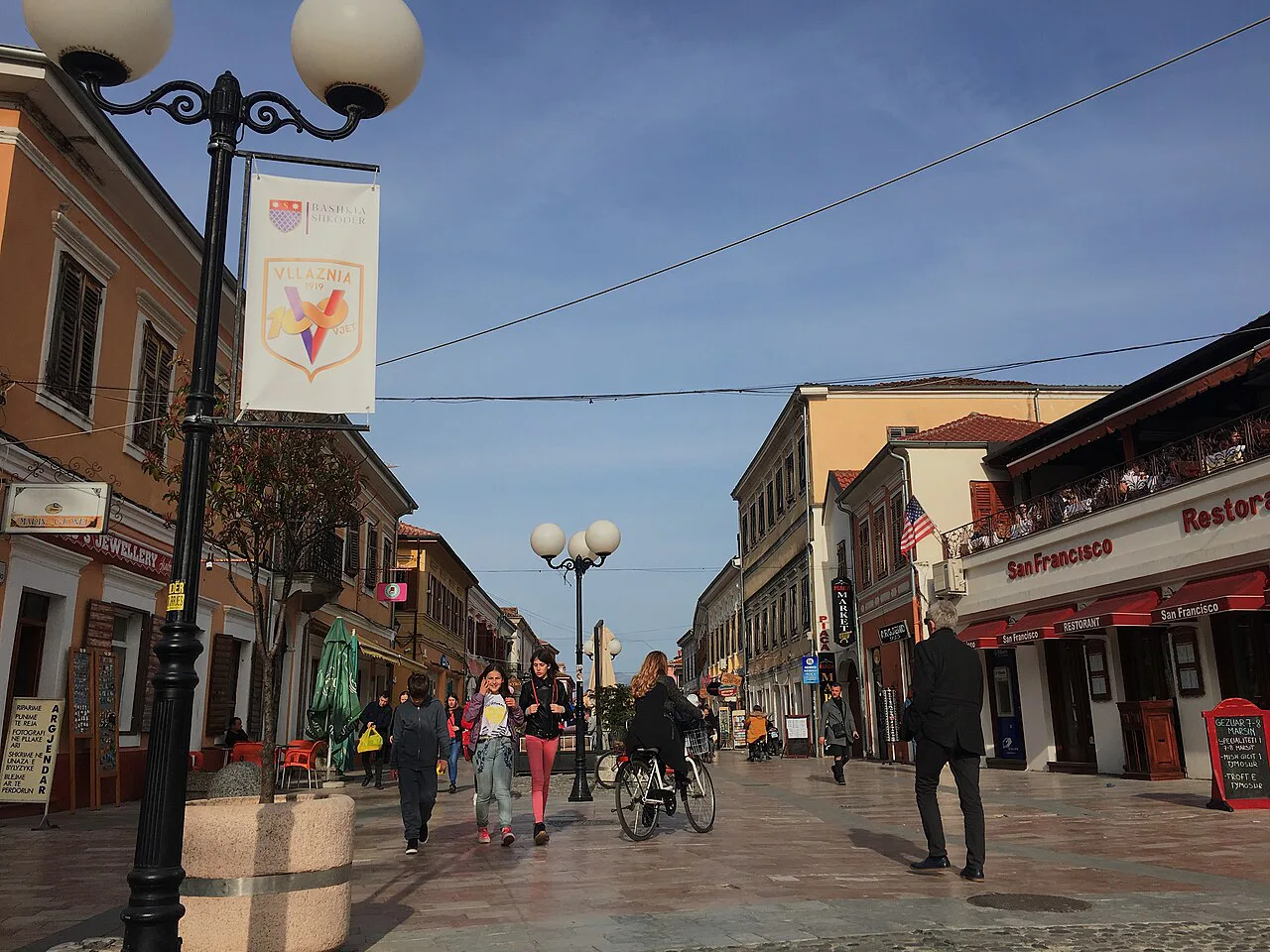
Begin at the northern end of the pedestrian street with coffee, then walk south at an unhurried pace. The street has a distinctly Italian feel, with pasta, pizza and gelato on offer alongside Albanian places, and the architecture rewards looking up rather than straight ahead.
About halfway down sits the Marubi National Museum of Photography, which began as a way of sharing the legacy of the Italian photographer Pietro Marubi and now displays the work of other Albanian photographers, including his pupil Kel and Kel's son Geg. Entry is 700 lek, and the museum's own website carries the visitor schedule.
The photography dynasty behind the collection traces a century of Albanian life, so the museum works as context for the streets you have just walked. If you only have time for one interior stop in the centre, make it this one.
Ebu Beker Mosque at the southern end
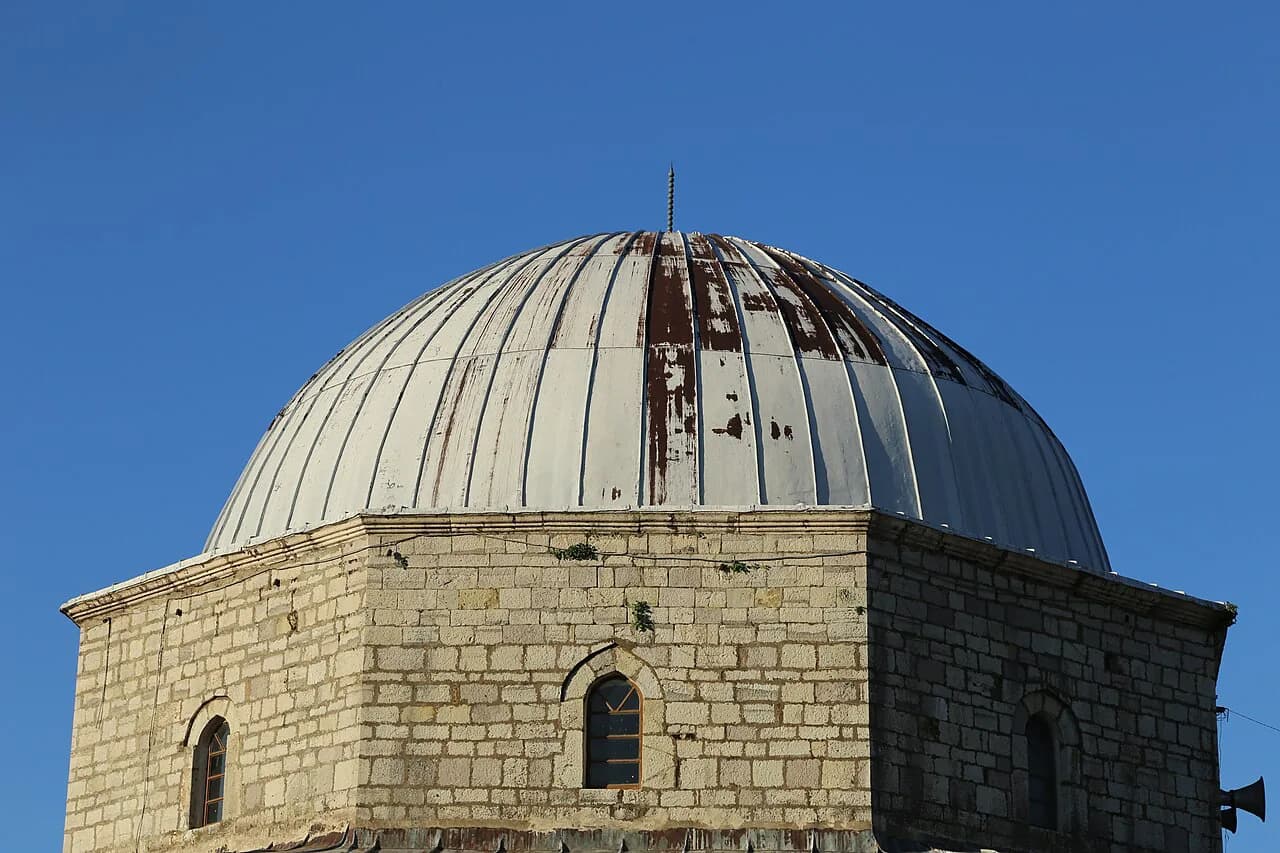
The Ebu Beker Mosque closes the pedestrian street at its southern end, in the middle of the old town. It is a contemporary building put up in the 1990s with two minarets over 100 feet high, and it occupies the site of the former Fushë Çela Mosque, which is why locals sometimes call it the Great Mosque or the New Fushë Çela Mosque.
Inside, arched windows let in plenty of light and patterned trim runs around the base of the dome; outside, the statue of Saint Mother Teresa and the Monument to the 27th Partisan Brigade stand nearby. Come in the evening if you want to see it lit up, and dress modestly as you would for any place of worship.
The city's other mosques, including the Lead Mosque and the Mosque of the Madrasa, sit beyond this street and are better folded into a longer wander. The demolished Fushë Çela building was one of many religious structures lost in the communist period, a thread that runs through the city's wider Shkodër History.
Rozafa Castle: the walk up, the walls and the views
From the old town, head out towards the castle hill between the Buna and Drin rivers. The climb is the demanding part of the day, so walk it in the cooler hours, take water, and leave the bike behind for this leg.
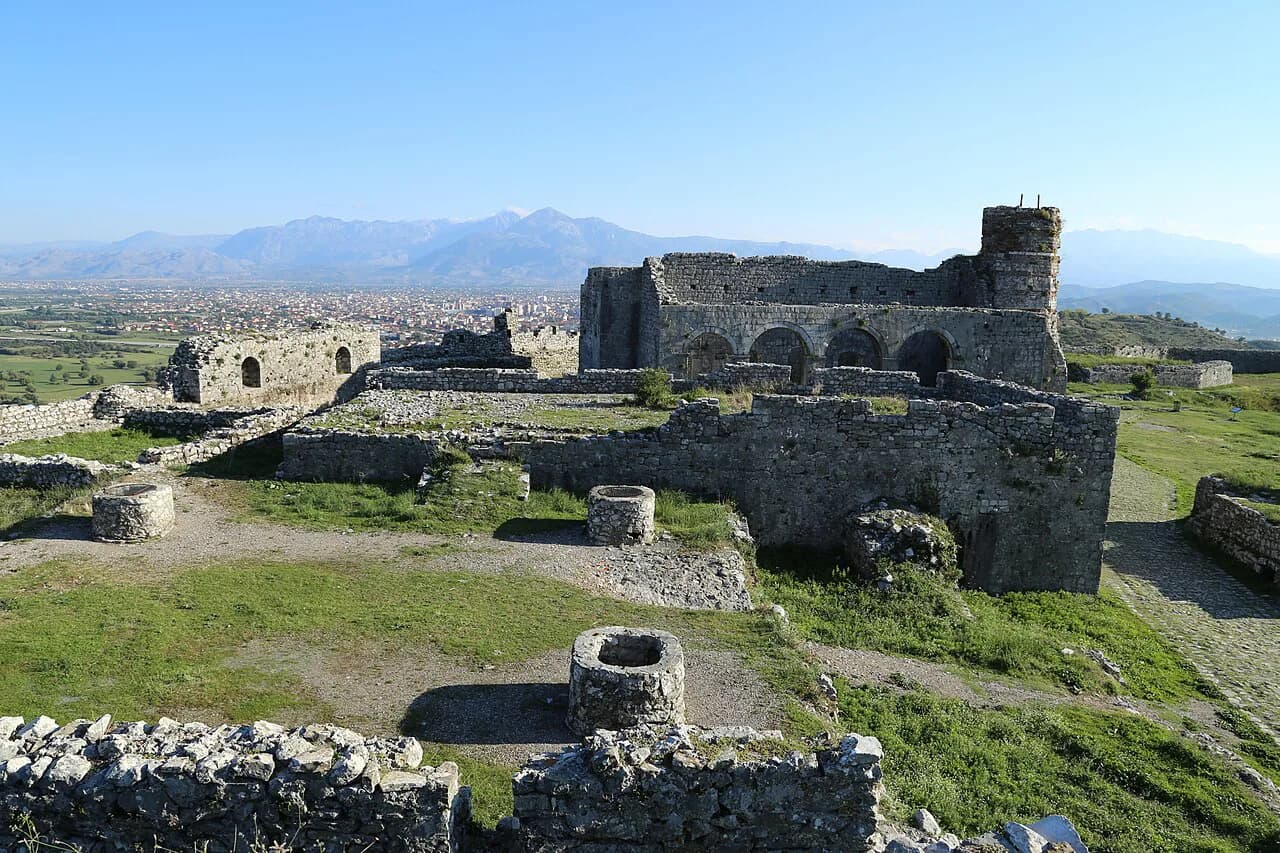
Inside the walls you find the remains of a Venetian church, often thought to be St Stephen's Cathedral, later converted into the Mehmed Fatih Mosque under Ottoman rule, plus a secret passageway and around a dozen viewpoints over the lake, the city and the countryside. A small museum explains the site from its early settlement through Venetian and Ottoman times.
Castle entry is 400 lek and the castle museum is a separate 200 lek, so budget for both if you want the full picture. The earliest foundations are Illyrian, and the cyclopean stones laid by those first builders still stand in the walls.
Adding the museums, the Site of Witness and Memory and the theatre
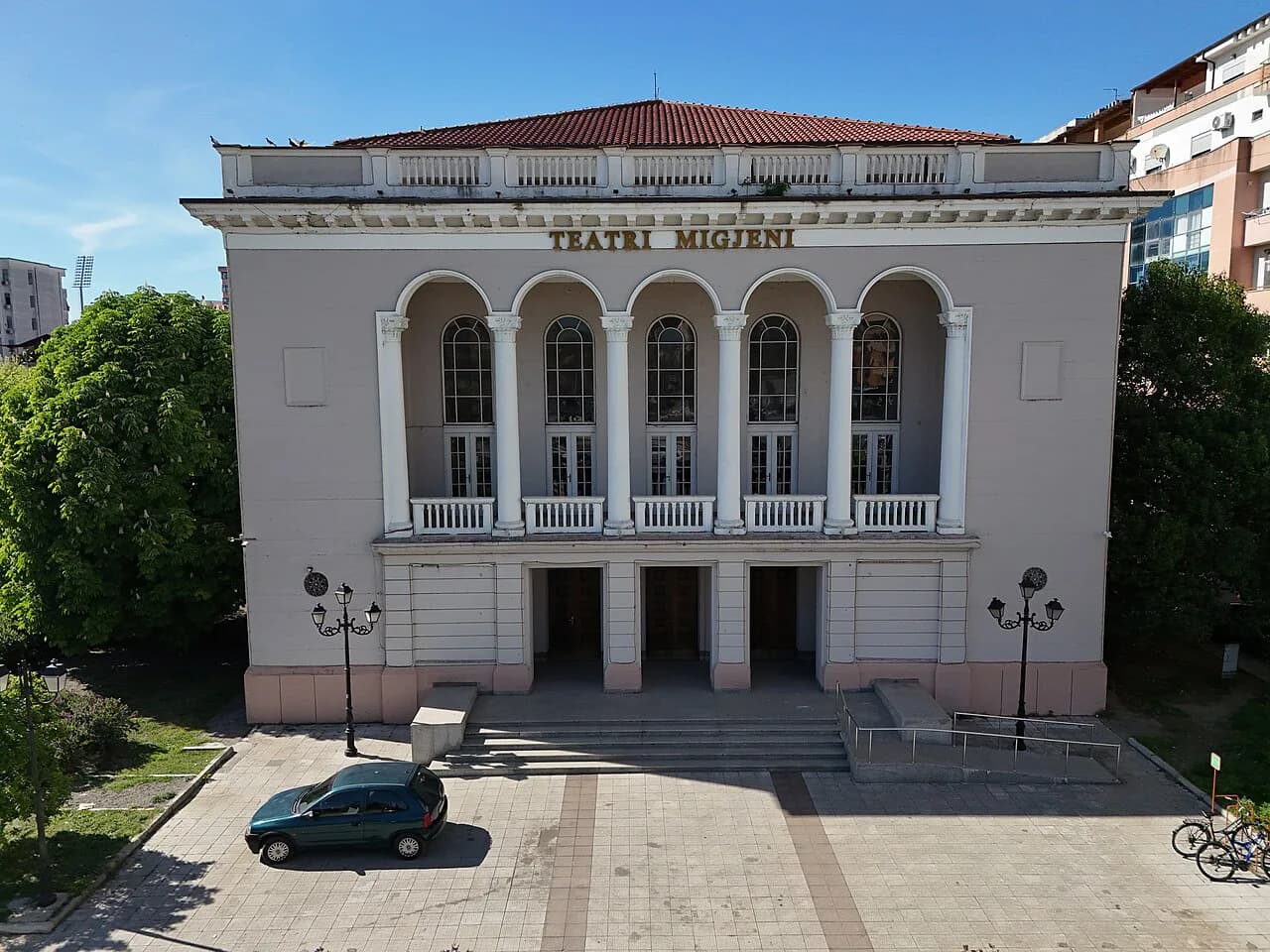
A longer city walk takes in the Shkodër History Museum for local life across the millennia, the sobering cells of the Site of Witness and Memory, and the Migjeni Theatre for the city's creative pulse. These sit in the centre, so they fit between the pedestrian street and the castle without adding transport.
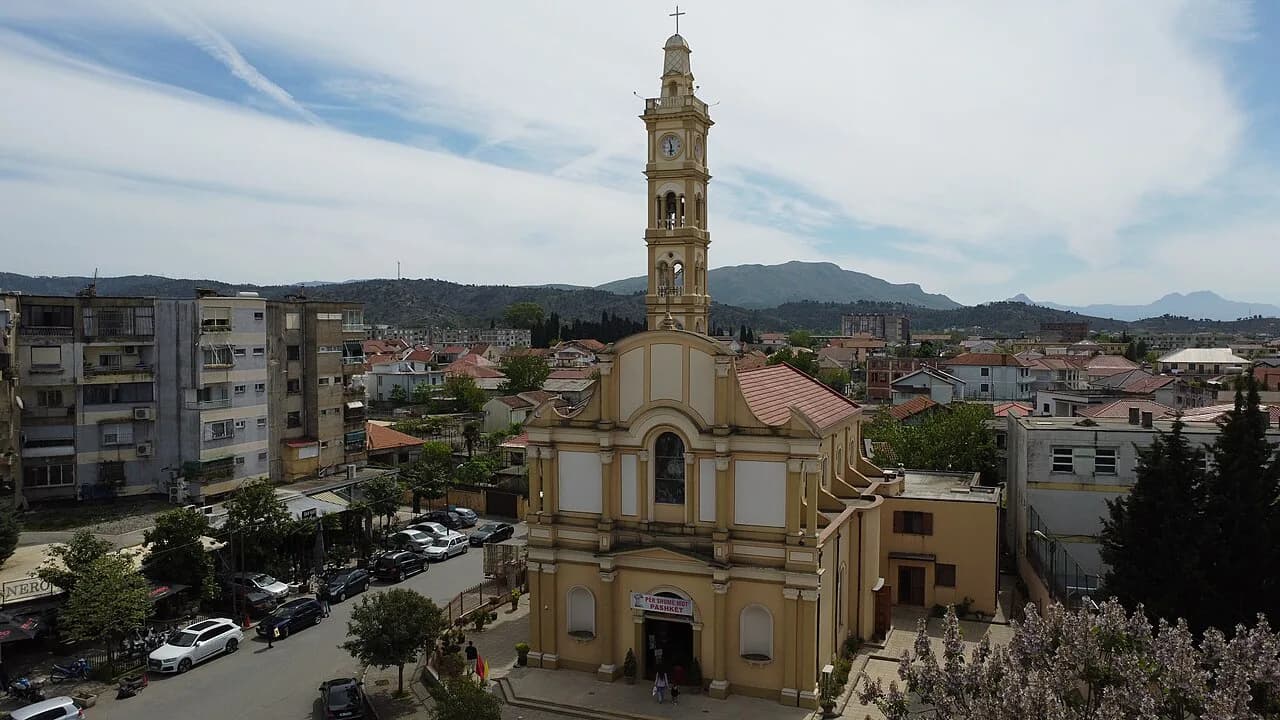
Shkodër is also a city of religious buildings in close company, which you can thread into the same walk. Our guide to the Shkoder cathedral covers the Metropolitan Archdiocese of Shkodra and Saint Stephen's Cathedral, worth a look if you are already circling the centre.
The short centre loop: five sights over 1.3 km
If you have an hour or two rather than a day, a published self-guided route links five sights over 1.3 km with only 7 m of ascent and 8 m of descent. The stops are the Franciscan Church, the Ebu Beker Mosque, the Deshmoret e 2 Prillit monument, the Migjeni Theatre and the Historic Museum of Shkodër.
That loop stays on the flat and leaves the castle for another outing, which suits a short stopover or a hot afternoon. Use it as the city-centre half of the day and add Rozafa separately when you have the legs for the climb.
Walking versus cycling: the castle, the lake and Mesi Bridge
The centre is walkable, but the castle, the lake and Mesi Bridge are easier by bike, and bikes are part of everyday life here. One guide gives rental at around €5 per day as an indicative rate, so confirm the figure with the hire shop on the day rather than budgeting to the euro.
On two wheels you can follow the lakeshore to Shiroka for a swim and carry on to Zogaj, a village that feels stopped in time, or ride out to the Venetian stone of Mesi Bridge. Taxis and local minibuses cover the rest. Pick one of these rather than attempting both in a single day.
Guided options: free walking tours and custom routes
Free guided walking tours in Shkodër can be booked through GuruWalk, which suits anyone who wants the stories behind the streets rather than a list of stops. Local operators also build custom routes from a location library, covering Rozafa Castle, the Marubi museum and lakeside walks with bird-watching.
Do not count on a fixed daily departure: one operator states plainly that it has no scheduled tours in Shkodër yet and builds them to order instead. Ask what a custom route costs and what it includes before you commit, since quotes come case by case.
Paid city tours that pair Shkodër with Krujë are also sold, with a mix of driving and walking, if you would rather see both in one day. Book through the tour company's own listing so you can read the cancellation terms before you book.
How long the walk takes and how to order the stops
Give the city at least two full days, and add a third if you want the bike ride to the lake or Mesi Bridge. Within a single day, put the pedestrian street and museums in the morning, rest through the middle of the day, and save Rozafa for the afternoon and early evening light.
Spring and early autumn bring milder weather and lighter crowds than high summer, which matters on an exposed castle hill. The published 1.3 km centre loop gives you a fallback if the day turns too warm for the climb.
Where the walk fits with a Lake Koman or Theth day trip
Shkodër works as a base for the Komani Lake ferry and the Shala River, or for Theth and the Accursed Mountains, with the city walk filling the day before or after. From Tirana, expect roughly two hours by bus or shared transfer, which makes an early start feasible.
Keep the walking day separate from a mountain or lake day rather than squeezing the castle in on the way to a ferry. If Shkodër is your first stop in the north, the Shkodër Old Town guide gives the wider layout of quarters and streets to plan around.
Should you walk it or join a guide?
Walk it yourself if you want the pedestrian street, the mosque and the castle at your own pace, with 400 lek for castle entry and 700 lek for the Marubi museum as the figures to carry. Book a free walking tour or a custom route if you want the human stories behind the buildings and someone else to order the stops.
Either way, treat Rozafa as the finish, keep the bike for the lake and Mesi Bridge, and check the museum and castle websites for the day's hours before you set out.
Explore more Shkoder guides
Frequently Asked Questions
Is Shkodër walkable?
Yes, the centre is compact: Rruga Kolë Idromeno runs through it, the Ebu Beker Mosque sits at the southern end, and museums and theatres cluster nearby. A published self-guided loop links five sights over 1.3 km on almost flat ground. Rozafa Castle is the exception and needs a climb.
How long does it take to walk up to Rozafa Castle?
No published walking time is given for the climb, so treat it as the strenuous part of the day and allow generous time rather than a fixed figure. Go in the cooler hours, carry water, and leave the bike at the bottom.
Do you need a guide for Shkodër old town?
No. The centre is easy to route yourself, and the museum labels and castle panels explain the main sights. A guide adds the stories behind the streets, and free walking tours can be booked through GuruWalk, while one local operator builds custom routes but runs no scheduled Shkodër tours.
Sources
Notes for your Albania trip
Optional updates to our Albania town guides.
You might also like
Continue reading
More guides you'll find useful