Mosques in Durrës: The Fatih Mosque and What to See
The Fatih Mosque is Durrës's main historic mosque, built in 1502–1503 near the amphitheatre and castle. Here is what you see, how to visit and dress respectfully.
On this page
For most visitors, the mosque to see in Durrës is the Fatih Mosque, also called the Small Mosque or the Old Mosque, built in 1502–1503 and still a working place of worship. It stands in the centre within a few minutes' walk of the Roman amphitheatre and the castle walls, so it slots into a short city circuit rather than needing a trip of its own. This guide covers what to look for in the building, how it differs from the newer Great Mosque, and the dress and shoe etiquette to follow inside.
Treat the visit as a twenty-minute stop that rewards a slower look, not a museum with a queue. If you are building a half-day in the city around it, our guide to the things to do in Durres sets the mosque alongside the amphitheatre, the Archaeological Museum and the seafront in a walkable order.
Which mosques in Durrës can visitors see?
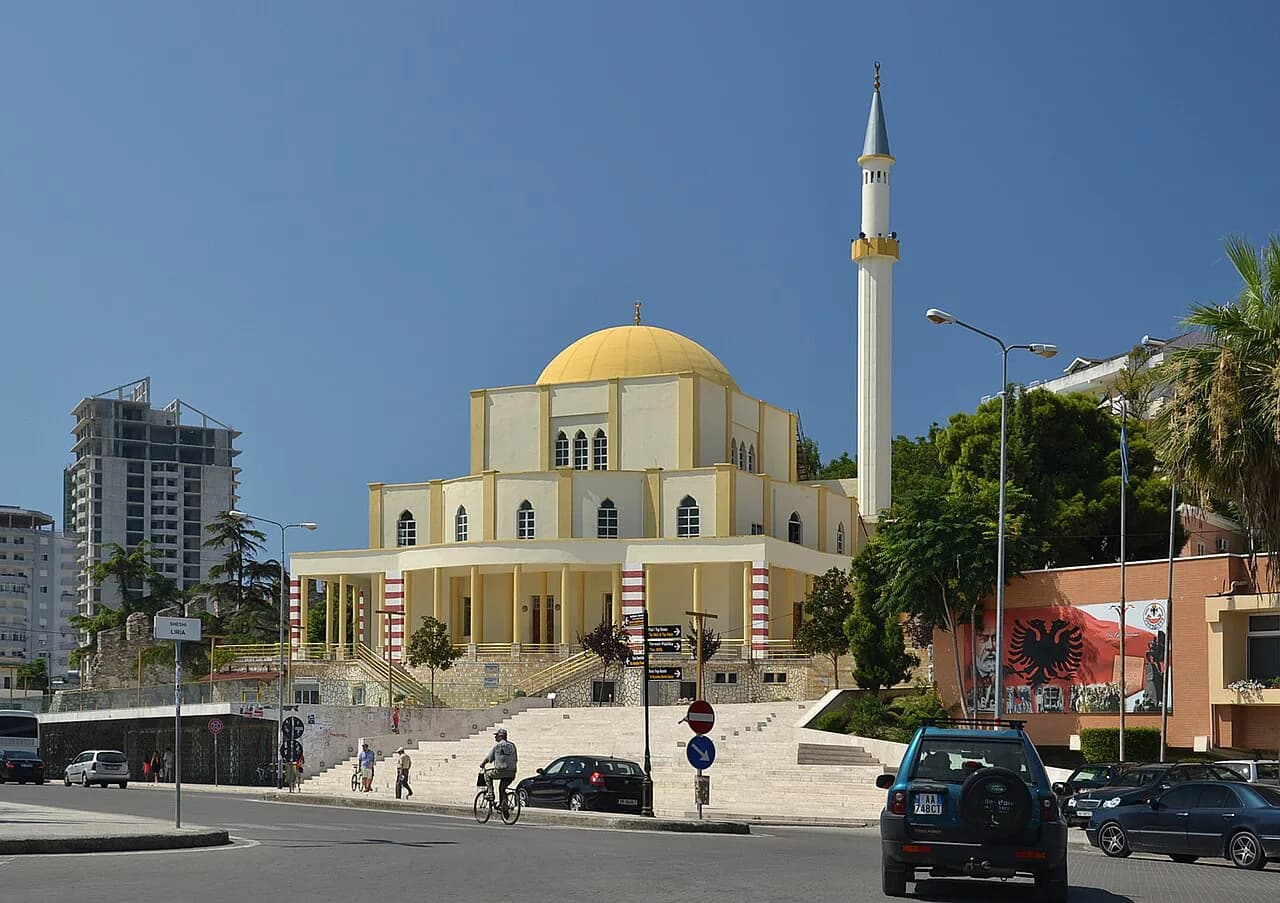
Two names come up when people search for a mosque in Durrës: the Fatih Mosque and the Great Mosque, sometimes called the New Mosque. They are separate buildings in different parts of the city, and mixing them up is the easiest mistake to make when planning a walk. The Fatih Mosque is the historic one near the amphitheatre; the Great Mosque is the newer congregational mosque, addressed on Rruga Aleksander Goga.
The Fatih Mosque is the one with a documented history you can read on site and in the city's heritage listings, which is why it carries most of the visitor interest. The Great Mosque is a separate working mosque rather than a heritage stop, so approach it as you would any neighbourhood place of worship: quietly, and only if you are dressed for it.
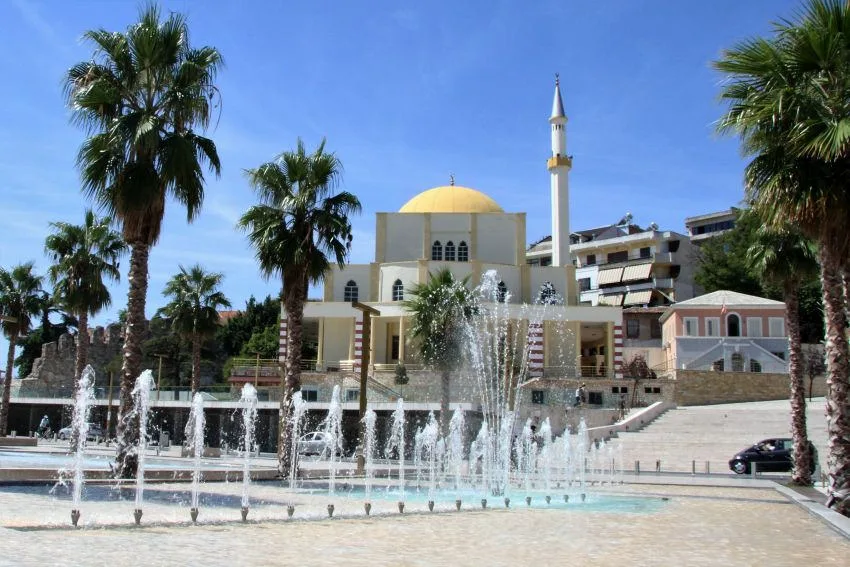
The Fatih Mosque: the city's main historic mosque
The Fatih Mosque was built between 1502 and 1503, just after the Ottoman conquest of Durrës in the early sixteenth century, and takes its name from Sultan Mehmet Fatih, known in English as Mehmed the Conqueror. It is named among the oldest monuments of Islamic worship in Albania. In 1973 it was declared a Cultural Monument of the Republic of Albania, which is the formal protection that underpins its status today.
It is still an active mosque serving the Muslim community, not a deconsecrated shell. That matters for how you visit: you are stepping into a place of prayer that happens to be a monument, so expect the building to be in use rather than staged for tourists.
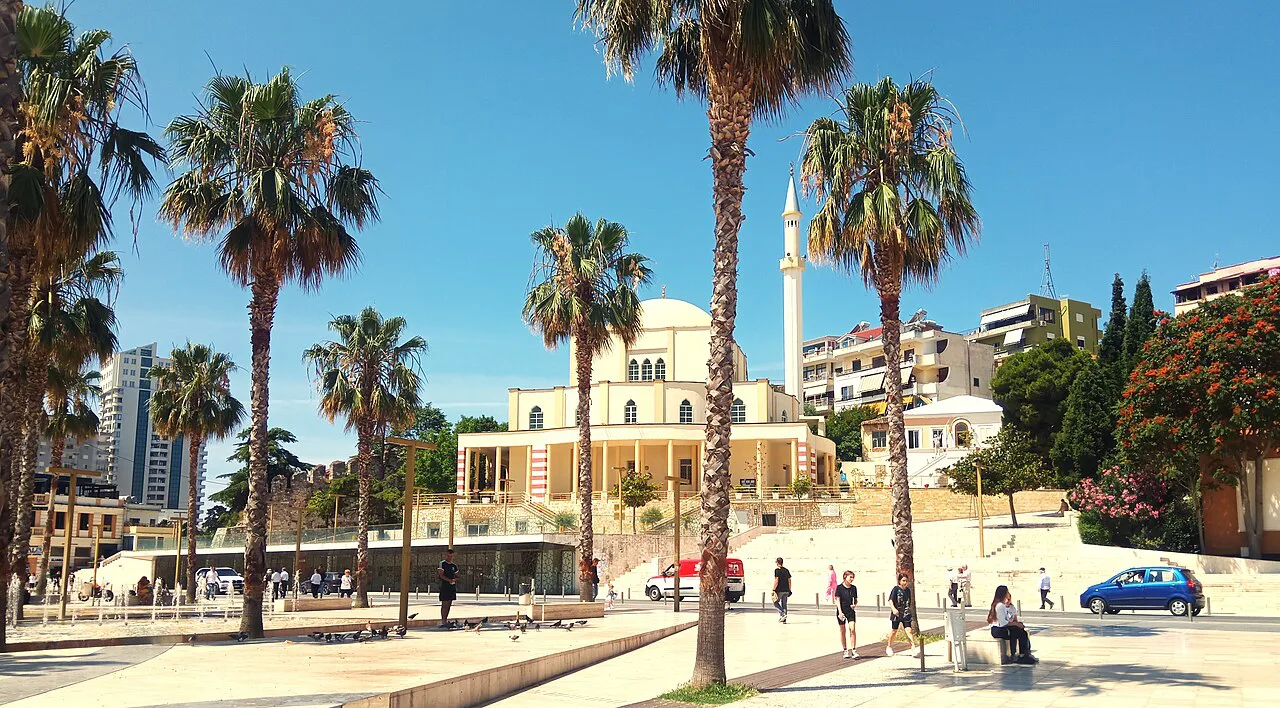
Where the Fatih Mosque sits: beside the amphitheatre and castle
The mosque's position is its practical advantage. It stands close to the Roman Amphitheatre, the Durrës Castle and the other monumental structures of the old centre, so you can move between them on foot without transport. Durrës packs its ancient core into a compact area behind the port, which is why a single loop covers the amphitheatre, the castle walls and the mosque in an afternoon.
The amphitheatre itself was built in the second century AD, and the castle's defensive walls date from the fifth century with later Venetian additions, wrapping the oldest part of the city. Seeing the mosque in that frame makes sense of the layers: Ottoman worship built into a streetscape of Roman and Byzantine remains. Our Durres Attractions hub collects the individual guides to these monuments if you want to plan each one properly.
What to look for in the building: tiled roof, square plan, rebuilt minaret
Do not expect a cluster of domes. The Fatih Mosque is covered with a tiled roof, which sets it apart from the domed Ottoman mosques most travellers picture, and it has a simple quadrangular plan. Look up at the roofline first: it is the quickest way to read the building correctly.
The minaret you see is a later, simpler rebuild. The original collapsed during the communist period, when Albania was declared an atheist state, so the current shaft is not the sixteenth-century one. Knowing this stops you misreading the mosque as a heavily restored replica; the historic fabric is in the walls, not the tower.
The walls carry their own evidence of reuse. The mosque was raised on the ruins of an early Christian basilica, and fragments of brickwork survive, including northern arcades and a western wall rebuilt in a cloisonné technique dated to the thirteenth and fourteenth centuries. Walk the exterior walls slowly before you go in, because these fragments are easy to miss and they tell the longer story of the site.
The Great Mosque of Durrës (New Mosque)
The Great Mosque, or New Mosque, is the city's newer congregational mosque, on Rruga Aleksander Goga. Little is documented about it as a visitor attraction, so treat it as a working mosque you might pass rather than a sight to schedule. If you want to look inside, go outside prayer times, dress modestly and follow whatever the people at the door indicate.
Visiting etiquette: dress, shoes and behaviour inside
Both mosques are active places of worship, so the rules are those of a functioning mosque rather than a ticketed monument. Cover shoulders and knees, and women should carry a scarf to cover the hair before entering the prayer hall. Remove your shoes at the entrance and leave them where local worshippers do rather than inventing your own spot.
Keep your voice low, do not walk in front of anyone who is praying, and do not photograph people at prayer. If the prayer hall is filling for a service, step back and wait or come back later; a short visit deferred costs you nothing. If you are unsure whether now is a good moment, ask at the door before stepping onto the carpet.
How long a visit takes and fitting it into a Durrës walk
Allow fifteen to twenty minutes inside and around the Fatih Mosque if you read the walls and look at the roofline properly. Combined with the amphitheatre and the castle, that makes a comfortable half-day in the centre before the seafront. The Archaeological Museum, which holds finds from the Illyrian, Greek, Roman and Byzantine periods, is nearby if you want to extend the day with the material context.
Durrës is easy to reach from Tirana and the coast, and the old centre is compact enough to cover on foot. If you are weighing up what else to include, the wider things to do in Durrës guide covers the promenade, the Venetian Tower and the city's museums so you can sequence the day before you arrive.
Practical notes on openings and prayer times
The Fatih Mosque is an active place of worship rather than a ticketed monument, and no visitor opening hours or entry price are given for it. The Great Mosque has an address on Rruga Aleksander Goga but no reliable published visitor timetable. Check with your accommodation or at the door on the day, since access depends on prayer times rather than a fixed tourist schedule.
Aim for the middle of the day, outside the main prayer gatherings, and be ready to wait if the hall is busy. Friday midday is the busiest congregational prayer of the week, so avoid it if you want to look around rather than observe from the doorway. Beyond that, the sensible move is to ask locally on the day you plan to visit.
Which mosque should you seek out in Durrës?
Make the Fatih Mosque the one you plan around. Its 1502–1503 date, its unusual tiled roof and square plan, the rebuilt minaret and the basilica fragments in its walls give you more to look at than any other mosque in the city, and it sits beside the amphitheatre and castle.
See the Great Mosque only in passing or as a working place of worship, not as a heritage stop. Build the visit into the centre-city walk rather than a separate journey, then use the rest of the day for the amphitheatre and the museum. For the practical details, see the Durres map.
Explore more Durres guides
Frequently Asked Questions
Is the Fatih Mosque the same as the Great Mosque in Durrës?
No. The Fatih Mosque is the historic mosque built in 1502–1503 in the old centre near the amphitheatre and castle. The Great Mosque, also called the New Mosque, is a separate newer mosque on Rruga Aleksander Goga.
Do I need a ticket to visit the Fatih Mosque?
No ticket price is published for the Fatih Mosque, and it functions as an active place of worship rather than a ticketed monument. Access depends on prayer times, so ask at the door before you go in.
Can non-Muslims go inside the mosque?
Visitors are welcome to look around outside prayer times, but you should dress modestly, cover your hair if you are a woman, remove your shoes and keep quiet. If the hall is busy with worshippers, wait or return later.
Why does the Fatih Mosque look different from other Ottoman mosques?
It has a tiled roof and a square plan instead of the usual domed form. Its minaret is also a later, simpler rebuild, because the original collapsed during the communist period.
Sources
Notes for your Albania trip
Optional updates to our Albania town guides.
You might also like
Continue reading
More guides you'll find useful