Korçë Food: What to Eat and How to Order It
What to eat in Korçë, from lakror and taskebab to the town's own beer, and how the bazaar, bakeries and traditional restaurants fit into a day of eating.
On this page
Korçë food is best understood as two habits: grazing in the Old Bazaar on cheese, lakror and grilled meat, then sitting down for a slow restaurant meal of taskebab, Fërgesë or moussaka with a glass of the town's own beer. This guide names the dishes worth ordering, explains that lakror is what Korçë calls burek, and shows what a real Korçë menu charges in lek so you can judge a bill before you sit down. Our Korçë, Albania guide covers the rest of the trip.
What Korçë food is known for
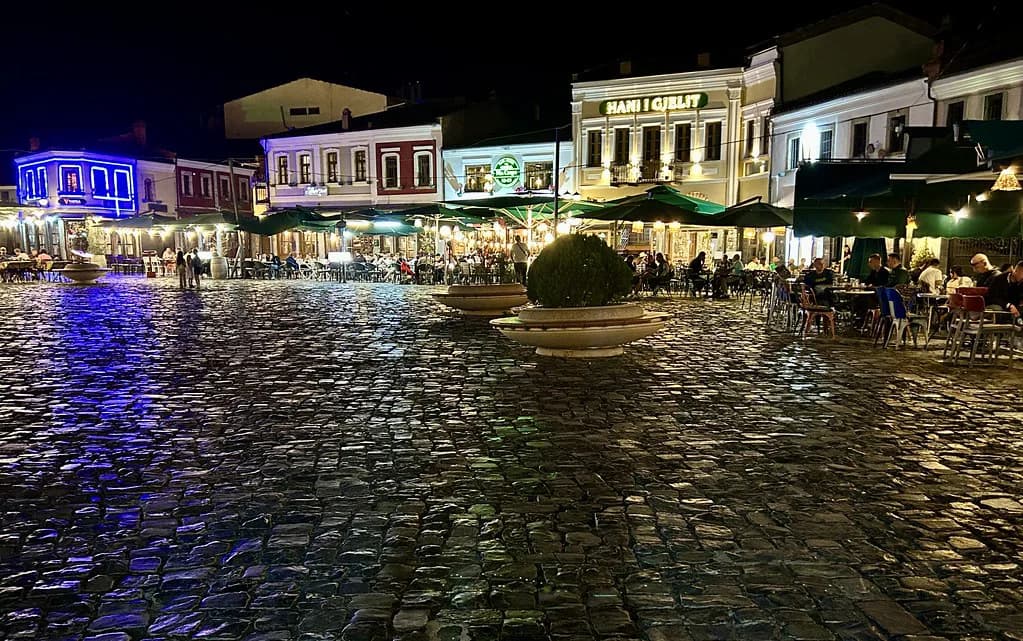
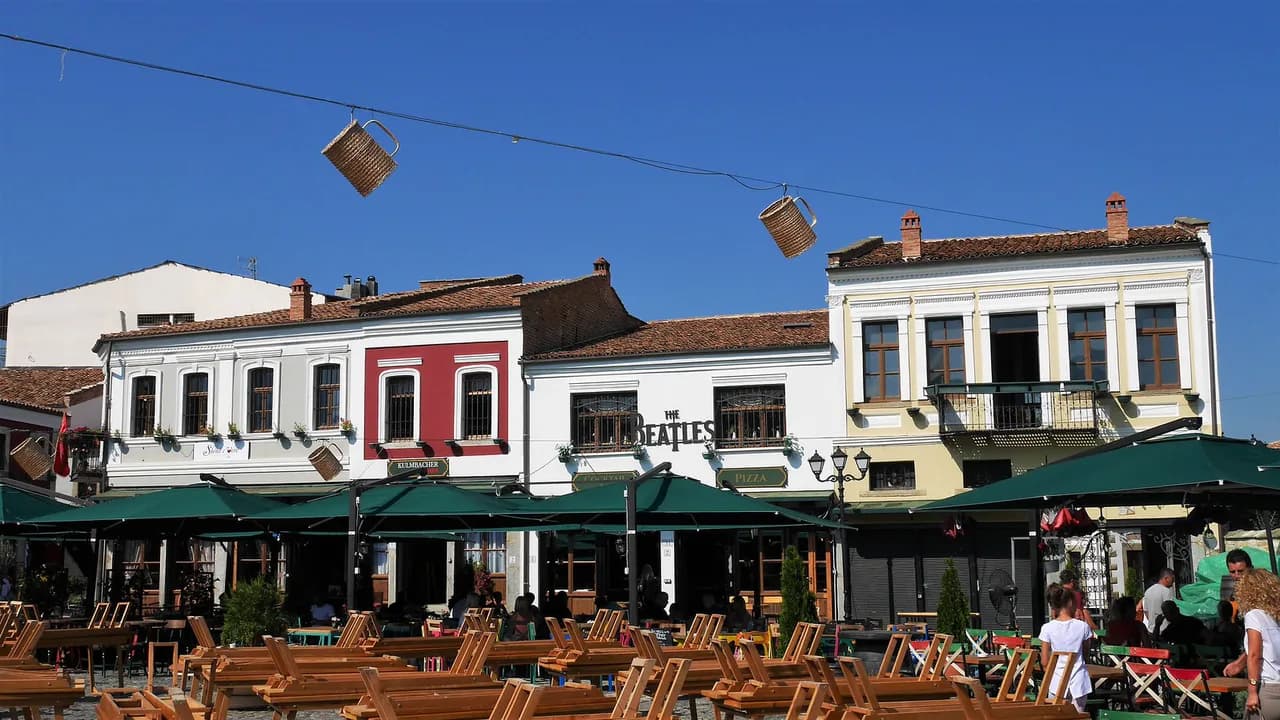
Korçë eats on its feet and then at the table. The Old Bazaar is where visitors pick up fresh fruit and vegetables, cheeses, spices, lakror and grilled meat to eat on the spot, along with odds and ends and clothes. In town, the boulevards fill with cafés where locals drink Turkish coffee, beer or raki, and the evening xhiro — the slow stroll with stops to chat — sets the rhythm for a meal afterwards.
Two names matter before you order anything. Lakror is the Korçë word for what elsewhere is called burek, so the pastry you buy in the bazaar and the pastry on a restaurant menu are the same thing. Taskebab is a savoury Albanian dish of tender chunks of lamb or beef, sometimes pork, marinated with garlic, paprika and cumin, and it turns up on traditional restaurant menus.
The dishes to look for: lakror, taskebab, Fërgesë, pastiçe and grilled meats
A Korçë table usually mixes a baked dish, a grilled meat and something vegetable-based. Fërgesë here is roasted red peppers with tomatoes and cottage cheese, while pastiçe is pasta baked with meat sauce and a creamy béchamel. Moussaka layers onion, garlic, aubergine and tomato, and stuffed peppers come filled with rice and sauce.
Grilled meats and the sea sit on the same menu in Korçë restaurants. Meatballs are ground beef and pork with garlic, herbs, onion, carrot and celery, and oven-baked orzo comes with chicken or veal and vegetables. Seafood reaches inland too: sea bream and sea bass come with a garnish, mussels are cooked with garlic and white wine, and fish casserole is white fish fillets baked with potato and onion.
Starters are where a Korçë meal begins, and they are mostly vegetable-led. Saganaki is oven-baked cheese, sometimes listed plain and sometimes with sour cream, cucumber and garlic, and grilled or boiled vegetables come dressed with oil, salt and olives. Feta with pepper and olives is the simplest thing to order while you decide on a main.
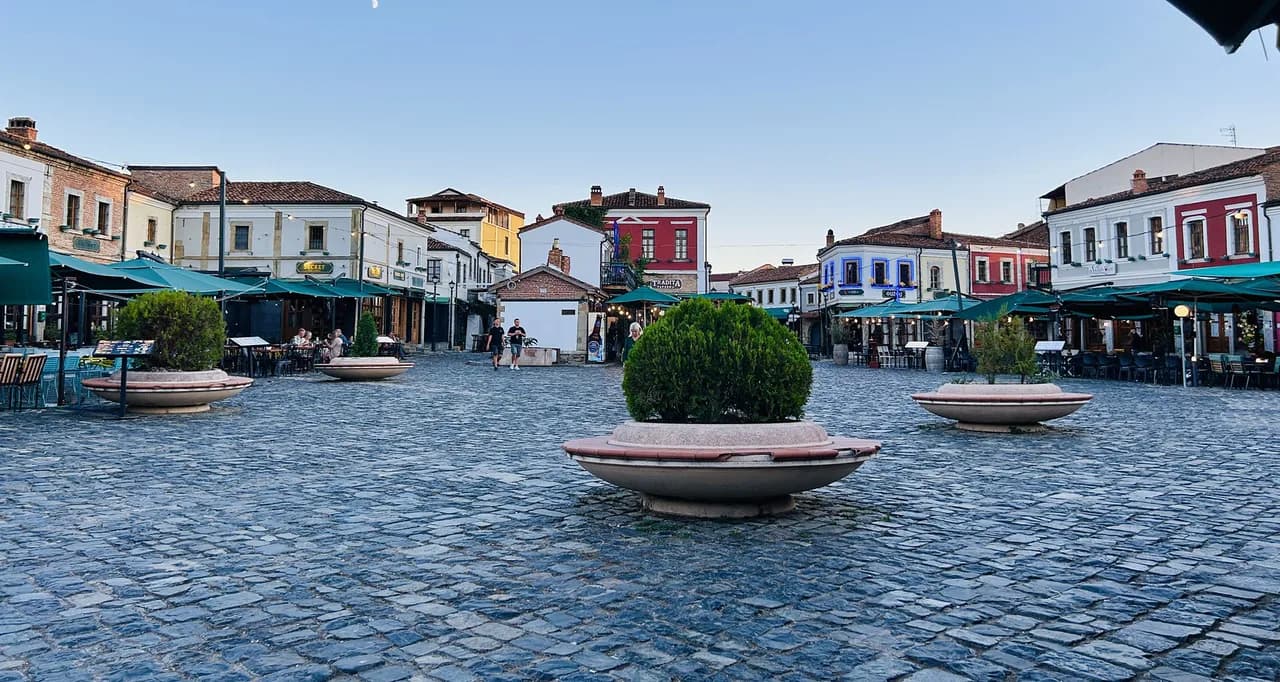
Eating your way through the Old Bazaar
Treat the Korçë Bazaar as a first meal rather than a shopping stop. The narrow alleys connect several small squares, and the selling happens on outdoor stands rather than inside the old Ottoman buildings, so you eat standing or walking. Fresh produce, cheese, spices, lakror and grilled meat cooked on the spot are the things to buy, and the same stalls sell clothes, trinkets and crafts if you want a break from food.
Go at the busiest hour if you want the market at full strength. The bazaar shifts with the day and the season, and the food stalls are the part most sensitive to timing, so build your visit around the middle of the day rather than a late afternoon. The Korçë Map for Visitors helps you find the bazaar lanes and the streets around them before you set out.
Korça beer and the brewery
Birra Korça is the drink that anchors a Korçë meal, and the brewery makes a worthwhile short stop. It opened in 1929 as the first Albanian brewery, and the plant was renewed in 2006 while the building kept its original design. The water still comes from springs on Morava Mountain, which you can see from the brewery yard; ask at the brewery on arrival about seeing the production, since tours run informally rather than on a fixed slot.
If you happen to be in Korçë in the middle of August, an annual beer festival is held in connection with the Korça brewery, but the exact dates are set each year, so confirm them locally before planning a trip around it. For most visitors the beer is simply the right order with taskebab or grilled meat, served cold in the bazaar, on a boulevard café terrace or at a restaurant table.
Breakfast and coffee on the boulevards
Breakfast in Korçë is a boulevard affair. Wide streets lined with cafés serve Turkish coffee, and pastries from the bazaar or a bakery make the cheapest start to the day; the same cafés switch to beer or raki later. Sit outside in the morning, watch the town go past, and save your appetite for a proper lunch in the bazaar or a restaurant.
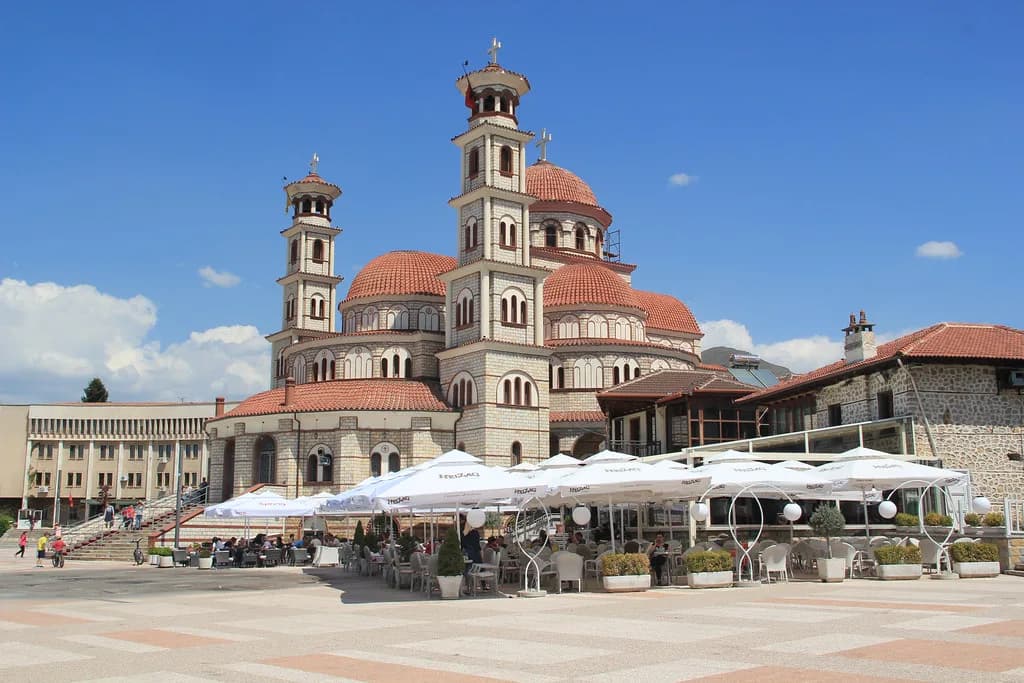
Build breakfast and coffee into a wider morning of sights rather than making it the outing itself. The Resurrection of Christ Cathedral, with the old houses and cobbled streets behind it, sits close to the centre and pairs well with a café stop before the bazaar gets busy; the Museums in Korçë fill the rest of a wet or hot afternoon.
Ordering in a traditional restaurant: what a full menu looks like and what it costs
A traditional Korçë restaurant menu is long enough to share, and the lek prices at Tradition Food of Korça give a concrete sense of the scale, though the restaurant lists its own address in Ksamil rather than in Korçë. Starters such as feta with pepper and olives, saganaki and grilled vegetables are listed at 300L to 400L. Mains run from Fërgesë at 300L through pastiçe, meatballs and stuffed peppers at 500L, moussaka at 600L and oven-baked orzo with chicken or veal at 550L. Seafood is the top end, with mussels at 600L, squid at 700L, sea bream and sea bass at 800L, and fish casserole at 2000L. These are that restaurant's prices on its published menu, not town-wide rates, so use them to judge a bill before you sit down rather than as a fixed budget elsewhere.
Ordering well means mixing across the menu. Take one starter of cheese or vegetables, one baked dish such as Fërgesë or moussaka, and one grilled or seafood plate to share, then add lakror from the bazaar if you still want pastry. Prices and menu items are printed in lek as the source lists them, so check the current menu at the table before ordering and pay in the currency the restaurant quotes. For a shortlist of tables across town, use our guide to the best restaurants in Korce.
What to eat if you are vegetarian
Korçë is workable for vegetarians because the starters and several mains are vegetable-based by default. Fërgesë with roasted peppers, tomato and cottage cheese, grilled or boiled vegetables, saganaki, and stuffed peppers with rice and sauce all appear on a printed restaurant menu without meat, and moussaka relies on aubergine and tomato. Say clearly that you want no meat stock or mince, since baked dishes can be finished with either.
Vegan eating is hard to pin down from the outside. HappyCow lists Korçë in its directory but its Korçë page returns no restaurant listings, so treat the directory as a starting point rather than a confirmed list and ask at the table about butter, cheese and cream in baked dishes. The bazaar is the safer bet, where fruit, vegetables, olives and spices are sold as they are.
Eating around Korçë: Prespa, Voskopoja and Tushemisht
Day trips out of Korçë change what turns up on the plate. The Great Prespa Lake is shared between Albania, Greece and Macedonia, with the small inhabited island of Maligrad and its fourteenth-century frescoed church of St Mary; the lakeshore village of Liqenas is a place to eat by the water. Tushemisht, on Lake Ohrid, has small canals of spring water running past the houses.
Inland, Voskopoja and Dardha make good half-day pairings with lunch. Allow the driving time on mountain roads and eat a late lunch rather than rushing back, since the roads and the pace of service both slow in the hills; Voskopoja also suits a cooler afternoon when the town centre is hot.
Should you eat in the bazaar or book a table?
Do both, in that order. Spend the middle of the day in the Old Bazaar eating lakror, cheese and grilled meat on your feet, then take a restaurant table in the evening for taskebab, Fërgesë or moussaka with a Birra Korça. If you only have one meal in Korçë, make it the restaurant one and buy pastry from the bazaar as a snack.
Check the menu at your table before ordering and confirm the brewery's tour and festival arrangements locally, since neither is fixed in a way you can rely on from a distance. Everything else — the dishes, the lek prices on the printed menu and the layout of the bazaar — you can plan around before you arrive.
Frequently Asked Questions
Is lakror the same as burek?
Yes. Lakror is the Korçë name for what is called burek elsewhere, so the pastry sold in the bazaar and the pastry named on a restaurant menu are the same dish under two words. If a menu lists lakror, expect a filled baked pastry rather than something unfamiliar.
What should I drink with a Korçë meal?
Birra Korça is the local beer and the obvious order with taskebab or grilled meat. The brewery opened in 1929 and was renewed in 2006, with water drawn from springs on Morava Mountain. Turkish coffee is the daytime habit along the boulevards, and raki is served in the same cafés.
Can I eat well in Korçë without spending much?
One cheap way to eat in Korçë is in the Old Bazaar, where fruit, vegetables, cheese, lakror and grilled meat are sold at stands to eat on the spot. At a restaurant table, the vegetable starters and Fërgesë are among the lower-priced dishes on the printed menu, with seafood and shared fish dishes at the top end. Check the menu in lek before you order.
Sources
Notes for your Albania trip
Optional updates to our Albania town guides.
You might also like
Continue reading
More guides you'll find useful