Lake Prespa: A Practical Guide to the Balkan Border Lake
Lake Prespa is a border lake shared by Albania, Greece and North Macedonia, with wetlands, birdlife and quiet lakeside villages. Here is how to plan a visit.
On this page
Lake Prespa rewards travellers who treat it as a place to slow down rather than tick off: you come for reed beds, birdlife and a shore that has stayed quiet while Ohrid filled with tourism. This guide covers the twin lakes, which shore you would realistically visit, how access works, and how long to give it.
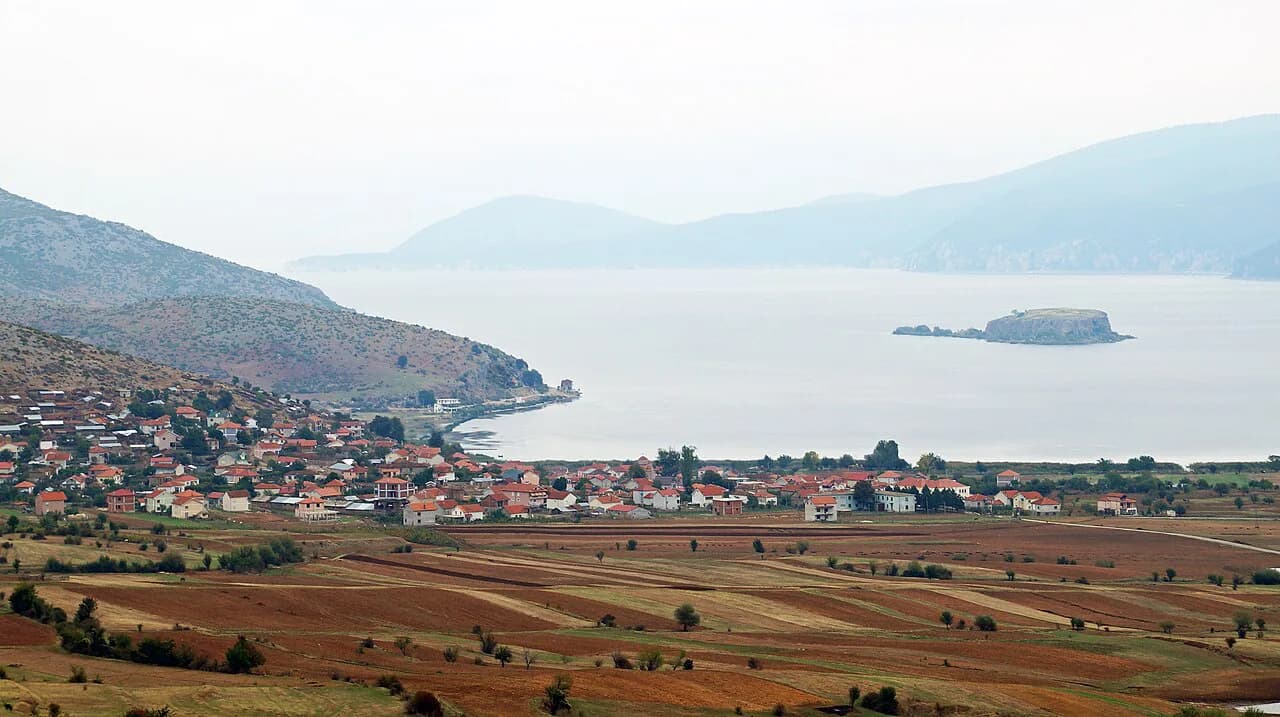
Two lakes sit here rather than one. Great Prespa, known locally as Big Prespa, lies about ten metres below Little Prespa and is joined to it across a short stretch of about 300 metres, so the pair are planned as a single landscape.
What Lake Prespa is: twin lakes shared by three countries
Great Prespa is the larger of the twins and the third-largest lake in the Balkans, after Lake Shkodra and Lake Ohrid. It spreads across the southwestern Balkan peninsula where Greece, North Macedonia and Albania meet, and its water slips away underground towards Ohrid through faults in the rock beneath Mount Xerovouni, which separates the two lakes.
The lakes are divided between the three states rather than sitting inside one border. One account puts Great Prespa at roughly 320 square kilometres, split between North Macedonia, Greece and Albania, with a deepest point around 54 metres; VisitPrespes gives a total area of 273 square kilometres, with North Macedonia holding about 60 per cent, Greece 39.4 square kilometres and Albania 18 per cent.
Little Prespa, the southern sibling, connects to Great Prespa at its southern edge and sits slightly higher. Near it lie the ruins of the early Christian basilica of Saint Achilleios, traditionally associated with Tsar Samuel, one of the monuments on the Greek side of the lakes.
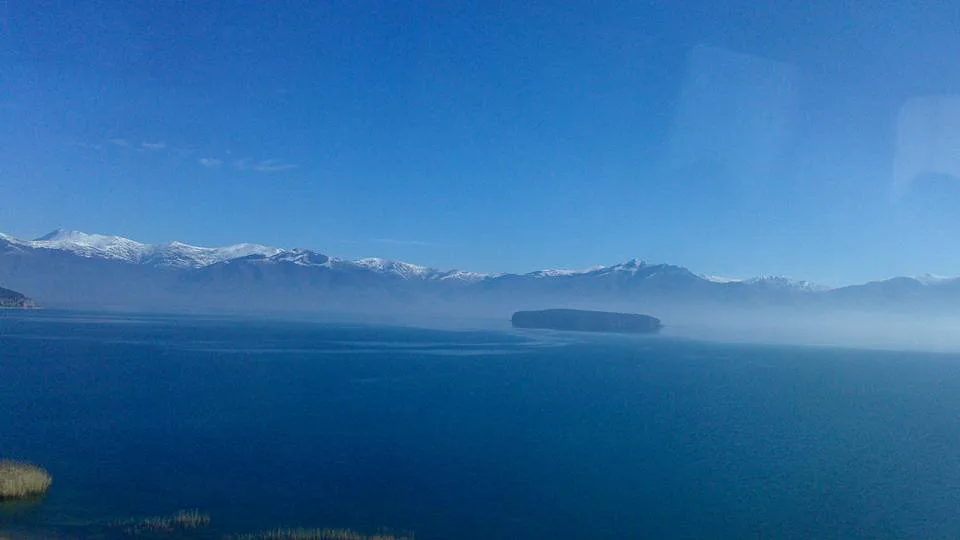
Where Lake Prespa sits and which shore you would actually visit from Albania
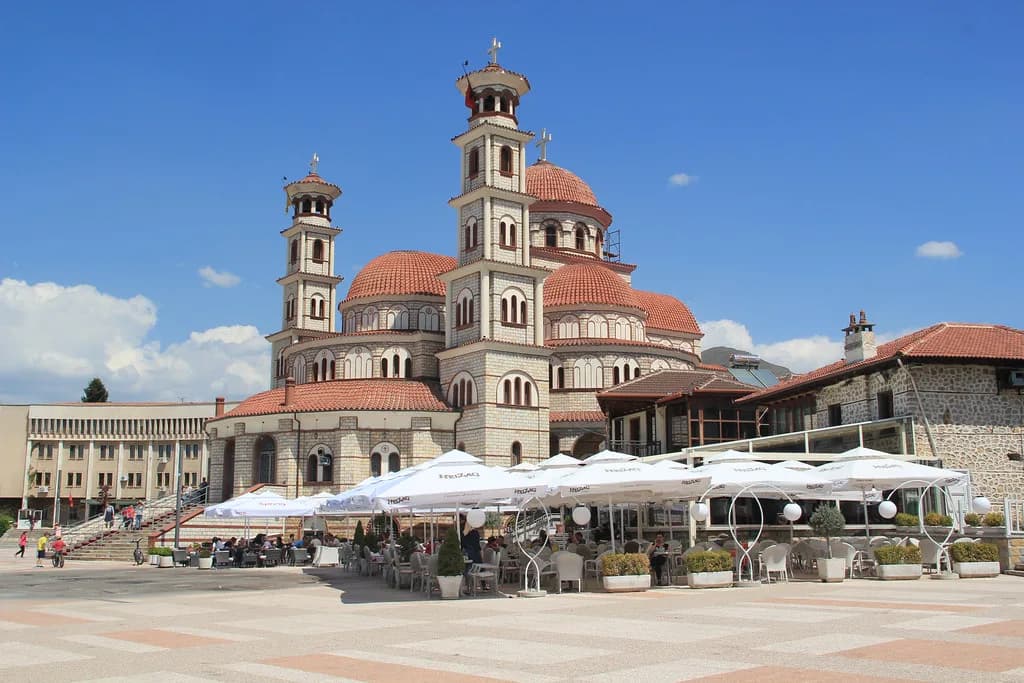
Most Albanian itineraries reach Prespa from the Korçë side, and that is also where you base yourself for the region: Korçë is the natural hub for the Albanian approach, and a base in the city lets you treat Prespa as a day out rather than a move. Our guide to Korçë: A Practical Guide to Albania's Southeastern City covers the city's quarters, its cathedral and the bazaar in detail, so you can plan the town half of the trip there and keep Prespa for the lake day.
The Albanian share of Great Prespa is the smallest of the three, about 18 per cent, so the Albanian shore is best approached as part of a wider lake circuit rather than as a stand-alone destination with named visitor sites. Use the Korçë map to check the road out of the city towards the lake before you commit to a route, since your approach will depend on where you are staying.
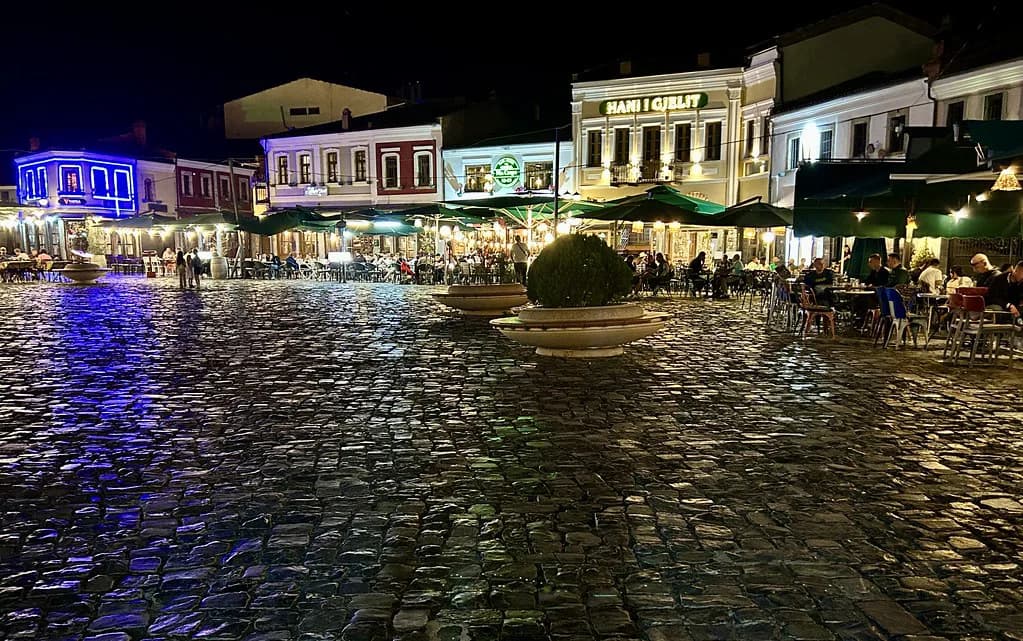
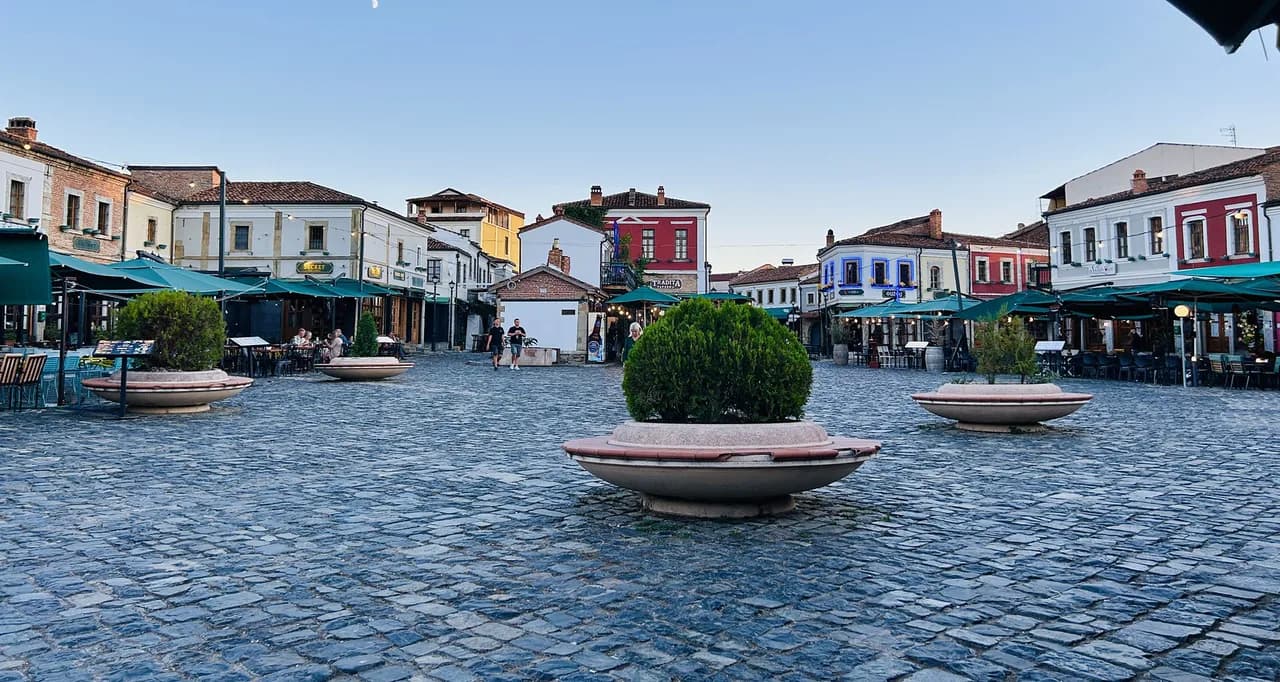
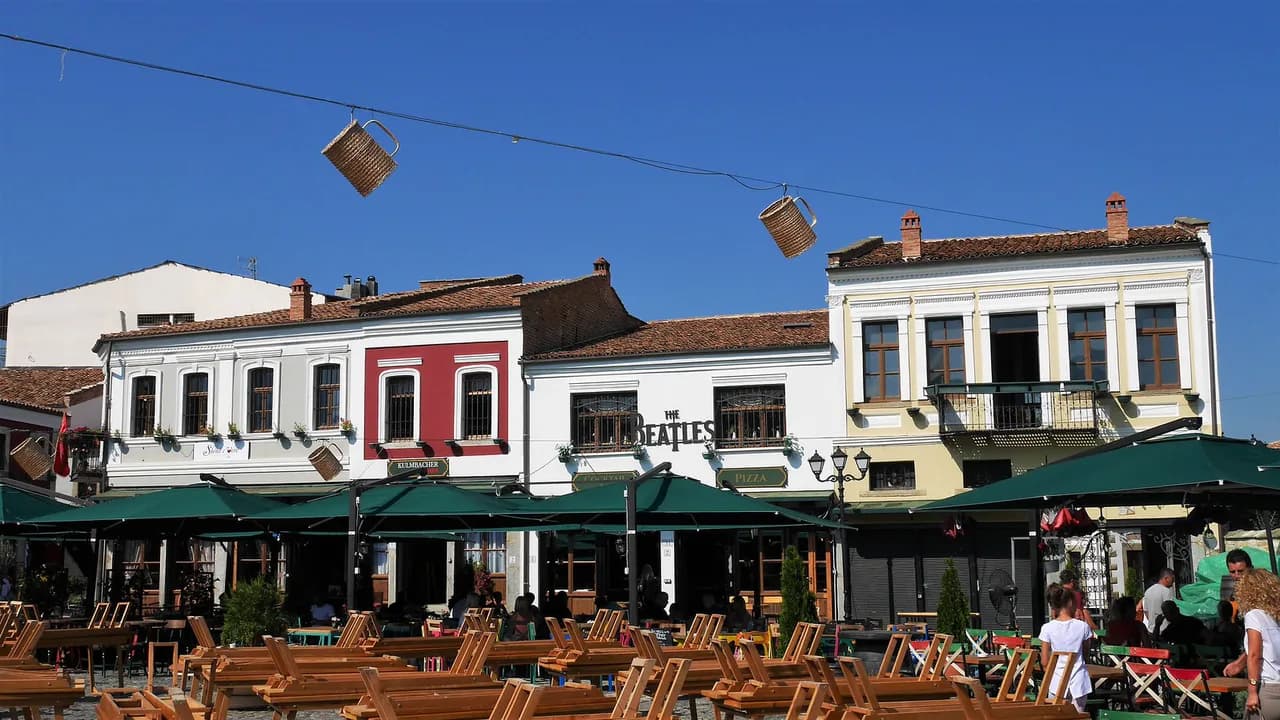
If your idea of a lake day includes a town to come back to, Korçë works well: the Korçë Bazaar gives you a market, cafés and a walk after the water, and it is the obvious evening to pair with a Prespa afternoon.
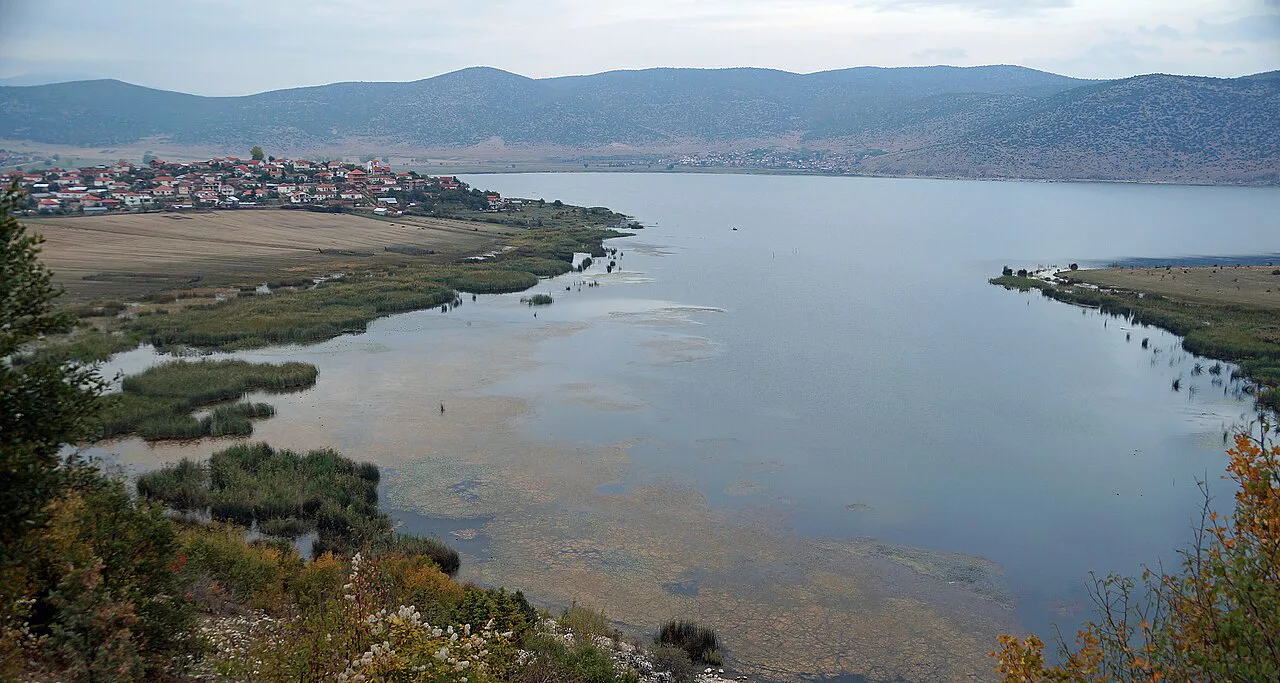
How to get there: the practical access routes
Prespa has no single obvious gateway, and that shapes the trip. On the Greek side, the only village actually on the shore of Great Prespa is Psarades, a traditional settlement near the water. The lake lies at about 850 metres, so the last stretch is mountain driving with bends, and you should allow more time than the distance suggests.
On the Greek side, the Prespes municipality around Laimos is the local base for the shore and its villages, and VisitPrespes lists Psarades among the places to see. For the Albanian approach, Korçë is the practical hub, and the lake lies inland from the city towards the border country. Mount Xerovouni is the ridge that separates Great Prespa from Lake Ohrid to the east.
Whichever way you come, a car gives you the flexibility the lake requires, as settlements are spread out and the shores are distant from each other. Confirm border and road arrangements for your own route before setting out.
What to see on the water: villages, the hermitage and the boat tour
The standout site near Psarades is the Hermitage of Panagia Eleousa, a fourteenth-century chapel that can only be reached by boat. That single detail changes how you build the day: the hermitage is not something you walk to, so a boat trip from Psarades pier is the way to see it, and the same outing puts you on the water for views back towards the village and the mountains.
Around Psarades, the shoreline is swampy in places, with water lilies and dense reeds where birds nest, so much of the lake's interest is in the margins rather than at a beach. Traditional fishing boats, the tar-sealed plaves, still work from the Greek villages, and fishing and farming remain the local economy.
Elsewhere on the shore, look for the abandoned Hotel Evropa and the fishing huts that sit among the reeds. These are sights to notice rather than visit inside, and they suit a slow circuit of the lake rather than a checklist.
The two islands: Golem Grad and Mali Grad
Great Prespa holds two islands, and both are uninhabited. Golem Grad, known in English as Snake Island, belongs to North Macedonia and is named for the snake species found there, an appropriate warning to keep to paths and watch your footing.
Mali Grad sits on the Albanian side of the lake and, according to the Belmondo tour description, holds the remnants of a medieval monastery, which makes it the more historically interesting of the pair. Crossings to the islands are not something the sources establish, so check with the Prespes tourism office whether any landing is possible before you build a day around it.
Birdlife and the wetland: why the lakes were protected
The Prespa basin is recognised as a centre of biodiversity, and the national park on the Greek side was founded chiefly to protect the birds that nest there, including pelicans, cormorants and herons. The park also protects a stand of centennial junipers that is described as unique in Europe.
One source describes the lakes as home to Europe's largest population of Dalmatian pelicans and swans, which is the claim to keep in mind when you plan your timing. The birds arrive and leave with the seasons, so the reed beds are the part of the lake that repays patience and binoculars over a rushed circuit.
Because the protection is about nesting habitat, behave accordingly: stay on tracks near the reeds, keep voices down, and do not push a boat into vegetation. The reward is a shoreline that still looks like a working wetland rather than a landscaped park.
How long Lake Prespa needs and how to pace it around the lakes
Give Prespa a full day if you are coming from Korçë or Ohrid, and two if you want both the Greek shore and the North Macedonian one. The lake rewards a loop rather than a single stop: Psarades and the hermitage need a boat slot, and the reed beds need quiet time at the edges.
Start early on the water, then work your way round the shore on foot or by car in the afternoon. Because the lake sits between three countries, do not try to see two shores in one day: border crossings plus mountain roads will eat the time you came for.
When to go and what the seasons do to the water and the roads
The Greek side recommends spring and autumn for a visit, and they line up with the bird movements that make the wetlands interesting. Summer brings the lake at its most accessible, but the heat and the mountain roads make an early start sensible; winter is quiet and the higher roads can be slow.
The lake sits at 850 metres, so expect cooler, changeable conditions than on the coast, even in the warm months. Pack layers and a windproof jacket for the boat, and check road conditions locally before committing to a high approach.
What to bring and how to behave on a sensitive border lake
Prespa is a border zone with a history: until 1969 locals carried special identity cards and foreign visitors needed a visa to enter. That is history, not a current permit system, so check your own entry requirements for each country rather than relying on old accounts.
Bring binoculars, water, sturdy shoes for the shoreline tracks and cash in the local currency for small purchases. Do not count on finding full services at the water's edge; check what is open in the villages where you plan to stop, and carry out what you bring in.
Combining Lake Prespa with Lake Ohrid and the Korçë side
The obvious pairing is Ohrid, which is a busy tourist hub compared with Prespa's quiet shores. If you want infrastructure and a town to stay in, Ohrid gives you that; if you want the wetland, come to Prespa and accept the lack of services. The two lakes are separated by Mount Xerovouni, and Prespa's waters drain underground towards the lower-lying Ohrid.
On the Albanian side, Korçë anchors the region, and the bazaar is where you go after the lake for food and a walk. For a wider loop, the villages around Korçë such as Voskopoja add a mountain day to the lake day without repeating it.
If you want a museum afternoon to balance the lake, the museums in Korçë give you the city's history and art in a compact area. Pair a Prespa morning with a Korçë afternoon rather than trying to do the lake and the city in one rushed stretch.
Which shore of Lake Prespa should you plan for?
Choose the Greek shore around Psarades if you want the boat trip to the hermitage and a village at the water; choose the North Macedonian side if you are pairing the lake with Ohrid; and use Korçë as your base if you are coming from Albania. Whichever you pick, plan one shore well rather than three badly.
Confirm boat and crossing arrangements with a local operator before you travel, and keep a spare half-day in the plan for the reed beds. Prespa's appeal is its quiet, and the itinerary that respects that is the one that works.
Explore more Korce guides
Sources
Notes for your Albania trip
Optional updates to our Albania town guides.
You might also like
Continue reading
More guides you'll find useful