Korçë Bazaar: Exploring the Old Bazaar Streets and Shops
Plan a walk through Korçë's Old Bazaar: stone-paved lanes, cafés and craft shops, plus the museums nearby and how to combine them with the city's sights.
On this page
Korçë's Old Bazaar is a restored Ottoman-era market district in the centre of the city, and half a day is enough to walk it properly, take coffee and add one nearby museum. The lanes are compact, so the visit is about wandering rather than ticking off sights. This guide covers the layout, the shops and food, the museums worth pairing with the bazaar, and how to order your time there.
What the Old Bazaar is and where it sits
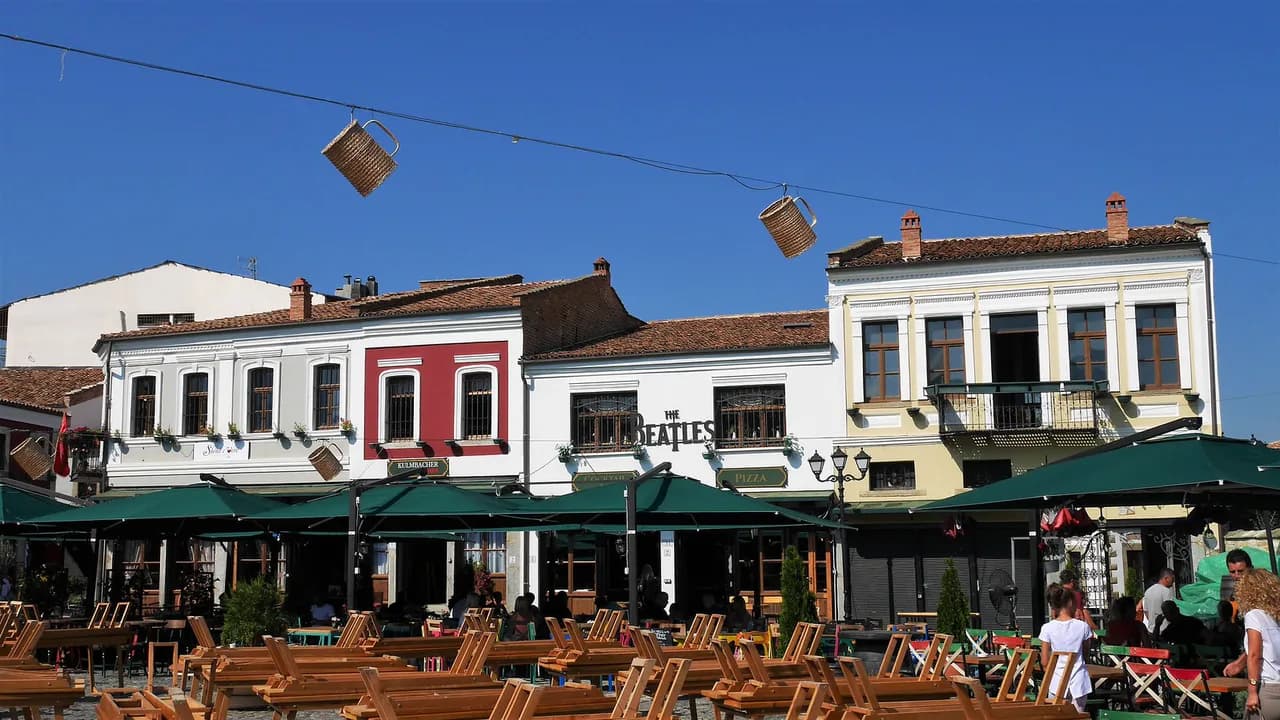
The Old Bazaar sits in the heart of Korçë and dates back to the Ottoman period, when it served as the city's main commercial centre for merchants, craftsmen and traders. Restoration brought back the traditional marketplace look while cafés, restaurants and artisan shops moved in, so the district is an active part of daily life rather than a preserved set piece.
Because the bazaar is central, it works as your starting point for Korçë as a whole: walk the lanes first to get your bearings, then branch out to the museums, mosques and churches around the centre. Our Korçë, Albania guide sets out the wider city if you want to plan more than the bazaar.
How the bazaar is laid out
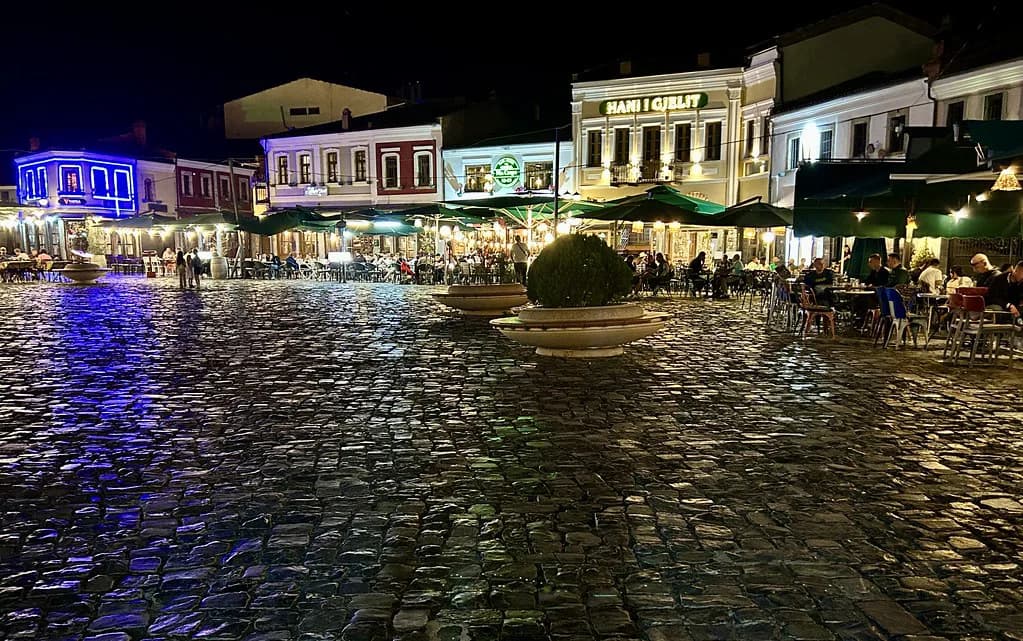
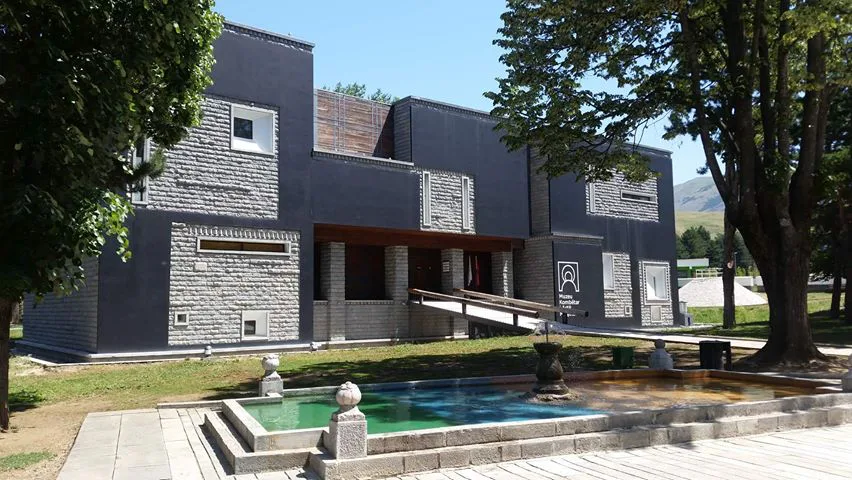
Expect traditional stone buildings, arched passages and cobblestone streets, all packed close enough to explore entirely on foot. That compactness suits all ages and makes the district easy to cover without a plan, though the cobbles are uneven underfoot and reward sensible shoes rather than sandals.
The easiest approach is to treat the lanes as a loop: enter from the central square side, follow the stone-paved streets past the shops, and come back through the arched passages as the light changes. A Korçë map helps you see how the bazaar connects to the cathedral and mosque before you set off.
What to do in the Old Bazaar
Coffee at a traditional café, lunch or dinner in an Albanian restaurant, shopping for handmade souvenirs and local products, and an evening walk through the illuminated streets are the main draws. The bazaar is calm and good for photography during the day, then livelier in the evening as locals and visitors gather for food, drinks and music.
Korçë is associated with a serenade tradition, but that does not guarantee live music in any venue on a given night. If music is the reason for your evening, look for an announcement that names a date, venue and admission conditions before you build the trip around it.
Shops and crafts: what the bazaar sells
The restored district keeps the character of a traditional marketplace, with artisan shops, family-run businesses and local products alongside the cafés and restaurants. Shopping here is less about major purchases and more about small handmade goods and foodstuffs you can carry home.
Opening hours vary from business to business, so treat any single set of times for the district with caution and check current hours with the shop or café you actually want to visit. Plan your browsing for the middle of the day, when the lanes are at their calmest.
Eating in the bazaar
The bazaar is one of the best places in Korçë to eat traditional Albanian cooking, and the dishes to look for are lakror, grilled meats, homemade cheeses and seasonal plates. Several venues also serve local beer, wine and desserts, so the district suits a relaxed lunch as well as a long evening dinner.
Our Korca food guide goes deeper on what to order across the city, while best restaurants in Korce covers sit-down options if you want to book ahead. Either way, leave the meal unhurried: the bazaar rewards lingering over a table rather than eating on the move.
Pairing the bazaar with a museum
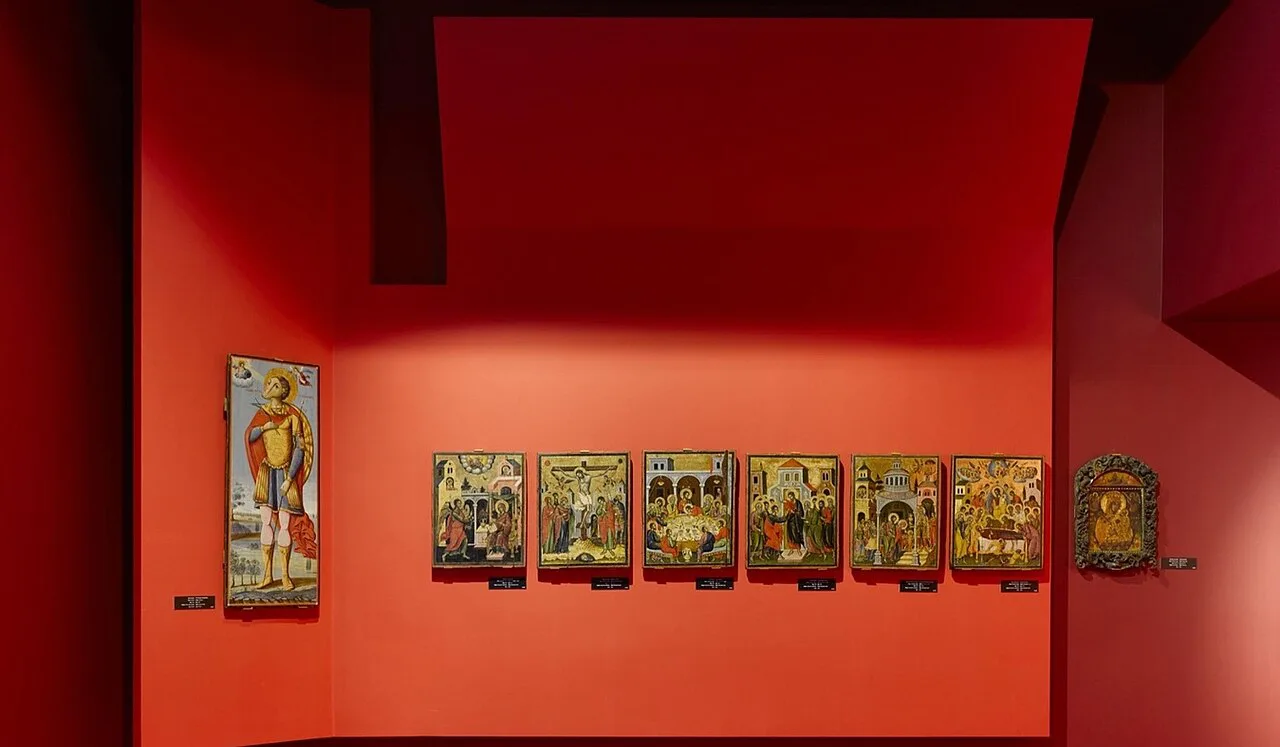
Two museums make the natural pairing, and the choice between them is a real one. The National Museum of Education connects to the first Albanian-language school, opened in 1887, and suits anyone interested in the history of language and schooling; the National Museum of Medieval Art is the better main stop for a day centred on art.
The workable order is museum first, a break, then the bazaar later, which matches the district's shift from calm daytime to lively evening. If you want both museums, arrange their order around confirmed hours and leave time for the displays themselves. Admission charges and photography rules come from each institution, so confirm them when you arrive or before you set out.
Nearby landmarks to add to the walk
The Iljaz Bej Mirahori Mosque and the first Albanian school sit within reach of the bazaar, and guided walking tours in Korçë combine the mosque, the bazaar, the school and the cathedral in a single circuit. That works well if you want context on the buildings without arranging each stop yourself.
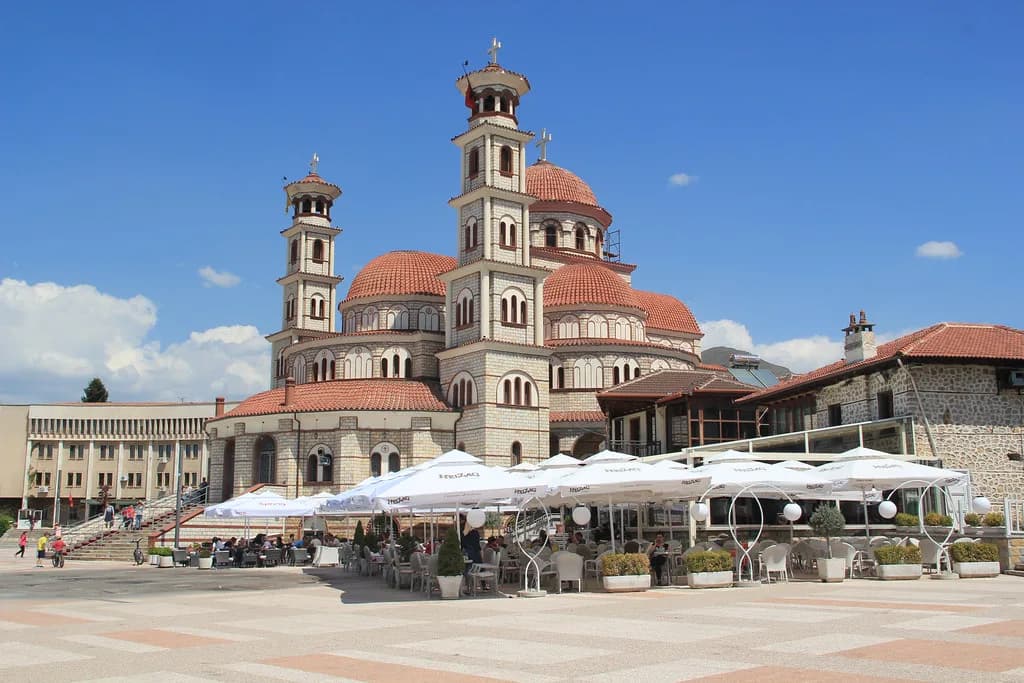
The Resurrection of Christ Cathedral, known simply as Korçë Cathedral, is the other obvious addition, with its own squares and painted interior. Our guide to the Korce cathedral explains what you are looking at before you walk back into the bazaar lanes.
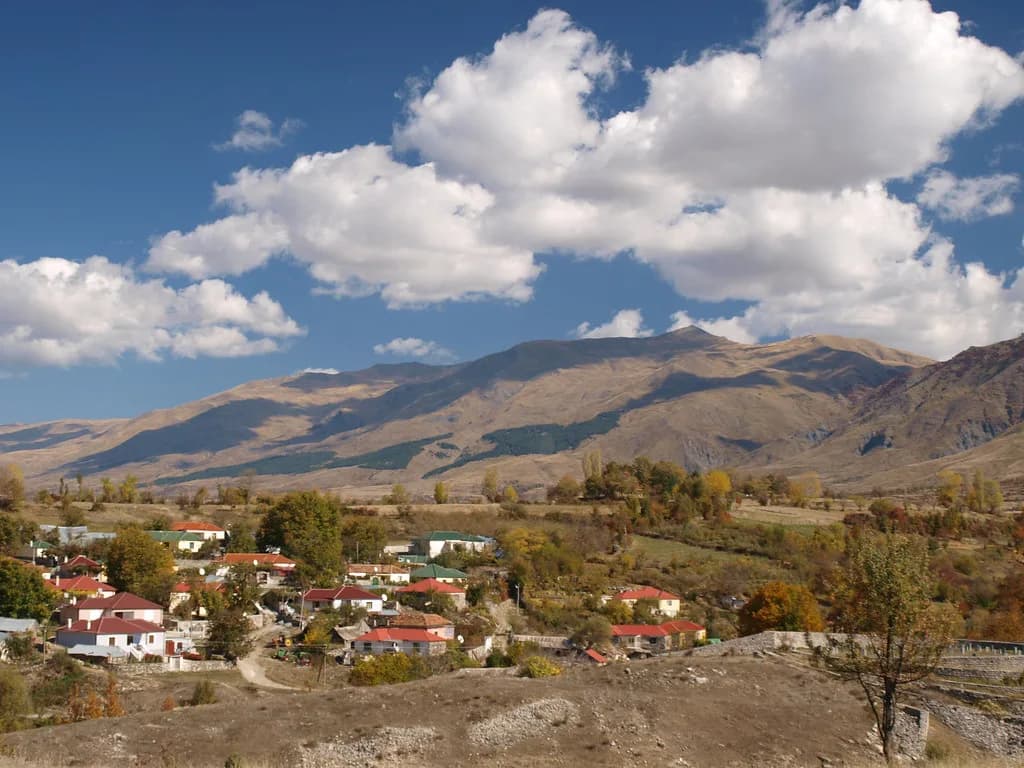
If you have a car or a spare day, Voskopoja and the villages of Korçë County sit outside the city and pair well with a bazaar morning. Lake Prespa lies further out and needs its own half-day.
How much time the bazaar needs
Allow roughly an hour to walk the lanes and shops, or a half-day if you add coffee, a meal and one museum. A full day makes sense only when you want both museums plus a long lunch, since everything in the centre sits close together.
For a short stay, one well-chosen museum and a walk is enough. With a night in town, keep the evening free for whatever cultural programme is actually announced for your dates.
When to go through the year
The bazaar is enjoyable in every season, with spring bringing pleasant weather and lively streets, summer filling the outdoor cafés and evenings, and autumn offering mild temperatures. Winter brings festive lights and cosy cafés rather than outdoor lingering.
Korçë sits high in southeastern Albania and winters here are cold, so pack for real cold if you visit between December and February. Our Korçë: A Practical Guide to Albania's Southeastern City covers the city's layout and how the seasons shape a visit.
Practical points for walking the bazaar
The lanes are cobbled and stone-paved, so wear shoes with grip and expect uneven ground, particularly after rain. The district is compact and flat enough for most visitors, but the surfaces are the main obstacle rather than distance.
Individual cafés, shops and museums keep their own hours, so confirm the places you care about rather than relying on a general opening time for the district. Korçë Beer Festival and Birra Korça are separate draws if you are in town when either is running.
Museum first, bazaar later: the day that works
Start at one museum in the morning, break for lunch, and walk the bazaar in the afternoon and early evening when the lanes wake up. Choose the education museum for language and schooling, the medieval art museum for a day built around art, and add the cathedral and Mirahori Mosque to the same loop.
Keep the evening open for whatever is announced with a date and venue, and check shop and museum hours directly for the days you are in Korçë. That leaves the bazaar to do what it does best: coffee, food and an unhurried walk through the old streets.
Sources
Notes for your Albania trip
Optional updates to our Albania town guides.
You might also like
Continue reading
More guides you'll find useful