
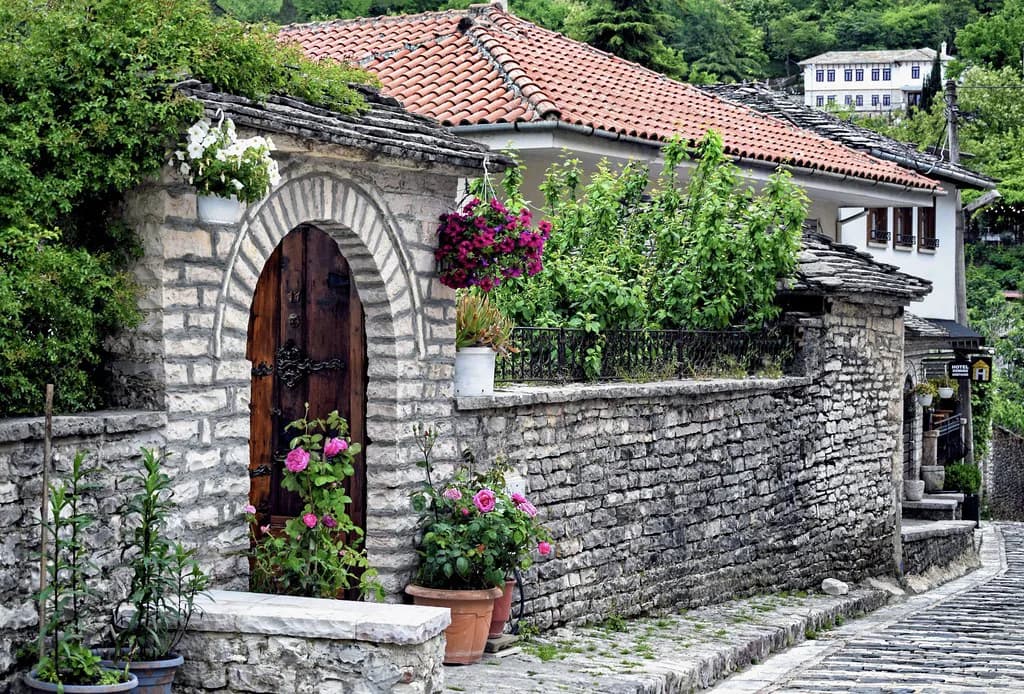
Skenduli House, Gjirokastër: Visiting the Ottoman House
Skenduli House is an Ottoman-era house in Gjirokastër's old town, and an hour is enough to see the furnished rooms, carved ceilings and four hamams inside. It sits near the Ethnographic Museum, so it slots easily into a walk between the bazaar and the castle. This guide covers the layout, the climb through the cobbled lanes, what the room counts actually mean for your time, and the practical questions about hours and tickets.
Visit Gjirokastra dates the house to 1823 while also calling it more than 300 years old, so treat the exact age as approximate. It served as the town's original ethnographic museum during the communist period and has since returned to the family, which now opens it to visitors. The counts visitors hear most often come from the owner's own account: nine fireplaces, six bathrooms, twelve rooms, 44 doors, 64 windows and four Turkish baths.
What Skenduli House is
This is a fortified tower house of the kind Gjirokastër is known for, with thick stone walls and a defended exterior. Archiqoo places it in the 19th century and classes it with the town's castle-like domestic buildings, which helps explain the heavy ground floor. It is a single house rather than a museum complex, so the visit is focused and short.
The building is associated with Nasip Skenduli, a descendant of the family that built it, who shows visitors round and tells the house's story. Do not count on him being there on the day you arrive. The rooms themselves, with their preserved original furnishings and fittings, are the reason to come.
Where it is in the old town
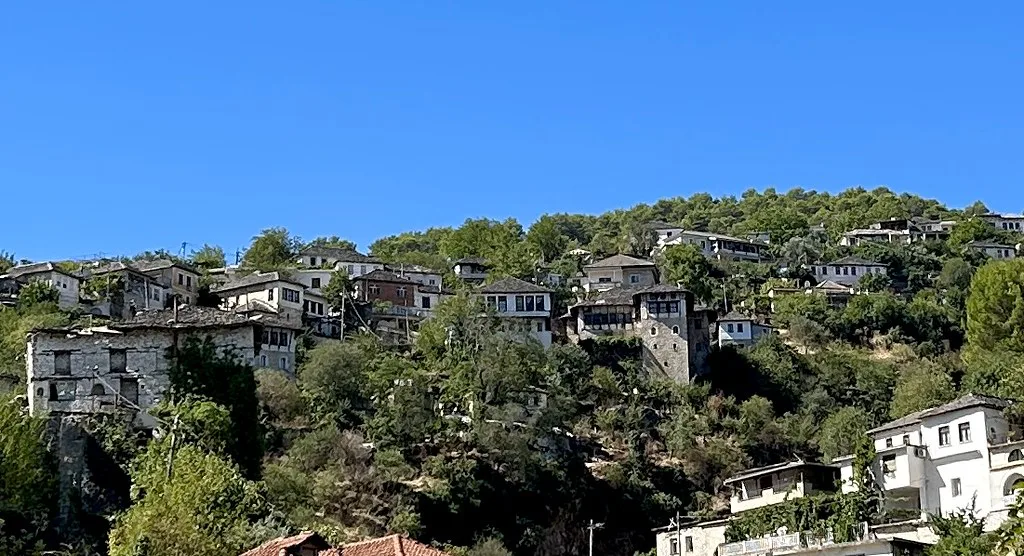
Skenduli House stands on Rruga Palorto in the Palorto quarter, uphill from the Old Bazaar and close to the Ethnographic Museum, which occupies the former house of Enver Hoxha. Visitors use the museum as the landmark: find that building and the Skenduli doorway is a short walk away. The Visit Gjirokastra listing gives the same reference point, which makes it the simplest way to orient yourself.
A mapping pin for the house puts it at 34GP+46R on Rruga Palorto, useful if you are navigating by phone in the lanes. Signal in the old town can be patchy between the stone walls, so load the map before you start climbing. If you are coming from the bazaar, the route is uphill almost the whole way.

Walking up through the cobbles
There is no vehicle access to the doorstep worth planning around; you walk the last stretch on steep, uneven cobbles. Wear shoes with grip rather than smooth soles, and keep a hand free on the polished stone after rain. The lanes are narrow and shared with residents, so keep voices down and step aside to let people pass.
Allow ten to fifteen minutes of climbing from the bazaar at an easy pace, more if you stop for photographs. The old town rises in terraces, so the walk is a series of short steep sections rather than one long slope. If anyone in your group struggles with stairs, plan the visit for the coolest part of the morning and take it slowly.
What to see inside
The counts give you a realistic picture of the visit: twelve rooms spread over the floors, 44 doors and 64 windows, and nine fireplaces that once signalled the family's standing. Four hamams, the Turkish baths, sit within the house. Not every room is open at once, so expect to see a good selection rather than all twelve, and budget roughly an hour.
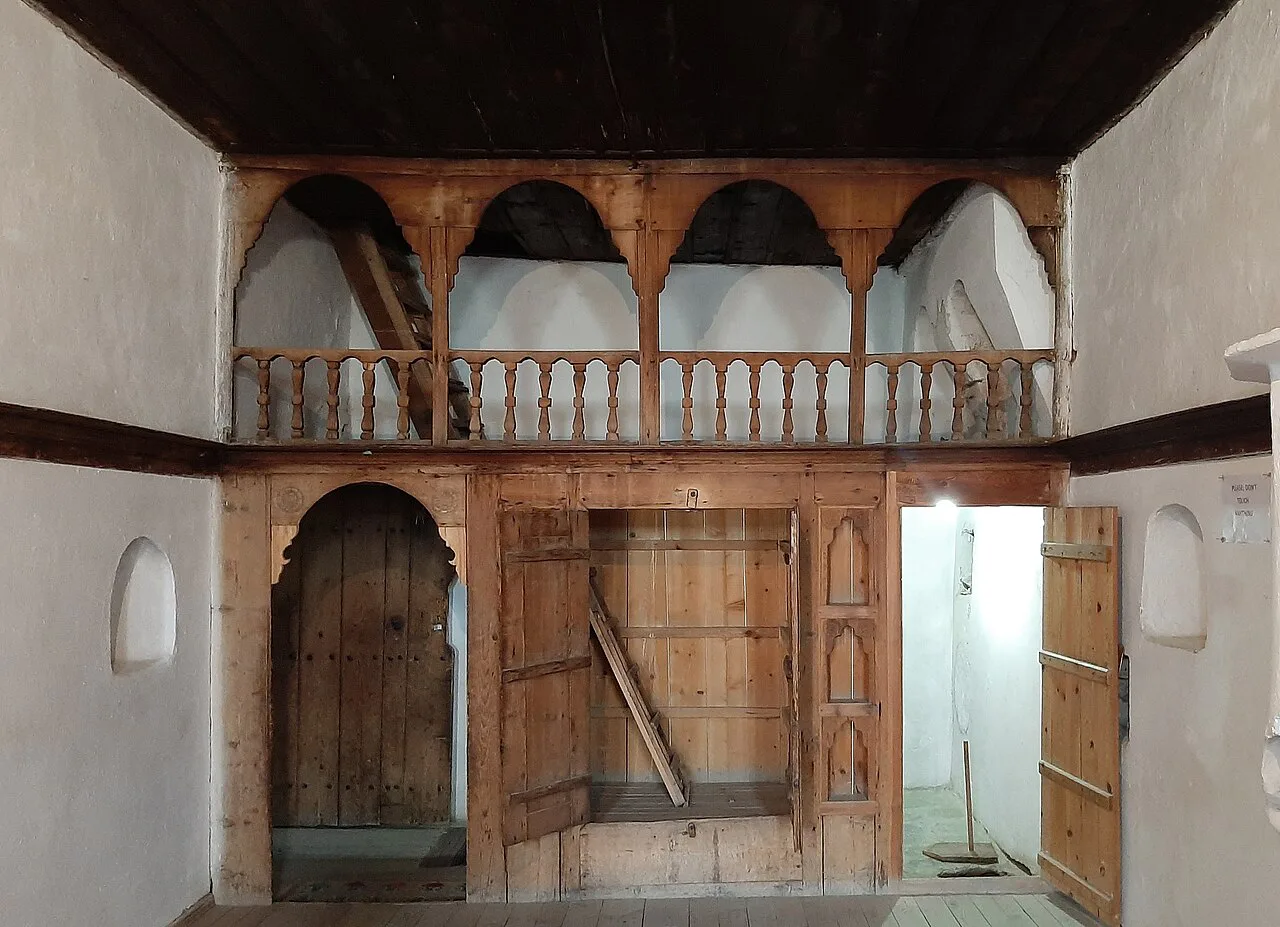
Look up: the painted and carved wooden ceilings are a detail worth noticing, along with the built-in cupboards and niches. Furnishings, carpets and textiles from the 19th century fill the main chambers, and many rooms are preserved in their original shape.
Outside, the surrounding fortified wall is original and measures about 17 metres. It is a good place to pause before heading back in.
Why the original fittings matter
What distinguishes this house from a reconstructed display is that the fabric and many of the objects have stayed with the building. That continuity is the argument for choosing it over a house that has been heavily rebuilt. Come here if you want to see how a merchant family lived rather than how a museum curator would arrange their possessions.
The trade-off is that an unrestored house shows its age: worn floors, uneven thresholds and rooms that are dim inside. That is part of the visit, not a fault, but it means you should watch your footing and give your eyes a moment to adjust at each doorway. Photography without flash is the sensible approach in low light.
Hearing the house's story
When the owner is present, he explains the building, the family and the conservation work himself, and that commentary adds a lot to a short visit. It is not a formal guided tour with a schedule, so treat any explanation as a bonus rather than a fixture.
The house's spell as the town's ethnographic museum under communism is part of its story and worth knowing before you walk in, because it explains why some rooms read as displays. Keep the visit factual and let the family's own account set the tone.
How long you need, and when to go
An hour covers the rooms, the terrace and a conversation if one is on offer; 45 minutes is enough if you move briskly. Pair it with the Ethnographic Museum next door and the castle above for a half day in the old town. Build in extra time for the climb back down, which is slower on cobbles than the ascent.
Go early in the day in summer: the stone lanes hold heat, the climb is exposed in places, and the rooms are cooler before the afternoon. Carry water and a hat for the walk up regardless of the season. Spring and autumn mornings are the most comfortable for the old town's gradients.
Opening hours and tickets
Visit Gjirokastra lists the house as open every day from 09.00 to 17.00, while another listing gives 09.00 to 19.00 Monday to Saturday. Hours can shift with the season and the family's arrangements, so confirm on the day at the door or through the tourist information office before making it your first stop.
Pay at the house and ask the price when you arrive; carry lek in small notes. Do not rely on card payment at the old town's smaller houses.
What is nearby
Gjirokastër Castle, the Kalaja e Gjirokastrës, dominates the ridge above the house and is the obvious next stop, with its Clock Tower and the Cold War Tunnel on the slope below. The Ethnographic Museum and the Old Bazaar are within a few minutes' walk. If you want a second old house for comparison, the Zekate house on the far side of the old town is the usual pairing.
The Old Bazaar has the Bazaar Mosque, Xhamia e Pazarit, at its heart, and the lanes around it are where you rejoin the flat part of town. Beyond Gjirokastër, the Antigonea Archaeological Park looks over the Drino Valley and makes a half-day trip by car. For a wider list of what to see, work through the Gjirokaster Attractions: 8 Visitor Guides.
Access and the lanes around it
The house is not step-free: thresholds, stairs between floors and the cobbled approach all demand care. Visitors with limited mobility should check what is reachable before paying.
Is Skenduli House worth an hour of your day?
Yes, if you want one old Gjirokastër house seen properly rather than several at a glance. The room counts, original fittings and terrace give you a concrete sense of how a merchant household worked, and the position next to the Ethnographic Museum makes it easy to combine with the castle and bazaar. Skip it if stairs and cobbles are a problem, or if your time in town is down to a single afternoon at the fortress.
Check the day's hours at the door or the tourist information office, take small notes for the entry charge, and climb up in the morning before the stone lanes heat through.
Explore more Gjirokaster guides
Frequently Asked Questions
Do I need to book Skenduli House in advance?
Visitors normally turn up during opening hours and pay at the door. If you are bringing a large party or joining a guided walk through the old town, ask ahead through local operators.
Can I take photographs inside Skenduli House?
The interiors are dim, so ask whoever is at the door before photographing the family's possessions.
How much time should I allow at Skenduli House?
Roughly an hour covers the rooms and the fortified wall outside, or about 45 minutes if you move briskly. Add ten to fifteen minutes for the climb up from the bazaar and a little more for the descent on cobbles.