
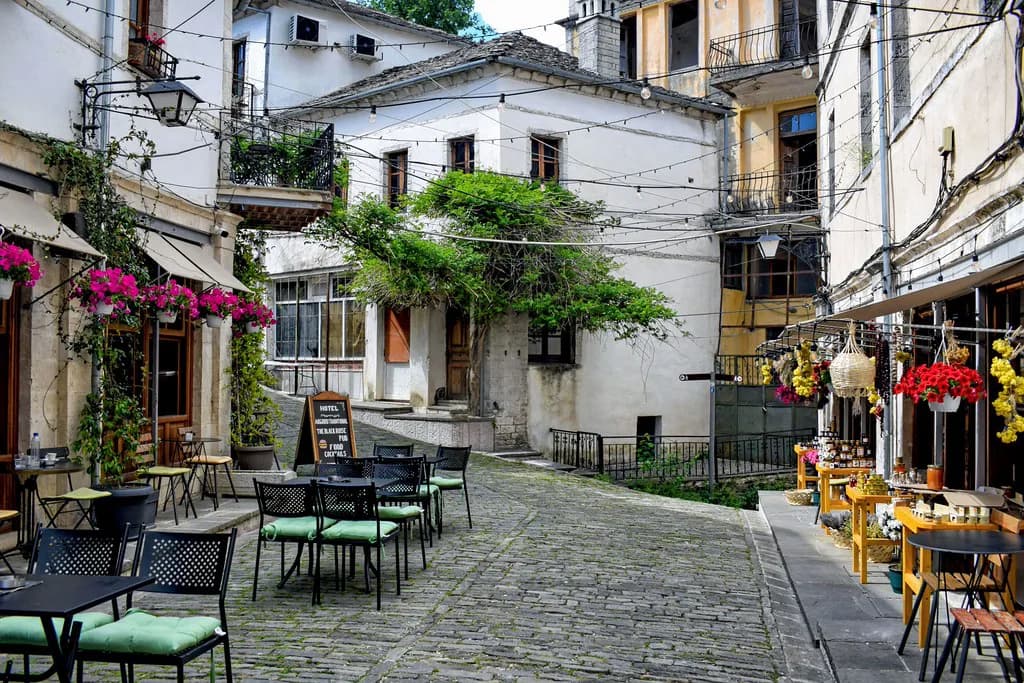
Bazaar Mosque (Xhamia e Pazarit), Gjirokastër
The Bazaar Mosque, also called the Memi Bey Mosque and known in Albanian as Xhamia e Pazarit, is the Ottoman mosque standing by the Old Bazaar in Gjirokastër, with a construction date of 1757. It sits in the middle of the bazaar quarter rather than in a museum, so the natural way to see it is as part of a walk through the lanes below the castle. This guide covers where it sits, how to reach it on foot, what to look for, how long to allow and which nearby houses fit the same walk.
What the Bazaar Mosque is
The building carries the name Bazaar Mosque, from its position in the market quarter, and is also captioned as the Memi Bey Mosque; Albanian signage most often reads Xhamia e Pazarit, so match the Albanian on the plate rather than the English. The mosque is an Ottoman landmark from 1757 and it dominates the old bazaar, the Ottoman market quarter of Gjirokastër. A bazaar walk describes it as the city's only remaining mosque.
Treat it as a short architectural stop on a bazaar walk, not a sight that fills an afternoon. The draw is the setting: a minaret and dome rising above shopfronts and timber upper floors that overhang the cobbles. If you are building a longer list of sights in town, the Gjirokaster Attractions: 8 Visitor Guides set out the castle, the houses and the tunnels as separate visits.
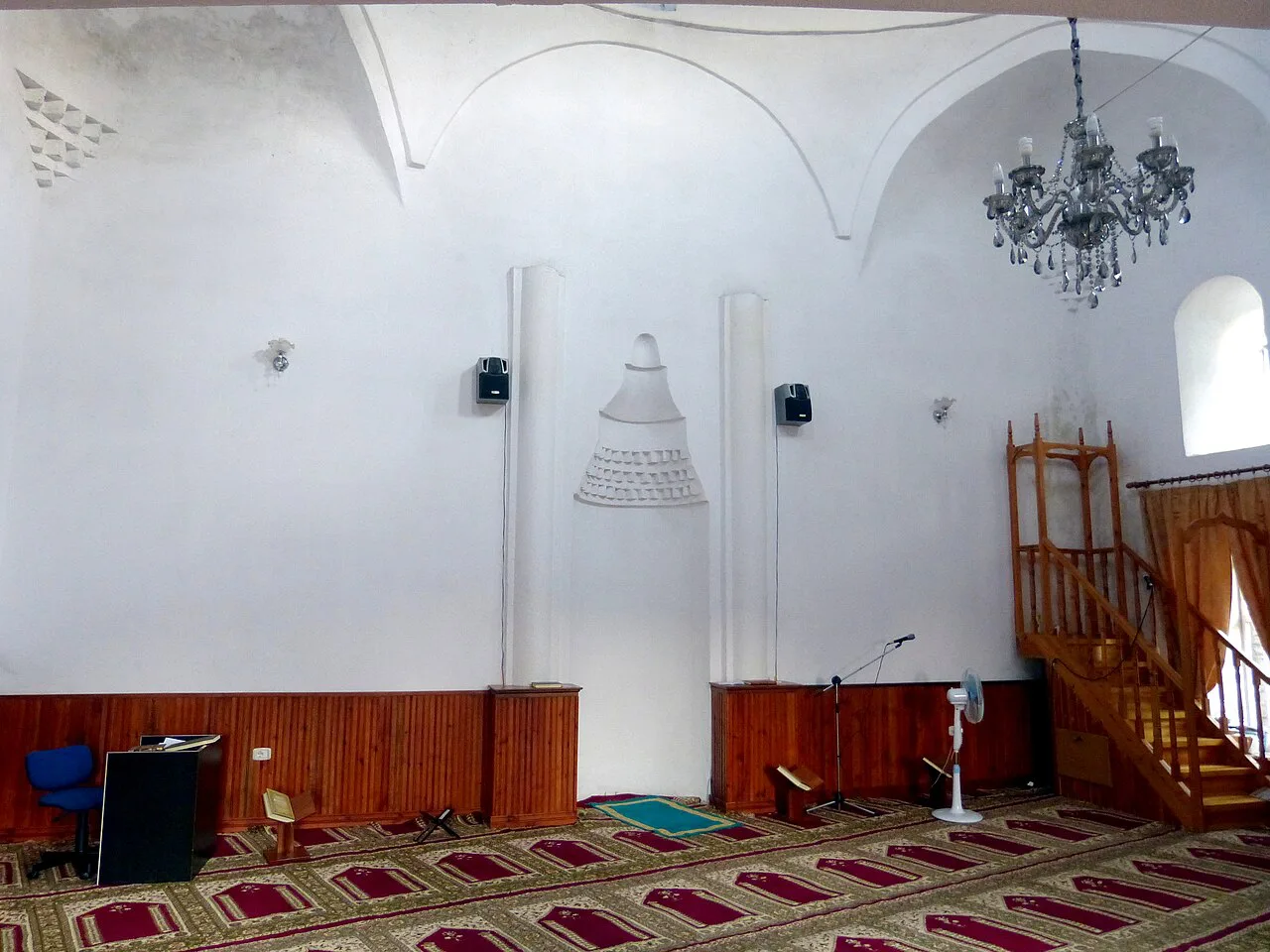

Where it sits in Gjirokastër
The mosque stands in the bazaar quarter, on the hillside between the lower town and the ridge carrying the castle. Gjirokastër's old town climbs steeply up the slopes of the Mali i Gjerë range, and only one stretch of the main road is wide enough for two vehicles to pass. That is the argument for arriving on foot and leaving the car below.
The lanes here lead up and down, around corners and bends, which is why the town is nicknamed the city of a thousand steps. Coming from the castle you descend into the bazaar; coming from the lower town you climb. Either way, allow more time than the distance suggests.
How to get there on foot
From the castle, take the cobbled mountain path down and join Gjin Bue Shpata Street, which leads into the central bazaar where the mosque stands. That route puts the mosque at the end of a downhill stretch, with the shopfronts and cafés of the bazaar around it.
From the lower town or the bus station, the climb is continuous and the surfaces are uneven, so wear shoes with grip rather than smooth soles. If the ascent is the main event of your day, read up on Gjirokastra Castle first and plan the castle for the top of the walk, then come down through the bazaar to the mosque.

What to see around the mosque
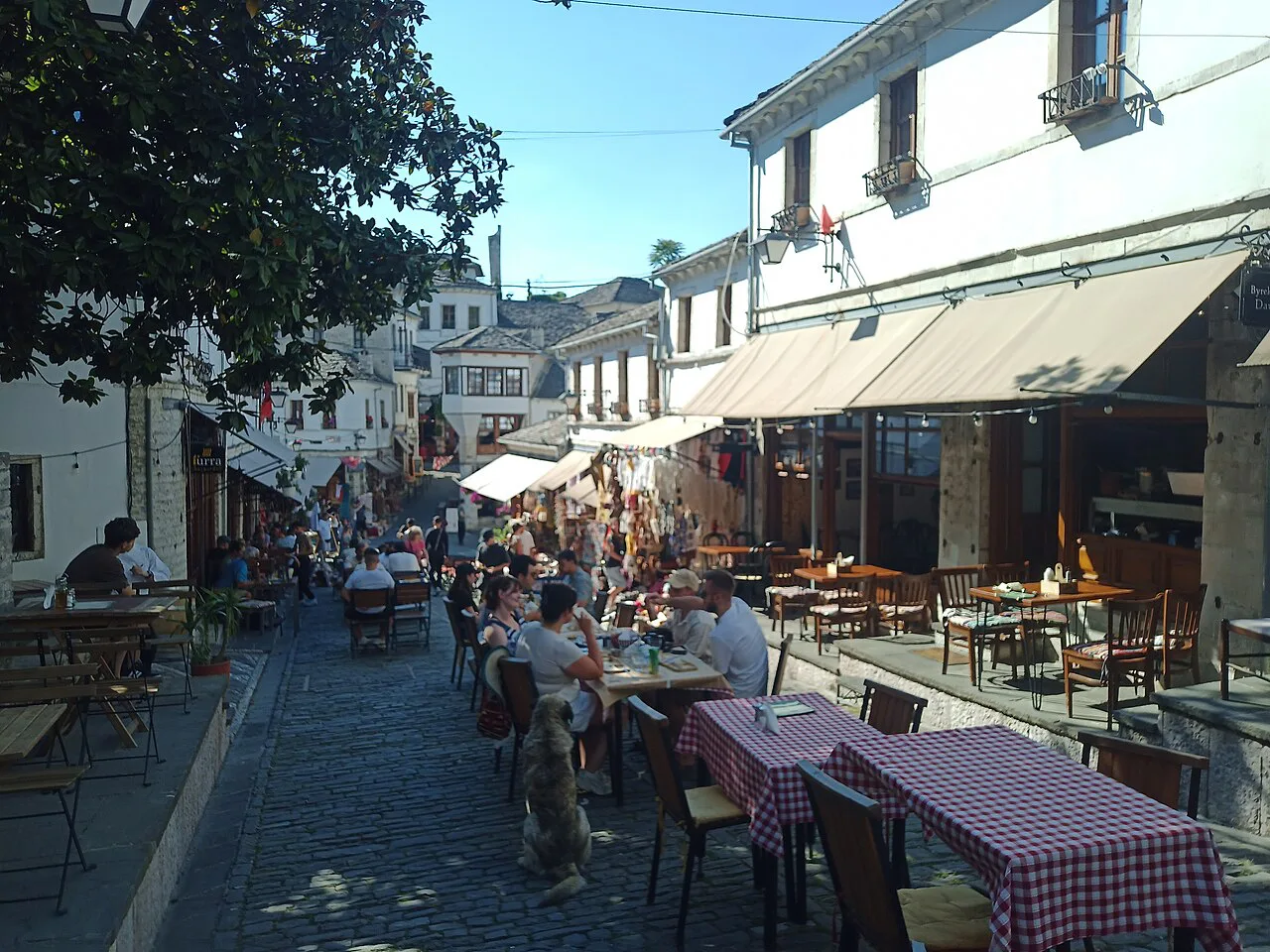
Look for the minaret and dome above the street line, then step back to take in the stone walls against the bazaar's overhanging Ottoman houses, where several upper floors jut out over the lane. Near the mosque you will also find houses with a shop or restaurant at street level and living rooms above, as described on the bazaar walk.
The castle's stone tunnels stay noticeably cooler than the open streets, so in summer it makes sense to see the fortress in the middle of the day and walk the bazaar lanes in the softer hours. The castle courtyard with its cannons gives a clear view back over the old bazaar, which helps you place the mosque before you walk down to it.
How long to allow
Give the mosque itself a few minutes, and the bazaar around it between half an hour and an hour if you want to look into shops and stop for coffee. The realistic unit here is a half-day walk: castle at the top, bazaar and mosque below, one or two Ottoman houses on the way back. The castle's grounds, arches and courtyard reward a slow circuit, so do not compress everything into a single hour.
Dress and etiquette at the mosque
Behave as you would near any place of worship: quiet voices, and if you do go inside, shoes off at the threshold and shoulders and knees covered. Women should carry a scarf in case a head covering is expected at the entrance. If the door is shut or people are praying, wait or come back later rather than walking through.
Whether non-Muslim visitors may go inside on a given day is not fixed, so ask at the entrance or at a nearby shop before assuming you can go in, and keep the visit short if the building is in use.
The bazaar houses that fit the same walk
Skenduli House, built in 1823, is a short walk from the bazaar centre and is one of the Ottoman houses open to the public, with rooms kept largely in their original form and views down over the town from its windows. It sits on a slope, so the approach is uphill from the mosque. The Stone & Eagle page on Skenduli House, Gjirokastër covers what is inside and how to time the visit.
Zekate House, built in 1812, is a fortified tower house of the kind owned by officials and merchants, with a heavy board at the foot of the stairs that could be dropped against intruders. It sits further uphill, so save it for legs that still have energy. Zekate House, Gjirokastër explains the layout room by room.
Ismail Kadare's birthplace, in the Palorto neighbourhood about five minutes from the bazaar houses, is now a museum with family objects and a balcony over the old town. Combine it with the mosque and one house rather than trying to see every interior in a day. The Stone & Eagle guide to the Ismail Kadare House, Gjirokastër sets out the rooms and the location.
Checking access and hours on the day
Opening hours for the mosque are not something to plan around from a distance. Check at the door on the day, or ask at your accommodation in Gjirokastër the evening before, and build the bazaar walk so the mosque is a bonus rather than the fixed point of the morning. For the museums and houses nearby, confirm hours locally too, since seasonal changes are common.
Is the mosque worth the detour?
Yes, as a short stop inside a bazaar walk that also takes in the castle and one Ottoman house. Come down from Kalaja e Gjirokastrës through Gjin Bue Shpata Street, look up at the minaret against the overhanging upper floors, and carry on to Skenduli House.
Explore more Gjirokaster guides
Frequently Asked Questions
Is the Bazaar Mosque the same as the Memi Bey Mosque?
Bazaar Mosque and Memi Bey Mosque are both used for the Ottoman mosque beside the Old Bazaar in Gjirokastër, dated to 1757, and its Albanian name is Xhamia e Pazarit. The Albanian name on the sign is the most reliable thing to match when you arrive.
Do I need a ticket for the Bazaar Mosque?
Treat it as a place of worship rather than a museum and ask at the entrance about going in. Access can be restricted while people are praying, so do not plan the day around getting inside.
How do I walk to the mosque from Gjirokastër Castle?
Leave the castle on the cobbled path down and join Gjin Bue Shpata Street, which runs into the central bazaar where the mosque stands. The descent is steep and uneven, so allow more time than the map distance suggests and wear shoes with grip.