
Zekate House: A Visitor's Guide to Gjirokastër's Ottoman Tower House
The Zekate House is worth an hour of anyone's time in Gjirokastër: a three-storey Ottoman tower house built for a wealthy family, with rooms you can walk through and a decorated reception room at the top. It sits on Rruga Zejtarëve and is reached on foot through the old town's steep cobbled lanes. This guide covers the approach, the floor-by-floor layout, what to look for inside and how to fit it around the castle.
What the Zekate House is and where it stands
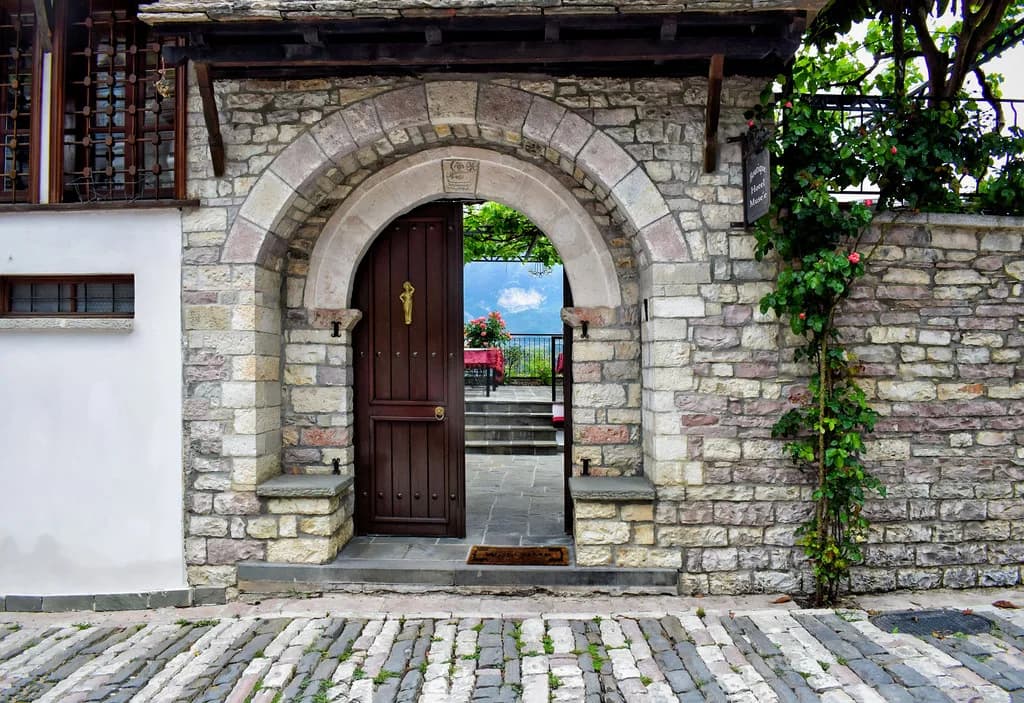
The building is a kullë, the Albanian term for a fortified tower house, and it was built for Beqir Zeko, an administrator under Ali Pasha, in 1811 and 1812, around the same period that Ali Pasha was enlarging the castle above the town. Its heavy walls and two towers reflect a defensive purpose, while the double-arched facade gives the house the grandeur expected of a leading family. The address is Rruga Zejtarëve in Gjirokastër, 6001.
Treat it as a historic house rather than a conventional museum: you are visiting the rooms of a family home, not a gallery of labelled cases. If you are working through the town's sights, it belongs on the same shortlist as the other old-town houses covered in our Gjirokaster Attractions: 8 Visitor Guides.
How to reach the house on foot
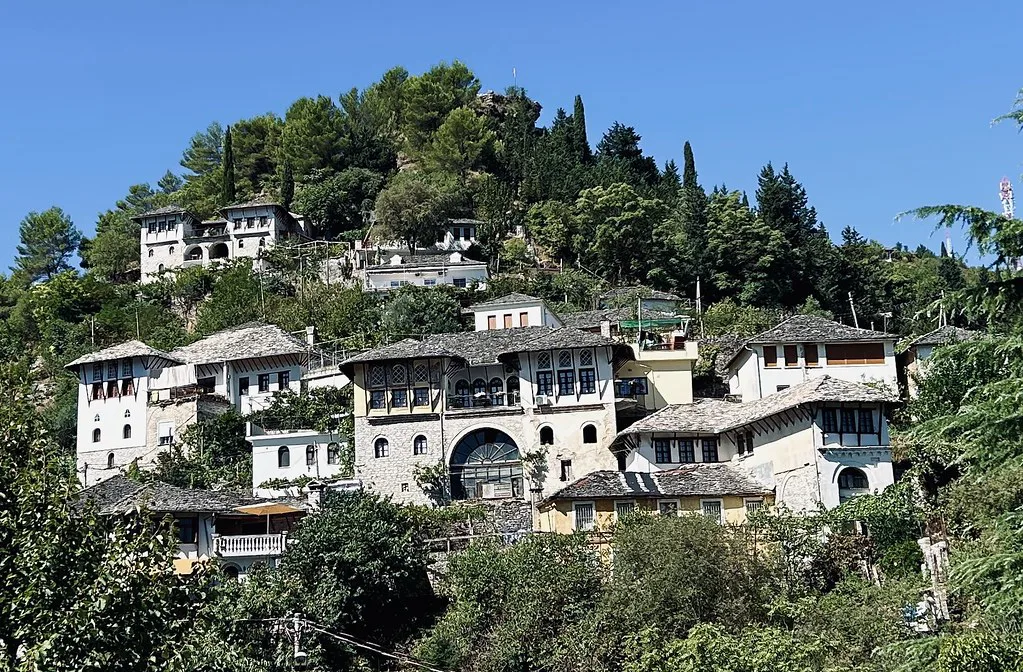
There is no separate vehicle entrance to plan around; the house is approached on foot. Gjirokastër's old town is built on a slope, so the walk in climbs steep cobbled lanes, and the surface is uneven underfoot. Sturdy shoes make the difference here, and the climb is quicker on a cool morning than in the middle of a summer afternoon.
Use Rruga Zejtarëve as your navigation point rather than a house number, because the lane is the practical landmark in a quarter of stone houses. Most visitors arrive on foot from the bazaar and old-town lanes below. If you are coming from further out, ask your driver or host to drop you at the edge of the old town and walk the rest of the way.
The layout: ground floor, family floors and the reception room
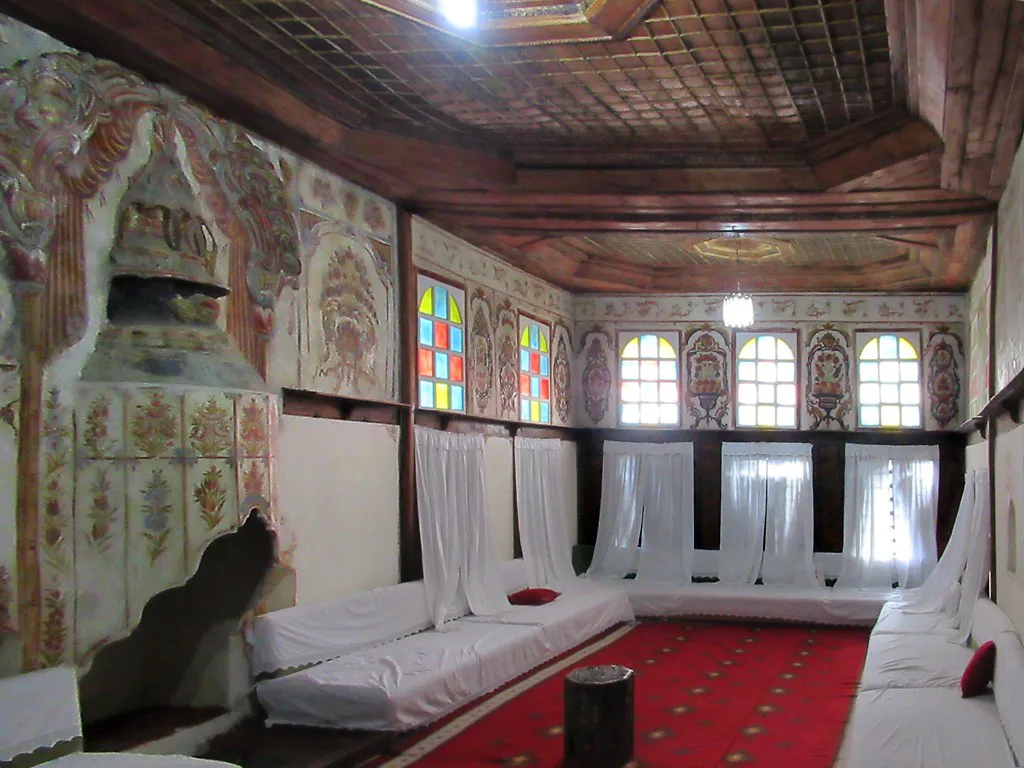
The ground floor held the working parts of the household: storage rooms, a kitchen and a cistern. The first floor provided living quarters for different branches of the family, which tells you how a large extended household was housed under one roof. The third floor is the one to linger in, with a grand reception room decorated with frescoed walls, a carved ceiling and an ornate fireplace.
Knowing this order helps you read the building as you climb: service below, family life in the middle, display and hospitality at the top. The interior is compact, so working upwards gets you through every floor without doubling back.
What to look for inside: frescoes, carved ceiling, Oda and çardak
The Oda and çardak in the centre of the house are the features to slow down for, decorated in the traditional Albanian manner and giving a sense of how the household received guests and organised its daily life. Look up at the carved ceiling in the reception room, then at the painted walls around it; both are the work that gives the interior its character. The fireplace anchors that room and is worth a close look.
The upper floors and the location together give views over the river valley, so leave time to look out rather than only at the decoration. The house is a grand example of the tower-house type built by Gjirokastra's wealthiest families in the 19th century.
How long to allow and when to go
The interior is compact, so an hour covers it comfortably, including time in the reception room and at the windows. That makes it easy to slot in before or after the castle rather than making it the day's main outing. Add extra time for the walk up and down the cobbled lanes, which is its own stretch of the visit.
Walking tours that combine the bazaar, the castle and the Zekate House run to just under three hours, which gives a guide's pace for all three together. If you are covering the town on foot without a guide, budget a half-day for the castle and one or two houses, and see our Gjirokastra Castle guide for the castle itself.
Tickets and opening hours
A walking tour review from 2018 reports the house entrance at 250 lek, which is a historical figure rather than today's rate. Ask the price at the door when you arrive, and carry cash in lek.
Opening arrangements for a historic house can change from week to week, so confirm the day's opening before you climb the lanes, either with your host in town or by asking at the door on the way past.
What's nearby: castle, mosque and old-town lanes
Gjirokastra castle, the Kalaja e Gjirokastrës, sits above the town and is the natural next stop after the house. Pair the two and you have the core of the old town in a morning.
For another house interior on the same scale, the Skenduli House, Gjirokastër makes a good comparison, with a different arrangement of rooms and its own decoration. Seeing both helps you understand how these houses varied between families.
The Bazaar Mosque, Xhamia e Pazarit, stands in the bazaar quarter on the walk between the lower town and the old-town lanes, so it fits naturally into the same circuit. The Cold War Tunnel is another town-centre stop if you want to add a 20th-century chapter to a day of Ottoman houses.
Should the Zekate House be on your Gjirokastër shortlist?
Yes, if you want to see how a wealthy Ottoman-era household in Gjirokastër actually lived, room by room. It is a small interior, so it rewards interest in architecture and domestic detail more than a quick tick-box stop. Allow an hour, wear shoes that grip cobbles, and ask about entry at the door.
Build the day around the castle and add the Zekate House on the way down, then compare it with the Skenduli House, Gjirokastër if you have the appetite for a second interior. Our Gjirokaster Attractions: 8 Visitor Guides covers the wider set of stops if you are planning more than one day.