
Gjirokastra Castle: what to see, tickets and how long to allow
Gjirokastra Castle is worth the climb for the clock tower, the prison cells, the weapons collection and the view over the valley, and most visitors need somewhere between one and three hours inside. The entrance fee is 400 ALL or 4 euros, with cheaper rates for groups and reduced admission, and the gates keep longer hours from April to September than in winter. This guide covers the walk up from the centre, the seasonal hours, what the ticket includes, the separate museums inside the walls and what sits within easy reach below the fortress.
What Gjirokastra Castle is and where it sits above the town
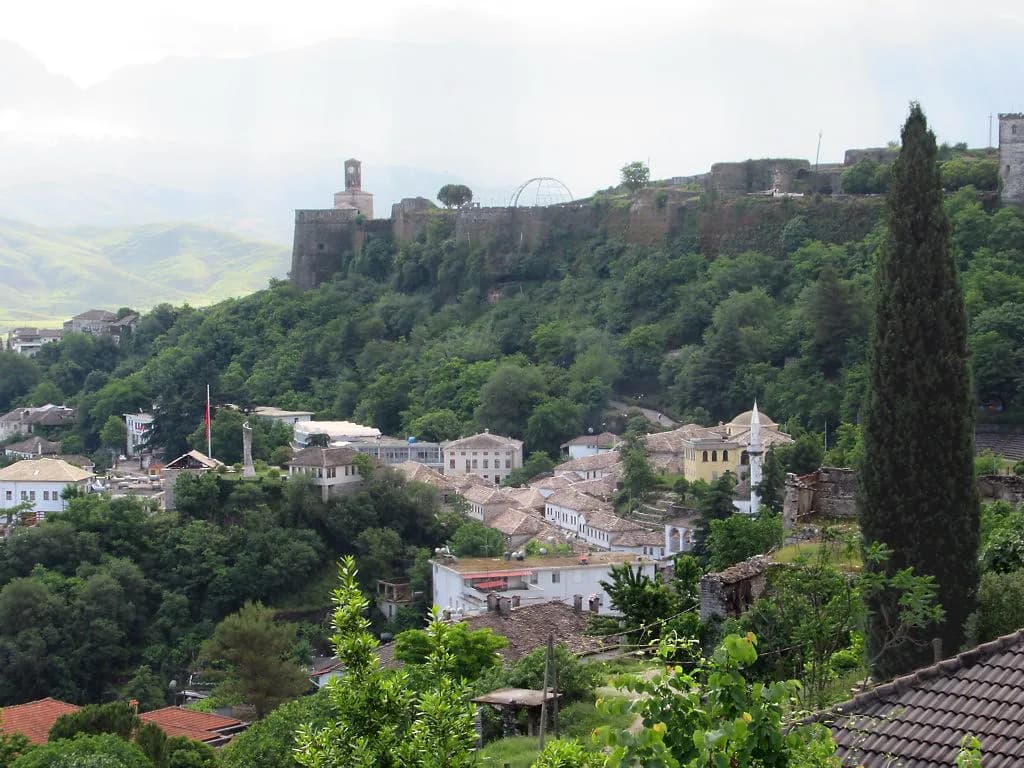
The fortress stands on the hilltop directly above the old town, on Rruga Elvia Celebi, and you can see it from the centre of Gjirokastër, so finding it is a matter of walking uphill rather than following a complicated route. Much of what you walk around today dates from the early 19th century, when Ali Pasha of Tepelena had the fortifications rebuilt and expanded, although the first walls on the site are dated to the 12th and 13th centuries. It is among the larger castles in the Balkans, which is part of why the grounds take longer to cross than the entrance suggests.
The old town below the walls is a UNESCO World Heritage Site, a preserved Ottoman settlement of stone houses with slate roofs, and the castle is its high point rather than a separate excursion. The town sits in a valley between the Gjerë mountains and the Drino river, so the fortress looks down on both.
For the rest of the town's sights, from the bazaar to the Ottoman houses, see the wider collection of Gjirokaster Attractions: 8 Visitor Guides before you fix your order of stops.

Getting up to the castle on foot from the centre
The climb is short but steep, and that effort, not navigation, is the real decision. One walked route from the centre measures about 820 metres, climbs roughly 97 metres and takes around 26 minutes at an unhurried pace, and the stone lanes are uneven underfoot. Wear shoes with grip rather than smooth soles, and carry water in summer, when the exposed sections heat up quickly.
Because the castle is visible from the centre, you can simply head uphill and join one of the tracks to the gate, or ask for the Kala, the local word for castle. Allow extra time on the way down, when polished cobbles are more slippery than on the ascent.
Opening hours by season
From April to September the castle opens from 09:00 to 19:00, and from October to March the day shortens to 09:00 to 17:00. The winter closing time is the detail that decides your plan: a late-afternoon visit works in summer but not between October and March, when you want to be at the gate by mid-afternoon to have a proper look.
A morning slot gives you cooler air for the climb and softer light for photographs across the valley, while the last two hours before closing are usually quieter. Check the gate times for your dates before you set out, since public holiday arrangements can differ.
Ticket prices in lek and euros
Standard admission is 400 ALL or 4 euros. Groups of 12 or more pay 300 ALL or 3 euros each, and a reduced rate of 200 ALL or 2 euros applies to people with disabilities and older visitors.
Tickets are paid for at the entrance when you arrive, so budget to settle up at the gate rather than in advance. Carry lek in cash as a sensible default, and note that the museums inside the walls are priced separately from the main gate.
What to see inside: the Clock Tower, the grounds and the views
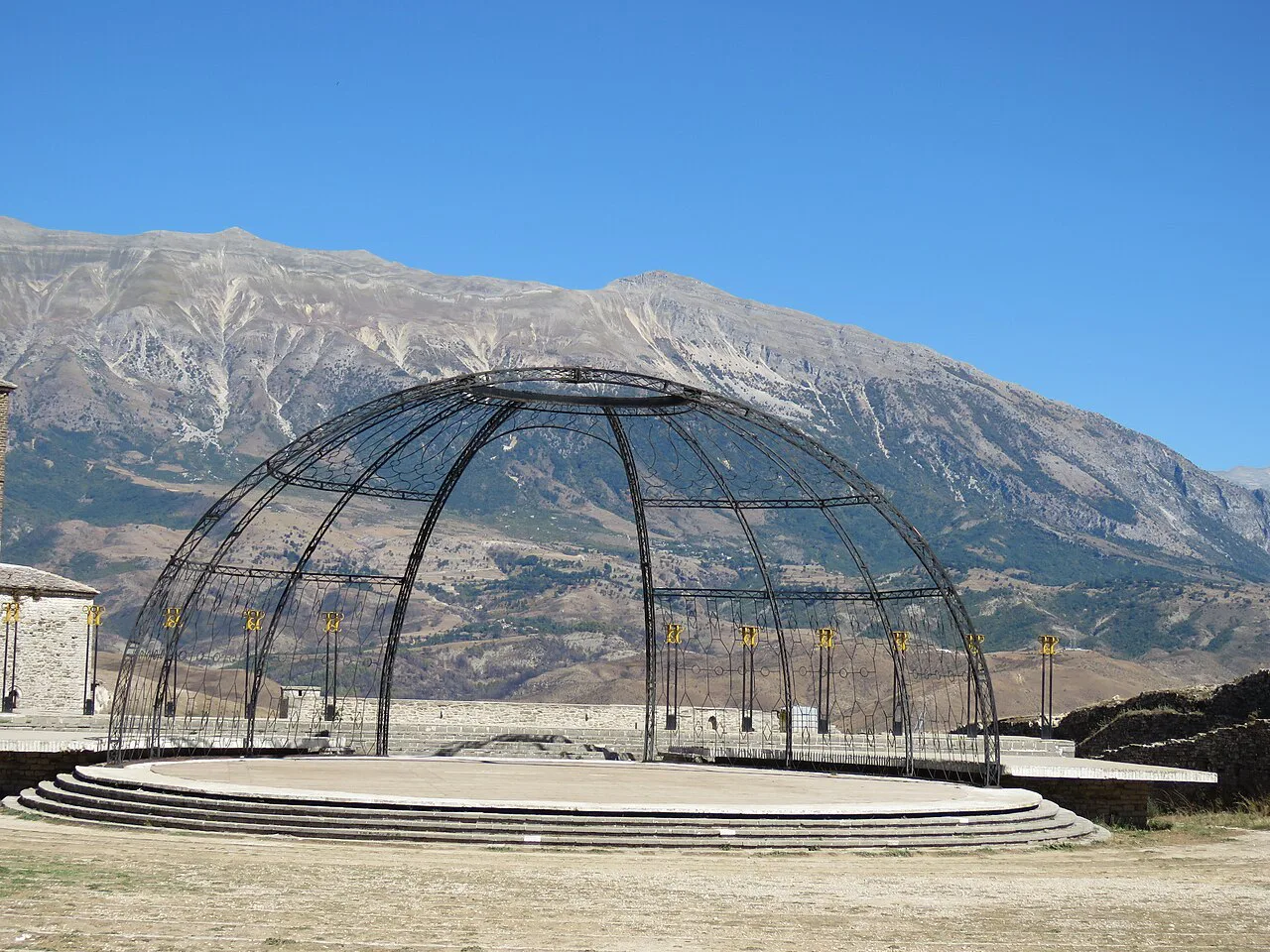
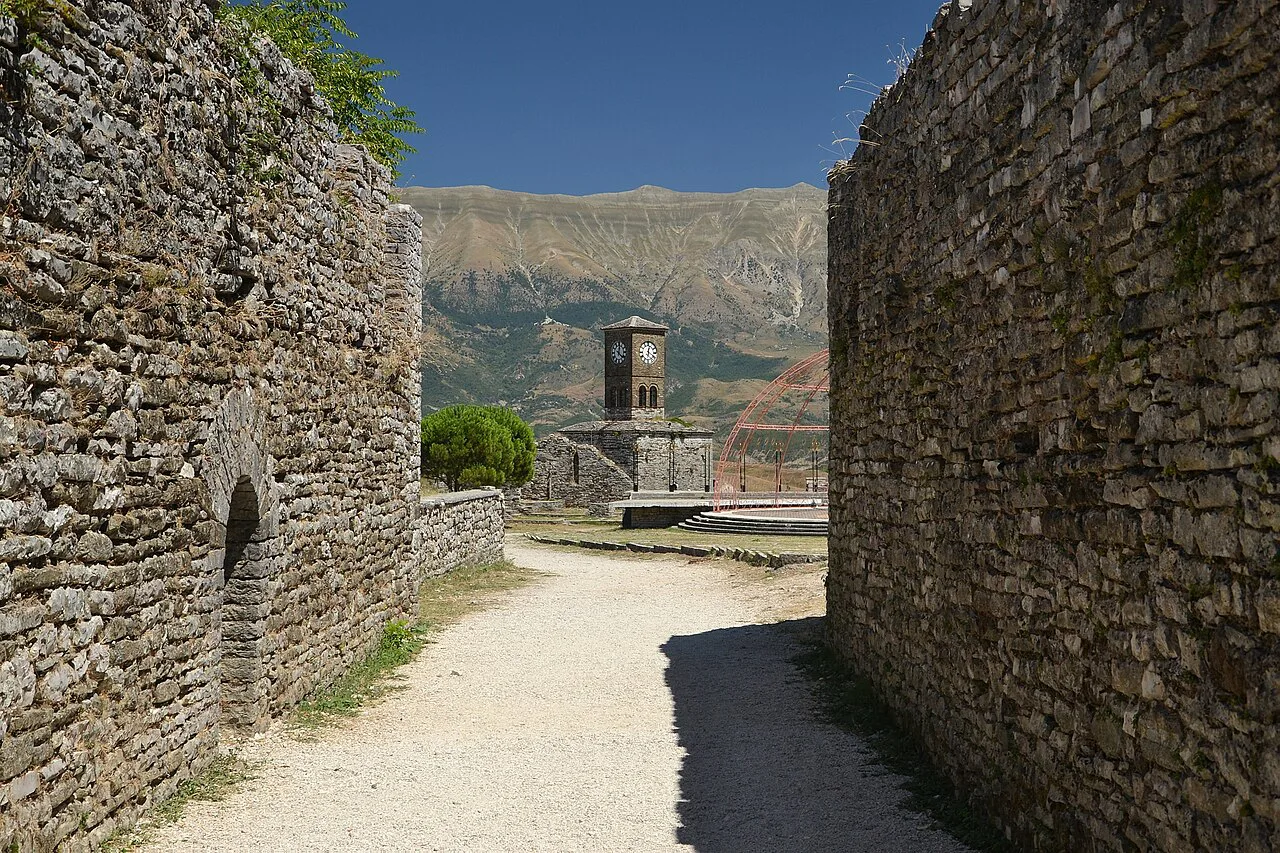
Inside the walls the Clock Tower is the landmark to head for first, and the ramparts give a long view over the valley, the town's slate roofs and the mountains beyond. The grounds also hold a festival scene, linked to the National Folk Festival that has been staged in the castle. Budget time simply to walk the perimeter, because the distances inside are deceptive.
The prison and the Museum of the Castle
The castle served as a prison during the communist period, and those cells now form part of the Museum of the Castle rather than a separate site. The same museum holds a collection of arms from the First and Second World Wars and a pavilion covering the history of Gjirokastra. Read the cells as a historical record and give them quiet time rather than treating them as a photo stop.
One traveller's account describes vaults displaying heavy artillery captured from German and Italian forces in the Second World War, with the clock tower above them. The same account notes that the exhibits carry little labelling, so a museum visit rewards patience more than quick reading.
The US Air Force jet on the castle grounds
A recovered US Air Force jet stands on the castle grounds, and how it got there is told in competing versions. One account says it was forced down in 1957 during the Cold War; another says the aircraft had mechanical trouble, went off course and landed at Rinas airport, after which the pilot returned to the United States. Treat the story as the castle presents it rather than as settled fact, and look for the display alongside the aircraft.
How long to allow and whether it is worth the time
The information board at the entrance suggests one hour, and a thorough visit with the museums runs to the best part of a morning or afternoon. If you only walk the walls and climb the Clock Tower, an hour is realistic; add time for the prison cells, the arms collection and the jet.
The trade-off is between breadth and depth. A brisk stop of around 45 minutes covers the main viewpoints and the jet, while two to three hours lets you read the museum displays properly and still walk down to the bazaar without rushing.
What is nearby: the bazaar streets and the stone houses
Below the walls, the bazaar is a compact grid of about five streets packed with shops, cafés and restaurants, and it is the natural place to stop after the descent. It is busy and touristy in season, but the lanes are the most direct route back into the old town.
The hillside between bazaar and castle is lined with stone houses under grey slate roofs, most of them from the first half of the 19th century, and a few have been turned into museums with modest entrance charges. Two worth planning around are the Skenduli house, whose rooms show how a wealthy Ottoman-era family lived, and the Zekate house, a short walk from Gjirokastër Castle on the opposite slope. Both pair naturally with a castle morning rather than a separate day.

Is the castle worth the climb for you?
Climb if you want the Ottoman fortifications, the prison cells, the weapons display and the widest view in town; skip it only if steep stone lanes and a couple of hours on your feet do not suit your day. Go early in summer, keep an eye on the winter closing time, and carry cash for the gate and the museums inside. Pair the visit with the bazaar and one of the stone houses to make a full morning of the old town.
Explore more Gjirokaster guides
Frequently Asked Questions
Do I need to book Gjirokastra Castle tickets in advance?
Tickets are bought at the entrance when you arrive, and the castle's own visitor page lists nothing to reserve in advance. Group rates apply from 12 people upwards, so larger parties should plan to pay together at the gate.
Can I visit the castle in winter?
Yes, the castle opens all year. Hours are shorter from October to March, closing at 17:00, compared with 19:00 from April to September, so start your climb early enough to finish before the gate shuts.
Are the museums inside the castle included in the entrance fee?
No. The main gate has its own admission, and the museums inside the walls charge separately. The Museum of Armaments was priced at 200 lek in 2019, which is historical rather than a current figure, so confirm the day's charge at the ticket desk.