Saranda Old Town: What to See and How Long to Allow
Saranda old town is a seafront core around the bay, with a long promenade, shops at Kodrra and Lëkurësi Castle above it. Here is how it fits together.
On this page
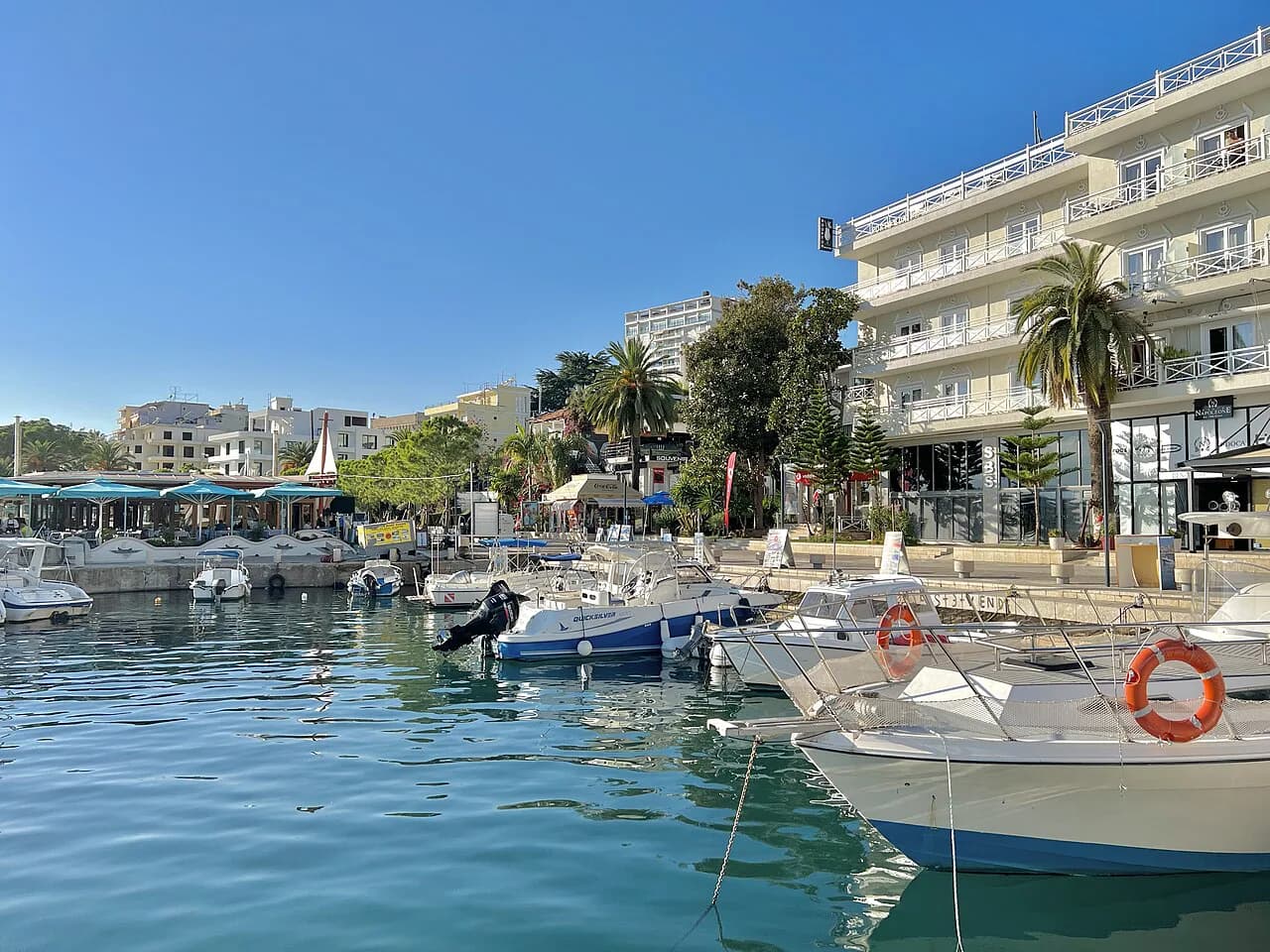
Saranda old town is not a walled Ottoman quarter. It is the walkable seafront core around the bay: a pedestrianised front, a compact centre of shops and cafés, and the Kodrra area behind it, with Lëkurësi Castle on the hill above. This guide sets out how those parts fit together, what each is like on foot, and how long to allow, so you can plan a route rather than wander between concrete blocks wondering where the old town starts.
The town sprawls a long way down the coast, and the part visitors mean by Saranda old town sits at the northern end. Staying or starting there keeps the promenade, the shops and the main public beaches within walking distance, and gives you a sensible base for day trips to Butrint, Ksamil and the Blue Eye.
How Saranda is laid out: bay, centre and Kodrra
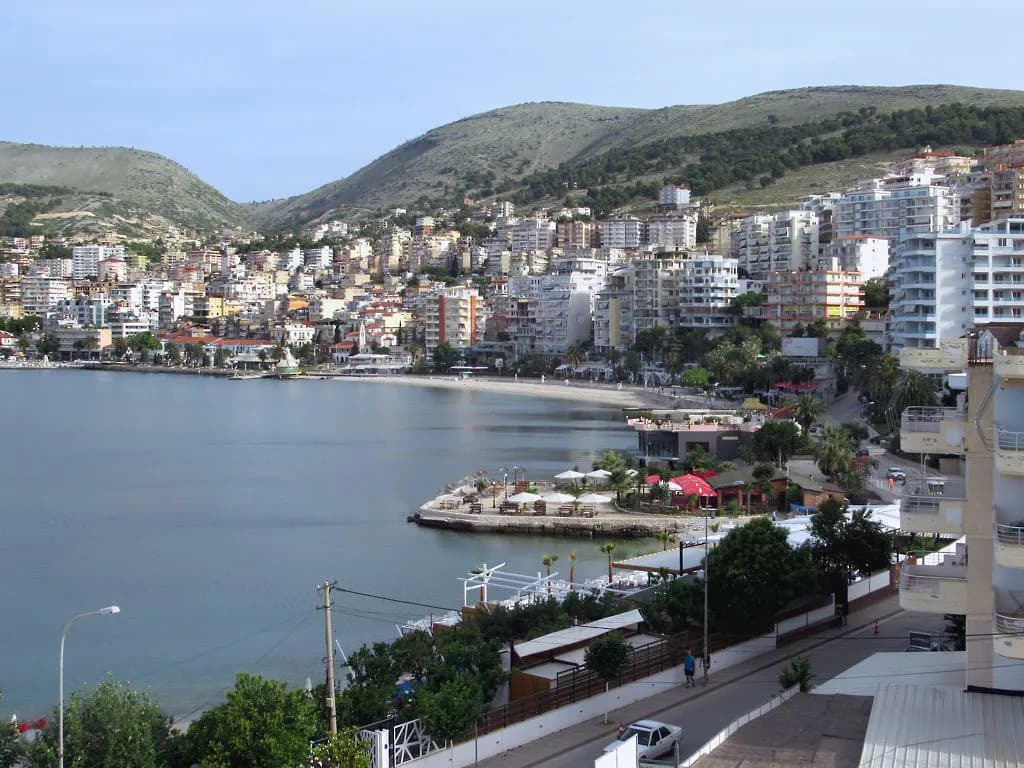
Think of Saranda in three bands running back from the water. The bay edge carries the promenade; one or two streets inland is the commercial centre with its shops and restaurants; and further up the slope is Kodrra, the area the town's bigger supermarkets, barbers and nail salons cluster in. The land flattens as you approach Kodrra, so a place a little back from the beach can still be an easy walk, though usually without the sea view.
The hillside matters more than a map suggests. Apartments two or three roads above the beach have the views precisely because the gradient is steep, which is hard work with small children or for anyone with mobility issues. Check the slope on a street-level view before you commit to an address, and favour the first or second road back if in doubt.
The southern stretch towards Mango Beach is where a lot of newer holiday apartments sit. The restaurants and grocery stores down there are largely shut outside the high season, so the centre is the safer choice for a stay that runs from autumn into spring.
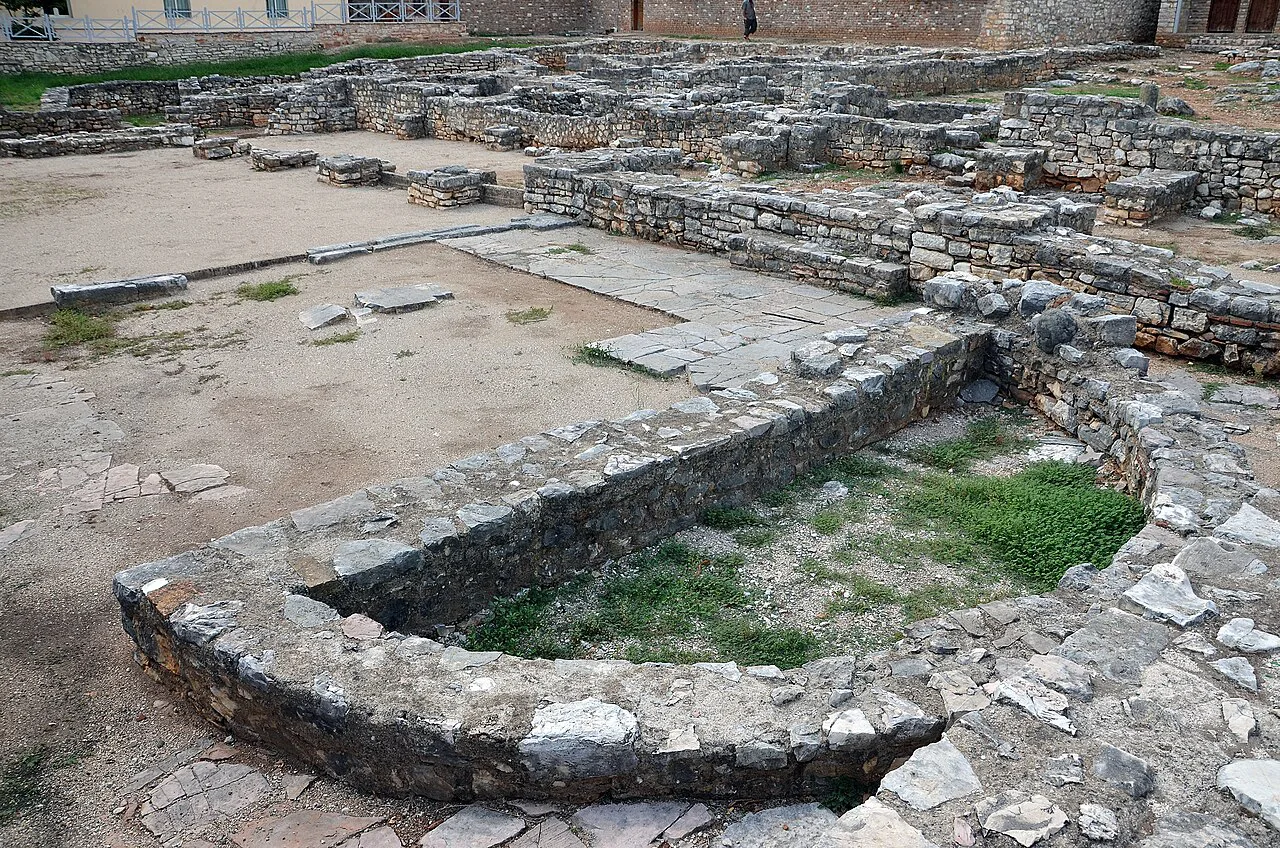
Walking the promenade
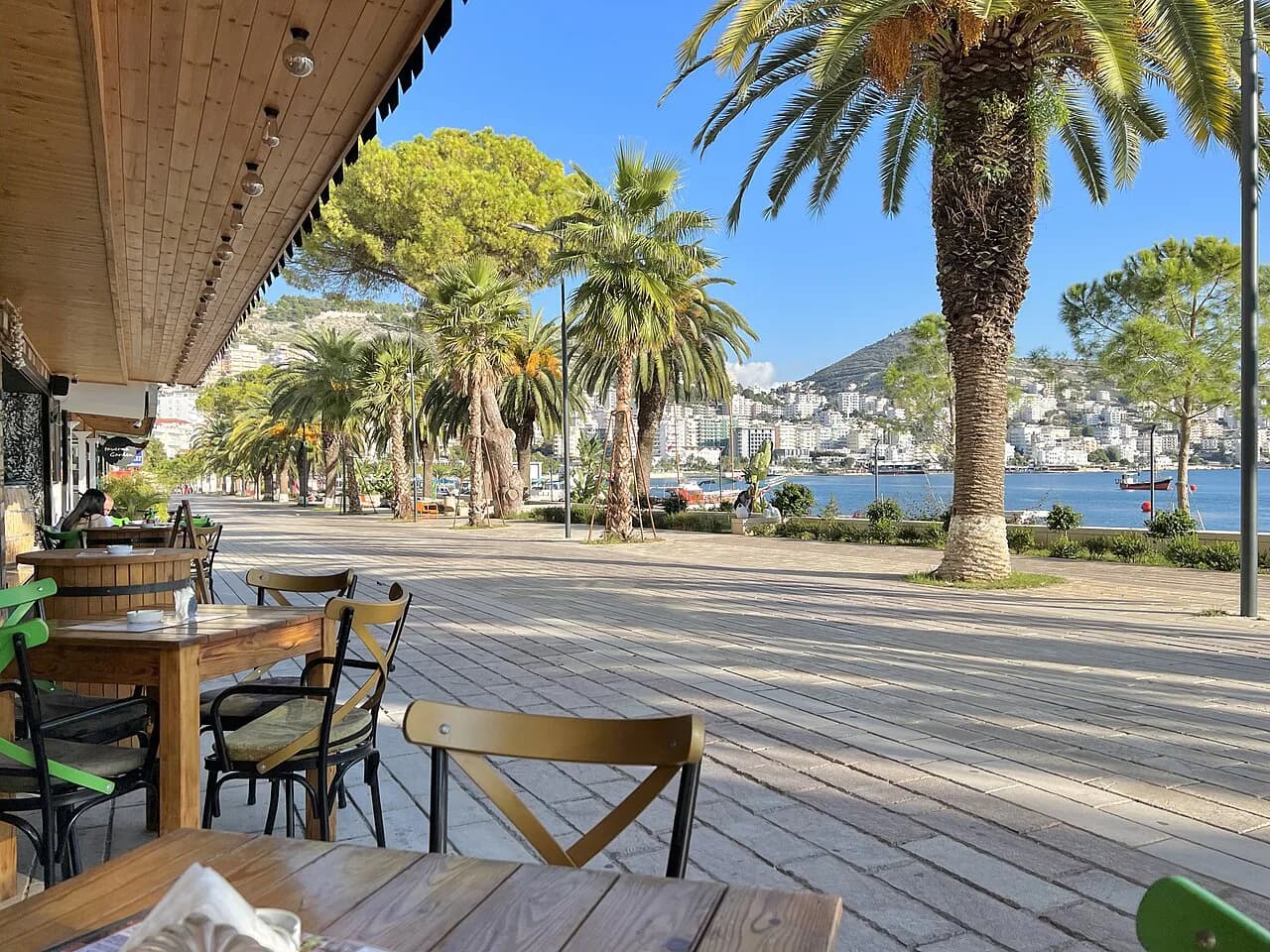
The promenade runs for over a kilometre along the bay, lined with restaurants, cafés, bars, hotels and shops. Early morning is the quietest and most interesting time: fishermen land their catch and locals bargain over it before the cafés fill. Evening brings the sunset crowd and a slower stroll.
Café culture governs the pace here, and you will see people sitting over an espresso at almost any hour. Walk the full length once to get your bearings, note the places that appeal, and treat the front as your orientation line for everything else in the centre.
For eating, the promenade and the streets behind it cover most moods, from the restaurants at the centre of the front to smaller places at the far end. It is worth deciding where you want to eat before the evening peak rather than queueing on spec.
The shopping streets and what Kodrra means for your position
Kodrra is the town's day-to-day shopping district rather than a sight in itself: bigger supermarkets, practical services and the kind of shops locals use. If you are staying near it you are in the flat part of town and can walk to the front without climbing. If you are near the water, Kodrra is the place to go for anything the seafront shops do not stock.
The town is not car-friendly, with parking extremely limited, so rent a car for trips out of Saranda rather than for getting around the centre. Plot the parts you want on a Saranda map before you walk them, and you will see how quickly the seafront gives way to a steep hillside.
Beaches in town
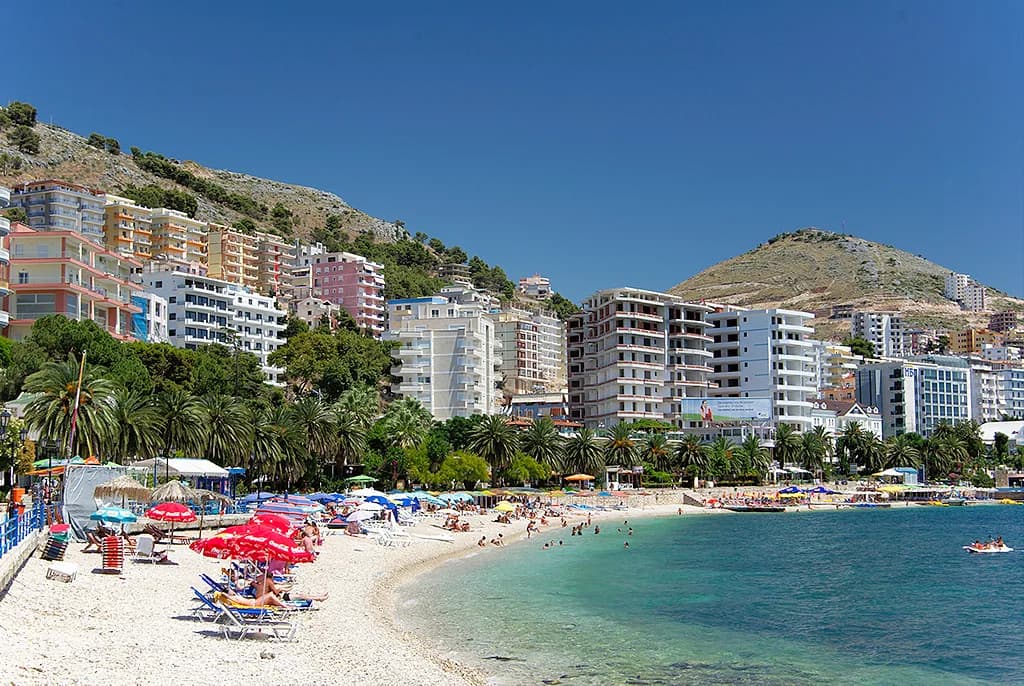
The map pin for Saranda Beach is only the smaller of two big public beaches; the second stretch lies on the opposite side of the pier. Both are pebbly rather than sandy and hard to miss if you are staying in the centre. You do not need to buy anything to use them, though people may offer umbrellas and chairs for hire in summer.
Flamingo Beach and Plazhi Era are among the other small beaches within the town itself, all pebble or rock underfoot. Further south, Mango Beach is a big, roomy pebble beach with a view back to the town, convenient if you are staying at that end, though the water can be less clear after heavy rain because the river enters the sea nearby.
Between the second public beach and Mango Beach, hotels and beach clubs dominate, renting umbrellas by the day. One long-staying visitor reported about 1,000 lek as the going rate, but it is not a fixed tariff and can climb in high summer.
Lëkurësi Castle above town
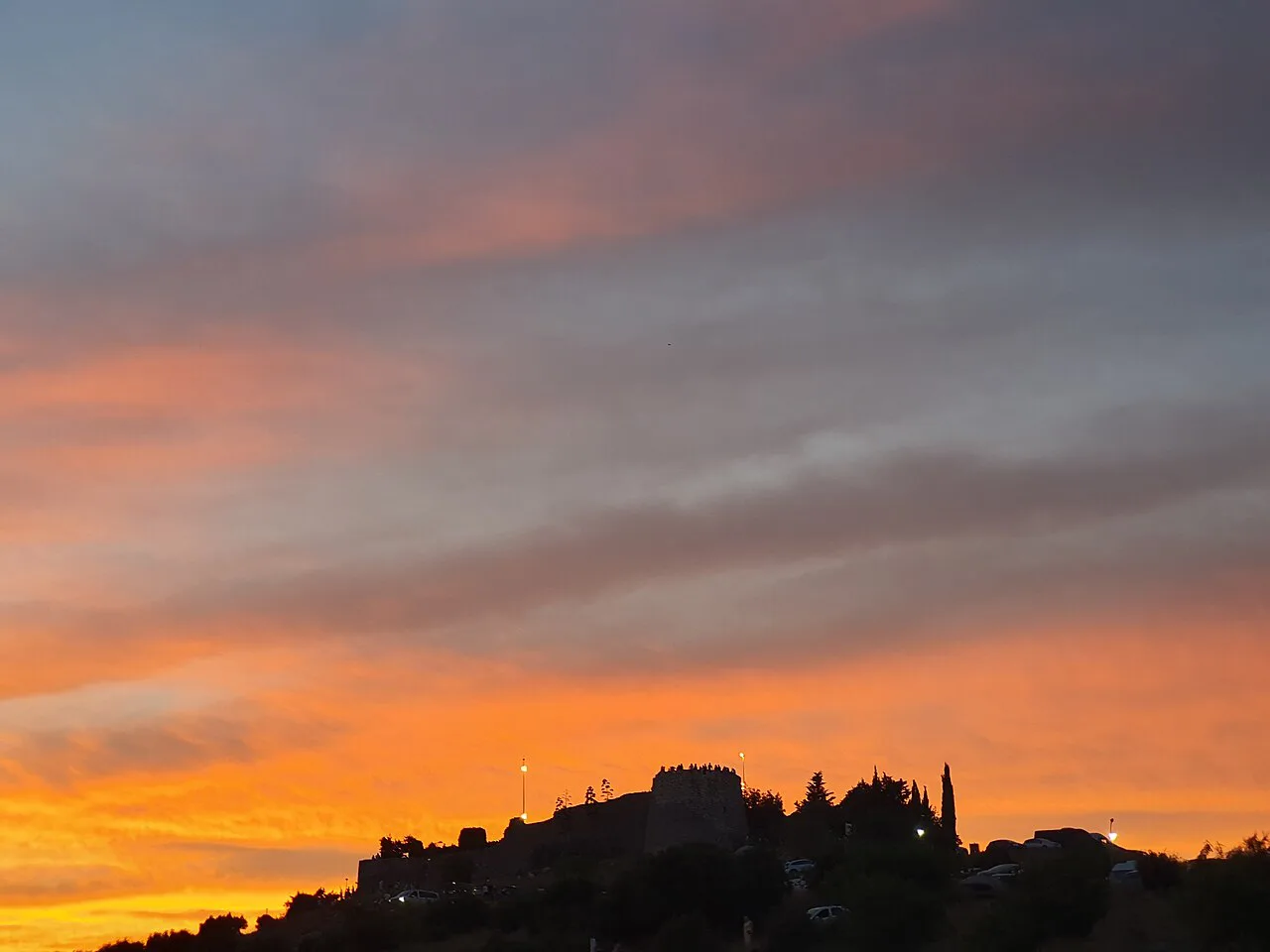
Lëkurësi Castle sits on the hill above Saranda and takes roughly 30 to 40 minutes to reach on foot from the centre. The climb is the point as much as the ruin: the view takes in the town, the bay and the water towards Corfu. There is a restaurant by the castle and others along the road up, and the castle's own visitor arrangements are best confirmed before you set out.
On the way up, places such as Natyra make a reasonable stop for a coffee and a view over the valley. If the walk is too much in summer heat, a taxi up and a slow descent is a fair compromise.
Forty Saints Monastery: the ruin on the hill
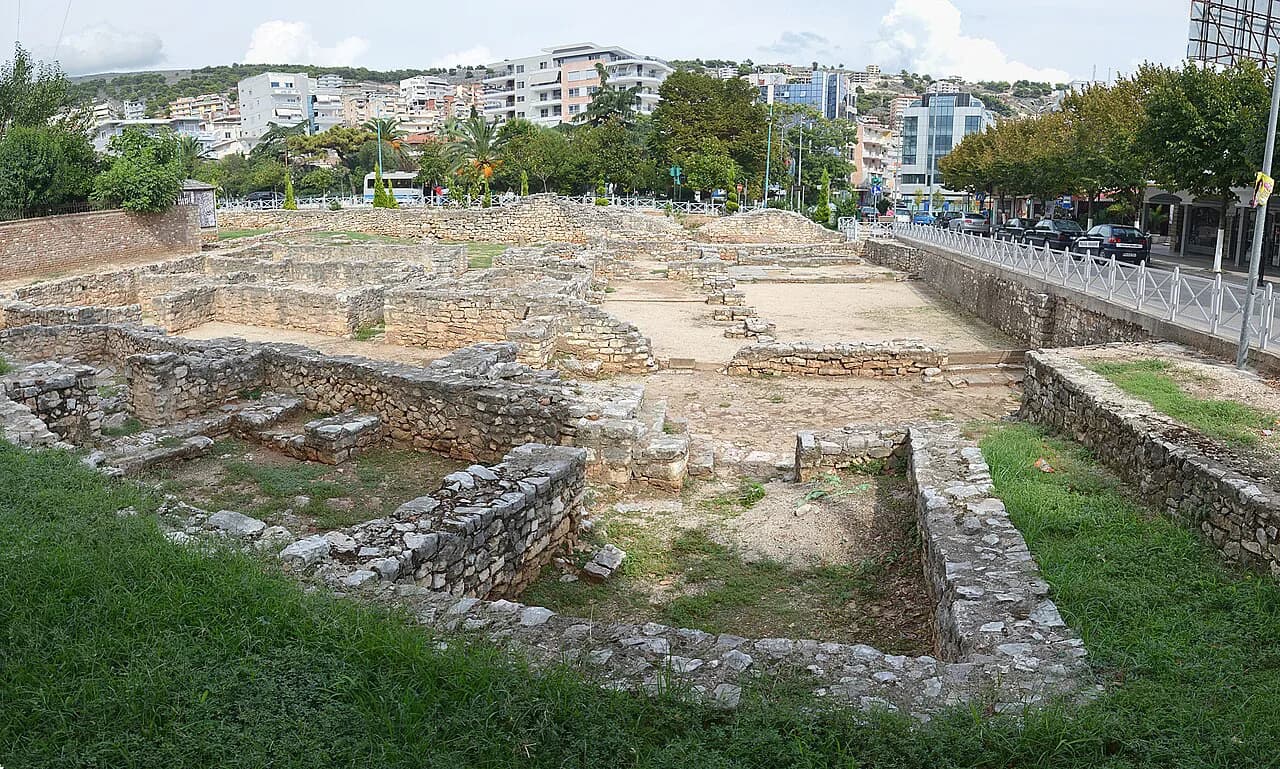
The ruins of the Forty Saints Monastery, an Eastern Orthodox foundation, sit on a hilltop with wide views over Sarandë. What survives is fragmentary, so treat it as a viewpoint with historical layers rather than a standing monument you tour room by room.
It pairs naturally with the castle on a half-day loop above town, and the walk between the two gives you the best sense of how Saranda sits in its landscape.
Butrint and the lake: the day trip that belongs with a stay
Butrint National Park and its archaeological site make the obvious day out from the centre, and you can add a boat ride on Butrint Lake to see Ali Pasha's castle from the water. Ksamil's beaches are a short bus ride further on, and the Blue Eye spring is the other standard excursion inland. For a wider shortlist, see our guide to the Things to Do in Saranda.
Local buses run to Ksamil and Butrint from Saranda, and bus travel is inexpensive. Services change with the season, so confirm times for your dates rather than relying on a printed schedule.
Getting around on foot, by bus and by car
The centre and promenade are walkable, and that is the right way to see Saranda old town. For Corfu, ferries cross in around half an hour and run year-round, though crossings are more frequent in high season. That makes Corfu a realistic day trip, but research crossing times before booking flights.
From Tirana, the bus takes roughly five to seven hours and the drive around four, along winding roads. Coming via Corfu and the ferry is usually quicker than the long run down from the capital.
Heat, pebbles and crowds: the trade-offs
Summer brings heat and crowds, especially in July and August when visitors arrive from the Greek islands. The town's beaches are narrow and pebbly rather than sandy, and the main strip is lined with concrete apartment buildings and tourist bars. If you want soft sand, you go to Ksamil; if you want a walkable base for southern Albania, you stay here.
Shoulder seasons are the better bet for the centre: March to June and September to November. Litter is a real issue in places and the town can feel chaotic in peak summer, so plan the promenade and castle for the cooler ends of the day.
How long Saranda old town needs
Give the centre a half day to walk the promenade, cut through Kodrra and swim at one of the town beaches. Add a morning or late afternoon for Lëkurësi Castle and the Forty Saints Monastery, and you have a full day without leaving town.
Beyond that, Saranda works best as a base. Butrint, Ksamil, the Blue Eye and a Corfu ferry crossing each take a day or most of one, so three or four nights lets you see the centre properly and still take the trips that make the journey south worthwhile.
Half day in the centre, or a base for longer?
Treat Saranda old town as a half-day walk with a hill climb attached: promenade first thing, Kodrra and the shops late morning, a swim at one of the public beaches, then Lëkurësi in the cooler evening. If you have more time, keep the centre for your first and last days and spend the middle ones on Butrint, Ksamil and the water.
Book your base near the bay or the flat ground around Kodrra and plan parking only for days out. Before you go, check current details for the castle and for bus and boat times.
Explore more Saranda guides
Frequently Asked Questions
Is there an old town in Saranda?
Not in the sense of a walled historic quarter. The part visitors mean by Saranda old town is the seafront core around the bay: the promenade, the walkable centre with its shops and cafés, the Kodrra shopping area behind it, and the hillside with Lëkurësi Castle and the Forty Saints Monastery above.
How do you get to Saranda from Corfu?
By ferry, which takes roughly 30 to 40 minutes and runs year-round, with more frequent crossings in high season. Check crossing times before booking flights, because a badly timed ferry can leave you needing a night in Corfu at either end.
How long does it take to walk up to Lëkurësi Castle?
Allow around 30 to 40 minutes on foot from the centre of Saranda. The route climbs, so doing it in the cooler part of the day makes sense, and a taxi up with a walk back down is a reasonable alternative in summer heat.
Sources
Notes for your Albania trip
Optional updates to our Albania town guides.
You might also like
Continue reading
More guides you'll find useful