
The Blue Eye, Albania: How to Visit Syri i Kaltër
The Blue Eye, or Syri i Kaltër, is a deep karst spring in the Bistrica valley roughly 22km east of Sarandë, and you visit it on foot from a paid car park to look down from a fenced viewing platform. Budget two to three hours door to door, arrive early in summer, and leave your swimwear behind: swimming is banned across the site. This guide covers the drive, the shuttle and tour options, the fees, the walk in, and the nearby stops worth folding into the same day.
What the Blue Eye is, and which one you want
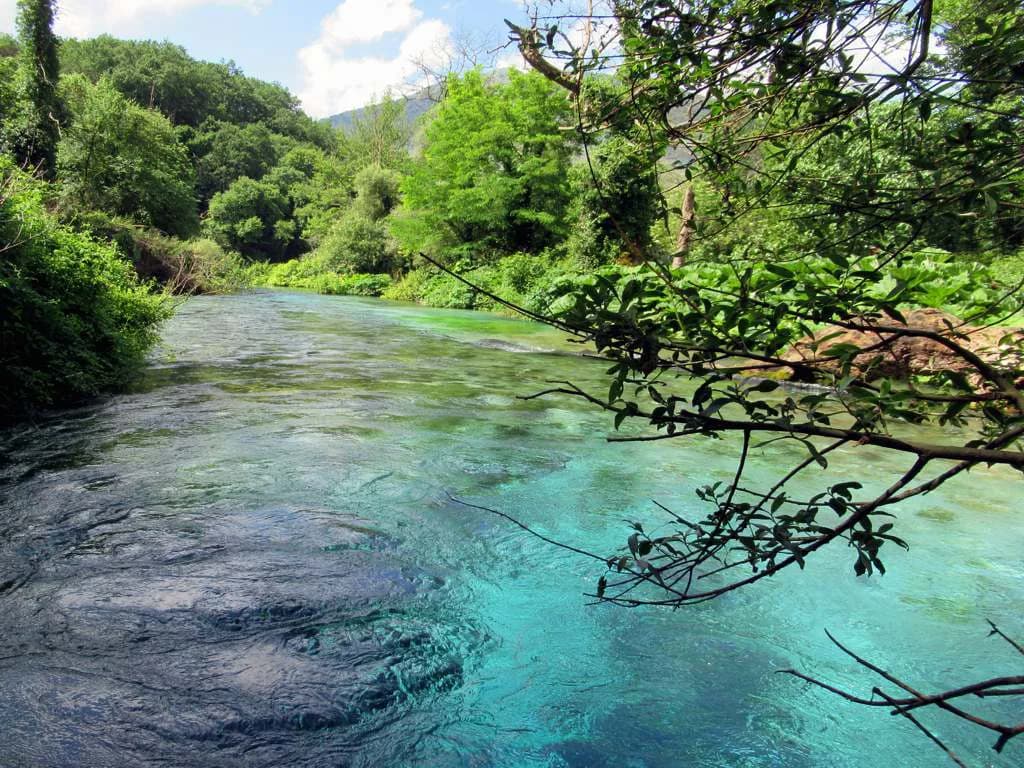
The southern Blue Eye sits in a 180-hectare nature reserve near the village of Muzinë, on the road between Sarandë and Gjirokastër, and takes its name from the Blue colour produced as sunlight hits the limestone beneath the surface. It is a karst spring, meaning it drains a large underground system, and it feeds the Bistrica reservoir downstream. Albania also has a second, far less developed Blue Eye near Theth in the northern mountains, so check which one your driver or tour is heading for before you set off.
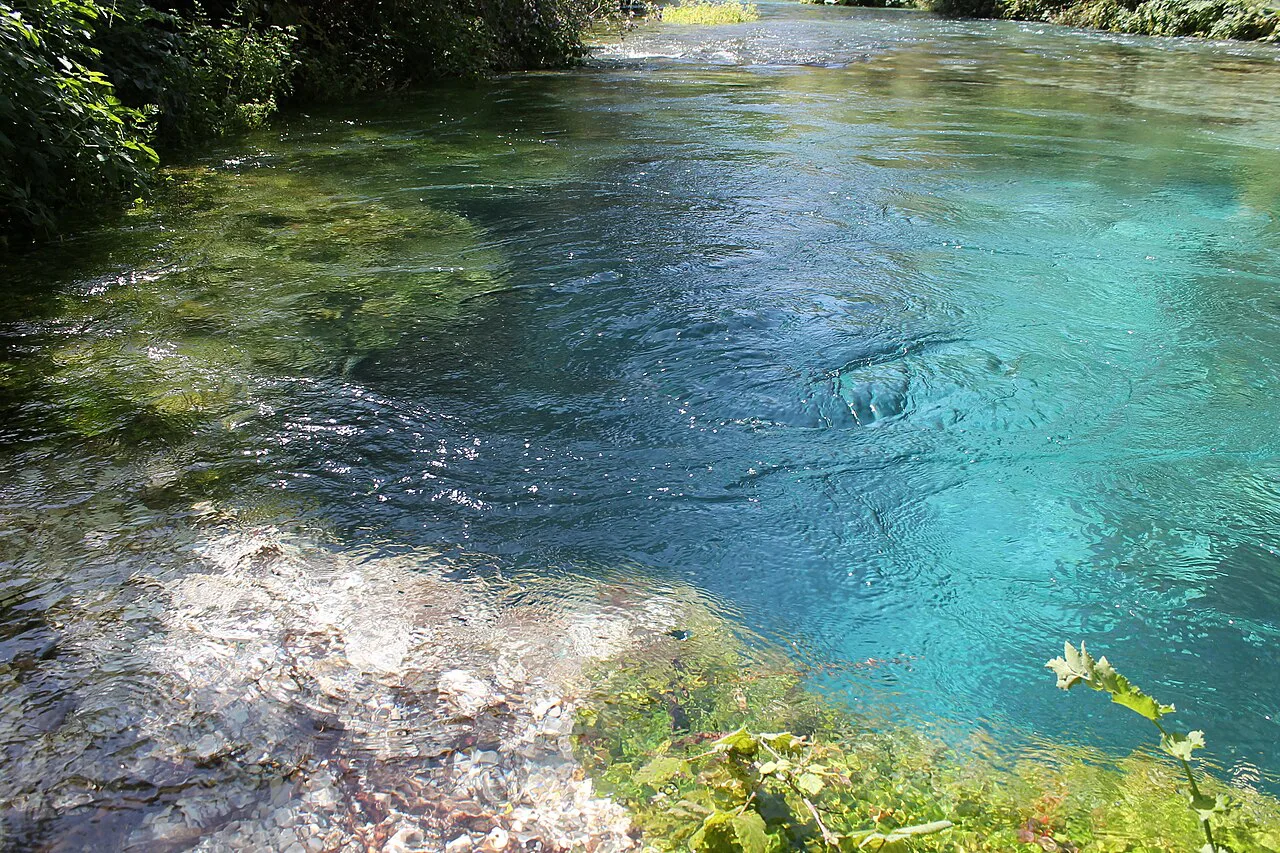
The pool itself is smaller than most photographs suggest, and it is fenced off with a raised wooden platform above it for the classic view down into the Blue. You can also stand at eye level at the barrier without climbing the steps. Watching the water well up is the main event, and it takes only minutes; the rest of your time goes on the walk in and out.

How deep is it, and how cold is the water
The exact depth has not been established, though the spring is described as deeper than 50 metres. Flow figures vary between accounts, so treat any single number you read online with caution; the point for visitors is that this is a powerful, high-volume spring rather than a still pool.
Water temperature is another figure that circulates loosely, with one account putting it at around 10°C year round. Because you cannot get in, the cold matters less than the shade and heat above ground: the walk in is largely exposed, so carry water and sun protection even on a mild day.
Getting there by car
Driving is the simplest option and the one that gives you control over timing. Allow about 40 minutes from Sarandë, roughly an hour from Ksamil, and about an hour from Gjirokastër. From Sarandë, take the SH8 and then the SH99; from Gjirokastër, follow the SH4 south and turn onto the SH78 at Jorgucat, then take the SH99 towards Sarandë.
If you are travelling between Gjirokastër and the coast, set your route to pass via the Blue Eye, because default navigation often sends you on a faster road that misses it. The access road up to the car park is paved, and the car park is large but fills in high summer, so an early start saves you a wait for a space.

Shuttle buses and tours from Sarandë
Public transport to the spring is limited, and a faster road now diverts most scheduled buses elsewhere. The practical alternative is the shuttle run by KMG Tourism Group, which makes multiple daily round trips from Sarandë to the Blue Eye, with departures starting in the morning; in 2024 the fare was quoted at 1,500 lek per person. Fares change, so confirm the current price and departure times when you book.
Day tours from Sarandë bundle the spring with Butrint, Ksamil and Lëkurësi Castle, which suits anyone without a car or who would rather not drive the SH99 themselves. One such full-day tour cost around €89 per person including entry fees and transport; check what a given operator includes before paying, since entry and parking are charged separately at the gate. Compare these against the self-drive options in the Saranda Attractions: 6 Visitor Guides before you commit, and read our notes on Lëkurësi Castle if you plan to end the day up on the hill.
Entry and parking fees
You pay twice: once for the car park and once for entry to the site, both in cash at the gate. Parking has been charged in time bands, with the shortest band covering most visits, and entry has been quoted at 50 lek per person; a separate account records 100 lek per car plus 50 lek per person. Treat these as indicative and bring small notes in lek.
There are small patches of free parking near the ticket entrance, mostly useful out of season, but reports of intimidation around those spots make the official car park the calmer choice. The gate has historically opened from 8am, which is also the hour that gives you the emptiest platform.
The walk from the gate to the spring
The spring is about 2km from the entrance, and the road up is closed to private cars, so everyone covers that distance on foot unless they pay for a transfer. Two routes run in parallel: the paved road, straightforward but shadeless, and a forest hiking path that is quieter and greener but rougher underfoot. Sturdy shoes and a hat make either one more comfortable.
If the walk does not appeal, you can rent an e-bike at the entry gates, ride the small tourist train, or paddle part of the way by kayak or canoe after walking the first kilometre of road. The road in is lined with fruit sellers and fresh juice stalls, which is welcome on the return leg in the heat.
Swimming: what is and is not allowed
Swimming is prohibited throughout the Blue Eye complex, not just in the eye itself. The ban in the spring has been in place for several years and is now firmly enforced, with barriers and staff whistling anyone who steps close, and the river that flows out of the spring is no longer a swimming spot either. Arriving in swimwear is the most common mistake visitors make.
The exception reported at the site is the lake, which does not have the turquoise colour that draws people to the spring. If a cool dip is essential to your day, plan it elsewhere on the coast rather than counting on the Blue Eye.
What is on site today
This is a managed, commercial site rather than a wild one. Around the entrance and the spring you will find restaurants, toilets, souvenir shops, cabins for overnight stays and a tourist information point, and drone footage is offered with tips expected. Set expectations accordingly: the draw is the colour of the water and the setting, not solitude.
How long to allow, and when to arrive
Two to three hours covers the walk in, the viewing platform and the walk back, with time for a drink at the stalls. Add an hour if you take the forest path, eat on site, or stop frequently for photographs. Most visitors need no more than three hours in the car park, which keeps you in the cheapest band.
Summer crowds are the main frustration: the platform is small, the car park fills, and weekend afternoons bring families and groups in numbers. An early morning arrival gives cooler walking and a clearer view, and outside July and August the site is far calmer.
Nearby stops worth adding
The spring sits naturally on a loop with Sarandë, Ksamil and Gjirokastër, so it makes a good half-day stop rather than a destination on its own. Travelling from Sarandë, the hilltop Lëkurësi Castle makes an easy sunset stop on the way back into town.
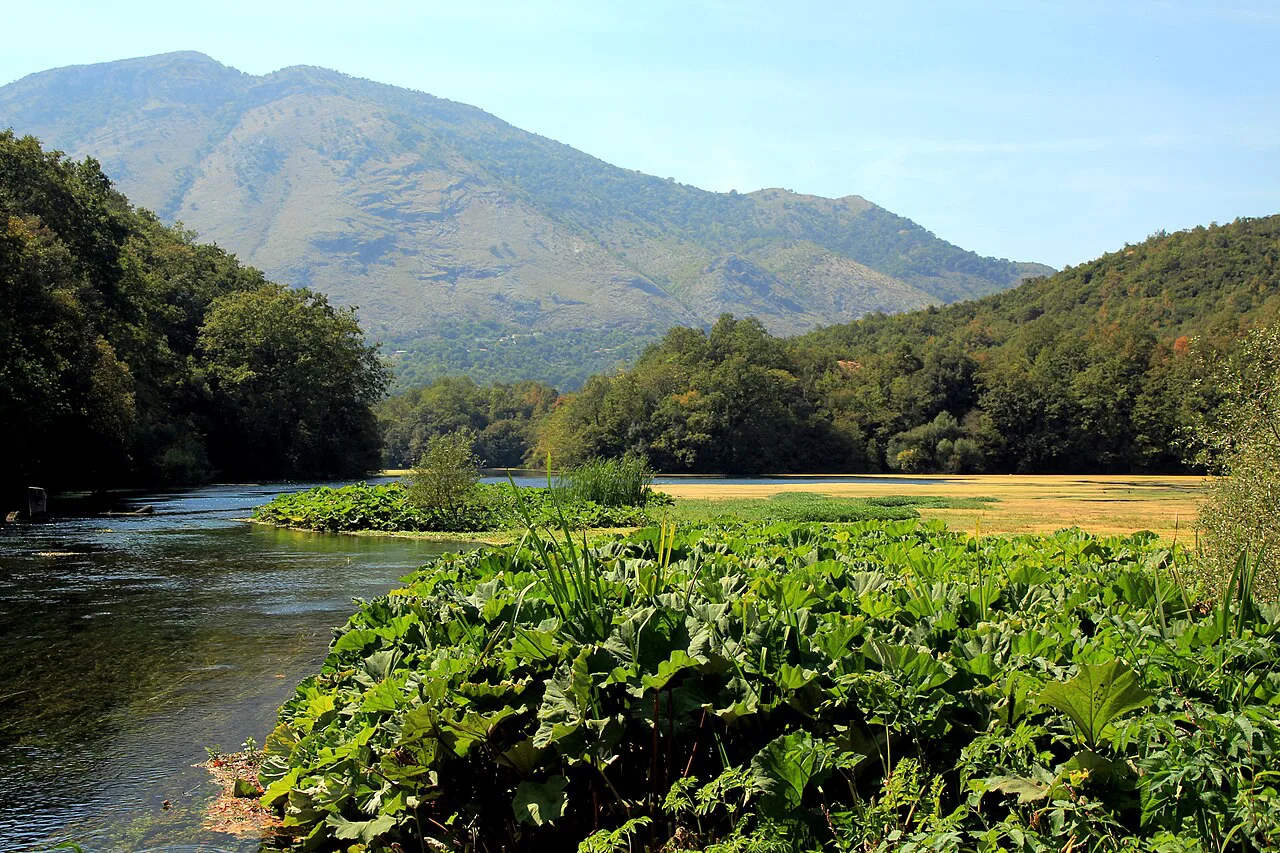
Inland, the Mesopotam Monastery and the wider Bistrica valley sit on the road towards Gjirokastër, and the archaeological park at Finiq (Phoenice) lies south of the main route if you have a car and a spare hour.
Should the Blue Eye make your Sarandë itinerary?
Go if you want a short, genuinely striking natural sight on a day that also takes in Ksamil or Gjirokastër, and accept the fenced platform, the fees and the 2km walk as part of it. Skip it if you pictured a wild swimming hole, because the ban is enforced and the site is busy in summer. An early start with your own car, or the Sarandë shuttle if you have none, is the least fiddly way to do it.
Explore more Saranda guides
Frequently Asked Questions
Can you still swim at the Blue Eye in Albania?
No. Swimming is banned throughout the site, including the spring itself and, according to recent accounts, the river that flows from it; the only water where swimming has been reported as permitted is the lake, which lacks the turquoise colour. Barriers and staff enforce the ban, so plan any swimming for the coast instead.
How much does it cost to see the Blue Eye?
You pay for parking and for entry, both in cash at the gate, and published figures have varied between accounts and over time. Check the charges at the barrier when you arrive and carry small lek notes rather than relying on card payment.
How far is the Blue Eye from Sarandë?
It is roughly 22km east of Sarandë, about 40 minutes by car, and about an hour from both Ksamil and Gjirokastër. The SH8 and SH99 route is straightforward, and setting your navigation via the Blue Eye stops it diverting you onto a faster road that misses the turn.
Sources
- How To Visit The Blue Eye in Albania (and Avoid The Crowds) — ALONG DUSTY ROADS
- Albania's Blue Eye: is it still worth it now swimming is prohibited? — Walk My World
- How to visit The Blue Eye Sarandë in Albania
- The Blue Eye in Albania | A pool near Sarandë - OurBigJourney - Travel and Photography Blog