
Saranda Synagogue: What to See at the Ancient Synagogue Basilica

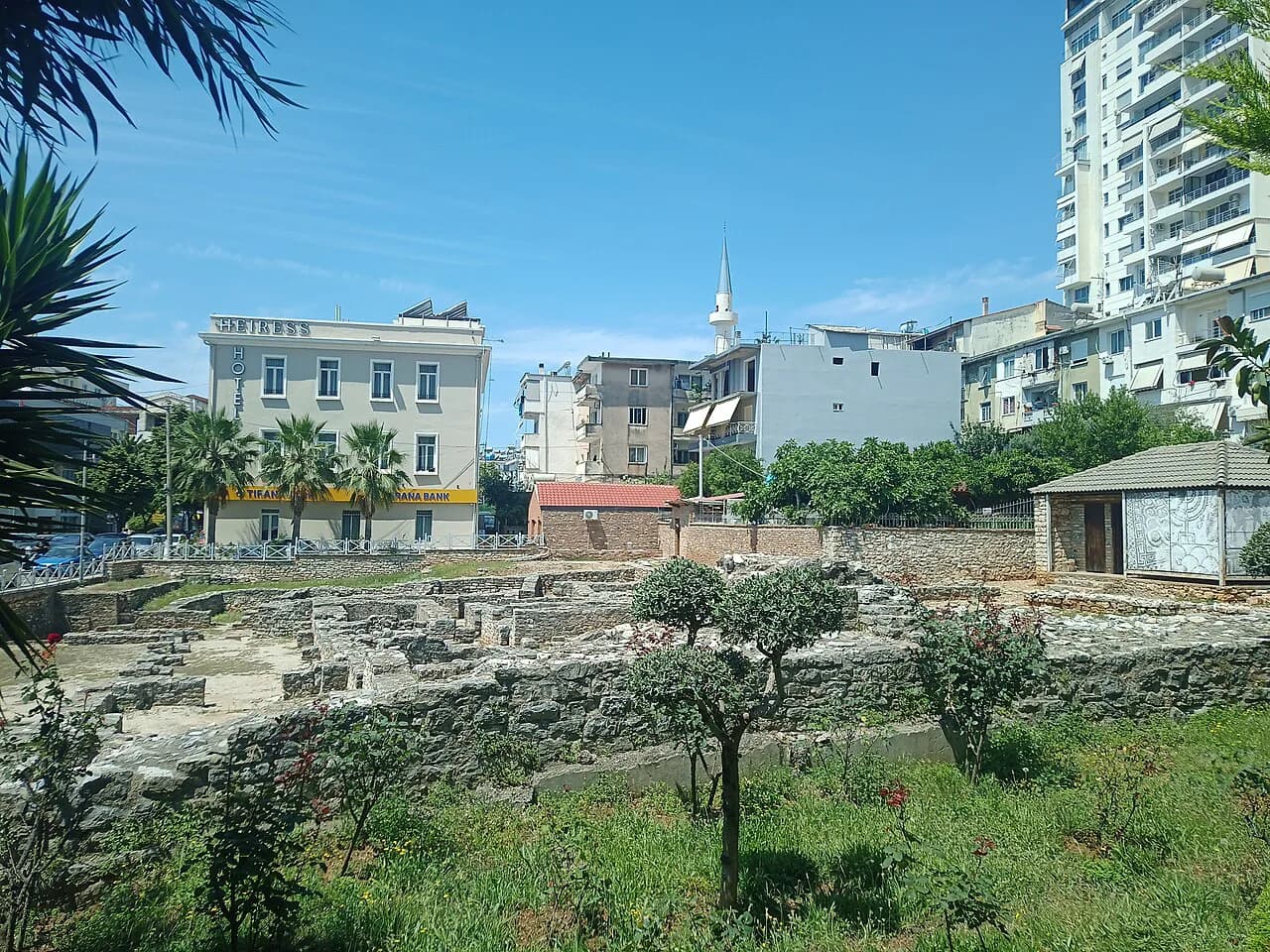
The Saranda synagogue is a late Roman synagogue in the centre of Saranda, close to the city hall, later converted into a church. Allow about twenty to thirty minutes for the two mosaic pavements and the surviving walls, and combine it with the seafront or a trip to Butrint. This guide covers where the site sits, what the mosaics show, and what to confirm before setting out.
What the Saranda synagogue is
The ruins are those of a synagogue built in the late Roman period in the ancient city of Onchesmos, the classical name for Saranda. The joint Albanian–Hebrew University excavation dates the building to the fifth or sixth century AD, and the structure was later converted into a Christian basilica, so the remains show two phases of use rather than a single building.
A joint excavation by the Archaeology Institute of the Albanian Academy of Sciences and the Hebrew University Institute of Archaeology brought the Jewish phase to light. Earlier work on the site had taken place during the Communist period, when religion was prohibited and a fuller survey was difficult. Parts of the synagogue still lie beneath the modern streets and buildings around it.
The Vlora Regional Directorate of Cultural Heritage promotes the Synagogue Basilica as an important archaeological site of southern Albania and invites visitors to see its mosaics and ancient walls. Read the ruins as a sequence: a Jewish place of worship first, a church later, with the mosaics spanning both phases.

Where it is in Saranda and how to reach it
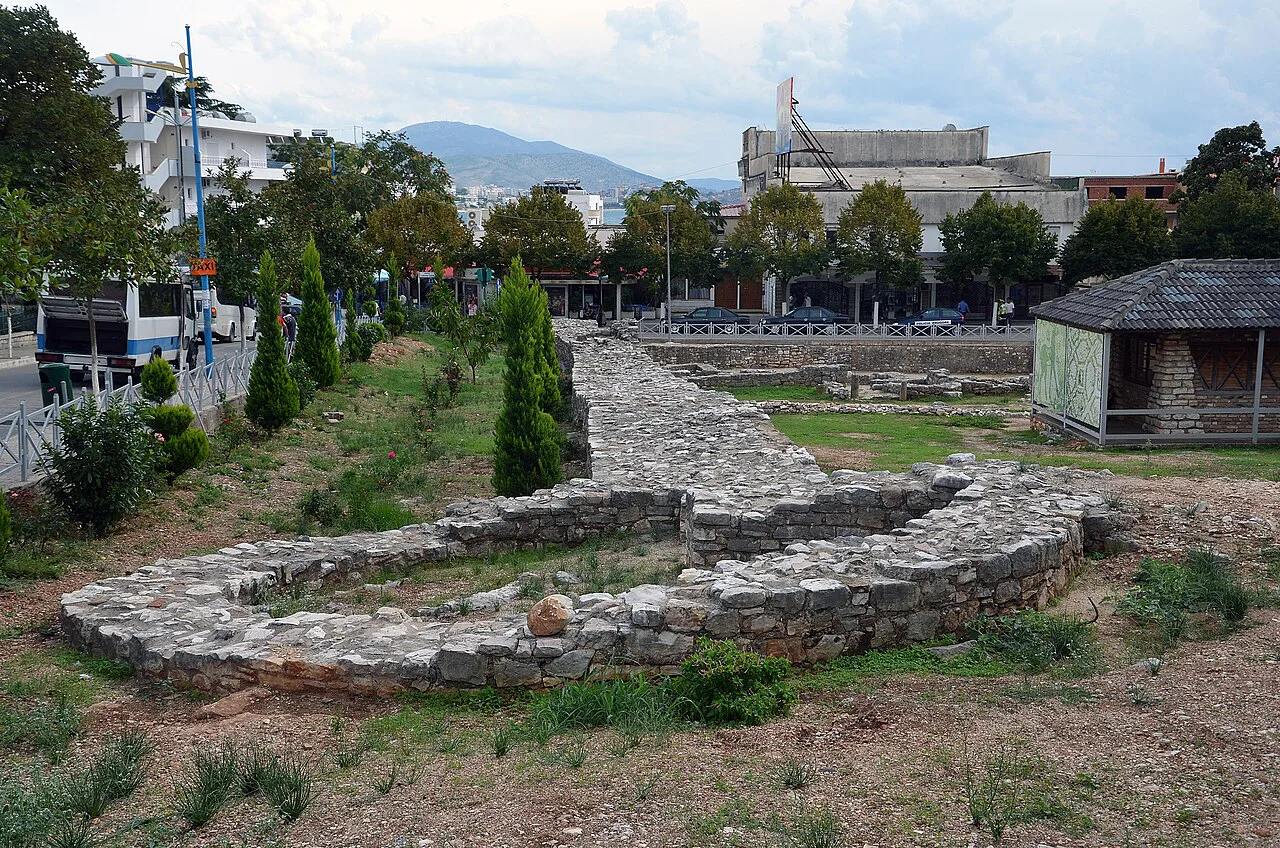
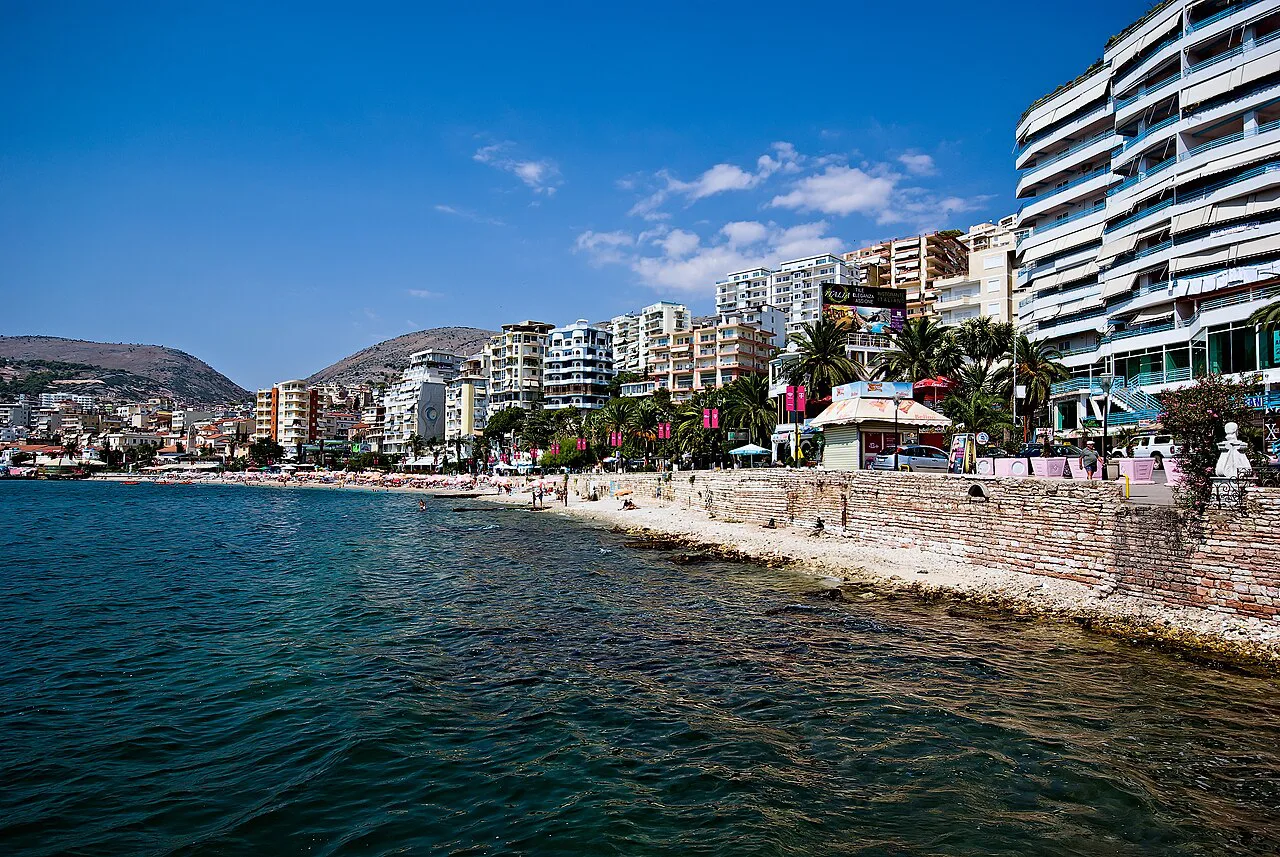
The site stands in the heart of Saranda, close to the city hall, which makes it an easy stop on foot rather than a separate excursion. From the seafront promenade, walk inland towards the centre and ask for the Synagogue Basilica. The town itself faces Corfu across the Ionian Sea, about 14 km away.
Is the Saranda synagogue the same as the Synagogue Basilica? Yes. The ruins are usually called the Synagogue Basilica because the synagogue building was later converted into a Christian basilica.
Can I see the mosaics when I visit? The mosaics are normally covered with sand to protect them, and photographs on the walls stand in for the pavements. Some panels may be exposed on the day, but you should not count on seeing the full floors laid bare.
How do I check opening hours and entry fees? Ask the Vlora Regional Directorate of Cultural Heritage, or check at the site. The site has had official opening times and entry fees, but the gates have also been found open with nobody collecting a charge, so confirm before you travel.
Because the ruins sit among modern buildings, the visible area is compact and hemmed in by streets. Parts of the synagogue still lie beneath the surrounding streets and buildings, which is why the exposed plan is small.
Saranda has no airport of its own, so travellers arrive by road from other Albanian towns or by ferry from Corfu. For a hilltop view to finish the day, Lëkurësi Castle sits above the town and is reached by road or a stiff walk.

The mosaics: menorah, citron and ram's horn
Two of the mosaic pavements are the centrepiece. One carries a menorah, the seven-branched candelabrum, flanked by a citron and a ram's horn, all symbols tied to Jewish holidays. The other shows trees, animals and the facade of a structure that may be a Torah shrine.
The mosaics are normally covered with sand to protect them, and photographs on the walls stand in for the pavements when they are covered. Do not expect to see the full coloured floors laid bare on every visit. View what is exposed, then use the wall photographs to read the design and the symbols.
The excavation also recorded mosaic pavements that pre-date the synagogue building, so the floors are not a single commission. The menorah pavement is the one most visitors come for, and the citron and ram's horn beside it are worth picking out before you move on.
The walls, the possible ark and the later church
Beyond the floors, a structure was found that may have been the aron hakodesh, the Holy ark that held the Torah scrolls, while the excavation report describes a building facade that may be a Torah shrine. Treat the identification as a possibility rather than a certainty, and look for the masonry the archaeologists point to rather than a reconstructed shrine.
In the sixth century the buildings were converted into a basilica, and that church phase was later destroyed, possibly by an earthquake or by Slavic invaders. The conversion is why the site is often called the Synagogue Basilica: the same footprint served two faiths in succession.
Excavations are expected to continue into the parts of the synagogue still buried under neighbouring buildings and streets. Give the walls and the plan as much attention as the floors, because they carry the story of the change from synagogue to church.
How long to allow
Twenty to thirty minutes is enough for the visible ruins, the mosaics and the wall photographs. Add ten minutes if you want to read the panels and work out the building phases. It is a short stop, not a half-day site, so pair it with something else in town.
Go early in the morning or late in the afternoon in summer, when the heat is less punishing and the light on any exposed mosaic is softer. Parts of the ruins are open to the sky, so a hat and water matter in July and August.
Opening hours and entry fees
The site has had official opening times and entry fees, but a visitor in 2019 found the gates open with nobody present to charge admission. Confirm with the Vlora Regional Directorate of Cultural Heritage or at the site before you build your day around it.
Carry some cash in lek in case a fee is being collected on the day, and treat any figure you have read elsewhere as unverified. The heritage directorate is the right body to ask about current arrangements.
Nearby in Saranda and the route to Butrint
The synagogue is central, so the seafront, the city hall area and the main streets are all within a few minutes' walk. For a wider plan of the town, the things to do in Saranda guide sets out the castle, the old town and nearby sights.
Butrint, the UNESCO World Heritage site, lies to the south and is the natural next stop for anyone with an archaeological interest. The synagogue makes a short prelude before you head out, and Butrint itself deserves the better part of a day.
Inland from Saranda, the Blue Eye spring, Syri i Kaltër, works well as a natural contrast to the ruins. Finiq, the archaeological park at ancient Phoenice, is another option for travellers following the classical sites.
What to know before you visit
Expect a compact archaeological site with exposed stone and uneven ground rather than a groomed museum floor. Wear shoes you can walk in, and keep an eye on where you step around the edges of the pavements.
The mosaics being under sand is the main reason visitors leave disappointed, so set your expectations before you arrive. If seeing the full floors matters to you, ask the heritage directorate about the best time before you travel.
Respect the site as a place of two faiths: it was a synagogue and then a church, and it is still being excavated. Keep to the paths, do not touch exposed tesserae, and keep voices low if others are reading the panels.
Should the synagogue be part of your Saranda day?
Yes, if you are already in central Saranda and have twenty to thirty minutes to spare. The mosaics, the possible ark and the change from synagogue to church make it a worthwhile short stop, especially as a prelude to Butrint. Do not travel across town for it alone on a day when the floors are covered.
Check hours and any fee with the Vlora Regional Directorate of Cultural Heritage before you go, and carry cash in case a charge is being collected. Build the rest of the day around the seafront, Lëkurësi Castle or a run south to Butrint.
Explore more Saranda guides
Frequently Asked Questions
Is the Saranda synagogue the same as the Synagogue Basilica?
Yes. The ruins are usually called the Synagogue Basilica because the synagogue building was later converted into a Christian basilica. The site is in central Saranda near the city hall, and the remains show both phases.
Can I see the mosaics when I visit?
The mosaics are normally covered with sand to protect them, and photographs on the walls stand in for the pavements. Some panels may be exposed on the day, but you should not count on seeing the full floors laid bare.
How do I check opening hours and entry fees?
Ask the Vlora Regional Directorate of Cultural Heritage, or check at the site. The site has had official opening times and entry fees, but the gates have also been found open with nobody collecting a charge, so confirm before you travel.