
Mesopotam Monastery: Visiting the Church of Saint Nicholas

Mesopotam Monastery is a short detour, not a half-day out. The Church of Saint Nicholas is the main building still standing from a Late Byzantine monastery beside the village of Mesopotam, inland from Sarandë and within easy reach of Butrint National Park. Allow under an hour on site unless you are studying the sculpture closely, and treat it as a stop on a drive between the coast and Finiq rather than a destination in its own right. This guide covers what survives, what to look for on the walls and floor, and how to slot the visit into a day around Sarandë.
What the Mesopotam monastery is
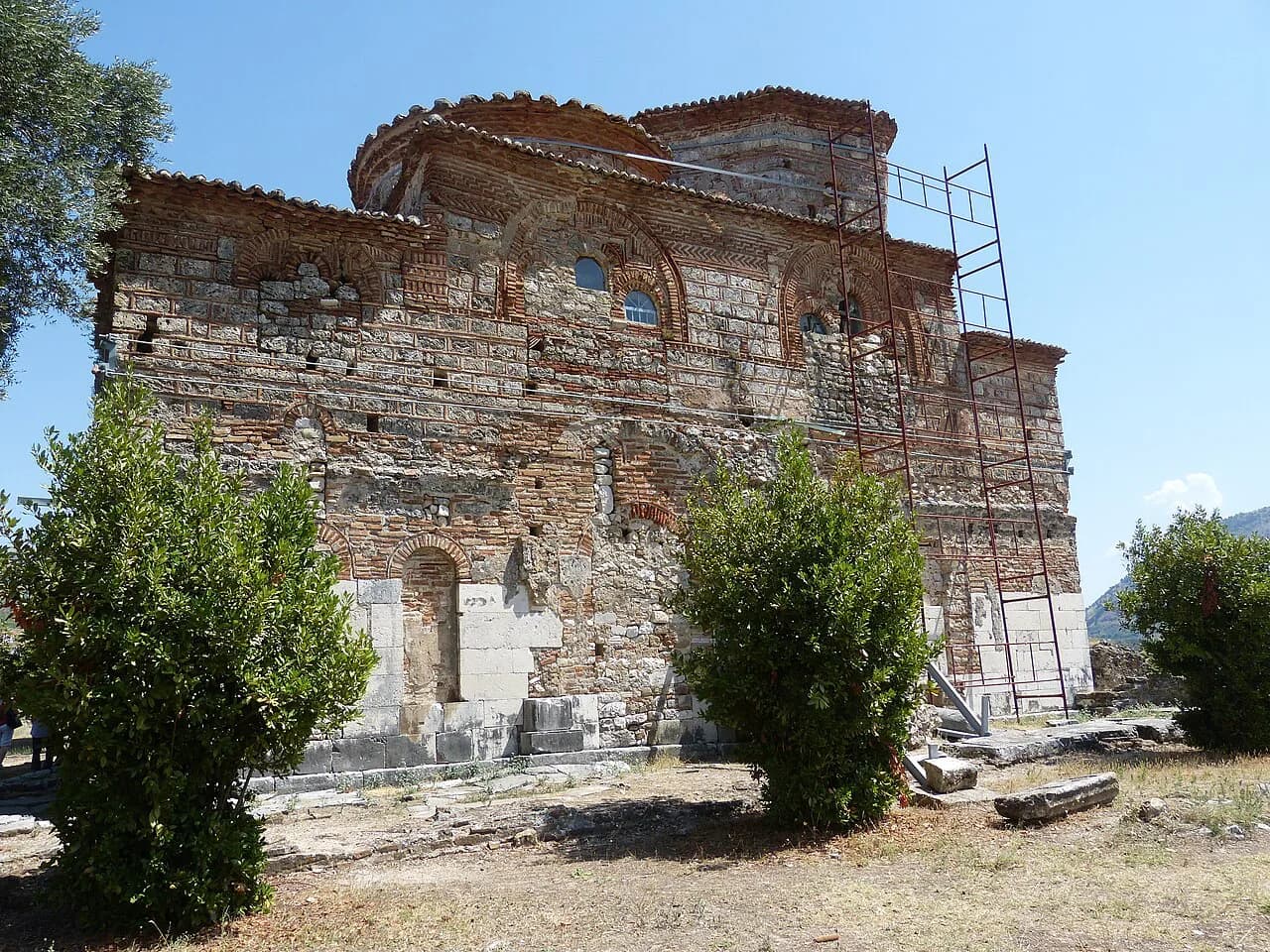
The Church of Saint Nicholas, known in Albanian as Shën Kolli, is the principal surviving monument of a monastery that stood near the village of Mesopotam in southern Albania. Scholars place its foundation anywhere from the 11th century to around 1224–1225, while the archaeological evidence and architectural features point to a construction phase between 1272 and 1286, when the Angevin kings of Sicily held the area between Durrës and Butrint. The monastery was stauropegion, meaning it answered directly to the Ecumenical Patriarch of Constantinople rather than the local bishop, and it served as a religious and economic centre in the 13th and 14th centuries.
The site had been occupied long before the church: excavation has dated some stones to the Hellenistic period, and the monastery's fortunes were tied to Phoenice, the capital of the Epirote League about three kilometres away. A destruction layer from the late 1330s or 1340s is visible in the ceramics, possibly linked to Andronikos III Palaiologos's campaign against the Despotate of Epirus, though the community kept going until the early 19th century. The monastery later passed through Ottoman hands, when the church was converted to a mosque and the frescoes were covered with a Blue wash, and the complex suffered further damage in the Soviet era.
The church is one of only 350 churches spared from demolition or conversion to agricultural or industrial use under Enver Hoxha's forty-year rule. Restoration began in 2021 under the European Center for Byzantine and Post-Byzantine Monuments with the Albanian Ministry of Culture, and the first phase, stripping later plaster and lime coatings, was completed in 2024. Intact Byzantine-era frescoes were found beneath the white walls during that work, so what you see inside has been revealed relatively recently.

Where it sits
Mesopotam is a village inland from the Sarandë coast, close to the northern edge of Butrint National Park and a few kilometres from the ancient site of Phoenice at modern Finiq. That position makes it a natural stop on a loop that takes in the national park and the archaeological park in one outing, rather than a separate excursion. If you base yourself on the coast, the Sarandë attractions guide sets out how the town and its nearby sights fit together.
Do you need a tour to visit Mesopotam monastery? No. A car, taxi or arranged driver from Sarandë is enough, and a private driver gives you more certainty about time on site than a group tour that may only pass through the village.
Is the church still used for Orthodox services? The Church of Saint Nicholas is an Orthodox church and the surviving building of a monastery that answered directly to Constantinople. Whether a service is scheduled on the day you visit is not published in advance, so keep the visit short and quiet, dress modestly, and step outside if a service begins.

Getting there
Plan on a car, a taxi or a chauffeured stop arranged from Sarandë. The roads in this part of the hinterland are ordinary rural lanes rather than a scenic mountain route, and the drive from the coast is short enough to combine with Butrint without eating into your day. If you have no car, ask your accommodation in Sarandë about a driver for a half-day and agree a waiting time at the church before you set off.
Organised day tours from the Sarandë and Ksamil area cover the wider region but generally treat Mesopotam as a passing mention rather than a fixed stop. Tour listings sold online bundle the Blue Eye, Gjirokastër and Lëkurësi Castle into single days, so check the itinerary in detail before assuming the monastery is included. A private driver is the more reliable way to guarantee time at the church itself.
What to see on the outside
Start with the plan. The church has a double apse, a feature described as unique in its type and argued by the scholar A. Meksi to have allowed the monastery to accommodate both Catholic and Orthodox rites. That explains the odd arrangement of the east end, which is easier to read when you stand outside and trace the two apses before going in.
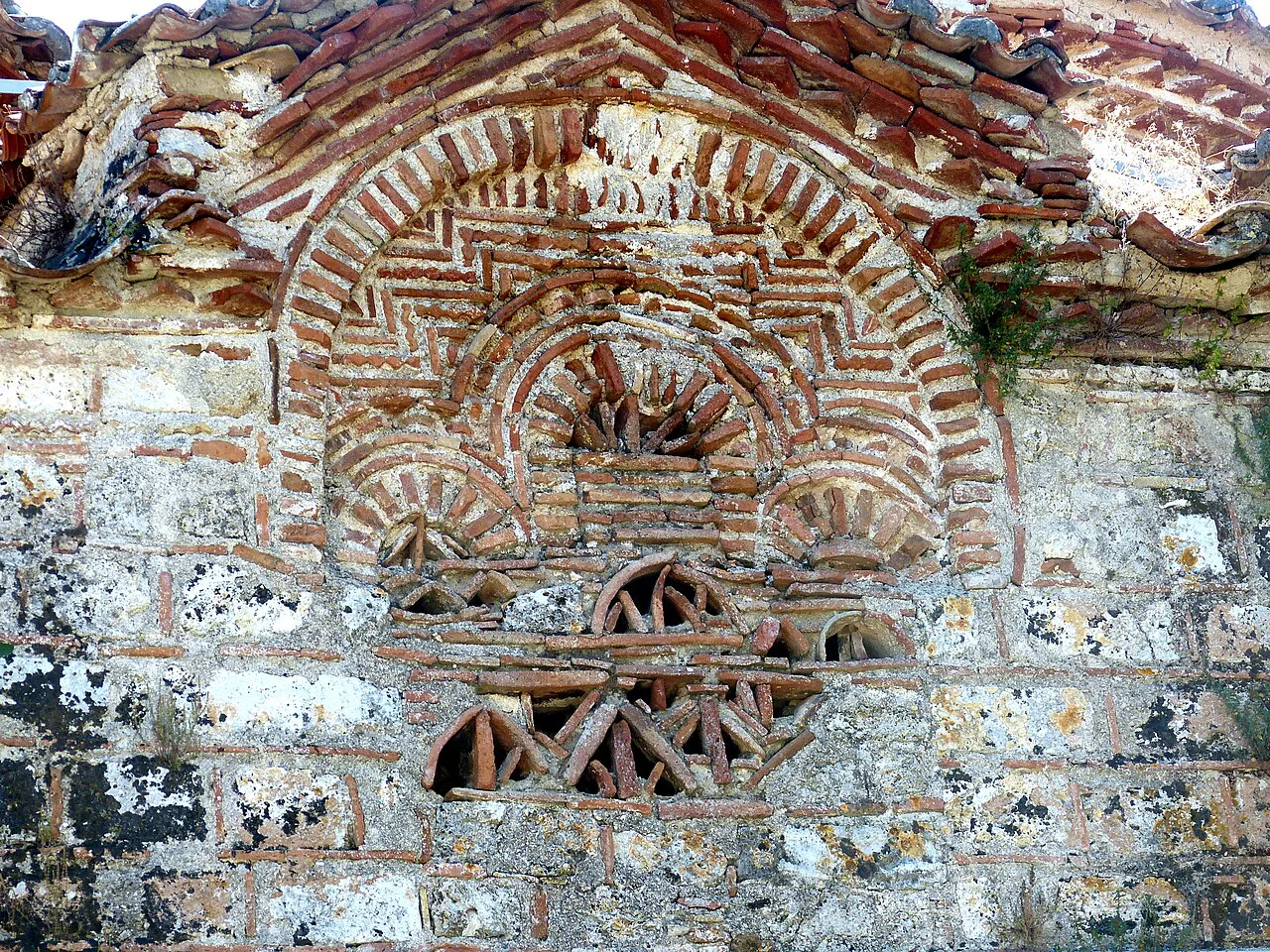
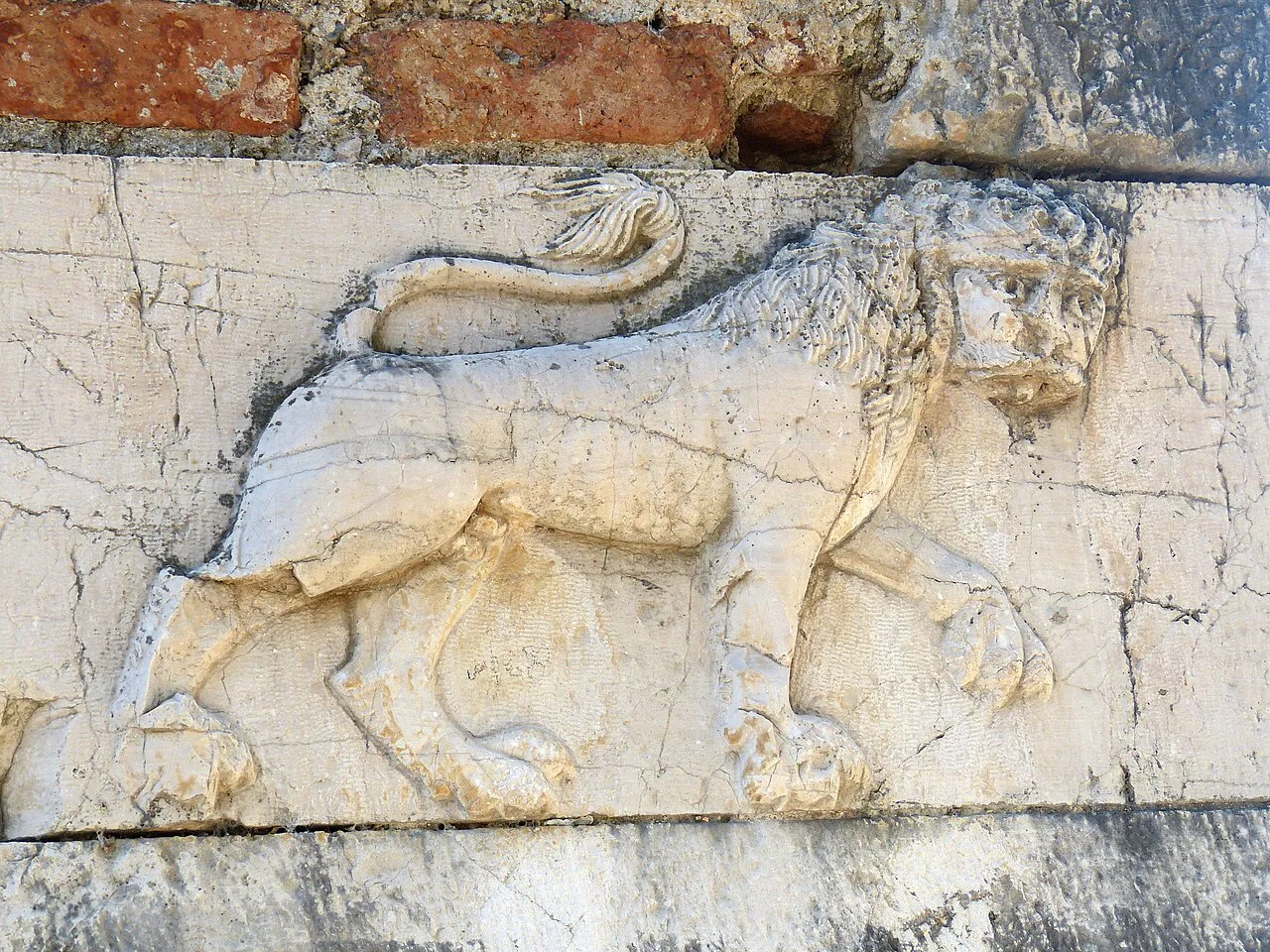
The lower courses of the walls are built from large rectangular stone blocks carved with reliefs of real and imaginary animals. Look for the lion, the angel, the dragon and the serpent dragon whose tail coils around its neck and back, and the tree-and-lion panel. One scholar, P. L. Vokotopoulos, argued that this lower masonry may belong to an earlier, unfinished building with Romanesque affinities, while the brick decoration and colonnaded portico above follow the architectural tradition of Arta.
A tower that originally served for accommodation survives from the monastery's defences, and one of the wall's original seven towers is still standing. The rest of the monastic buildings are ruins scattered around the church, so set your expectations at footings and fragments rather than a complete complex. Walk the perimeter once to pick out the surviving structures before you go inside.
What to see inside
Look down as well as up. The floor is opus sectile, cut stone and marble set in patterns, and the narthex floor carries three fleur-de-lis motifs that resemble the Angevin coat of arms, one of the arguments for dating the church to the Angevin period. The floor mosaic has been compared with that of the Blachernae church in Arta, which is useful context if you have already seen the churches of Epirus.
The wall paintings are the reason to go slowly. Byzantine frescoes were found under the later plaster during the restoration that began in 2021, and the first phase of coating removal finished in 2024, so parts of the interior may still carry scaffolding or props while work continues. Photography is straightforward in daylight, but keep noise down and give way to anyone working or praying.
How long to allow, and the state of the ruins
Plan on twenty to thirty minutes for the church and its carvings, and a little more if the interior is open and you want to examine the frescoes properly. The monastic ruins around it take a further ten minutes at a stroll. That makes Mesopotam a natural add-on to a Butrint or Finiq morning rather than the purpose of a day.
Opening hours and tickets
There are no reliable published opening hours or ticket prices for the Church of Saint Nicholas, so do not build a day around an assumed time. Confirm access before you drive out, and ask your accommodation in Sarandë to call ahead on the day you plan to visit. If the church is shut, the exterior carvings alone justify the detour.
Dress and behaviour
This is an Orthodox church, so cover shoulders and knees and remove hats before going in. Keep voices low, avoid flash photography where frescoes are exposed, and do not touch the carved stone or the opus sectile floor. If a service is under way, wait outside until it finishes.
Nearby
Butrint National Park is the obvious pairing, with its own archaeological site and museum set among woodland and lagoon. The Finiq Archaeological Park covers ancient Phoenice, the Epirote League capital whose fortunes were tied to the monastery. Both are straightforward to combine with Mesopotam in a single half-day by car.
Back in Sarandë you can fill the rest of the day with the views from Lëkurësi Castle above the bay, or the hilltop ruins of the Forty Saints Monastery. The town's synagogue, a late-antique basilica converted into a museum, is a short stop in the centre. None of these need booking far ahead outside peak summer.
Is Mesopotam worth the detour?
Yes, if you are already driving between Sarandë and Butrint or Finiq, and you care about Byzantine carving and a church that has survived several regimes. No, if you have no transport and a short trip: the frescoes are behind a door you cannot guarantee is open, and the ruins around the church are modest. Build it into a half-day loop with Butrint and Finiq, confirm access before you set out, and give it under an hour.
Explore more Saranda guides
Frequently Asked Questions
Do you need a tour to visit Mesopotam monastery?
No. A car, taxi or arranged driver from Sarandë is enough, and a private driver gives you more certainty about time on site than a group tour that may only pass through the village. Ask your accommodation to arrange one and agree a waiting time.
Is the church still used for Orthodox services?
The Church of Saint Nicholas is an Orthodox church and the surviving building of a monastery that answered directly to Constantinople. Whether a service is scheduled on the day you visit is not published in advance, so keep the visit short and quiet, dress modestly, and step outside if a service begins.