Mosques in Tirana: The Great Mosque and Visiting Etiquette
A practical guide to the Great Mosque of Tirana, the Namazgah Mosque: where it stands, what you see inside, dress rules and when to avoid prayer times.
On this page
The Great Mosque of Tirana is a five-minute walk from Skanderbeg Square, which makes it the easiest mosque to reach in the city. It opened in October 2024 as Xhamia e Namazgjasë, known in English as the Namazgah Mosque, and it is a working place of worship before it is a sight. This guide covers what you actually see inside, how the complex is laid out, the dress and shoe rules, and the moments in the day when you should not be walking through.
What the Great Mosque of Tirana is
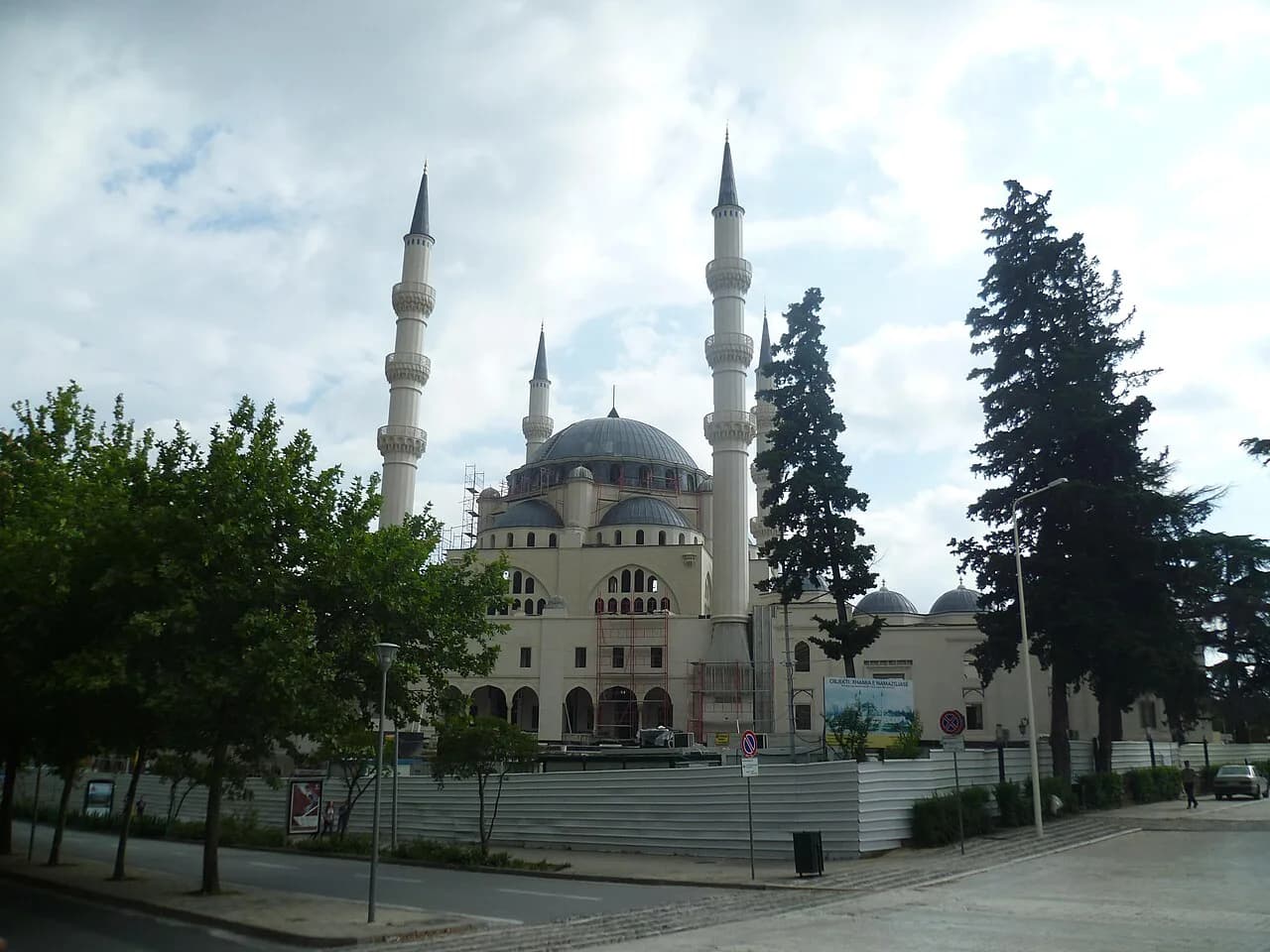
The mosque was inaugurated in October 2024, after construction that began in 2015 with funding largely from Turkey's Diyanet religious authority alongside the Albanian Muslim Community. It is built in a classical Ottoman style, and travel listings describe it as the largest mosque in the Balkans. The site itself has been a prayer ground for far longer: the name Namazgah means a place of prayer, and the open field here held Eid gatherings when the Et'hem Bey Mosque could not hold the crowds.
The city's official tourism site lists the Namazgja Mosque among Tirana's attractions as a place of worship and a reference point for the city's Muslim community, with domes, minarets and detailed decoration to look at. Treat it as you would any working mosque rather than a museum with a turnstile.
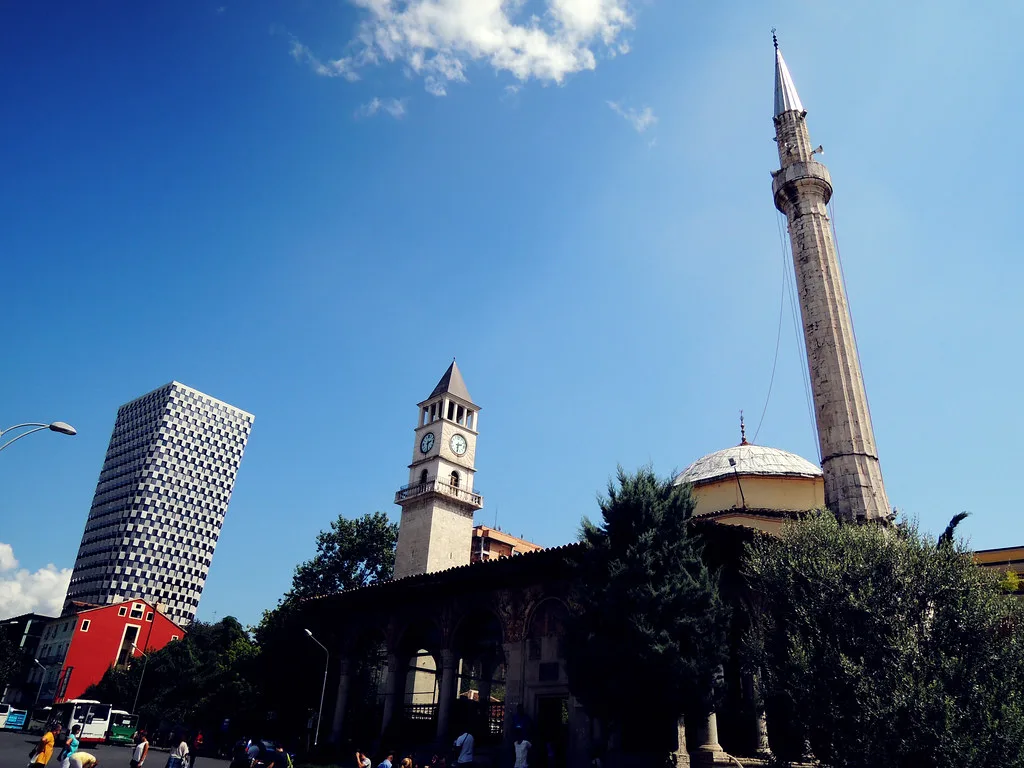
Where it is: the walk from Skanderbeg Square
The mosque stands near the Parliament of Albania and George W. Bush Street, on the edge of the park that runs along the Lana River. From Skanderbeg Square, head south past the parliament buildings and you will see the four minarets before you reach the entrance; the walk takes about five minutes at an easy pace.
What makes the location worth planning around is its neighbours. The mosque was deliberately built on a site next to the Catholic Cathedral and the Orthodox Cathedral, forming a triangle that represents the country's religious coexistence, and the surrounding gardens and courtyards are open to the public as an extension of the riverside park. That means you can see a mosque, a Catholic cathedral and an Orthodox cathedral in one short loop without touching public transport.
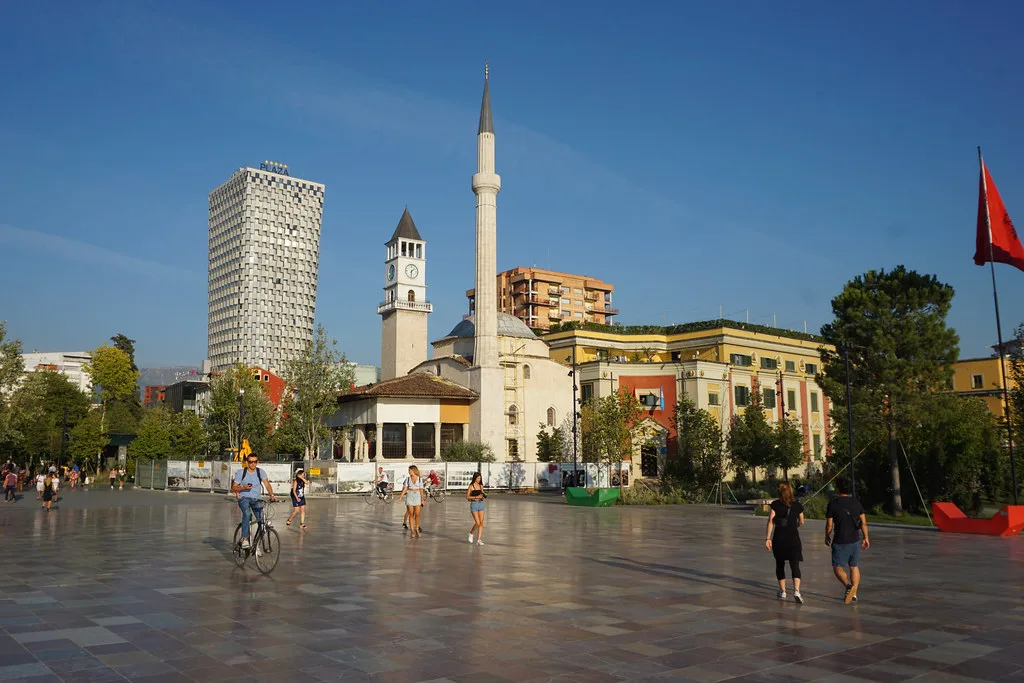
The building itself: minarets, dome and courtyard
Four minarets rise 50 metres at the corners, and the central dome reaches 30 metres above the prayer hall. The exterior is clad in light-coloured stone. Inside, the prayer hall holds roughly 5,000 worshippers, with the courtyard and surrounding space taking the total capacity to about 10,000.
The design is the work of the Turkish architect Muharrem Hilmi Şenalp and his firm, Hassa Architecture, working in 16th-century Ottoman forms with modern engineering. Look up once you are through the door: the dome and the calligraphy in the prayer hall are the reason to come, and they are best seen in daylight.
Inside the complex: prayer hall, library and the Museum of Coexistence
The building is more than a prayer hall. The complex includes a library, classrooms for language and Quranic study, a conference hall seating hundreds, and a museum in the basement dedicated to the coexistence of religions in Albania. Visitors enter the prayer hall; the teaching rooms and conference spaces are part of the mosque's daily work rather than stops on a tour, so do not wander into them uninvited.
If religious buildings and their collections are your thing, pair this stop with the city's other museums, which range from the National History Museum on Skanderbeg Square to the smaller house museums, and give the whole set a half-day rather than an afternoon.
Entry, donations and how long to allow
There are no fixed visiting hours, so arrive outside prayer times and expect the doors to be open during normal daytime hours. Entry is free, with donations welcomed but never required, so you can walk in, look, and leave without reaching for your wallet.
Allow 20 to 30 minutes for the prayer hall, courtyard and a look at the exterior, and longer if the museum in the basement is open and you want to read the displays. If you are building a Tirana walk, this fits neatly between the square and the riverside park, and you can read the old town's street layout beforehand so you know what else is within reach on foot.
Dress and behaviour: shoes, headscarves, shoulders and legs
Take your shoes off before entering the carpeted prayer area; there are cubbies at the entrance for them. Men should wear trousers rather than short shorts, with shirts covering the shoulders. Women should cover their hair with a headscarf, often available at the entrance if you have not brought one, and wear long skirts or loose trousers that cover the legs; a scarf wrapped around the legs also works.
Keep your voice down, and if someone is praying nearby, do not walk directly in front of them. This is the single rule most often broken by casual visitors, and it is the one that matters most to the people using the building.
Photography and where to keep your camera down
Photographs are usually allowed, but do not photograph individuals while they are praying, and watch for posted signs about flash. The exterior is the easy subject: the four minarets, the dome and the light stone facade all read well from the courtyard and from the park side. Inside, put the phone away when anyone is at prayer.
When not to visit: the five daily prayers and Friday midday
The mosque is a place of worship first, and the five daily prayers are performed at times set by the position of the sun, so the exact minutes shift slightly every day. Fajr comes in the twilight before sunrise, Dhuhr just after the sun passes its highest point, Asr in the late afternoon, Maghrib immediately after sunset and Isha once the sky is fully dark. Dhuhr is often the busiest time in city mosques, and Friday midday is the week's main congregational prayer, so both are the moments to stay outside.
In practice, plan your visit for mid-morning or early afternoon outside the Dhuhr window, and avoid Friday around midday altogether. If you are unsure on the day, ask at the entrance or check the prayer board rather than guessing from a clock.
Getting there on foot and fitting it into a Tirana walk
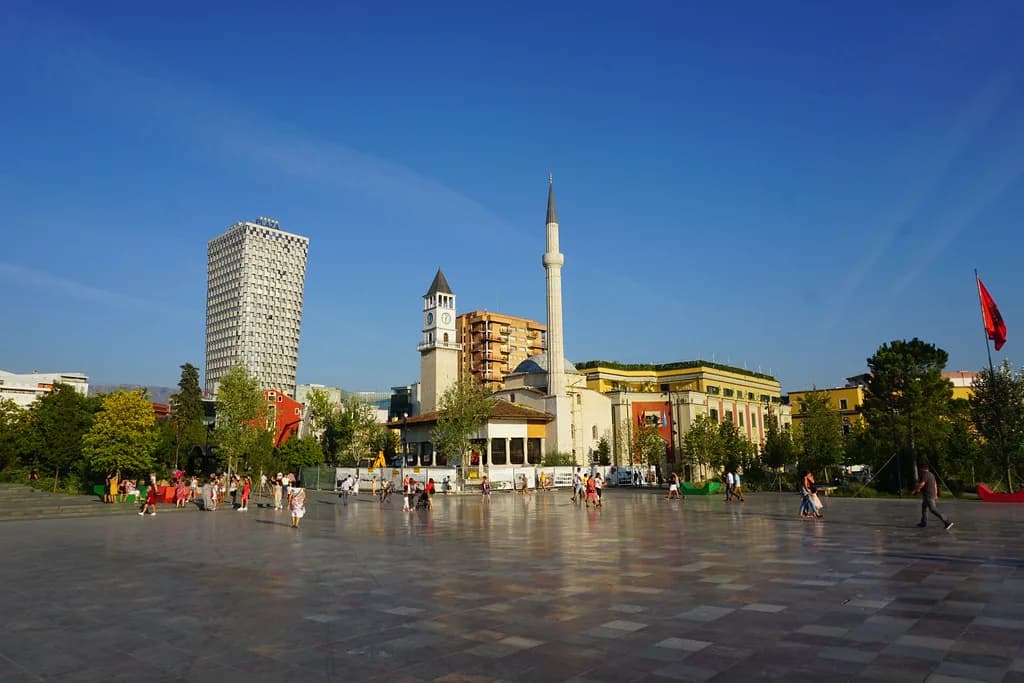
Walking is the sensible way in: the mosque is central, close to the parliament and the Lana River park, and five minutes from Skanderbeg Square. Start at the square, look at the Et'hem Bey Mosque and the clock tower, walk south to the Namazgah Mosque, then cross to the cathedral triangle and finish along the river.
The cathedral next door is worth the same stop: the Cathedral of the Resurrection of Christ, the Orthodox cathedral in the triangle, is a short walk from the mosque's courtyard and gives you the contrast the site was designed around. It is also the easiest of the city's churches to fit into this walk; for the full picture, see our guide to the Tirana Cathedral and the city's other churches.
Is the Great Mosque worth the detour?
Yes, if you go at the right hour. It is five minutes from Skanderbeg Square, and the combination of the prayer hall, the courtyard and the neighbouring cathedrals makes a compact and worthwhile loop. Go mid-morning, dress modestly, take your shoes off at the door, and skip Friday midday.
If you have an afternoon, extend the walk into the old town streets and the museum quarter rather than treating the mosque as a standalone stop. Twenty minutes here, done respectfully, is a better visit than an hour spent waiting for the prayer to finish.
Explore more Tirana guides
Frequently Asked Questions
Is the Great Mosque of Tirana the same as the Namazgah Mosque?
Yes. Xhamia e Namazgjasë is the Albanian name, and English-language listings call it the Namazgah Mosque or the Great Mosque of Tirana. It is the same building near the Parliament of Albania, inaugurated in October 2024.
Do I need a ticket to visit the mosque?
No ticket is required, and donations are welcomed but not required. You walk in outside prayer times, take your shoes off at the entrance and behave as you would in any working place of worship.
What should I wear to visit a mosque in Tirana?
Men should wear trousers and a shirt covering the shoulders, not short shorts. Women should cover their hair with a headscarf, often available at the entrance, and wear long skirts or loose trousers. Shoes come off before the carpeted prayer area.
Sources
Notes for your Albania trip
Optional updates to our Albania town guides.
You might also like
Continue reading
More guides you'll find useful