Himarë Promenade: The Seafront Walk, Stretches and What's at Each End
A practical guide to the Himarë promenade: how long the seafront walk takes, which beaches and cafés line it, and how it links to the castle and Old Himarë.
On this page
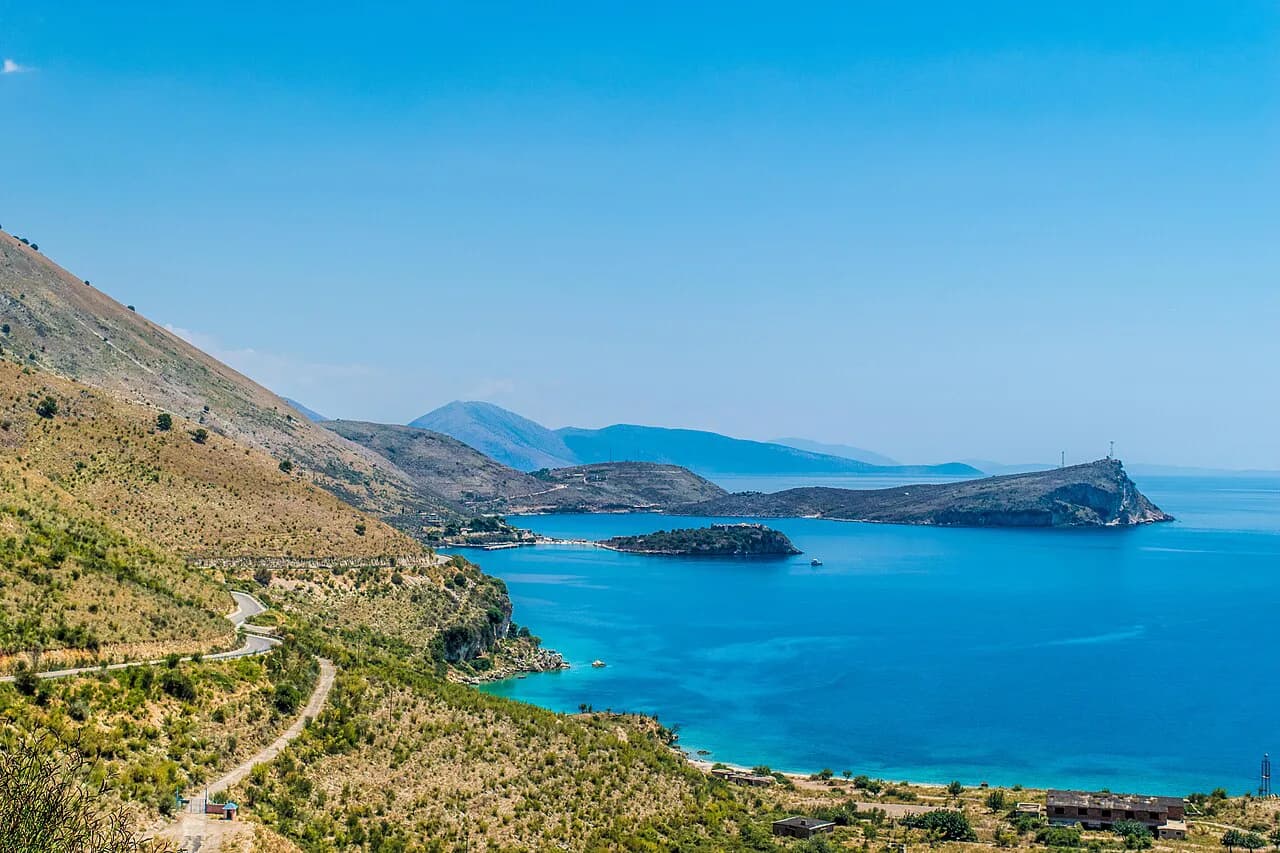
The Himarë promenade is a seafront walk of about 2 km that links the town's six named beaches, from Spile in the north to Potami in the south. Walking its full length and back takes roughly an hour at an easy pace, which makes it the simplest way to see the whole town frontage. This guide breaks the walk into named stretches, explains the evening xhiro, and covers the two historic detours above the town: the castle and Old Himarë, which you can follow up with our Himarë Old Town guide.
What the promenade is and where it runs
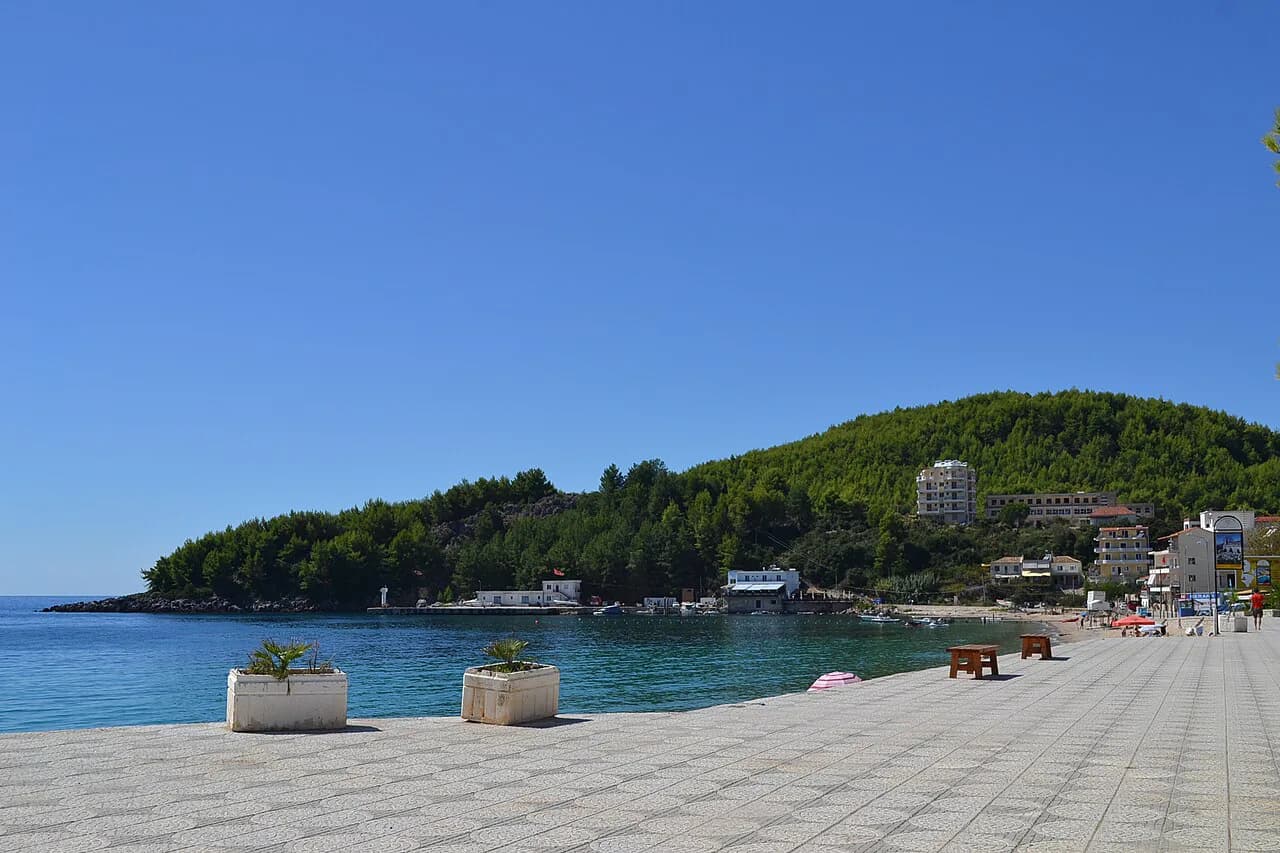
The promenade runs parallel to the coast through the centre of Himarë, with the sea on one side and the town's cafés, shops and restaurants on the other. Much of the centre sits within a short step of it, though the ground above the seafront rises steeply. Think of it as the spine of the resort: most of what you need in the centre is a short walk off it.
Most of the restaurants and shops sit in the northern part of Himarë, close to the promenade, while the southern part is quieter. Free parking is difficult in the northern section, but a private car park listed in Google Maps as Private Parking Himare charged 300 lek for three hours or 700 lek for the day in 2023. If you plan a full day that includes the top sights among the Things to Do in Himarë, paying once in the north and walking rather than moving the car is the sensible approach.
How long the seafront walk takes and how far it goes
The town has roughly 2 km of coastline, so a full length of the promenade and back is about 4 km and takes around an hour. That is a comfortable stroll, not a hike, and there is no need to prepare for it beyond footwear you can walk in. If you stop for a swim or a coffee, add the time accordingly.
The walk is best treated as a series of short hops rather than a single march. Pick a beach, walk to the next one, stop, and carry on; the flat surface means you can turn back at any point without a climb. For orientation before you start, a Himare map makes the order of beaches and the side streets up to the old town easier to follow.
Which beaches the promenade passes
The beaches run in a line from north to south: Spile (Plazhi i Spillese), then Himarë Beach (Plazhi i Himares), Sfageio, Marachi (Plazhi i Maracit), Prinos and Potami. Spile is the northernmost and is also where the jetty for boat tours sits. Himarë Beach merges into Spile and has showers and a lifeguard, while Sfageio is the smallest of the group, tucked between the main beach and a small cliff with a restaurant above it.
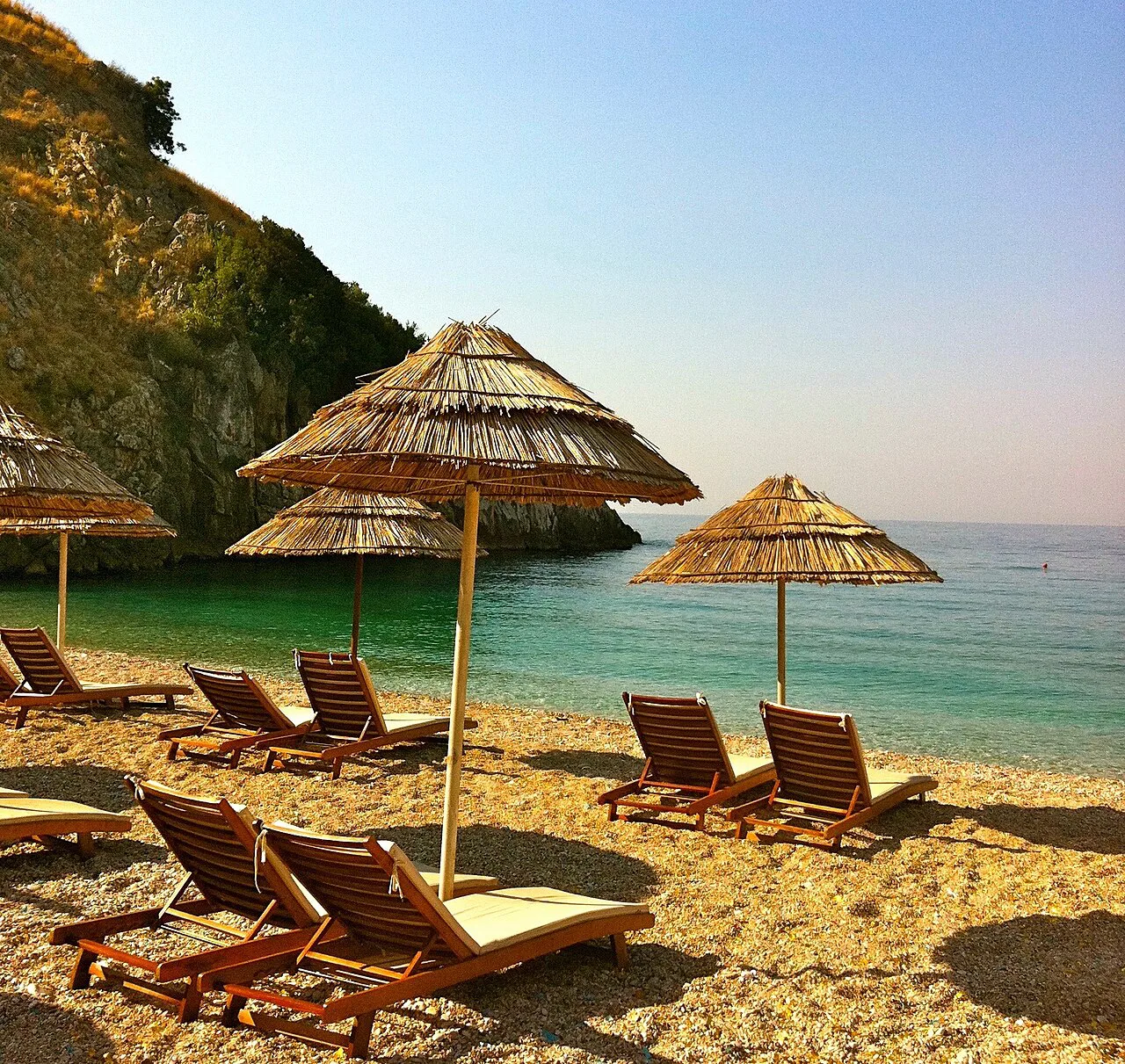
Marachi is a private beach, which surprises some walkers, and is the spot where renting a lounger makes most sense. In 2024 two sunbeds and an umbrella cost 1000 lek per day, according to a beach guide published that year; prices are not fixed and vary by beach and season, so treat that as a guide rather than a tariff. Prinos is where many of the hotels sit and has beach bars, while Potami is the southernmost and quietest of the central beaches.
When to walk it: the evening xhiro and summer heat
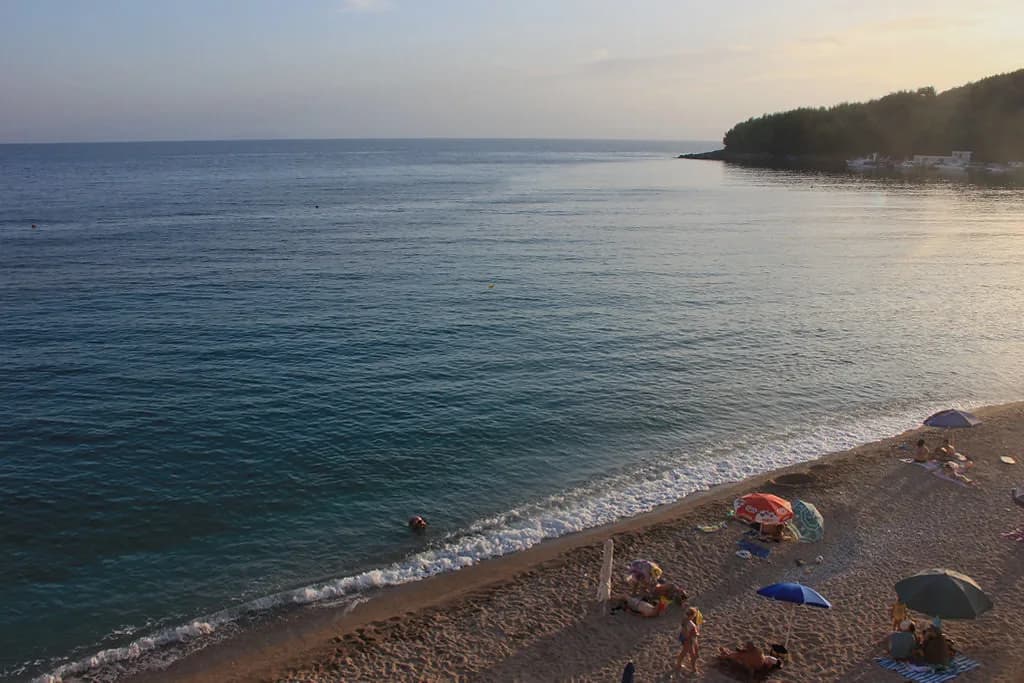
In Albania the evening stroll is called the xhiro, and in Himarë it means walking the promenade as the light drops and the heat lifts. The cooler hours either side of sunset are the practical time to be on the seafront in July and August, when the middle of the day is hot and the beach is the better place. If you want warm weather with fewer people, June and September give temperatures around 25°C, and May and October hover around 20°C.
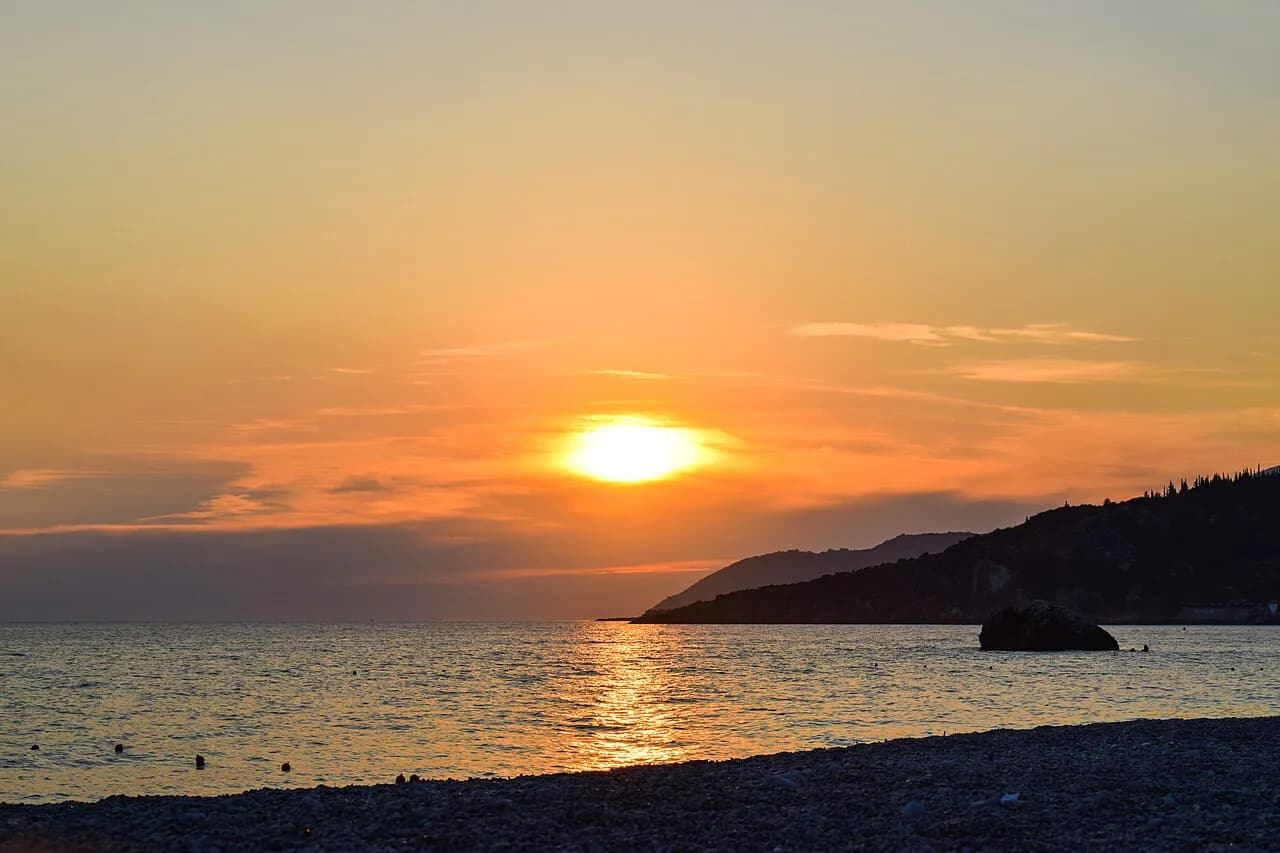
Sunset over the water is the reason the walk is timed for evening. If photography is part of the plan, allow an extra twenty minutes on the northern frontage. For a dedicated spot to watch the day end, the Himare sunset guide covers the angles and the best stretches, but the promenade itself gives you the whole bay.
What lines the seafront: tavernas, cafés and the boat jetty
The northern stretch around Spile holds most of the restaurants and shops, many of them serving Greek-influenced food in the taverna style. That makes the northern end the place for a sit-down meal, while the southern frontage is better for a quiet coffee. For a shortlist of places along the seafront and just off it, our guide to the best restaurants in Himare names the options worth booking.
The jetty at Spile is where boat tours leave from, and it is worth checking current departures before you rely on one. Boat trips from here include the Grama Bay Tour, the Coastline Tour and the Pirate Cave Tour; the schedule and price are best confirmed at the time you book, as a daily service is not guaranteed. We cover how the trips differ in the Himarë boat tours guide.
Parking near the promenade and the northern seafront
Free parking is hard to find in the northern part of Himarë, and the southern part is where roadside spaces are easier. The paid option in the north, cited above at 300 lek for three hours and 700 lek for the day in 2023, is the least stressful choice if you are arriving by car. In peak season, expect the seafront itself to be busiest in the evenings, which is exactly when the xhiro fills it.
If you are staying outside the centre, the short drive in each evening is a common pattern and saves you hunting for a space during the day. Drop everyone at the northern frontage, park, and walk the length of the promenade before dinner. That way you see both ends of town without moving the car twice.
Walking up to Himarë Castle from the seafront
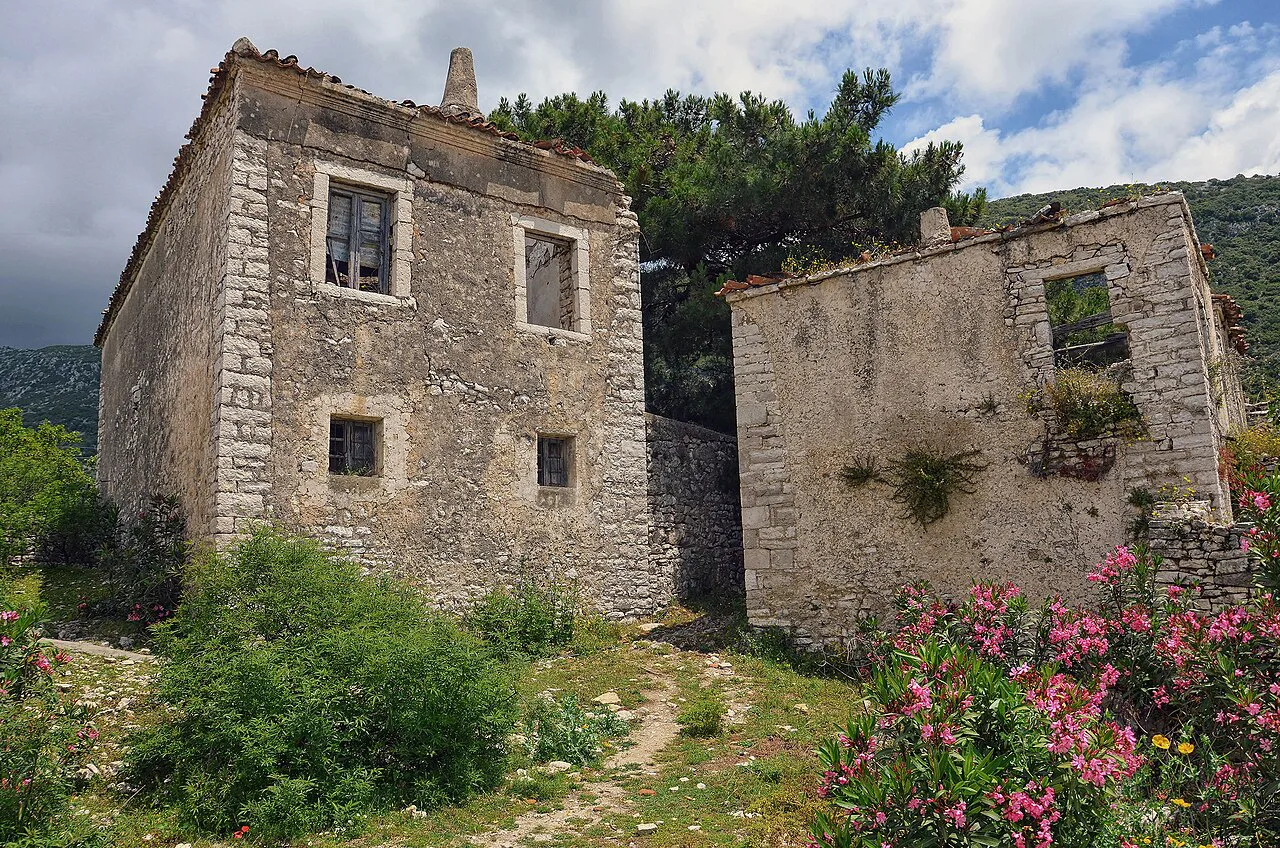
The climb to Himarë Castle is the steep counterpart to the flat walk along the seafront. The route is strenuous, but the zigzagging old streets and high stone walls lead into the upper castle, where the view opens over Livadhi beach and the bay. Today's buildings and churches date from the Middle Ages, though the site has been inhabited since ancient times.
Allow an afternoon if you plan to explore properly, and go in the morning or evening rather than the heat of the day. The castle is not connected to the seafront by a gentle path, so treat it as a separate outing from the promenade walk. Our Himarë map shows both the seafront and the path up so you can judge the climb before you start.
Old Himarë and the Church of All Saints above the town
Old Himarë, or Himara Fshat, sits above the modern town and is reached by road. The Church of All Saints stands next to the castle and has a bell tower and a view of the mountains behind the town. The walls of the church carry paintings of everyday life in the old town, and the ruined streets around it reward a slow wander on foot.
Parking at Old Himarë is limited just off the main road, with more space behind the nearby church. Because it is a drive rather than a walk from the seafront, pair it with the castle in one outing rather than trying to fit it into an evening stroll. Our Himarë Old Town guide covers where the lanes lead and what to look for among the ruins and churches.
Extending the walk: the path between Livadi beach and Himarë
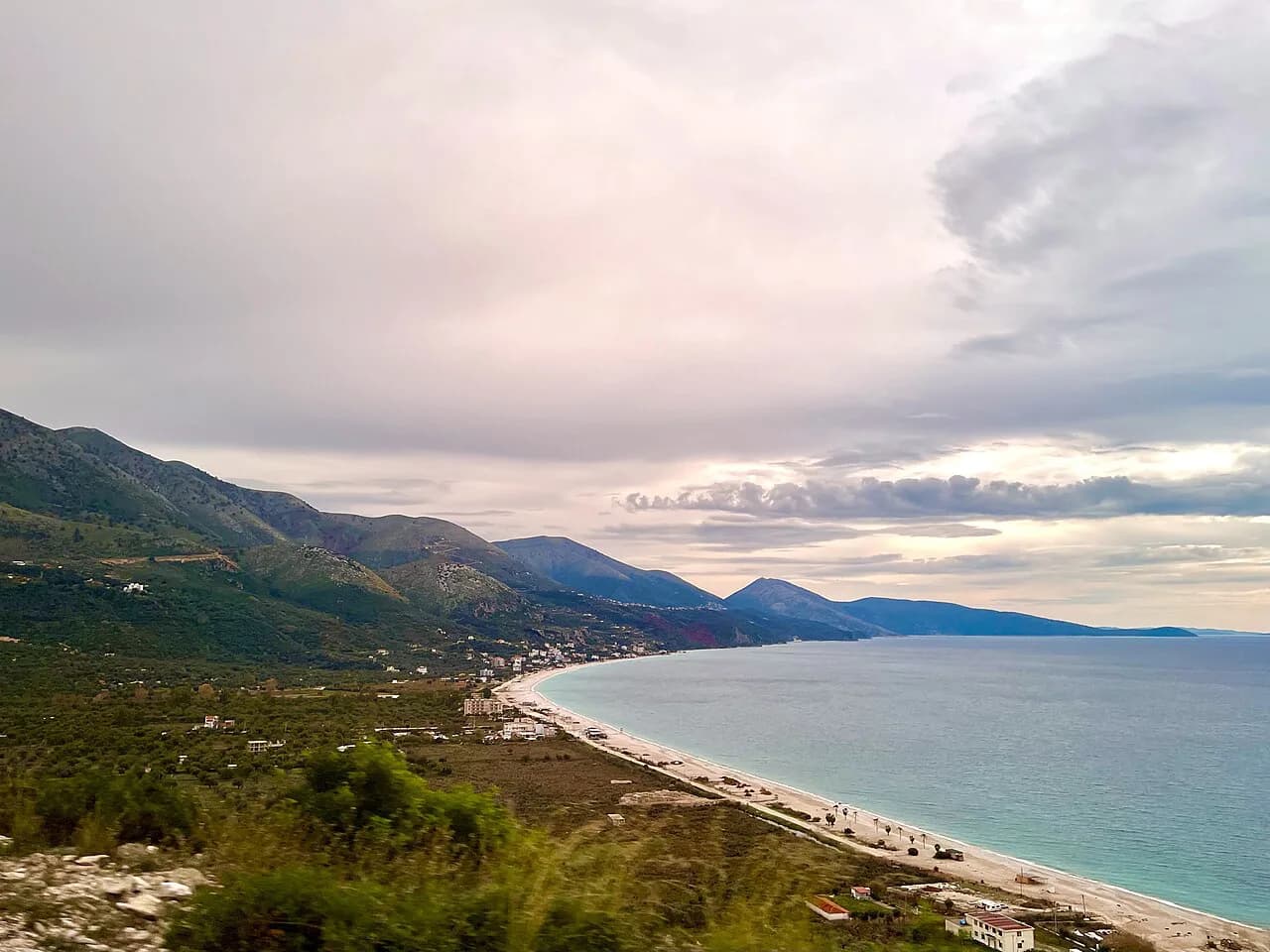
Livadi beach, north of the town, is not part of the promenade. A separate path connects it to Himarë, running through narrow forest trails and over sharp rocks on an easy but uneven route. If you take it, wear shoes rather than sandals and allow more time than the flat sea front takes.
Livadi itself is a wider, sandier beach than the town frontage and repays the walk if you have a spare afternoon. The connecting path is a useful way to link a beach day with an evening back in town. For the rest of the day's options, see the Things to Do in Himarë guide.
Practicalities: cash, sunbeds and the state of the seafront
Take cash to Himarë: the seafront bars and sunbed renters may operate on cash, and a machine failure is not the moment to discover you have none. Sunbed and umbrella prices vary by beach and season, and the Marachi figure above is an example from 2024, not a fixed rate. The southern end of Livadi is quieter because the road does not extend that far, which is worth knowing if you want a less developed patch in the peak season.
Parts of the waterfront have been under construction in recent summers, and the area above Livadi was messy while a promenade was being built there in 2023. That kind of work changes quickly, so judge the state of the frontage when you arrive rather than relying on last year's account. For everything else in town, start with the Things to Do in Himarë guide and work out from the seafront.
Walk the flat frontage first, then climb
The promenade is the easiest thing you will do in Himarë, and that is the point: it links the beaches, the restaurants and the jetty without a single climb. Do it on your first evening to get your bearings, then use the mornings for the castle and Old Himarë, when the heat is lower and the paths are quieter. If you have more than a couple of days, use the seafront as your base and add the boat trips and the outlying beaches from there.
Explore more Himare guides
Sources
Notes for your Albania trip
Optional updates to our Albania town guides.
You might also like
Continue reading
More guides you'll find useful