
Rozafa Castle (Kalaja e Rozafës), Shkodër: A Visitor's Guide
Rozafa Castle crowns the rocky hill at the entrance to Shkodër, roughly 130 metres above sea level, and an hour and a half inside its walls is enough to see the courtyards, the church that served as a mosque and the river confluence below. Go for the view as much as the ruins: the Drin, Kir and Buna braid together west of the ramparts, with Lake Shkodra stretching towards Montenegro. This guide covers the current ticket options and opening times, the climb or bus ride up from the centre, what stands inside and what to pair with it in town.
Where Rozafa Castle sits above Shkodër
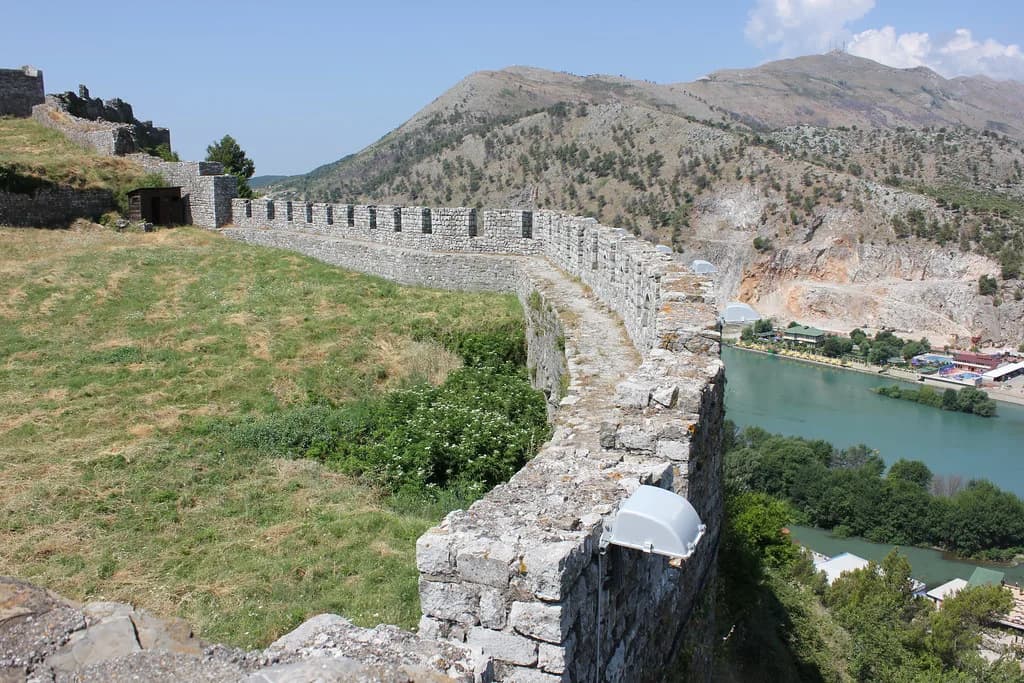
The castle occupies a strategic rocky hill at the entrance to Shkodra, from which it controlled the plain and the rivers that meet below. Its name, Rozafa, belongs to the medieval period, but the site is of Illyrian origin and went through Roman, Byzantine, Venetian and Ottoman building phases. The walls you walk today owe most to the Venetian period, while the castle's current form was given to it by the Balshaj family during their 14th-century rule, and Ottoman work also left its mark.
It is a ticketed heritage site rather than a free viewpoint, and one ticket covers the castle and the museum displays inside it, on a single set of hours. If that is your main reason for being in town, the castle anchors a short break in Shkodër, and the walk down puts you back on the boulevard within half an hour.
Opening hours through the season
In 2026 the gate is open every day from 09:00 to 20:00 until the end of October, a longer day introduced so groups can avoid the hottest hours. From 1 November the off-season timetable applies: closed on Mondays, 09:00 to 16:00 Tuesday to Saturday, and 09:00 to 14:00 on Sundays until the season restarts in May. Treat those times as the 2026 schedule and confirm them at the kiosk if you arrive in the changeover weeks, when the published list tends to lag behind the gate.
Summer heat matters more than you might expect, because the last stretch of the climb is a steep cobbled ramp with no shade. Arriving at opening time or in the two hours before closing gives you softer light on the rivers and cooler stone underfoot.
Ticket prices at the gate and online
In 2026 an adult ticket costs 400 lek at the gate, or 300 lek bought online through the ministry's e-Albania service. Online payment carries a 50-lek card fee, so a single adult pays 350 lek in total against 400 at the kiosk, a saving that only becomes worthwhile for a group of more than 12, where the online rate is 200 lek each. Children under 12 enter free, ages 12 to 18 and students pay 120 lek at the gate, and a half-price 200-lek rate exists for other reduced categories.
The reduced categories are worth asking about rather than assuming: the ministry's list covers pupils, students, pensioners, orphans and disabled visitors, but whether a foreign student card or pension card counts is decided at the kiosk. Online tickets are bought on a separate path for visitors without an Albanian e-ID, and e-tickets are valid for a month. If a card payment is refused, the kiosk sells the same ticket on the spot.
Getting there from the centre
On foot it is about 3 km from the centre of Shkodër on ordinary streets, with the climb finishing on the steep, unshaded cobbled ramp below the gate. Allow roughly an hour each way if you walk slowly or stop for photographs, and carry water in summer. The alternative is the city's Fermentim–Bahçallëk bus, which stops on Democracy Square; ride it to the old Buna bridge and walk uphill for about 20 minutes from there.
A taxi or your own car shortens the approach, and there is a small car park by the entrance that fills quickly in peak season. Coaches and cars are meant to get extra parking below the walls as part of works announced for 2026, so the last few hundred metres may look like a building site. If you would rather not drive, a licensed operator such as Albaniaturism runs guided visits that include the castle's history and legend.
What to see inside the walls
The gate leads through monumental stone walls into three courtyards linked by internal paths, with towers, gates and ruined buildings to pick through. The church inside is the building to look at closely: it spent nearly three centuries as a mosque before returning to church use, and the conversion is why its outline reads oddly against the fortifications. Small museum displays inside hold artefacts, old weapons and models showing how the fortress evolved.
At the main entrance look for the bas-relief of Rozafa and the limestone water that seeps out there, which the story connects to the milk she was left to feed her child with. Engravings, reproductions of archival documents and works of art around the site carry the city's history and its notable figures, so the visit is not only about the masonry.
The view over the rivers and the lake
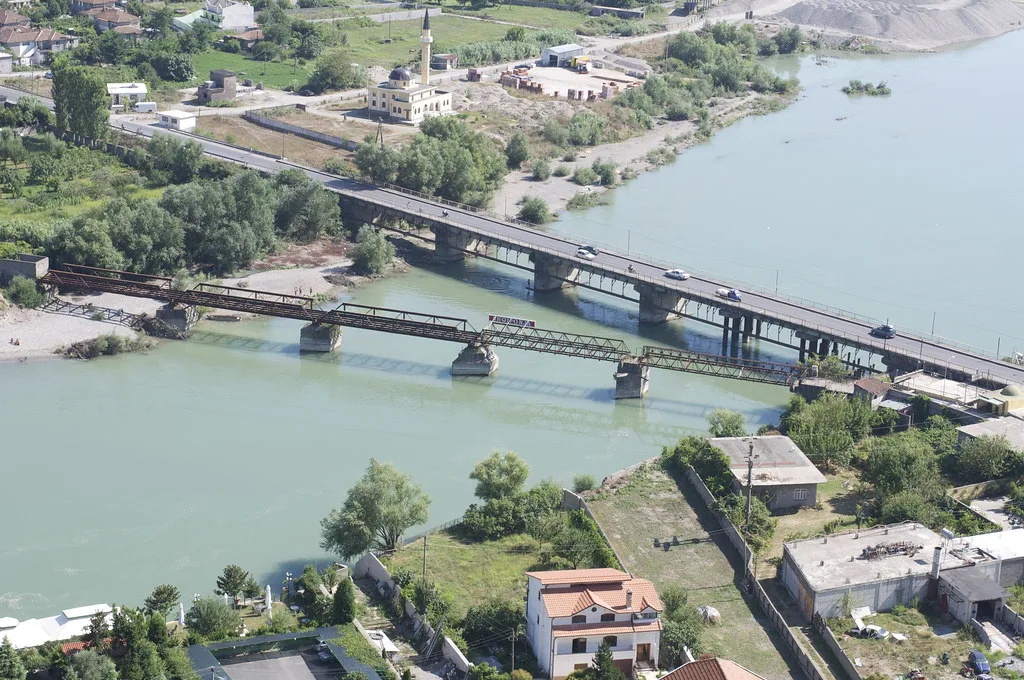
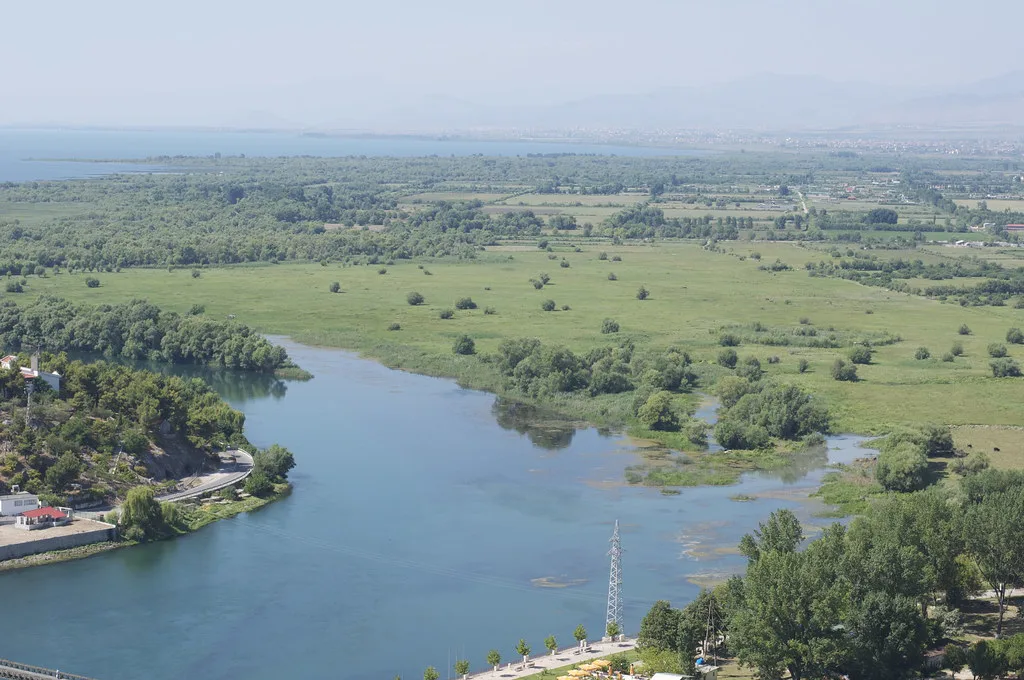
West of the castle the Drin, Kir and Buna meet, and the braided channels, the minaret on the near bank and Lake Shkodra heading for Montenegro are what justify the ticket. The official tourism site singles out this river junction as the castle's photographic draw, and the ramparts give you several angles on it as you walk the circuit.
Late afternoon gives the best combination of open hours and low light, and the terrace above the rivers catches a breeze that the climb up does not. Bring a light layer even in summer, because the exposed walls funnel wind once you are up top.
The Legend of Rozafa, briefly
The legend explains why the walls stand: three brothers built by day and the walls collapsed by night, until a wise elder said a living person had to be immured in the masonry. Rozafa, the youngest brother's bride, agreed to be walled in so the fortress could be finished, asking that one arm, one leg and her head be left free so she could keep nursing her infant. The story is usually read as a tale of sacrifice and keeping one's word, and it is a central part of Shkodër's identity rather than a footnote to the ruins.
How long to allow, and what to do after
Give the castle about an hour and a half: enough to walk the courtyards, read the displays, find the church-mosque and sit with the view without rushing. Add the walk up and back and you have used half a day.
Below the walls, the natural pairing is the Mes Bridge (Ura e Mesit) outside town, an Ottoman stone crossing that suits a combined half-day with a car. In the centre, Kolë Idromeno Street is the pedestrian spine of Shkodër, lined with pastel houses, cafés and shops, and a good place to land after the descent. For more options across the town, see Shkoder Attractions: 5 Visitor Guides.
Nearby in Shkodër town
The Marubi National Museum of Photography holds a photographic record of Albanian cultural, social and political life from the 1850s onward, and it makes a cool, quiet contrast to the exposed castle hill. It sits within easy reach of Kolë Idromeno Street, so the two fill an afternoon without a car.
For a more sober stop, the Site of Witness and Memory, Shkodër documents the persecution of Albanians under the communist regime, including prisoners executed and sent to labour camps, and it is a short walk from the main square. The Lead Mosque, Shkodër on the riverbank is an Ottoman-era building worth a look if you are already walking the Buna side of town.
Is the climb worth the ticket?
Yes, if you go for the rivers rather than the ruins alone: the confluence, the lake and the mountains behind them are the reason to pay the 400 lek gate price, and an hour and a half is enough. Walk up early or late to dodge the unshaded ramp, or take the bus to the old Buna bridge and shorten the climb. The castle is a natural first stop for the rest of your time in Shkoder, with the town's museums and streets waiting below.
Buy at the kiosk if you are one or two people, since the online saving disappears into the card fee, and buy online only if your group is large enough to make the per-person rate count. Check the board at the gate for the current price and today's hours before you commit to the climb.
Frequently Asked Questions
How do I get to Rozafa Castle without a car?
Take the Fermentim–Bahçallëk city bus from Democracy Square to the old Buna bridge, then walk about 20 minutes uphill. Walking the whole way from the centre is roughly 3 km, ending on a steep cobbled ramp with no shade. A taxi shortens the approach and drops you near the entrance car park.
Is one ticket enough for the castle and the museum?
Yes. The site is ticketed as the castle and museum together, with a single set of opening hours, so the adult ticket covers the museum displays inside the walls. If someone asks you for a separate museum ticket, ask what it covers before paying.
What is there to see near the castle in Shkodër?
In town, the Marubi National Museum of Photography and the Site of Witness and Memory are both short walks from the centre, and Kolë Idromeno Street is the place to eat afterwards. Outside town, the Mes Bridge (Ura e Mesit) suits a combined half-day if you have a car.