
Mes Bridge (Ura e Mesit): A Visitor's Guide to the Ottoman Span Near Shkodër
Mes Bridge is a 108-metre Ottoman stone bridge of thirteen arches over the Kir River in the village of Mes, a short drive northeast of Shkodër. It has carried pedestrians for roughly two and a half centuries, and it remains the reason most visitors leave the city for an hour or two. This guide covers the location, the approach from Shkodër, what to look at once you arrive, how long to allow and what to combine with it.
What Mes Bridge is
The bridge takes its name from the village of Mes (also written Mesi) in the administrative unit of Postribë, Shkodër County. Ura e Mesit translates literally as the bridge of Mes. It crosses the Kir on the old road towards the Kir valley and the southern Albanian Alps.
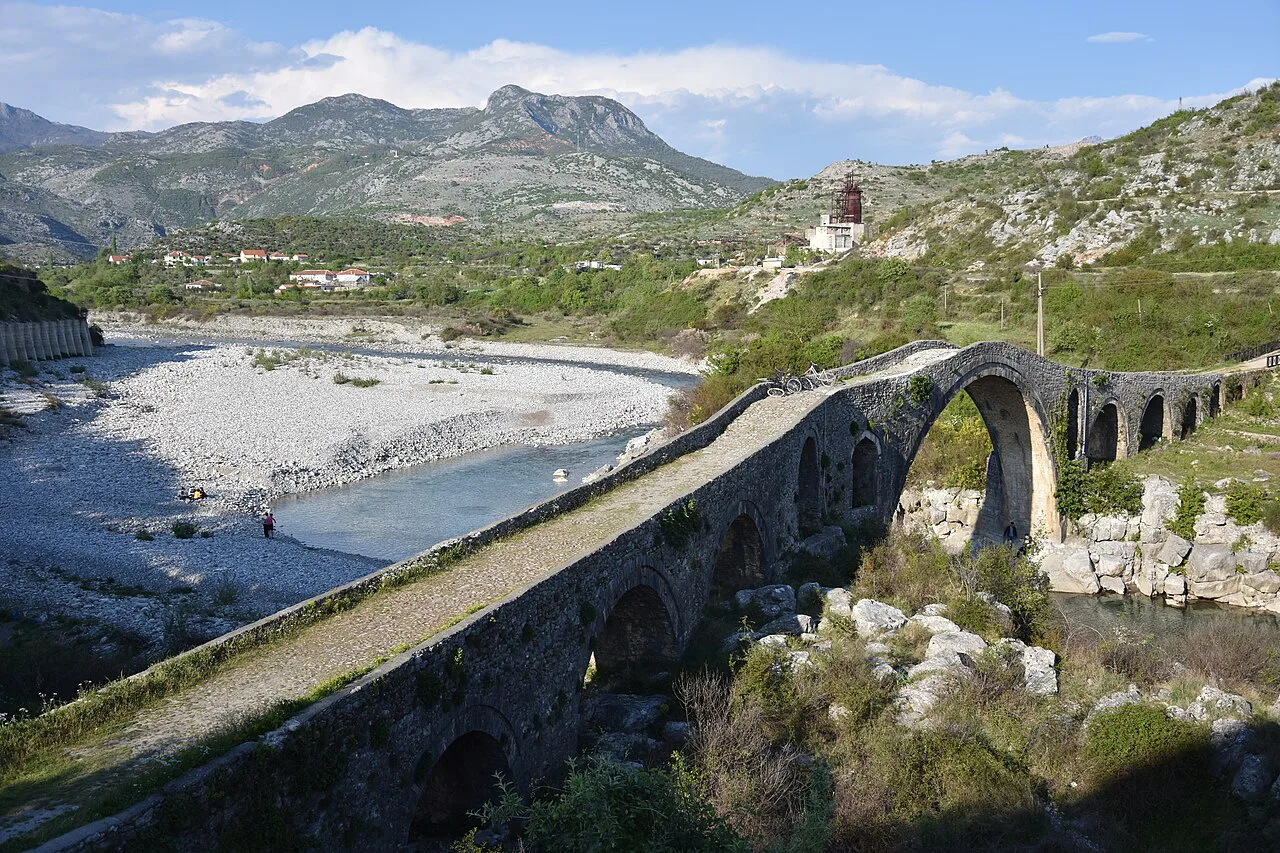
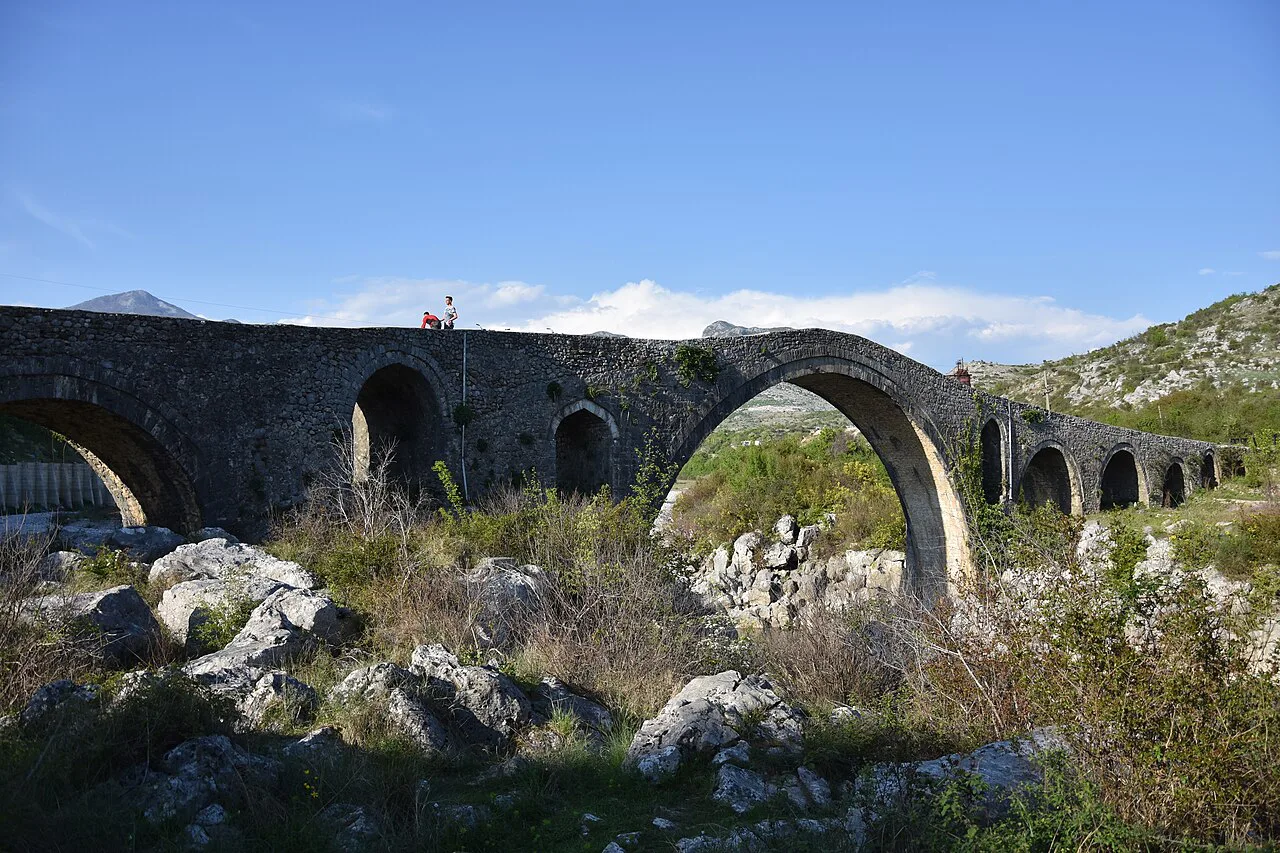
It is 108 metres long, 3.4 metres wide and 12.5 metres high, with thirteen arches of different sizes and heights. The central arch is the tallest and was designed to take the Kir at its strongest. Locally quarried stone forms most of the structure, and much of the mass was laid without mortar.
It was built in the late 1760s on the orders of Mehmed Pasha Bushati, the Ottoman governor based in Shkodër, to improve the route east towards the Drin and on to Kosova. That trade purpose explains the width and the height of the deck above the flood line.

Where it is and how to find it
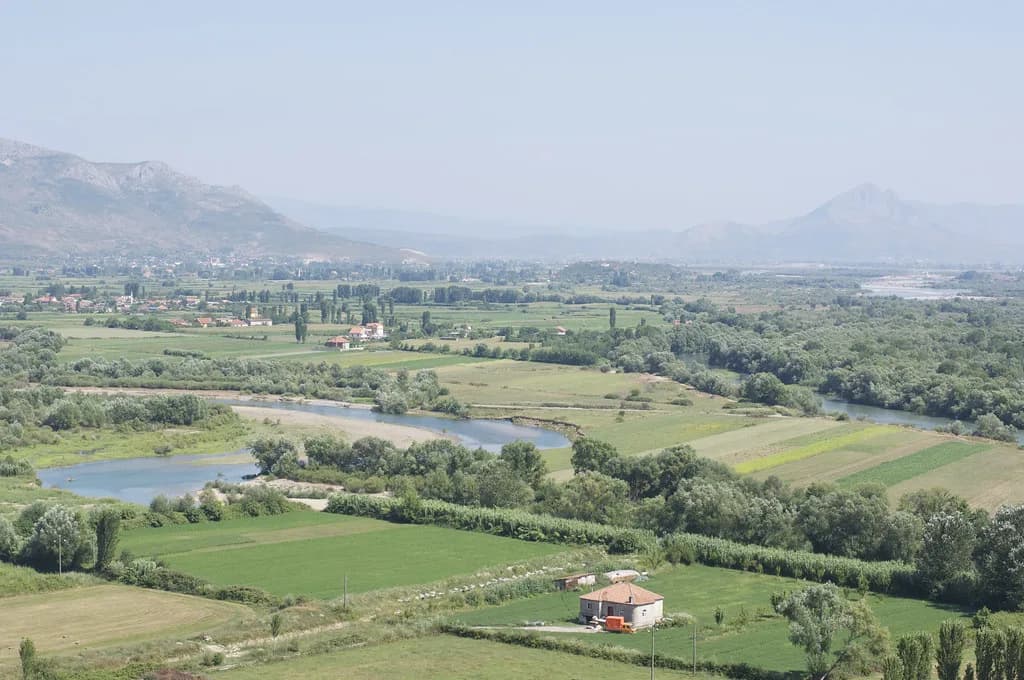
The bridge sits about 5 km northeast of Shkodër, a short drive out of the city on the road towards Mes and the Kir valley. The road out of the city passes the eastern edge of Lake Shkodra before dropping into the narrow valley of the Kir.
If you are driving yourself, the bridge is a quick stop rather than a destination in its own right, and the parking is informal roadside space beside the new road bridge. It is easiest to combine the visit with Drisht Castle and the Kir valley on the same loop, since all three sit on the same road out of Shkodër.

Getting there by bike, car or taxi
Cycling is the most pleasant way to arrive, because the road is only about five kilometres from Shkodër and is not especially busy. Bikes can be rented in the city, and the ride out along the Kir valley makes a natural half-day outing. Allow for warm exposed stretches in summer and take water.
Without a car the practical options are a taxi from Shkodër or a small-group tour that includes the bridge alongside other sights. Arrange the taxi as a return trip or agree a pickup time, since there is no taxi rank at the bridge itself. No bus or furgon route to the bridge is set out in the available sources, so ask at your accommodation in Shkodër what currently runs.
Why the silhouette is uneven and the deck bends
The bridge is not symmetrical, and that is the first thing to notice. The central arch was built first together with one adjacent arch, and the remaining eleven smaller spans were added afterwards. That sequence gives the long, undulating line of stone that photographs so well from the riverbank.
The deck also kinks slightly as you cross. The builders shifted the alignment to avoid boulders on the riverbed rather than forcing a straight line. Look down at your feet halfway across and you can see the small bend where the masonry changes direction.
Walking the bridge and where to stand
The crossing takes a couple of minutes at an easy pace, but the deck is cobbled and there are no railings, so wear shoes with grip and keep an eye on children near the edges. The parapets are low by modern standards. Nobody should be leaning over them.
The best view of the arches is from the riverbed below, reached by scrambling down from the roadside. The deck itself gives you the view along the Kir valley towards the Albanian Alps, which appear in the distance on a clear day. A short walk upstream and downstream gives two quite different profiles of the bridge.
One honest caveat: a new road bridge was built a few metres from the historic span and intrudes on the view from several angles. Frame your shots along the old bridge rather than across it, or walk further down the riverbank to get the new concrete out of the picture.
The river through the year
The Kir is shallow for most of the year and often nearly dry in the summer months, so do not arrive expecting a full span of rushing water beneath the arches. The river is at its most dramatic for a few weeks in spring, when meltwater fills the channel. The bridge's height and span make more sense once you have seen that contrast.
How long to allow
The bridge itself needs around thirty minutes, including the walk down to the riverbed and a look from both banks. Pair it with Drisht Castle and you have a comfortable half-day from Shkodër by car or bike. Adding the Kir valley drive extends the outing, but check road conditions locally before heading further into the mountains.
There is no ticket office or gate at the bridge, and no published opening hours, so plan around daylight and weather rather than a timetable. If you want to confirm access or learn about any restoration work in progress, ask the tourist information point in Shkodër or your accommodation before setting out.
Nearby: Rozafa Castle and Shkodër's old town
Most visitors to Mes Bridge start or finish at Rozafa castle, which sits on its own hill on the other side of Shkodër and makes an obvious pairing on a day out from the city. The two together cover Ottoman engineering and the city's defensive history in a single loop.
Back in town, the Marubi national museum of photography holds a remarkable archive of Albanian photography on Kolë Idromeno Street, and it fills an hour well after a morning at the bridge. Both are covered in our guide to Shkoder Attractions, which sets out the city's sights in a workable order.
If you have longer in Shkodër, the Lead Mosque Shkodër and the site of witness and memory round out a fuller day in the city. Neither is on the way to the bridge, so treat them as a separate afternoon rather than an add-on.
Should you add Mes Bridge to your Shkodër day?
Yes, if you are already hiring a car or a bike and heading towards Drisht or the Kir valley. The bridge rewards a thirty-minute stop with a close look at Ottoman engineering, a walk on a cobbled deck and a view back up the valley, and there is no ticket office or gate to plan around.
Skip it if you are short of time in Shkodër and relying on public transport, since getting there without a car means a taxi or a tour. For everything else in the city, from the castle to the museums, start with our guide to things to do in Shkoder and slot the bridge into a half-day loop.