
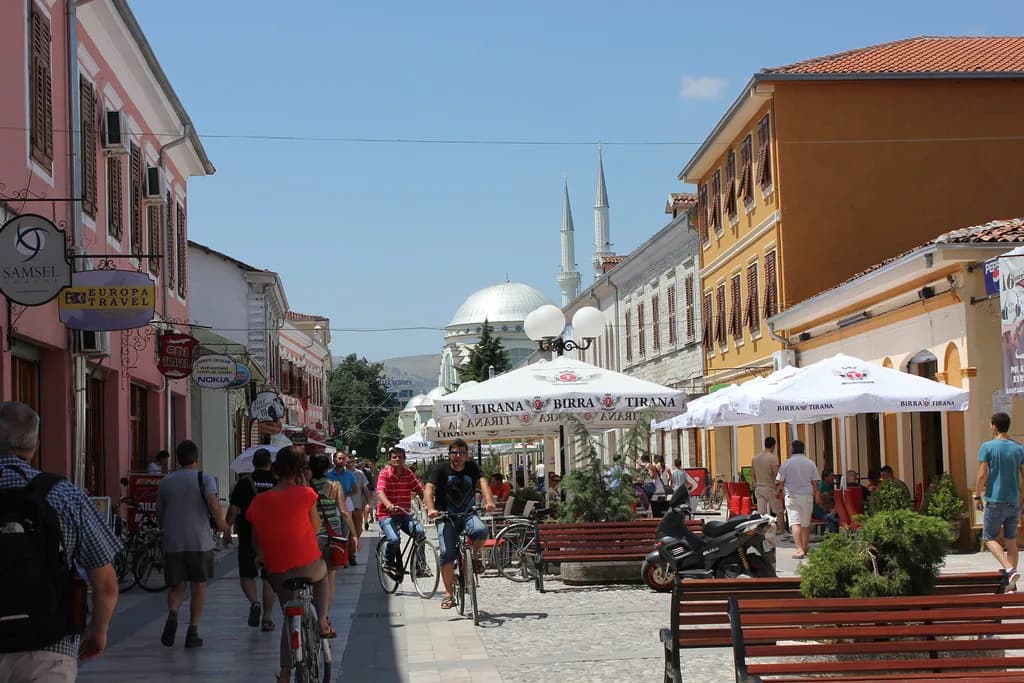
Marubi National Museum of Photography: what to see in Shkodër
The Marubi National Museum of Photography is a compact, single-subject museum on Kolë Idromeno Street in the pedestrian centre of Shkodër, built around the work of three generations of the Marubi photographic dynasty. Its permanent display runs through three thematic rooms, so you pass a working studio, a dark room and a family archive in one visit. This guide covers where the museum sits, what each room shows, how long to allow and what to pair with it nearby.
What the Marubi National Museum of Photography is
The museum holds the archive created by the Marubi dynasty and presents it as a modern institution on the city's main pedestrian street. It opened to the public in May 2016 after renovation work supported by the Albanian-American Development Foundation with the Albanian government and the European Commission.
The collection runs to more than 500,000 negatives reaching back to 1856, and the displays draw on the studio's own holdings plus contributions from other Albanian photographers. Treat it as a photography museum with a documentary purpose rather than a general history museum.
It belongs with the other sights in the centre rather than on a separate excursion; Shkoder Attractions: 5 Visitor Guides sets out the rest of the cluster.
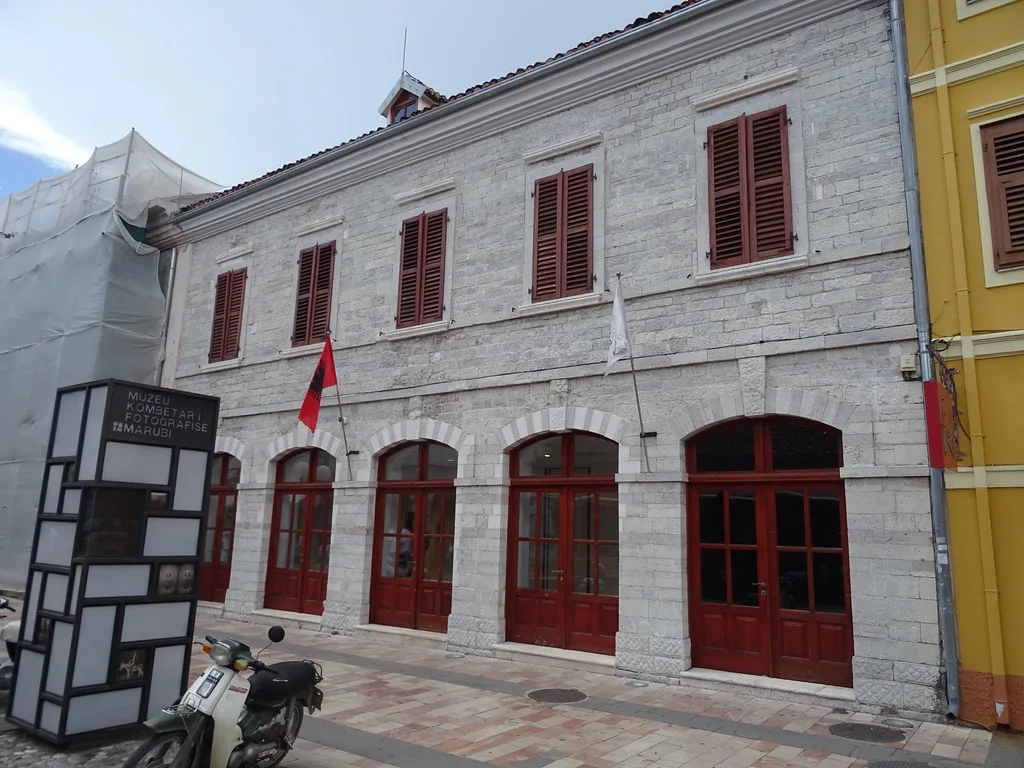
Where the museum is on Kolë Idromeno Street in Shkodër
The address is Rruga Kolë Idromeno, No. 32, 4001 Shkodër, on the pedestrian street running through the centre of the city. The museum lists the same street number alongside telephone numbers and an email address, which are the quickest way to confirm practical details before travelling.
Kolë Idromeno is named after the Shkodër painter and photographer whose work also appears in the museum's collection. The setting is flat and entirely urban, which makes the museum easy to slot into a walk through the centre.
How to reach it on foot through the pedestrian centre
The museum is a walking destination: once you are in the pedestrian zone around Kolë Idromeno Street, no bus or taxi leg is needed. From the area around Bulevardi Skënderbeu, allow a short walk of roughly ten to fifteen minutes depending on where you start.
The centre is compact and mostly level, so the approach is straightforward even with a bag in warm weather. If you are also visiting the Site of Witness and Memory, Shkodër on Bulevardi Skënderbeu, the two fit into the same walking loop.
Leave the car behind if you can: parking in the pedestrian core is limited and the museum does not sit on a through road. Furgon minibuses and buses serving Shkodër set down near the centre, and from there you continue on foot.
What the three rooms of the permanent exhibition show
The first room reconstructs Pietro Marubbi's photographic studio as a staged set, with painted backdrops of nature combined with carpets, chairs and plants, and side-window light controlled by curtains. Marubbi, who lived from 1834 to 1903, worked in this theatrical environment to produce the studio portraits that made his name in Shkodër.
The second room turns to Kel Marubi's dark room and the technical shifts of his era, notably the move from glass-plate negatives to celluloid film. Kel Marubi, 1869 to 1940, worked through changes that made developing easier and cut the size and weight of cameras.
The third room presents Gegë Marubi's archive and its scale: the material Gegë Marubi donated to the Albanian state in 1970 comprised 493,819 negatives, 246 letters and telegrams, 219 cameras and other photographic material. Those figures make the holdings legible, because the displays themselves are only a selection.
The collection has since been extended by other Shkodër and Albanian photographers, including Kolë Idromeno, Shan Pici, Dedë Jakova, Pjetër Rraboshta and Angjelin Nenshati. Read the rooms as a family story set inside a wider photographic culture rather than a single-studio tribute.
What the archive holds and why it matters
The archive preserves the studio's output across births, baptisms, weddings, funerals and public life in Shkodër, alongside portraits of well-known figures and of ordinary people. The photographs work as a record of the city and of Albanian history as much as an artistic collection.
The studio's story runs from Pietro Marubbi's arrival in Shkodër, through Kel Marubi's inheritance of the studio and its renaming as Dritëshkroja, to Gegë Marubi's training in France. In 1952 the photographic atelier was closed, and Gegë went to work in a state cooperative of photographers before donating the family archive in 1970.
That history is told plainly through photographs and captions rather than dramatic presentation, which suits a small museum. Read the labels alongside the images; they carry the dates and names that turn a wall of portraits into a narrative.
Temporary displays and the Gjon Mili material
Beyond the permanent rooms, the programme includes temporary exhibitions and material relating to Gjon Mili, the Albanian-born photographer known for his work in the United States. What is on show changes, so check the exhibitions page on Marubi.gov.al or ask at the desk before you visit.
A past example is Marubi: Life in Images, which ran from 17 March to 17 July 2017 and drew on the family archive to trace the photographers' gaze across people, places and events. It shows how the museum curates its own holdings, not what you will see today.
If a temporary show is the reason for your visit, keep some flexibility in your day so a closed gallery does not spoil the trip. The permanent three-room display is the reliable core.
How long to allow inside
Plan on about an hour for the permanent exhibition, which spreads across three rooms in a compact building. If you read the labels closely and take in a temporary display, an hour and a half is realistic.
Photography enthusiasts and anyone with a family connection to Shkodër tend to linger in the archive room, and there is no reason to rush it. Casual visitors who mainly want the atmosphere can move through in well under an hour and still walk the street afterwards.
Because the footprint is small, the museum works best as one stop in a half-day in the centre. Pair it with the street's cafés and shops, then head to the bigger sights while you still have daylight.
Tickets and opening hours: what to confirm before you go
The museum's permanent exhibition page does not publish a general admission rate or a daily timetable. Check the museum's website or ask at the desk on Kolë Idromeno Street before you build your day around a visit.
Tickets and daily opening times are not set out as a single published schedule here, so confirm the current position with the museum directly before you build your day around a visit.
The museum's contact details are listed as info@marubi.gov.al, which is the most direct way to settle ticket, group and access questions. Bring cash in lek as a sensible default for small museums in Albania, and ask about card payment when you ring or write.
What is nearby in Shkodër
The museum sits in the pedestrian core, so the Lead Mosque, Shkodër and the riverside walks are within reach on foot or a short ride.
Rozafa Castle, Shkodër is the obvious bigger sight to pair with a museum morning, sitting on its hill above the city. Allow separate time for the climb and the grounds rather than squeezing it into the same hour.
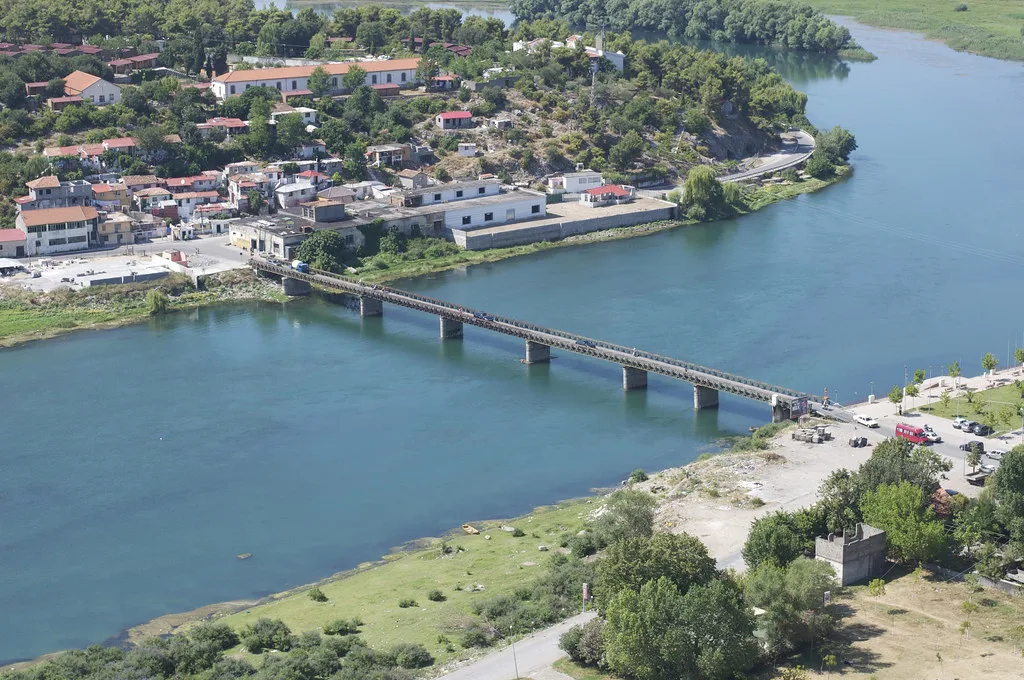
Further out, Mes Bridge (Ura e Mesit) near Shkodër makes a good add-on by car or taxi for anyone with a spare afternoon. If you want a wider menu, our things to do in Shkoder list covers the options beyond this one attraction.
Is the Marubi museum worth an hour of your day?
Yes, if you want a small, well-organised museum that explains a city through its photographs rather than through objects. The three-room layout gives structure, the archive figures give scale, and the Kolë Idromeno Street address means it costs you very little time to reach.
Skip it if you are after grand halls and long galleries, or if you only have time for one sight and would rather spend it at Rozafa castle. Otherwise go in the morning, confirm tickets and hours with the museum first, and leave the afternoon free for the rest of the centre.
Frequently Asked Questions
Who is a famous Albanian photographer connected to the Marubi museum?
The museum is built around three generations of the Marubi dynasty: Pietro Marubbi, Kel Marubi and Gegë Marubi, whose archive was donated to the Albanian state in 1970. The collection also includes work by other Albanian photographers such as Kolë Idromeno, Shan Pici and Dedë Jakova.