Butrint History: A Visitor's Timeline of the Ruins
A visitor's timeline of Butrint history, from the Greek sanctuary and Roman forum to the Byzantine basilica and Venetian fortress, with what to see at each layer.
On this page
Butrint is best understood as a sequence of layers rather than a single ruin field: Greek sanctuary, Roman city, Christian bishopric, Byzantine rebuilding, Venetian fortification, then abandonment as marsh spread. The site holds over 200 hectares on a peninsula facing Corfu, with remains running from the Bronze Age to the Ottoman era, and it joined the UNESCO World Heritage List in 1992.
This guide walks the site in historical order, tying each period to a named structure you can find on the ground, and separates the free fortress across the strait from the paid main site. For logistics, tickets and how the paths connect, use the companion Butrint National Park guide.
Where Butrint sits, and why the geography matters
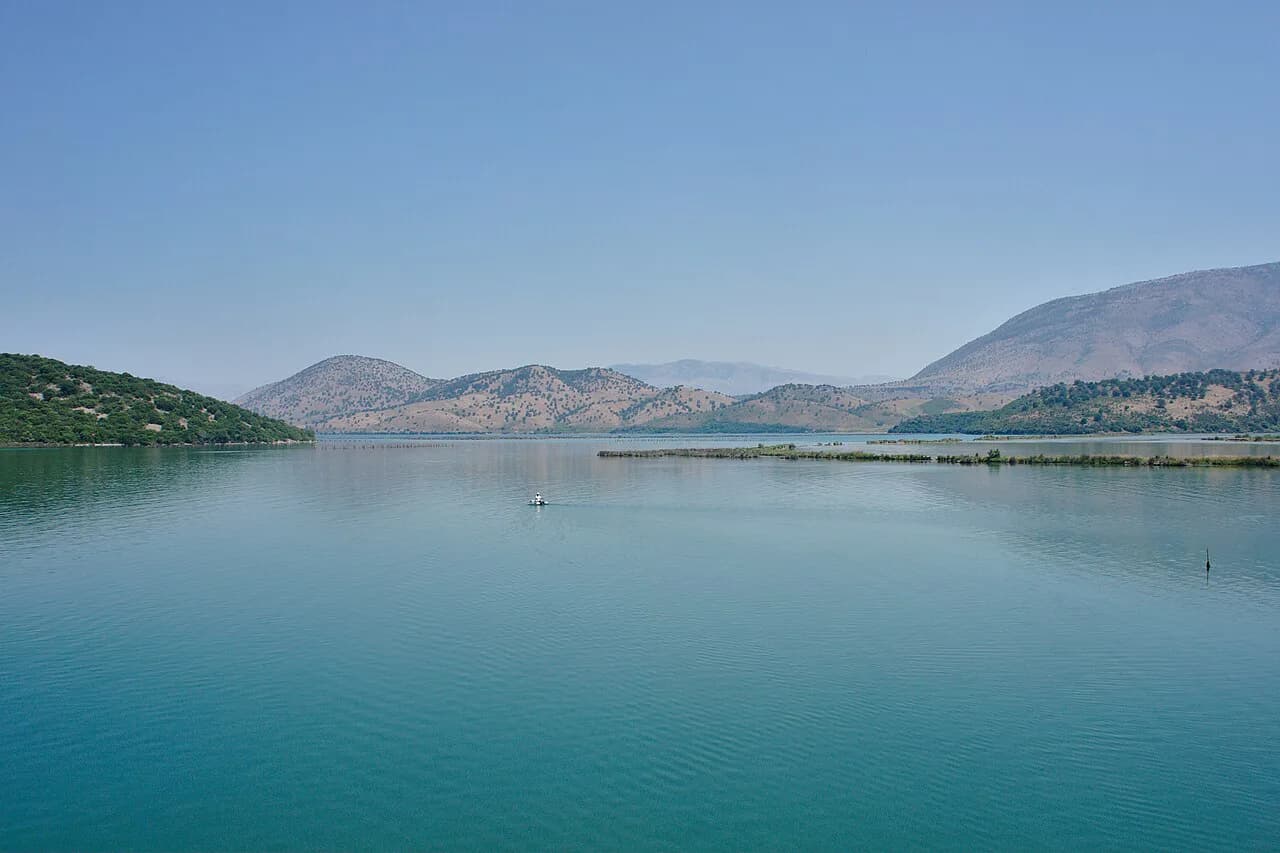
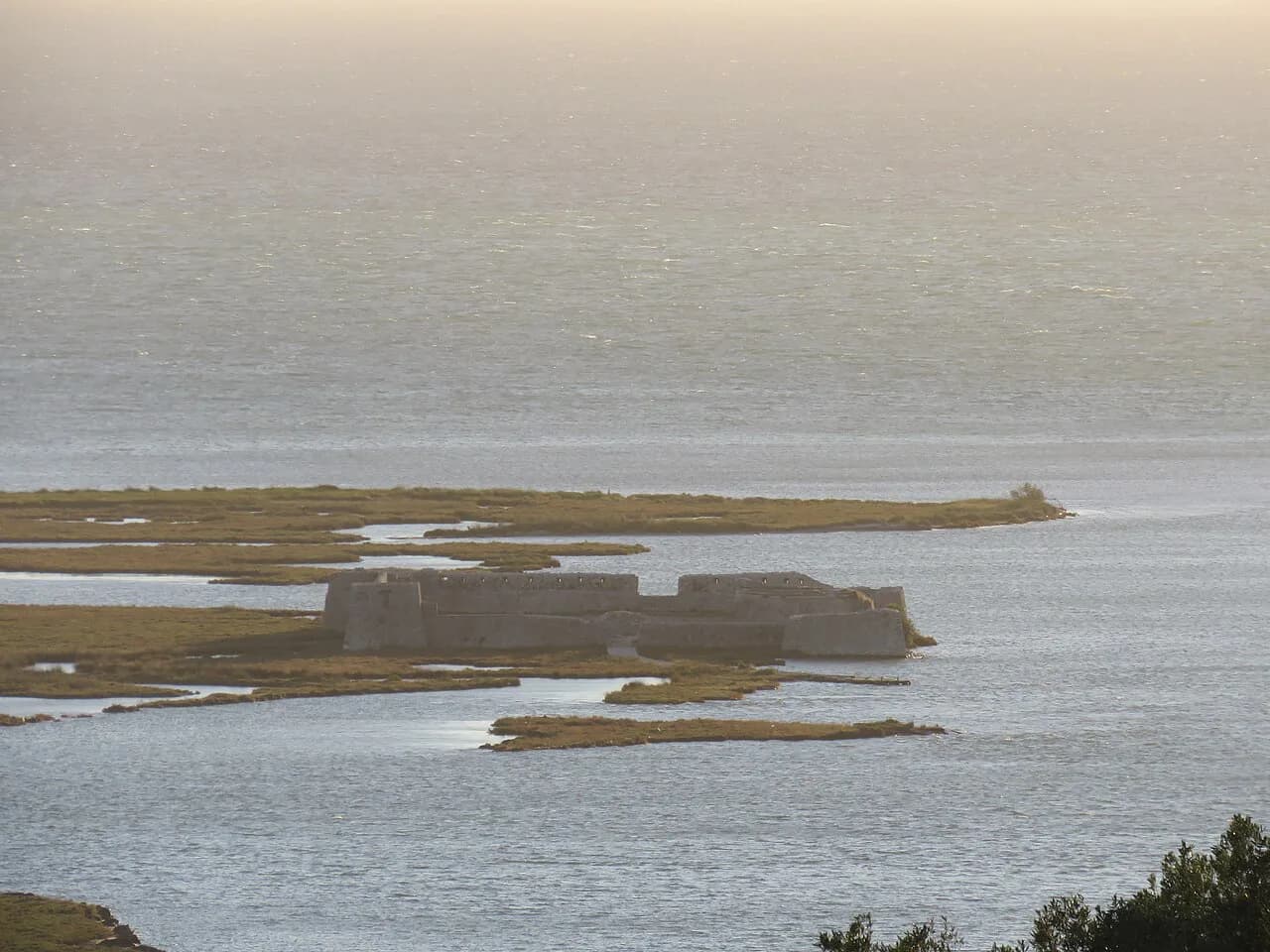
Most of the site occupies a peninsula at Albania's southern tip, opposite Corfu, with the Venetian fortress standing across a narrow strait from the main ruins. Arrive from the south and you reach the fortress first, crossing the strait by a small ferry to see the rest; from the north the order reverses.
A national park buffers the ruins from modern development, which is why the setting has stayed open rather than built up. Marshland later swallowed the city, and that abandonment is the reason so much of it survived intact rather than being quarried or built over.
The earliest layers: deep prehistory and the Bronze Age
The earliest remains at Butrint date to 50,000 BC, long before any city stood here. Archaeological work in the surrounding hinterland has also examined the Kalivo hillfort and a Bronze Age settlement at Cape Stillo, so the story begins with scattered prehistoric activity rather than a single founding moment.
The Trojan founding story, in which Helenus and a sacrificed bull give the city its name, is legend and should be treated as such. Documented history starts later, when Butrint appears as a harbour in the late sixth or early fifth century BC.
Greek Butrint: the Sanctuary of Asclepius and the theatre
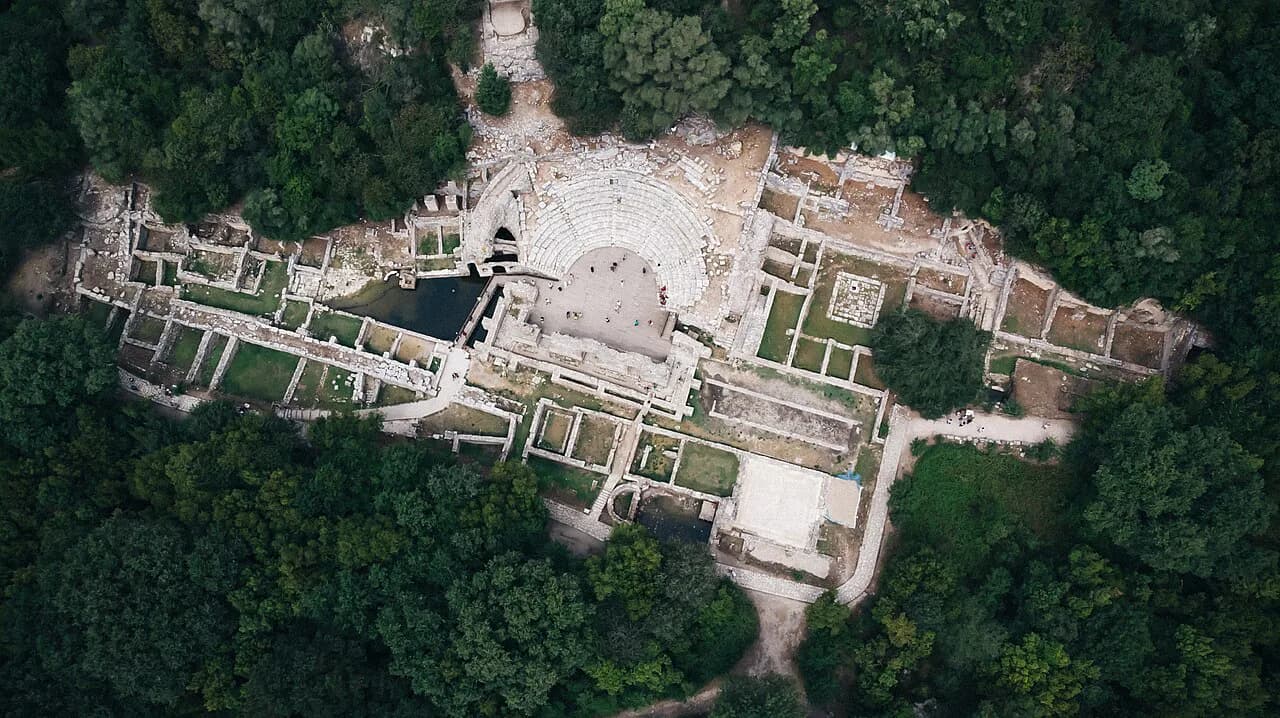
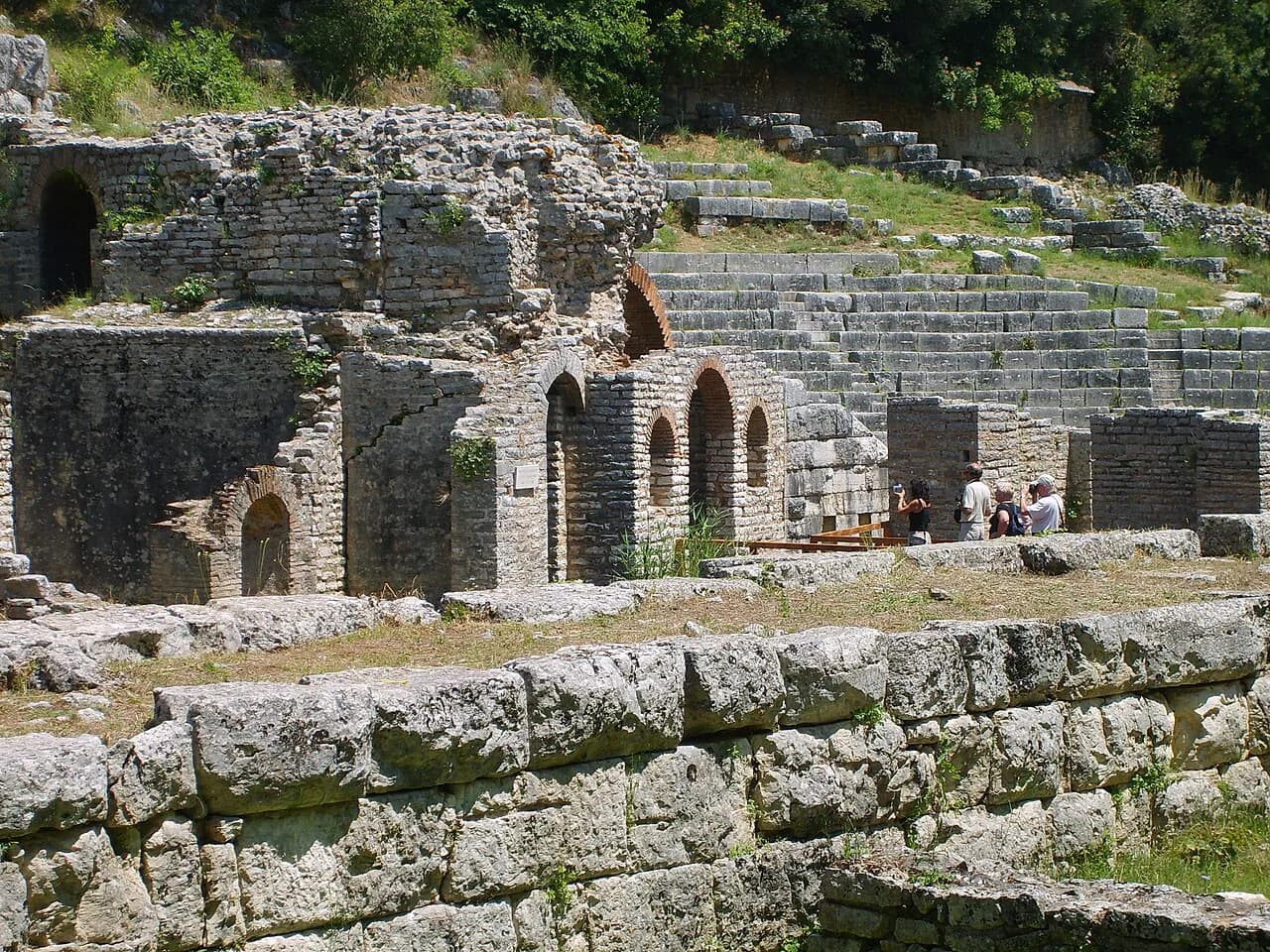
The Sanctuary of Asclepius, dedicated to the god of healing, became the city's monumental centre, drawing worshippers who left offerings and inscriptions recording their recoveries. The theatre was built into the hillside as part of that sanctuary, funded by donations to the god and used for religious rites before the Romans enlarged it for performances.
A defensive wall was built in the fourth century BC or shortly after, enclosing the settlement; its line is one of the earliest structures you can trace on the ground. Look for the theatre's stone-paved orchestra and the adjoining Peristyle Building, which housed priests or pilgrims.
Walking this part first makes the later Roman additions legible: the Romans kept the sanctuary's religious core and expanded around it rather than starting afresh. Give the theatre and sanctuary a slow half hour before moving down towards the forum.
The inscriptions: 500 records of slaves being freed
More than 500 inscriptions dated between 163 BC and 44 BC record the emancipation of slaves at Butrint. They are the most human documents on the site, naming individuals and marking a public act rather than a private transaction.
Look for them on the theatre's seating and surrounding stonework, where the lettering survives in places. Reading a few before you climb to the acropolis gives the civic life of the city a shape that the bare walls otherwise lack.
Roman Butrint: colonisation, the forum and the aqueduct
The Romans arrived in 44 BC and colonised Butrint, replacing Greek civic buildings with Roman ones. The forum began as a Hellenistic agora and was developed under Augustus into the city's political, administrative and commercial hub, lined with shops, temples and statues of the imperial family.
Beside the forum stands a bathhouse with a black-and-white mosaic floor, and Roman engineers ran an aqueduct some 4 km across the Vrina Plain to feed the baths and fountains. The forum's importance faded after a late fourth-century earthquake, which is why its paving survives in fragments rather than as a standing square.
Two Roman bathhouses are among the 24 separate elements recorded across the main site, along with gates, walls and a palace. Together the surviving structures show how the Roman city was laid out.
Early Christian Butrint: the basilica and the baptistery
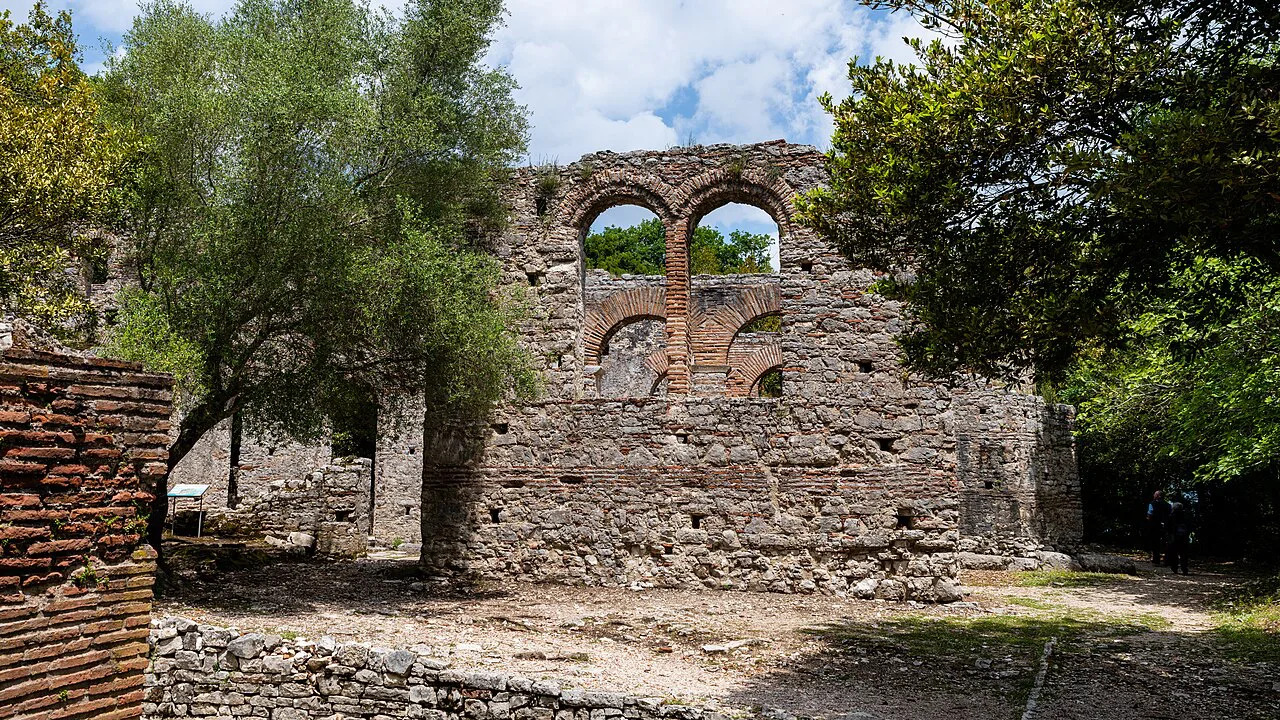
In the 400s AD Butrint became an episcopal centre, and Christian structures replaced the Roman ones. The Great Basilica dates to the early sixth century and was rebuilt in the Middle Ages, so its fabric shows two building campaigns in one shell.
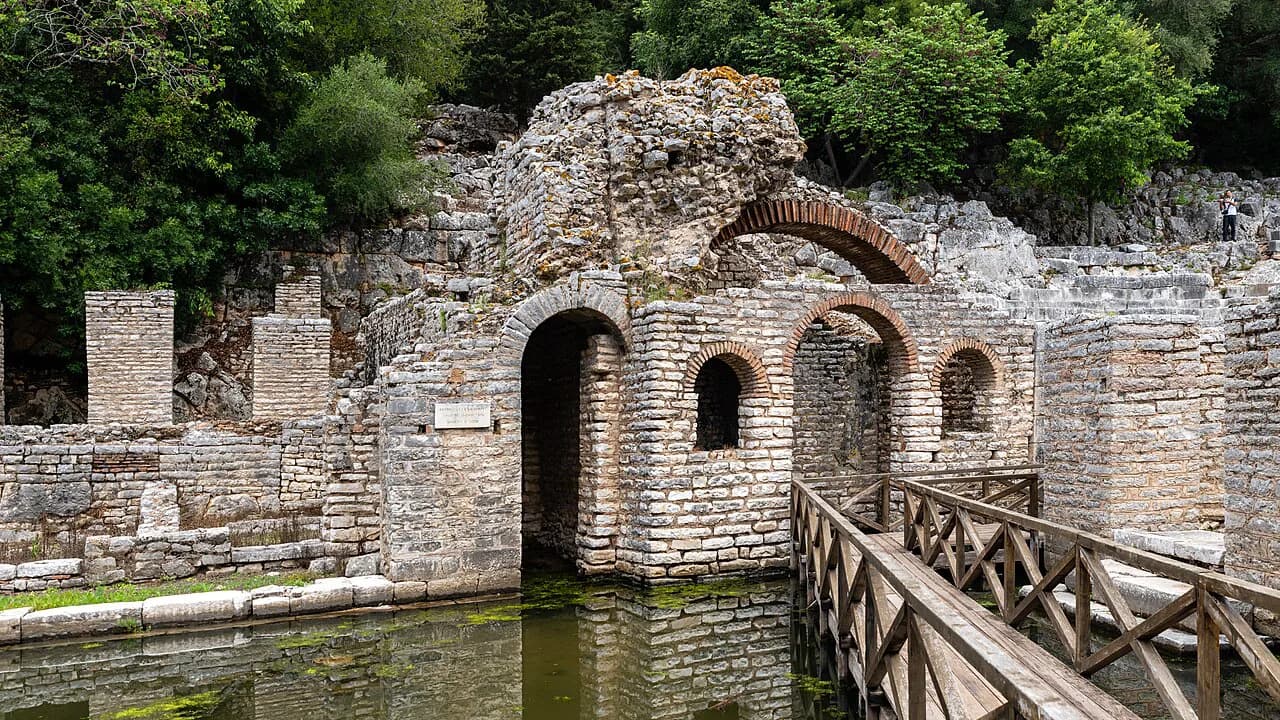
The Baptistery holds the mosaic floor most visitors remember, a surviving fragment of the city's Christian phase. The site's Roman and Byzantine features, including these mosaic floors, are its best-preserved remains above ground, so plan your slowest stop here.
Byzantine rebuilding and the Venetian centuries
The Byzantine Empire took Butrint and rebuilt it in the ninth century, then Angevin and later Venetian rule followed from 1387. The Venetians fought repeated wars with the Ottoman Empire over the site, which they wanted as a stepping stone to Corfu, and it changed hands several times before being ceded to Napoleon in 1797.
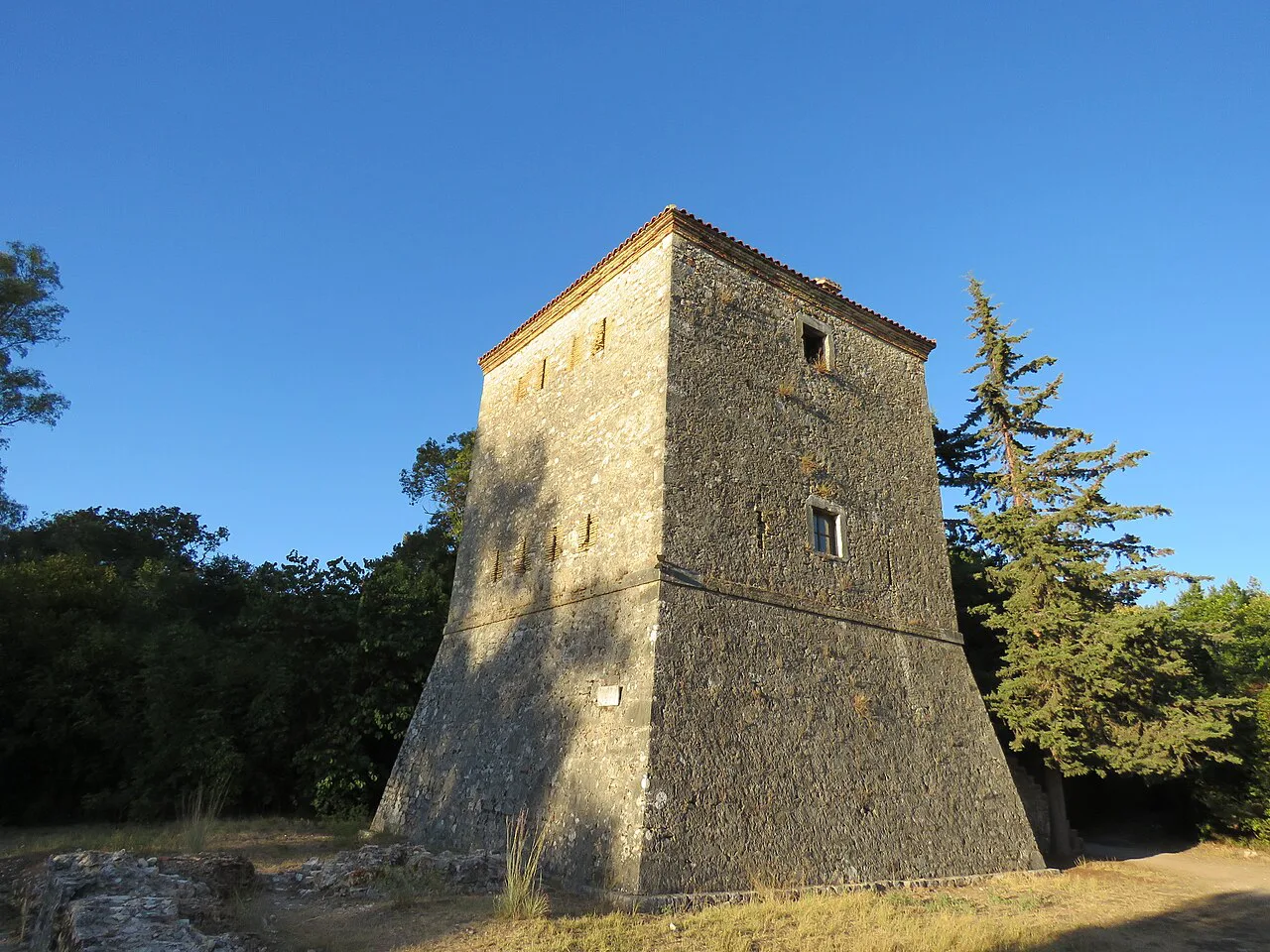
To hold the position the Venetians built the Triangular Fortress, and the fortress, with its late fifteenth-century walls and a blockhouse added in the sixteenth century, is what you see across the strait. Its walls are thick and plain, with simple windows and doorways and no crenellations.
There is no admission fee for the fortress itself, while the main site across the channel charges an entrance fee. If your interest is the Venetian layer, that difference matters when you plan where to spend your time.
Why Butrint was abandoned
Marshes spread across the low ground around the city and the site was gradually abandoned. That is why so much of it lay untouched: later generations did not build over the ruins or remove their stone, leaving the excavated city unusually intact when work began.
The abandonment also explains the site's setting today: a protected national park surrounds the ruins and keeps the approach open. Read the ruins with that in mind, as a city that stopped rather than one that was destroyed.
What survives above ground, period by period
The main site comprises 24 elements, including two Roman bathhouses, the Sanctuary of Asclepius, a theatre, a palace, a baptistery, various gates and walls, and a small museum. Most are well marked and shaded by trees, which makes the site easy to wander once you are inside.
Work through them in order and each period has one anchor building: the theatre for the Greek city, the forum and bathhouse for the Roman, the basilica and baptistery for the Christian, and the fortress for the Venetian. That gives a route rather than a scatter of masonry.
The terrain is dirt paths rather than paved walkways, so parts are reachable with help rather than fully accessible, and sturdy shoes matter more than any other kit. A plan of the site helps: the companion Butrint map shows where the fortress ferry lands relative to the theatre and forum.
Walking the site in historical order
Start with the Greek layer at the theatre and sanctuary, move down to the forum and bathhouse, then take the basilica and baptistery, and finish with the fortress across the strait. Allow an hour or two in the main site, more if you want the inscriptions and the museum, and treat the fortress as a separate short stop.
The strait crossing is by a small ferry, and the order of your visit depends on which side you arrive from. If you come from the south you reach the fortress first; if you come from the north you reach the main site first, so plan the walking direction accordingly.
Butrint in the wider Albanian story
Butrint's value lies in the continuity of occupation on one site, from prehistoric activity through Greek, Roman, Byzantine and Venetian phases, which is the kind of sequence the World Heritage listing recognises. Other Albanian towns carry different layers: Gjirokastër is a stone-built Ottoman town, and Berat is known for its stacked Ottoman houses, neither of them an excavated ancient city.
If you add Gjirokastër or Berat to a southern itinerary, expect a lived-in town with houses, bazaar streets and a castle rather than a ruin field. They complement Butrint rather than repeat it.
Which Butrint layer to see first
Go to the Greek theatre and Sanctuary of Asclepius first, because every later Roman and Christian addition was built around that core. Then work forward through the forum, the basilica and baptistery, and cross to the fortress last, so the visit reads as the timeline above rather than a random walk.
Before travelling, confirm the ferry operating times, the entrance fee and whether any part of the site is closed, as these change seasonally. The national park authority publishes the current position.
Explore more Ksamil guides
Frequently Asked Questions
Was Butrint an Illyrian city?
The sources here set out Greek, Roman, Byzantine and Venetian phases and prehistoric activity in the wider area, including the Kalivo hillfort. They do not describe Butrint as an Illyrian city, so treat any such label with caution.
How long does a history-focused visit to Butrint take?
Allow an hour or two in the main site to see the theatre, sanctuary, forum, basilica and baptistery at a reasonable pace. Add time for the museum and the fortress across the strait if you want the full sequence.
Can you see the Venetian fortress without a ticket?
Yes, according to the travel account cited here: the Triangular Fortress is reached across the strait and has no admission fee, while the main excavated site on the other side charges an entrance fee.
Sources
Notes for your Albania trip
Optional updates to our Albania town guides.
You might also like
Continue reading
More guides you'll find useful