
The Venetian Tower (Kulla Veneciane) in Durrës
The Venetian Tower, known in Albanian as Kulla Veneciane, is a small circular fortification set within the old walled city of Durrës, a short walk from the amphitheatre and the Hammam. The tower itself takes roughly 15 to 20 minutes to see, so treat it as one stop on a half-day circuit of the old centre rather than a standalone outing.
This guide covers where the tower sits in the street layout, how to reach it on foot, what is visible in its structure, and which nearby monuments fit naturally into the same visit. Opening hours are given where they are published; entry charges are checked separately.
What the Venetian Tower is and where it stands in Durrës
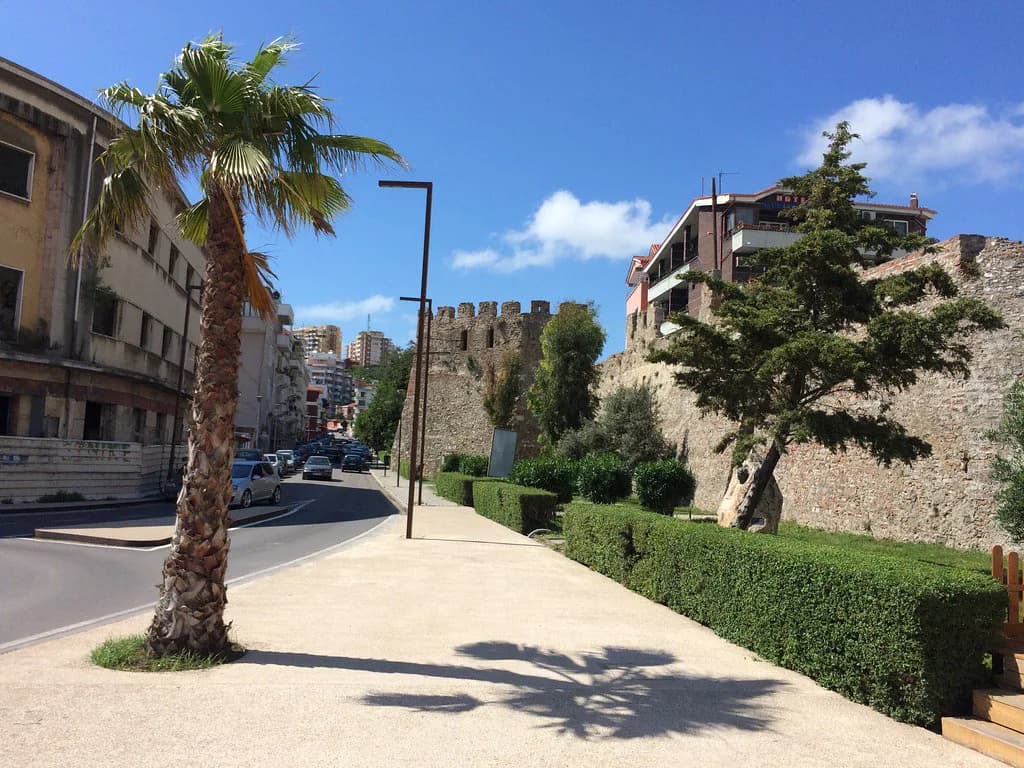
The tower is part of the fortified old city of Durrës, a walled enclosure first built in the late fifth century and repaired and reinforced in the medieval and early modern periods. It stands among the remains of the castle, close to the Hammam of Durrës, which is about 110 metres to the north.
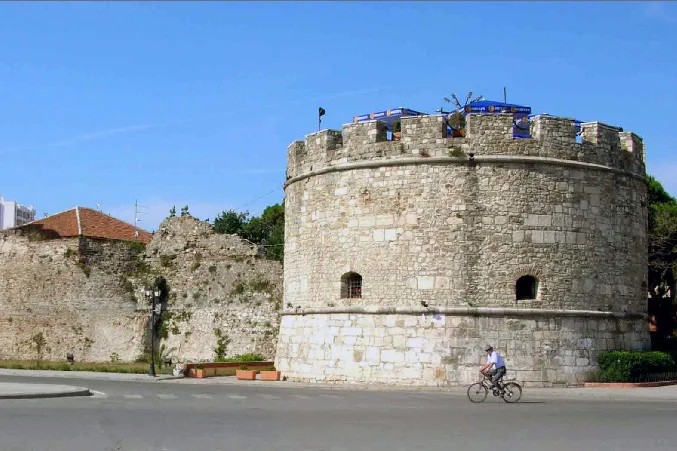
A Plus Code for the tower is given as 8C5W+VQC, Durrës, and the castle grounds are listed at Rruga Sotir Noka. Use the castle-street location as your walking target and look for the squat round tower rising from the wall line; our Durres Attractions: 6 Visitor Guides pick out the other monuments in the same quarter if you want to widen the circuit.

How to get there on foot from the centre of Durrës
The tower is in the middle of the old city, not on the seafront, so the simplest approach is on foot from the central streets. From the Roman Amphitheatre of Durrës it is about 310 metres to the north-west, which makes the two easy to pair in one walk.
Because the tower sits inside the surviving wall circuit, you will pass stretches of masonry and other remains on the way in, including the part of the wall attached to the castle. Wear shoes that cope with uneven stone paving rather than sandals, and carry water in high summer.

The tower's structure: circular plan, domed interior and gun ports
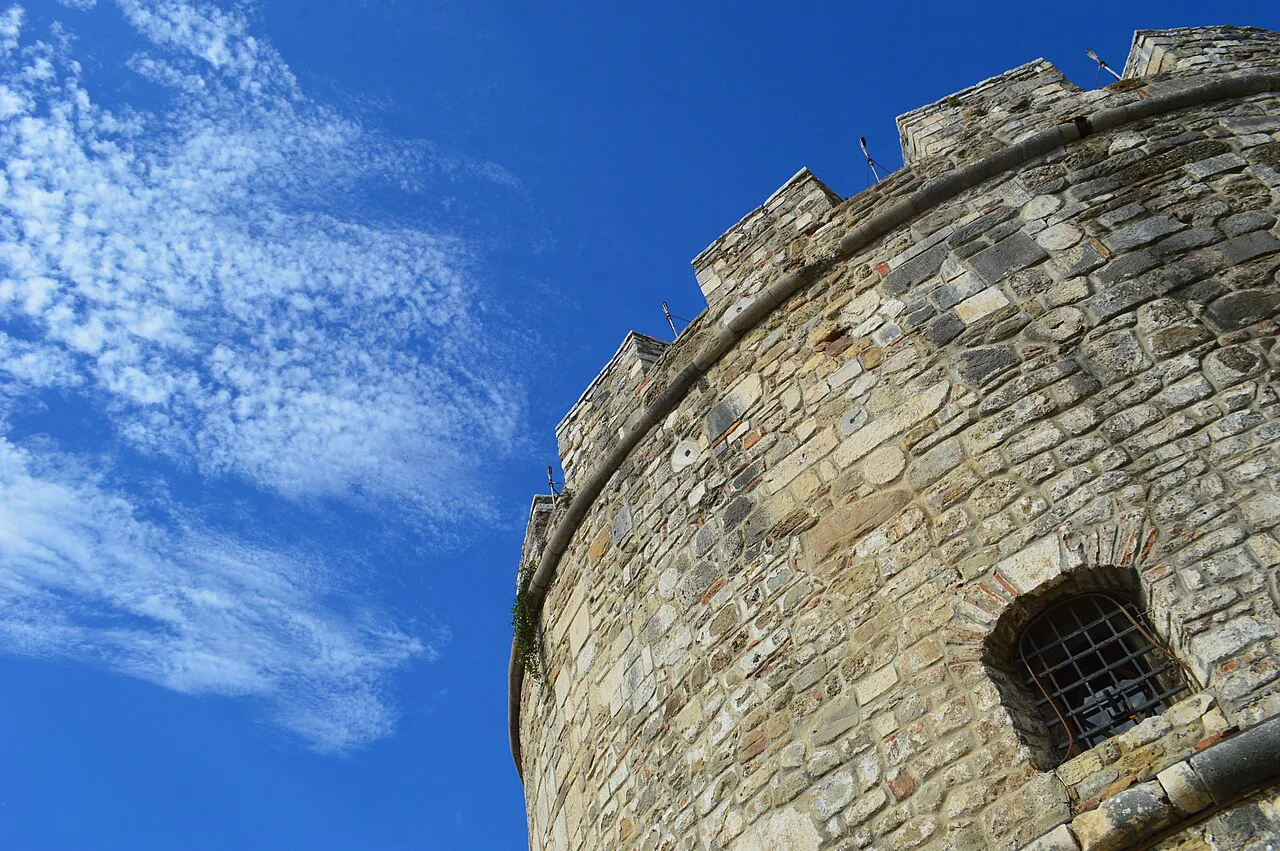
The tower is built on a circular plan of about 9 metres in diameter and rises about 9.6 metres, according to the tower's own published description. It sits on a cone-shaped basement filled with an earth mound paved in stone slabs, forming a defensive podium ringed by a serrated banquette.
Inside there is a single hall lit by five artillery pill-boxes and covered by a brick spherical dome, a shape that is easy to spot once you are standing beside the walls. The walls are described as 3.70 metres thick and reinforced with a wooden sash, thick enough for a cylindrical stair to the roof and small slots used as ammunition stores.
The Venetian rebuilding and what it says about the fortifications
Architectural detail and historic records indicate the fortress was rebuilt in the first half of the fifteenth century, when Durrës was ruled by the Republic of Venice. That context explains the tower's name: it is an extension of the earlier Byzantine fortress, adapted for artillery rather than for medieval assault.
The castle's earlier walls, devastated by an earthquake in 1273, were repaired and reinforced over the following centuries, and the wall line is described as standing close to 4.6 metres high in places. Read the tower as one piece of a defensive system that was continually reworked as siege tactics changed.
Durrës Castle and the surviving walls around the tower
The castle precinct retains three preserved entrances at its fortification towers, which give a sense of how the walled town was entered and controlled. Walking the surviving wall segments around the Venetian Tower is the best way to understand how a single round tower related to the rest of the circuit.
Restoration of the main Durrës Tower was announced in February 2022 under the EU4Culture programme, with plans to turn it into a heritage interpretation centre with digital and classic displays. That work is a project rather than a finished facility, so access and what you can see inside may vary during the season — plan the tower as a wall-and-structure visit.
Opening hours and how to check them
The listing gives Tuesday to Saturday 9:00 to 16:00 and Sunday 9:00 to 14:00, which is the pattern to plan your day around. Treat these as listing times rather than a guarantee, since a monument of this size can close without notice.
A second listing records a 9:00 to 16:00 opening on one specific late-October date, which is consistent with the daytime pattern but does not amount to a year-round timetable. No entry fee appears in these listings, so ask on arrival whether a charge applies for the tower or any combined castle ticket.
How long to allow and what to combine with it
Give the tower 15 to 20 minutes: read the walls and look at the structure and dome, and go inside only if the entrance is open on the day. Add the wall circuit around the castle for another 20 to 30 minutes, which brings the old-town core to about an hour of walking.
Pair the tower with the amphitheatre, about 310 metres north-west, and the archaeological museum if you want the finds from the city's Roman and later layers in one place. That combination is a comfortable half-day, with the tower as the shortest stop of the three.
Nearby: the amphitheatre, the Hammam and Ottoman-era remains
The Roman Amphitheatre of Durrës is 310 metres north-west of the tower and is the obvious companion sight. Check its own hours before setting out, since a closed amphitheatre will change the shape of your walk.
The Hammam of Durrës is about 110 metres north of the tower, and traces of the Ottoman administrative building and the Veliera structure are listed among the nearby remains. Treat these as a short detour on the way between the tower and the centre rather than a set-piece sight.
If you are building a longer circuit of the old city, the Fatih Mosque and the Byzantine Forum add Ottoman and late-Roman layers within the same central area. Pick two or three of these rather than all of them, or the day becomes a checklist instead of a walk.
Is the tower worth the detour?
Yes, if you are already in the old centre: it is quick to see and gives the castle circuit a focal point. It is not a reason on its own to cross Durrës, so build the visit around the amphitheatre and the archaeological museum and slot the tower in between.
Start at the castle on Rruga Sotir Noka, work around the wall to the tower, then head north-west to the amphitheatre. Leave the question of tickets and access until you arrive, and keep the walking order flexible enough to absorb a closed door.
Explore more Durres guides
Frequently Asked Questions
Do you need tickets for the Venetian Tower in Durrës?
The listings for the tower record opening times but not an entry fee, so there is no published ticket price to budget for in advance. Ask at the tower or in the castle area when you arrive whether a charge applies, and whether any combined ticket covers the walled circuit.
How far is the Venetian Tower from the Durrës Amphitheatre?
The two are about 310 metres apart. That makes them easy to see in one stretch, with the tower as the shorter stop.
Can you go inside the Venetian Tower?
The tower has a single domed hall lit by artillery pill-boxes, and the listing times suggest it opens on most days. Restoration of the main Durrës Tower was announced in 2022 as a heritage interpretation project, so what is accessible may change; check at the entrance whether the interior is open.