
Durrës Amphitheatre: what to see and how long to allow
Allow about an hour for the Durrës Amphitheatre itself, and a half day if you pair it with the Roman baths and the Archaeological Museum a few minutes away. The arena sits in the built-up centre of Durrës, a short walk from the old town rather than out on the edge of the city. This guide covers where it is, what you walk through inside, how long to budget and what to see nearby.
What the Durrës Amphitheatre is and why it sits in the middle of the city
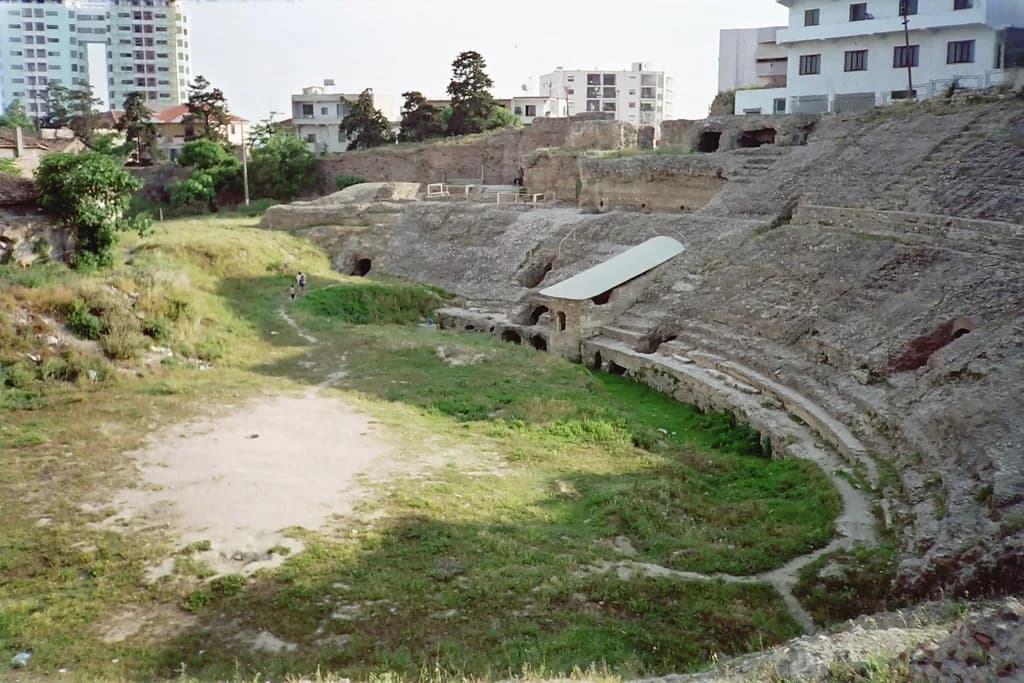
The arena was built at the beginning of the 2nd century AD and used for performances until the 4th century, when an earthquake in 345/346 is thought to have damaged it and closed it. Later building is the reason it now feels embedded in the street plan: an early Christian chapel went up on the structure in the second half of the 4th century, and a medieval chapel followed in the 13th. In the 16th century, after the Ottoman conquest, the site was covered over when a city wall was built nearby, which is why the amphitheatre reads as part ruin, part foundation beneath later Durrës.
Google Maps describes the remains as a 20,000-seat Roman amphitheatre built by Emperor Trajan. Treat the capacity figure as the listing's own description rather than something you can verify at the site, and plan your visit around the visible structure instead.

Where it is: a short walk from the fortified old town
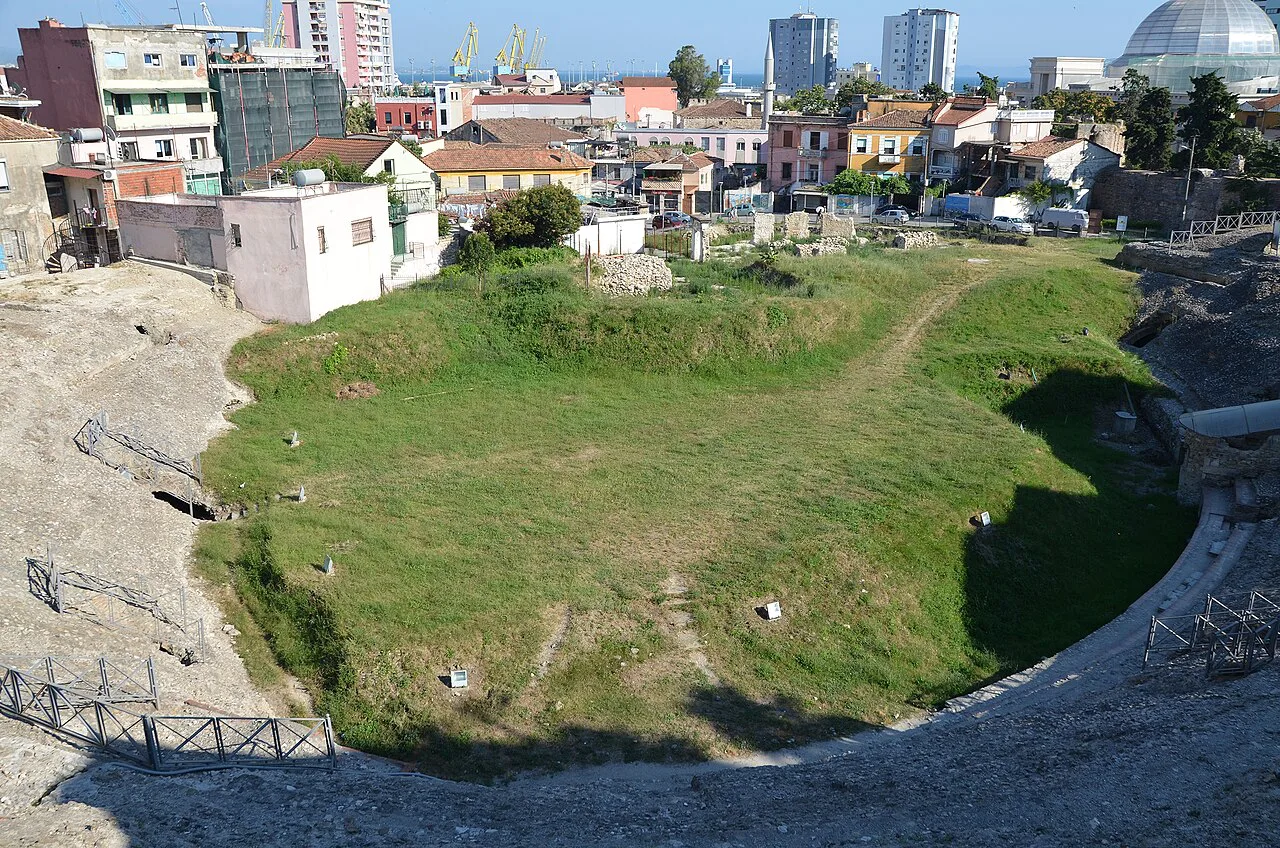
The amphitheatre is in central Durrës, close to the Venetian Tower and the fortified old town. SpottingHistory gives the address as Rruga Dok Margariti 25, while other listings place it on Rruga Kalase nearby, and it puts the old town about 300 metres away, which makes the arena an easy stop on a walk through the centre rather than a separate trip.
How to get there on foot from the old town, the Roman baths and the Archaeological Museum
Walk rather than drive. The Roman baths are listed about 300 metres from the amphitheatre and the Durrës Archaeological Museum about 400 metres, so a single loop on foot covers all three without moving the car. If you are coming from the seafront, head inland towards the old town and the built-up centre, where the site sits at street level.
For the wider set of sites in this part of the city, see the Durres Attractions: 6 Visitor Guides, which covers the Roman baths, the old town and the museum in one place.
The arena itself: ground plan, seating and galleries
The amphitheatre is elliptical, with axes of 132 metres and 113 metres, and it was cut into a slope of the hill rather than built up from flat ground. Inside, staircases and galleries sit at different levels, so you move up and down through the structure rather than around a single flat floor. Wear shoes with grip and expect uneven stone underfoot.
The chapel built into the arena, its frescoes and later mosaics
The chapel on the site began as an early Christian structure in the second half of the 4th century, decorated at first with frescoes. Mosaics were added in the 6th century, and a separate medieval chapel with frescoes was built in the 13th century. The chapel with mosaics is described as preserved, so look for it as part of your walk through the arena rather than treating the site as seating alone.
The Roman baths and other remains in the same archaeological zone
The amphitheatre falls within archaeological zones A and B, which also take in the Roman bath complex and the Byzantine forum. That grouping is the practical reason to plan one short walking loop in the centre instead of visiting each site on a different day.
The Byzantine Forum lies in the same cluster of remains and is worth ten minutes on the same walk.
How long to allow, and whether to combine it with the museum
Budget roughly an hour inside the amphitheatre, which is enough to walk the levels, find the chapel remains and read the interpretation without rushing. Trip.com suggests one to two hours for the sightseeing visit; add the museum only if you want the finds from the city's Roman period in context, and give the museum its own hour. Combining both in one morning works because they are a few minutes apart on foot.
The Durrës Archaeological Museum holds the material from the city's ancient past; plan it after the arena so what you have just walked through makes sense.
Opening hours and tickets: what to confirm before you go
Trip.com lists the amphitheatre as open 9:00–19:00 at the time of that listing, which is a useful planning guide but not a guarantee for the day you arrive. The site also functions as a museum, so hours can differ from the open-air remains. Check the current times and the ticket price with the site before travelling, since no published entry figure appears in the sources used here.
What else is within walking distance: the Venetian tower and old town
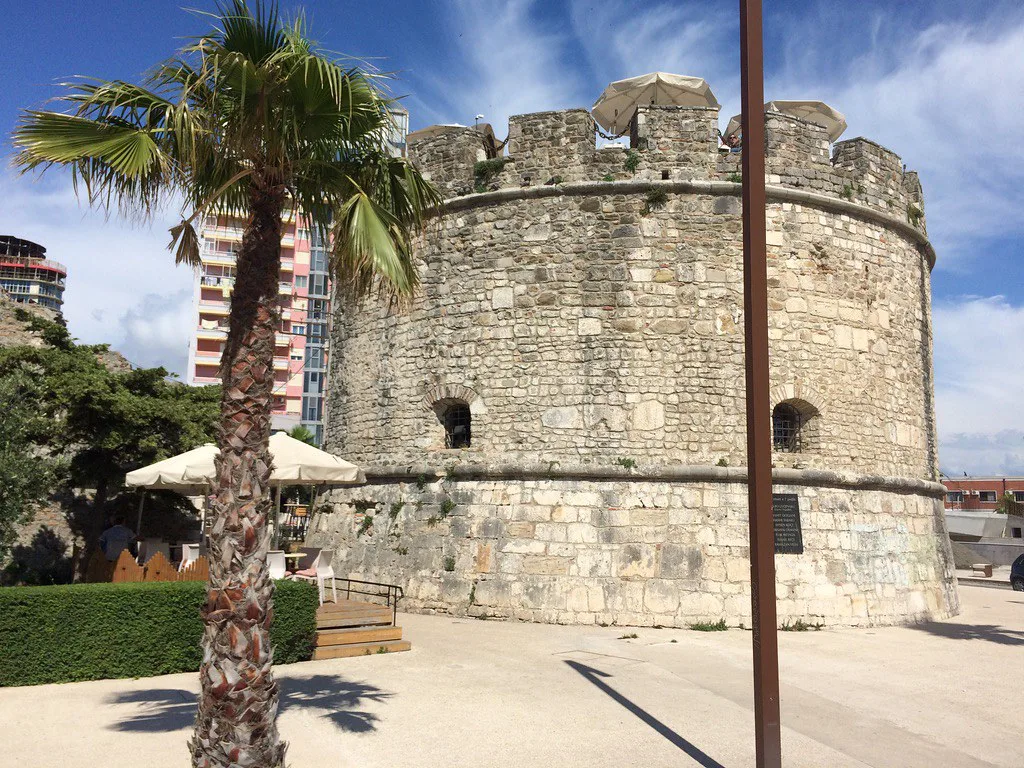
The Venetian Tower of Durrës stands about 318 metres from the amphitheatre, so it fits naturally at the end of your visit. The fortified old town around it was built under the Byzantine Emperor Anastasius I, who came from Durrës, and the walls give you a sense of how the ancient city was later refortified.
The Venetian Tower (Kulla Veneciane) in Durrës is the most obvious next stop on the same walk through the centre.
Practical points: uneven ground, steps and summer heat
The site has staircases and galleries at different levels on uneven stone, so it is not a flat circuit and sturdy footwear matters more than a camera. In high summer the exposed stone holds the heat; go early or late in the day, carry water and use the shaded stretches between the levels. The museum next door makes a sensible cool-down stop in the middle of the day.
Is the amphitheatre worth an hour of your day in Durrës?
Yes, if you are already in central Durrës. It is a compact, central ruin that rewards an hour of walking rather than a special trip, and it works best as part of a loop with the Roman baths, the Byzantine forum remains and the Archaeological Museum. Arrive early in summer, wear grippy shoes, and confirm the day's opening times and ticket price before you set out.
Explore more Durres guides
Frequently Asked Questions
How old is the Durrës Amphitheatre?
It was built at the beginning of the 2nd century AD and used for performances until the 4th century. An earthquake in 345/346 is thought to have damaged it and ended its use as an arena, after which chapels were built into the structure.
Do I need to book tickets in advance?
The sources used here do not set out a booking system. Check the site's current opening times and whether tickets are sold on the day or in advance before you travel.