
King Zog Villa, Durrës: What You Can See and How to Visit
The King Zog villa in Durrës is the royal summer residence built for King Zog I on Kodër Vilë, a hill about 98 m above sea level on the edge of the city, with views over the Bay of Durrës and the Adriatic coast. It has long been closed and inaccessible to the public, so treat it as a hilltop landmark to see from outside rather than a museum you walk through. This guide covers where the villa sits, how to reach the hill, what the building was designed to contain and how to fit it into a Durrës half-day alongside the Roman and medieval sights lower down.
What the King Zog villa in Durrës is
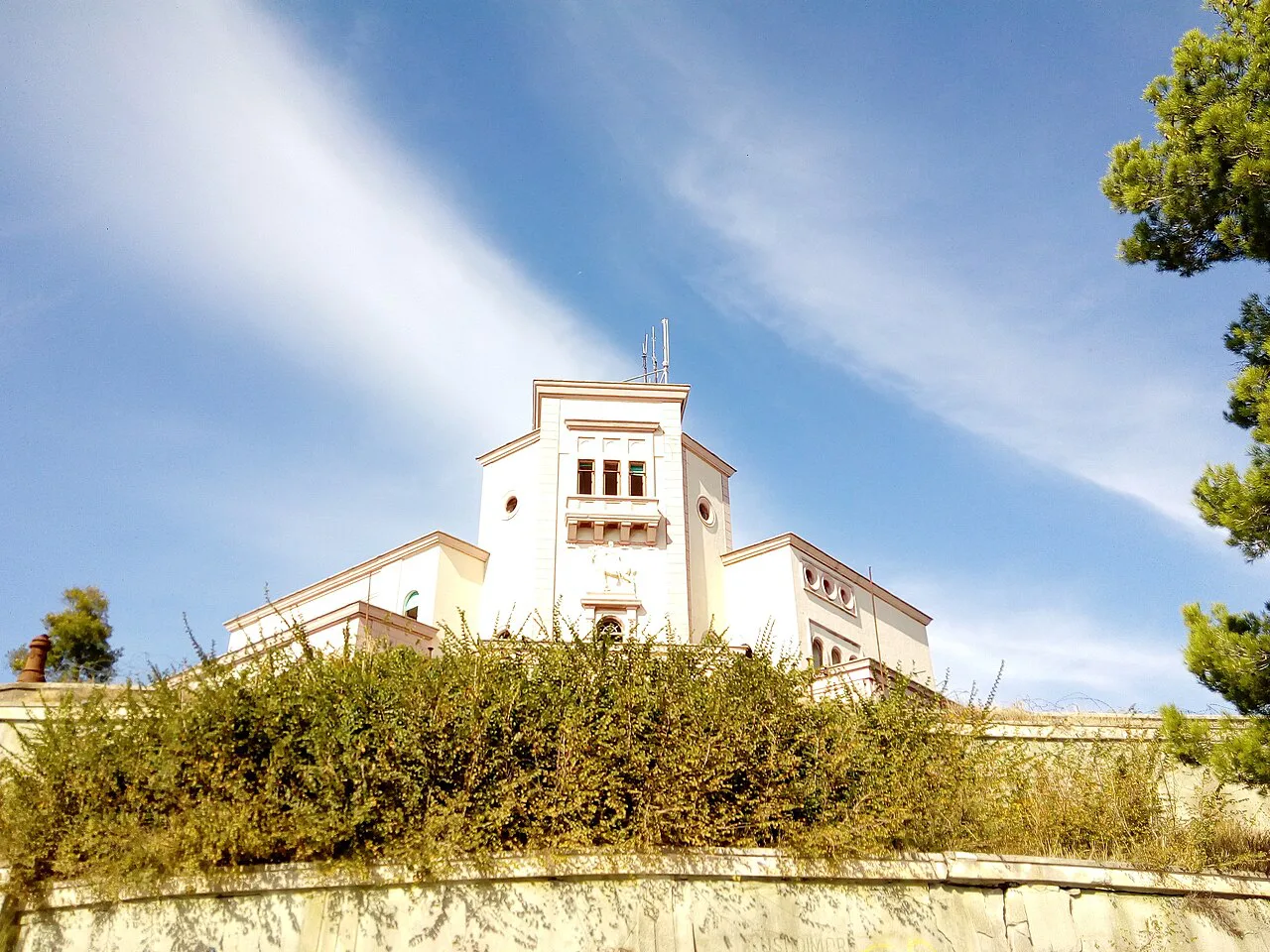
Construction began in 1927 at King Zog I's initiative and the building was completed in 1937, a few months before his marriage to Queen Geraldine, according to the official tourism website. It was designed as the royal family's summer residence and as a place for official events, which explains both the hilltop position and the formal interiors.
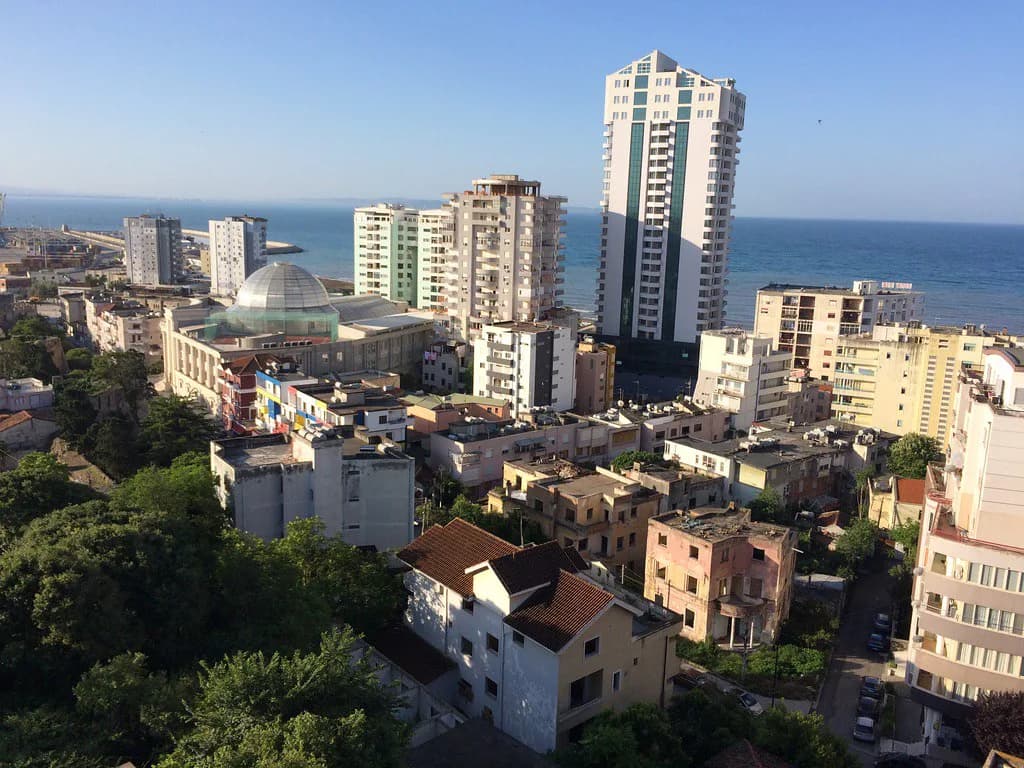
The palace sits on Kodër Vilë, a hill that rises about 98 m above sea level on the outskirts of Durrës and gives panoramic views of the Bay of Durrës and the Adriatic coast. The location is the strongest reason to make the trip: the architecture is the draw, but the sea view from the hill is what you will remember.
Later in its life the building served as a reception facility and official residence for high-ranking guests, including Nikita Khrushchev and Jimmy Carter on official visits. Knowing that helps you read the building's odd mix of royal origin and state entertaining.

Where it is and how it relates to central Durrës
The villa stands on Kodër Vilë above the city, with an address reference of Rruga Kont Urani on the hill. It is not in the flat historic centre where the amphitheatre and the Venetian tower sit, so it works best as a separate outing rather than a stop on a walking loop.
From the centre you are heading uphill and away from the port and seafront, which is the key contrast to plan around: the lower town holds the Roman and medieval monuments, while the villa occupies its own elevated setting. If you want one page that maps those sights together, start with the cluster of Durres Attractions: 6 Visitor Guides before you fix an order.

How to get there: hill walk or car
There are two realistic ways up: on foot along the hill road, or by car or taxi to the top. Walking gives you the climb and the gradual reveal of the bay, but the road rises steadily and there is little shade on open stretches, so a morning start is kinder than midday. Driving removes the effort but leaves you dependent on parking near the top and on dropping back down into the city afterwards.
Durrës is compact enough that the villa can be paired with the lower town in one day, but allow for the return downhill and do not schedule the hill between two tightly timed sights. Confirm the route with your accommodation or a local taxi driver on the day, since street access on the hill is not something you can rely on from a map alone.
What you see: the architecture and the setting
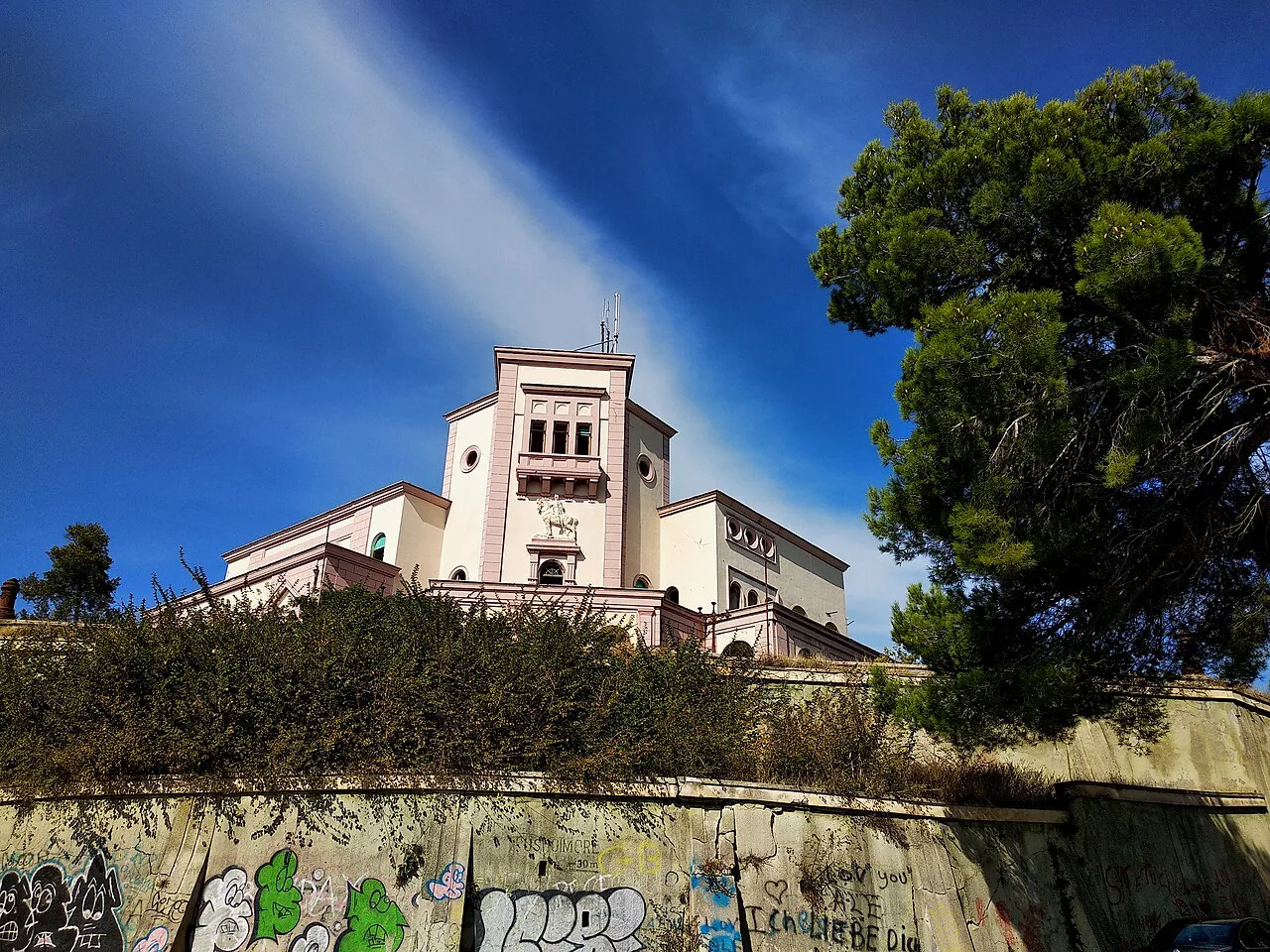
The structure is built in the Italian rationalist style with neoclassical interior elements, including marble floors, symbolic ornamentation and Albanian eagle motifs. The exterior is the part you can study from outside, and the rationalist lines set against the hilltop sea view are the reason to come.
Views from the hill take in the Bay of Durrës and the Adriatic coast, which is why the site was chosen for a summer residence in the first place. Bring a camera for the outlook rather than for interiors, and expect the building itself to be the subject of your photographs rather than a place you wander through.
Inside today: the 1997 damage and what it means for a visit
During the civil unrest of 1997 the building was vandalised and looted, and part of its interior suffered significant damage, losing many original decorative elements and furnishings. The villa has remained effectively unaltered since then, which is the honest reason the interior cannot offer a furnished royal interior experience.
Because the palace was not included on the official list of cultural monuments and lacked protective status, it has long remained closed and inaccessible to the public. For a visitor that means the building is a subject to look at and read about, not a ticket-and-turnstile attraction, and any plan should be built around the exterior and the hill.
Access, tickets and opening hours: what to check
A private initiative in 2025 aims to restore the building to its original 1930s condition, recovering parts of its historical decor and function in line with how it looked in 1939. No public opening has been confirmed, so do not build a trip around the hope of going inside.
Opening hours, ticket prices and any guided access are not published for the villa, so ask at the Durrës tourist information point or your accommodation shortly before you go. Treat a visit as a walk or drive to a closed royal building with a fine outlook, and you will not be disappointed by a locked door. The Durres Attractions: 6 Visitor Guides page on this site sets the villa beside the city's other sights if you want to compare before committing a morning to the hill.
How long to allow and whether it fits a half-day
Allow roughly an hour to ninety minutes for the round trip from central Durrës, including the climb or drive, time at the building and the descent. The visit itself is short because there is no interior circuit to walk; the time goes on the hill and the view.
The villa fits comfortably into a half-day if you pair it with one monument in the lower town rather than trying to cover everything. In summer heat the hill is best done early, and in cooler months the walk up is a pleasant way to see the city's layout from above.
Nearby in Durrës after the villa
Back in the centre, the Roman amphitheatre is the obvious next stop: a substantial ancient structure set among later buildings, reached on foot from the main streets. Read the Durrës Amphitheatre guide before you go so you know what you are looking at in the excavated corridors and seating.
The Venetian Tower in Durrës is a short walk away and gives you a compact medieval counterpoint to the villa's 1930s architecture. The Venetian Tower (Kulla Veneciane) in Durrës stands in the old core, so it slots neatly into the same afternoon as the amphitheatre.
If you prefer finds and context to standing stones, the Durrës Archaeological Museum holds the material recovered from the city's ancient layers and makes a good indoor break from the hill and the heat. The Fatih Mosque, Durrës is also in the centre for anyone following the town's Ottoman layers, and the Byzantine Forum, Durrës adds the late-antique piece of the puzzle.
Is the King Zog villa worth the climb?
Go for the hill, the sea view and the chance to see a 1930s royal building in its unrestored state, not for a furnished palace tour. If you are in Durrës for a day, the villa makes a worthwhile early-morning detour, and the amphitheatre and Venetian tower fill the rest of the afternoon without rushing.
If you are short on time or the weather is poor, the lower town's Roman and medieval sights will use your hours better. Either way, check current access before you travel up, because the villa's long closure to the public is the one fact that shapes every visit.
Explore more Durres guides
Frequently Asked Questions
Can you go inside King Zog's villa in Durrës?
The building has long been closed and inaccessible to the public, and it has no protected monument status. A private restoration initiative reported in 2025 aims to bring it back to its 1930s condition, but no public opening has been confirmed. Plan to see it from outside and check locally before travelling up the hill.
Why is the Royal Villa of Durrës empty inside?
During the civil unrest of 1997 the building was vandalised and looted, and part of the interior was badly damaged, losing many original decorative elements and furnishings. It has not been refurnished since, so the marble floors and eagle motifs described in its design are not on show to visitors.
How do you reach Kodër Vilë without a car?
You can walk up the hill road from central Durrës, which takes a steady climb with little shade, or take a taxi to the top and walk back down. There is no published bus service to the villa itself, so agree the route and drop-off point with a driver.