
Durrës Archaeological Museum: What You'll See and How Long to Allow

Allow two to three hours for the Durrës Archaeological Museum, including the outdoor garden, and go in the morning if you want to combine it with the Durrës Amphitheatre and the Venetian Tower on the same walk. The museum occupies a single building on Rruga Taulantia, the street that runs parallel to the waterfront, so it slots easily into a half-day in the old town. This guide covers what is on display, how the galleries are laid out, the seasonal opening pattern and the sights within a few minutes' walk; for the wider set of sights, see Durres Attractions: 6 Visitor Guides.
Where the museum is on Rruga Taulantia
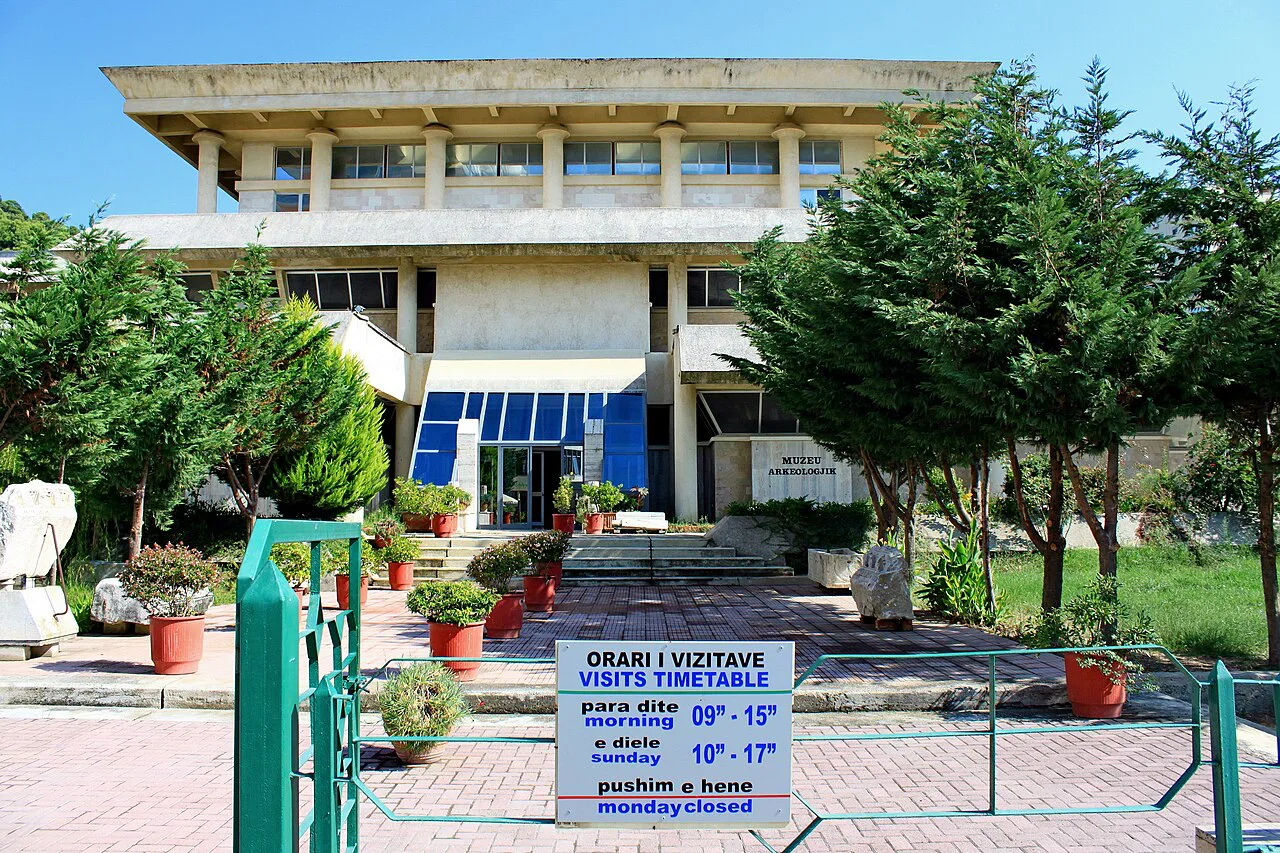
The museum's address is Rruga Taulantia 32, on the street that runs parallel to Durrës's seafront promenade, known locally as the Vollga. It sits in the northern, older part of the city, between the harbour and the modern waterfront, which is where most of the historic sights cluster. If you are coming from the port or the promenade, you can walk to the door rather than needing a taxi.
Use Sheshi Liria, the town hall square, as your orientation point: the main streets of the old town radiate from it, and the museum is a short walk away on the sea side. From there you can head first to the museum, then loop inland to the amphitheatre and back through the lanes to the Venetian Tower. Durrës is compact enough that this whole circuit is done on foot, though pavements and crossings around the harbour area need a bit of care.

What is on display inside
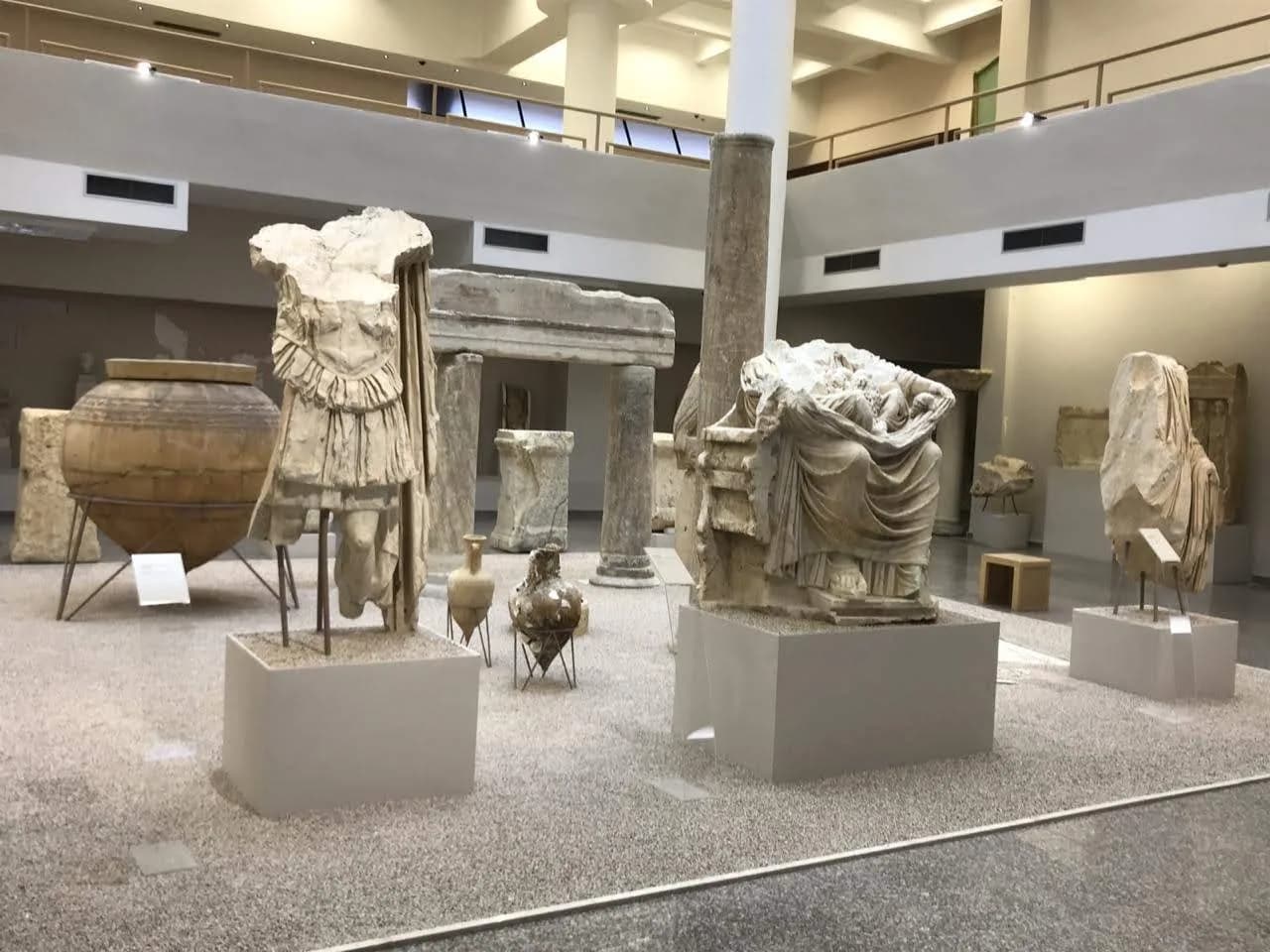
The collection traces the city from prehistory through the Illyrian, Hellenistic and Roman periods, with stone, iron and ceramic objects, coins minted in ancient Dyrrachium and material recovered from the sea. Finds include amphorae and anchors from the seabed, alongside more than 2,000 objects, nearly all of them found in and around Durrës. The museum building opened in 2002 and has separate pavilions for prehistory, antiquity and the post-Byzantine period.
The first floor holds exhibits that run from the city's founding to the Roman era, with a large number of funerary steles, pottery and statues. That range makes the museum a useful primer before you look at the amphitheatre or the Byzantine Forum, because the labels give context to ruins that otherwise read as bare stone. If you only have an hour, concentrate on this floor rather than trying to cover every pavilion.

Highlights to look for
Look for the stone sarcophagi and Roman funerary stelae, and the miniature busts of the goddess Venus, which reflect the city's role as a centre of her worship. The displays run from prehistoric material through the classical and Hellenistic periods into Roman times, so you can follow the sequence in one pass. Allow time to read the labels on the ceramics, which date from around the fourth century BC and show the city's cultural and economic development through the Hellenistic period.
The coin displays are easy to skim past but worth a pause: they were minted in ancient Dyrrachium and track the city through the Roman period. Maritime finds, including amphorae and anchors recovered from the sea floor, are grouped together and give a sense of how much of Durrës's trade arrived by water. Photography rules and any restricted areas are set by the museum itself, so ask at the ticket desk when you arrive.
The outdoor garden and porticoes
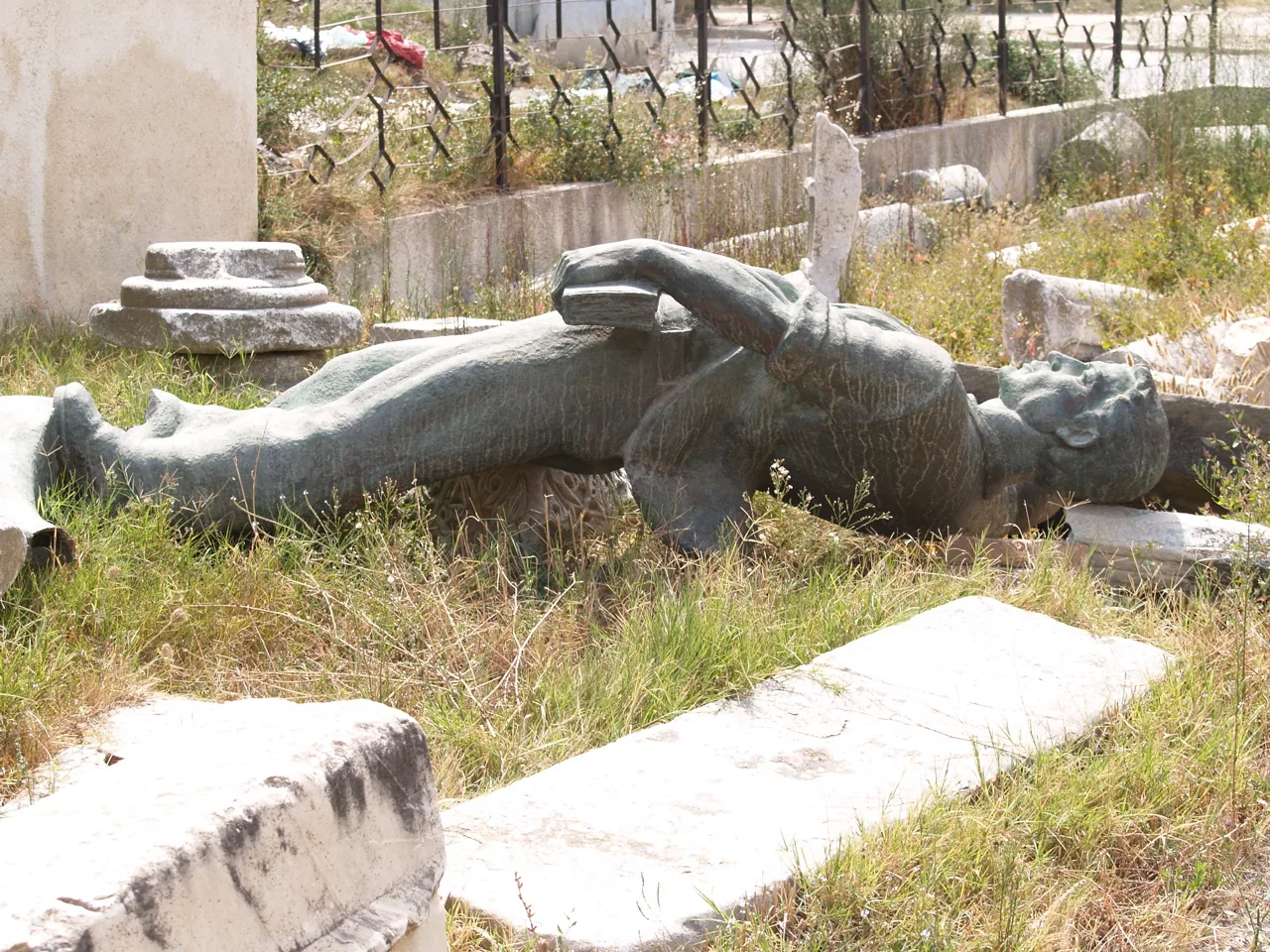
The outdoor area is part of the visit rather than an afterthought: gardens and porticoes hold large marble statues that are too big for the indoor galleries. It is a pleasant place to slow down after the dense display cases, and in warm months it offers shade between the museum and the waterfront. Budget fifteen to twenty minutes here, more if you want to photograph the statues.
Treat the garden as a breather rather than a second museum: the labels are thinner than indoors, and the appeal is the setting and the scale of the pieces. If it is raining, the indoor galleries will take up most of your time and the outdoor section can be skipped without losing the thread of the collection.
How long to allow and fitting it into an old-town walk
Two to three hours is a sensible allowance for the museum and its immediate neighbours, with the museum itself taking roughly an hour to ninety minutes at an unhurried pace. A practical loop starts at the museum, continues to the amphitheatre, listed at about 400 metres away, and finishes at the Venetian Tower, listed at roughly 600 metres from the museum. That gives you a half-day circuit without any transport.
The old town between these points is where the Venetian walls and gates survive, so the walk between sights is itself part of the visit. Wear shoes that cope with uneven paving, and carry water in summer, when the stretch along the promenade offers little shade. For a wider pick of what to see in the city around the museum, see things to do in Durres.
Opening hours in summer and winter
The museum runs on a seasonal timetable: from 1 May to 15 October it opens every day from 09:00 to 19:00, while in winter it opens 09:00 to 16:00 from Tuesday to Sunday, with Monday closed. Those hours are the pattern to plan around rather than a guarantee for any given day. Check directly with the museum or your accommodation before making a special trip, especially outside the summer season.
Opening hours and ticket arrangements are set by the museum, and published hours and fees change, so confirm the current entry price at the desk or by phone rather than relying on older write-ups. The museum lists a contact number for ticket enquiries if you want to ask ahead.
What is nearby in the old town
The Venetian Tower stands at the start of Rruga Anastas Durrsaku, next to the small square with the monument to Mujo Ulqinaku, and is the surviving piece of the old castle defences along with stretches of wall and three town gates. It is a short walk from the museum and works as the second stop on the loop. Read more on the Venetian Tower in Durrës before you go.
Between the tower and the amphitheatre, on a side street off Rruga Xhamia, the Ethnographic Museum occupies the house museum of the actor Aleksandër Moisiu, with his career documented on the lower floors and traditional costume and craft displays above. The Fatih Mosque and the remains of the Roman baths and Byzantine Forum are also within the same compact old-town area, so you can add them without another journey.
The Mansion of Zog, built in 1926 on the hill above the city, is visible from parts of Durrës but is used as a military headquarters and is not open to the public, so plan to see it from outside rather than touring it. Treat it as a viewpoint stop if you have a car, not as a museum visit.
Is the museum worth an hour of your day?
Yes, if you want the story behind Durrës's Roman ruins before you look at them, and especially if rain or heat has pushed you indoors. Go early, check the seasonal timetable, and walk the museum, amphitheatre and tower loop in one morning. If your time in Durrës is very short, the amphitheatre and the tower are the outdoor sights that cannot be seen elsewhere.
Explore more Durres guides
Frequently Asked Questions
Do you need to book tickets for the Durrës Archaeological Museum in advance?
The museum sells entry at the door, and there is a phone line for ticket enquiries. No advance booking requirement or online sales channel is published, so the simplest approach is to arrive during opening hours and pay at the desk.
Is the museum open on Mondays?
In the winter timetable it is closed on Mondays and opens Tuesday to Sunday, 09:00 to 16:00. From 1 May to 15 October it opens daily, 09:00 to 19:00. Confirm the current timetable before travelling, since seasonal hours can shift.
Can you visit the Mansion of Zog near the museum?
No. The mansion on the hill above the city is used as a military headquarters and is not accessible to the public, though it can be seen from outside. Plan your indoor time around the Archaeological Museum and the Ethnographic Museum instead.