Elbasan Old Town: What to See and How to Walk It
Plan a walk through Elbasan old town: the bazaar gate, King Mosque, the Orthodox Church of the Virgin Mary and the Roman walls, with what each part is like.
On this page
Elbasan old town is small enough to walk in a couple of hours: a Roman-era street grid inside surviving walls, entered through the bazaar gate off Aqif Pasha Boulevard. The centre holds the King Mosque and the Orthodox Church of the Virgin Mary a short stretch apart, with defensive towers along the west and south walls. This guide covers the layout, the route through it and what each building is like, so you can judge the time it deserves on a stop between Tirana and the south.
Where the old town sits in Elbasan
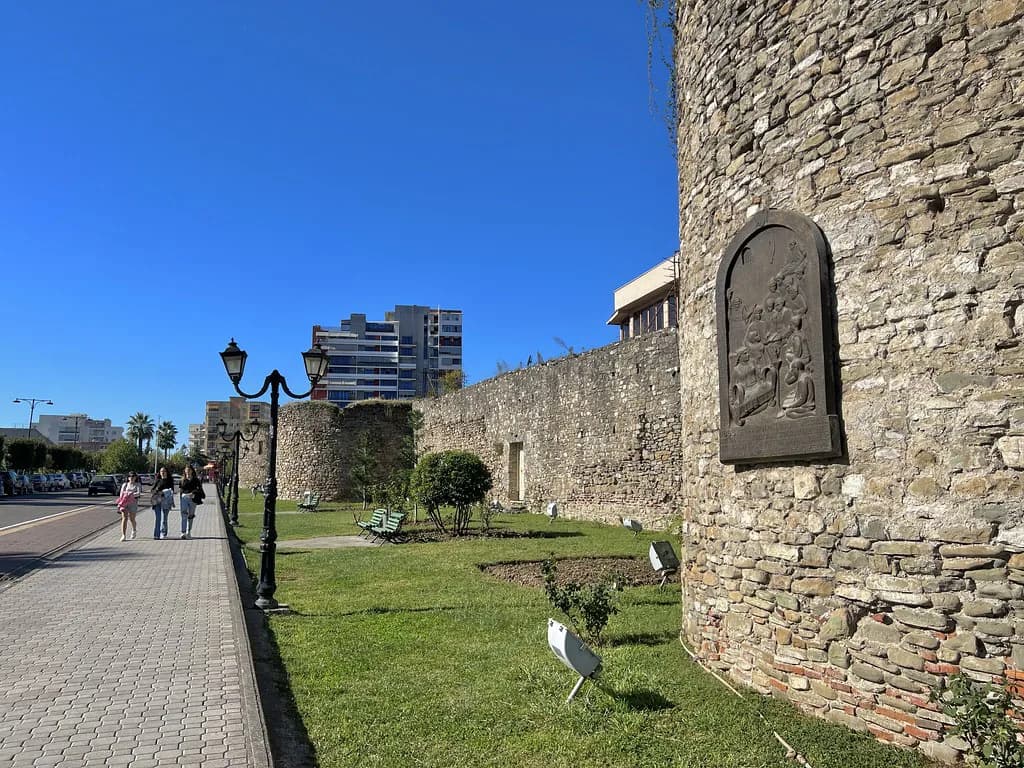
The old town occupies the historic core of Elbasan, a city on the Shkumbin River, and its street pattern survives from the Roman period. The walls were later strengthened by the Ottomans, who used Elbasan as a stronghold after taking the surrounding territory, so Roman masonry and Ottoman repairs sit in the same circuit. In practice this means you are walking a small, walled quarter rather than a separate museum site, and the rest of the city presses right up against it.
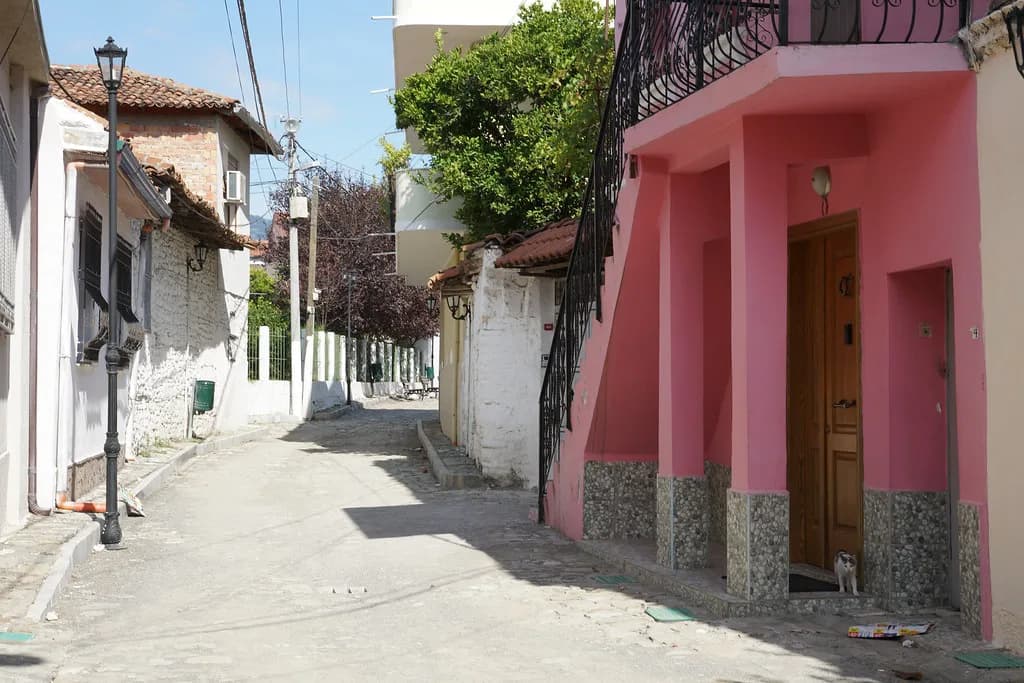
Set your expectations by what has gone: much of the oriental character of the centre has disappeared, and it now stands apart from neighbouring districts mainly through its narrow lanes and lower houses. That is not a reason to skip it, because the walls, the two main streets and the mosque and church give the quarter its shape. Treat it as a short, dense walk with a handful of specific stops rather than a day-long old city.
How the old town is laid out
Two main streets run perpendicular to each other and cross at the centre, giving the quarter a traditional square plan that is easiest to read from above. Because of that grid, you rarely get lost: pick the crossing as your reference point and everything else hangs off it. If you want a paper picture of the layout before you arrive, an Elbasan map showing the walled core is more useful than a city-wide one.
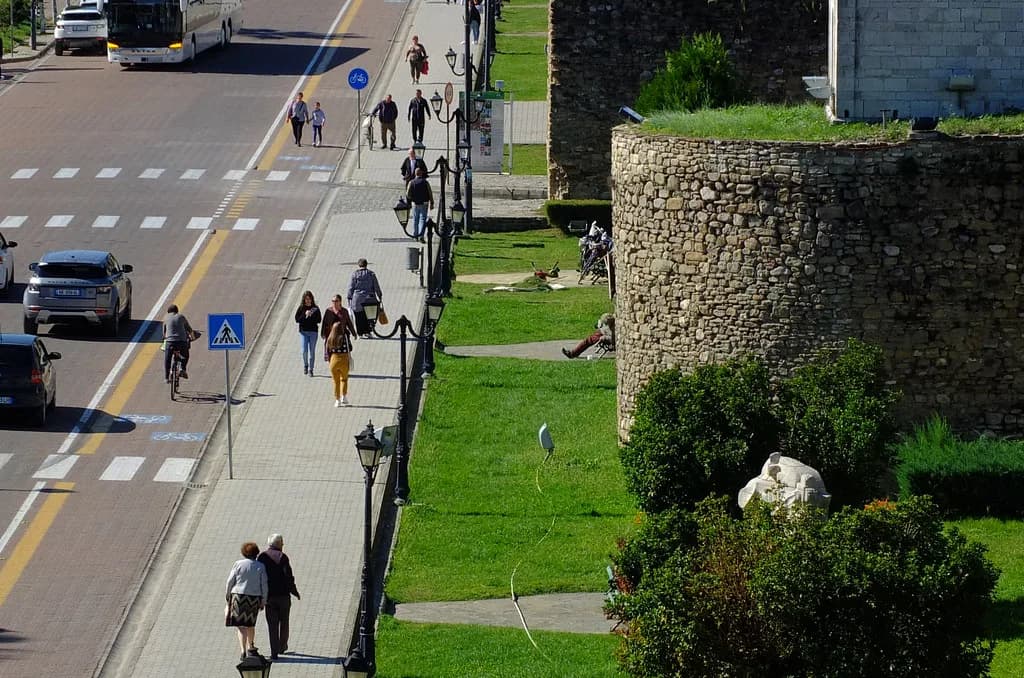
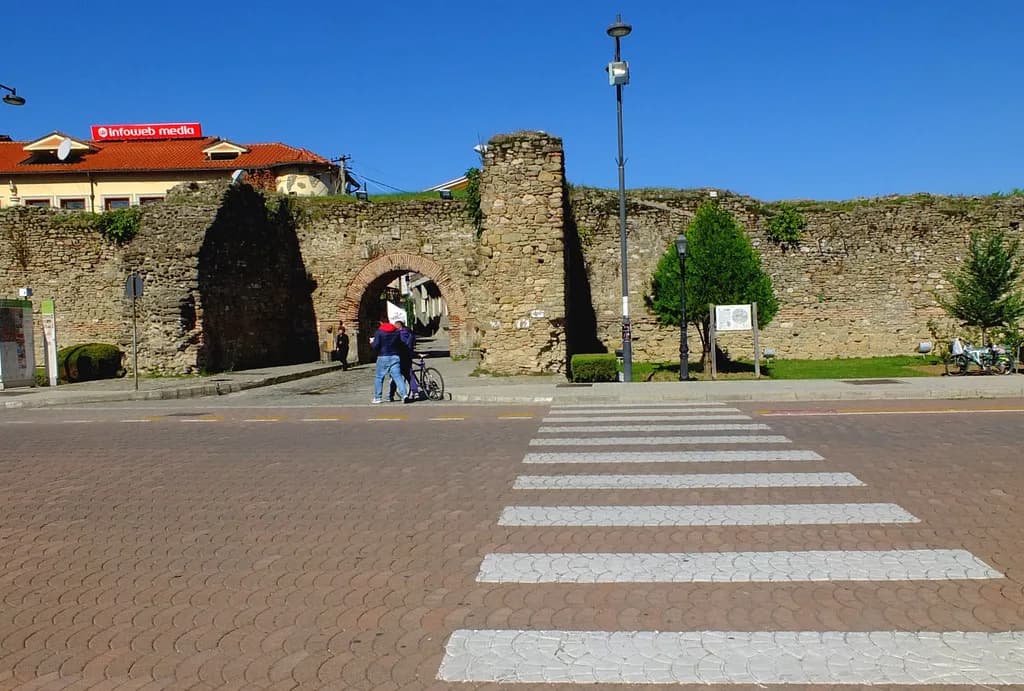
The surviving fortifications are the strongest feature, particularly the stretches with defensive towers to the west and south. These are the parts to linger over, since they show the Roman work together with later Ottoman improvements in one line of stone. Walk the outside of the western and southern walls if you have time, then come back in through one of the gates for the interior streets.
Entering through the bazaar gate
Come in through the bazaar gate from Aqif Pasha Boulevard, which puts you straight onto the main approach to the centre. This is the clearest arrival point and saves you circling the walls looking for a way in. Once through the gate, Xhaferr Kongoli Street carries you into the heart of the quarter.
After roughly a hundred metres along Xhaferr Kongoli Street you reach the King Mosque, which makes the gate the natural start of any walk. Keep the crossing streets in view as you go, because they give quick sideways detours to the towers on the west and south. The whole approach is short, so there is no need to plan a route in advance beyond this first stretch.
The King Mosque (Xhamia e Mbretit)
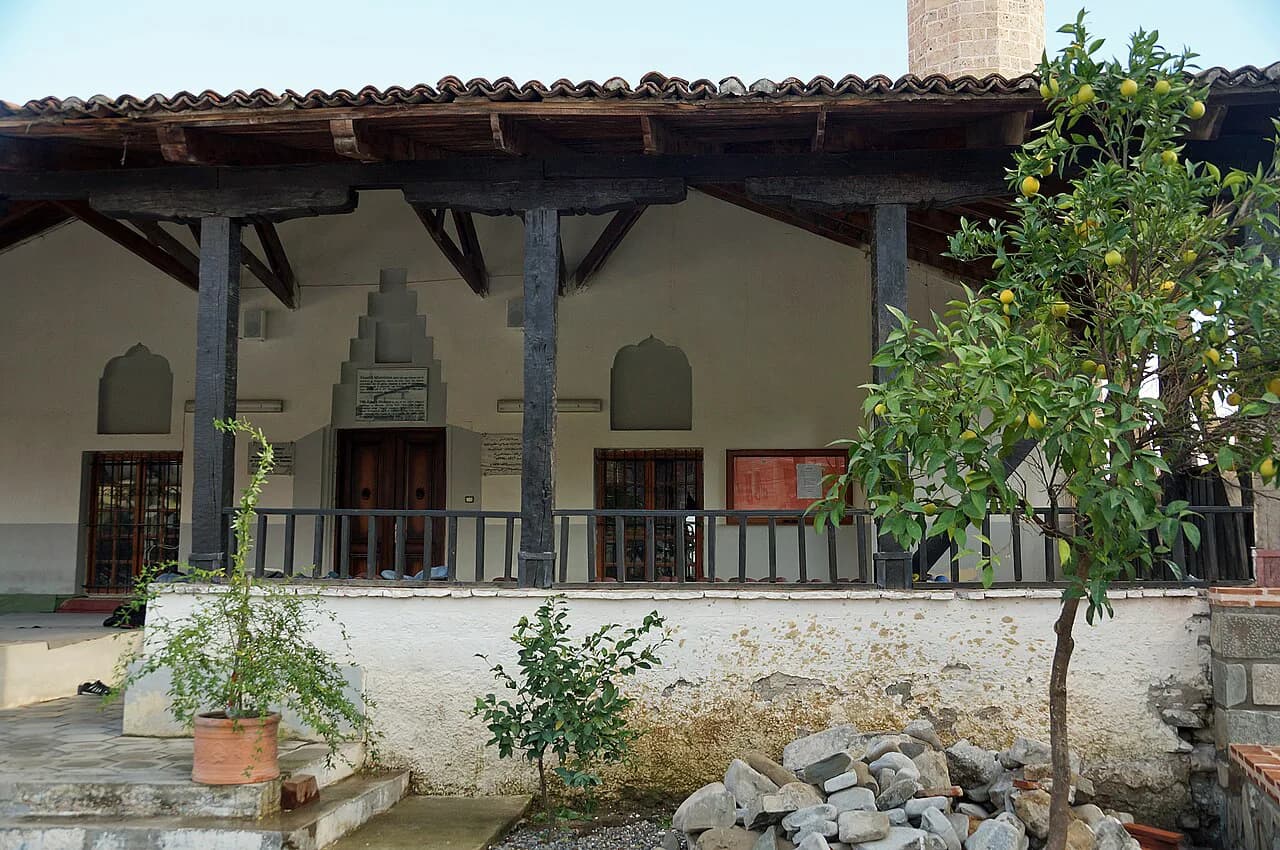
The King Mosque, Xhamia e Mbretit, was built in 1492 and is the oldest mosque in Albania. It stands just inside the old town on the approach from the bazaar gate, so it is usually the first building you see properly. After 1967, when religion was banned under the communist regime, the mosque was used for a period as an agitation centre rather than for worship.
Take your time inside rather than passing straight through the door. Visitors should dress modestly as a matter of course at a working mosque, covering shoulders and legs, and women should carry a scarf. Check locally whether the building is open before you build a day around going inside.
The Orthodox Church of the Virgin Mary
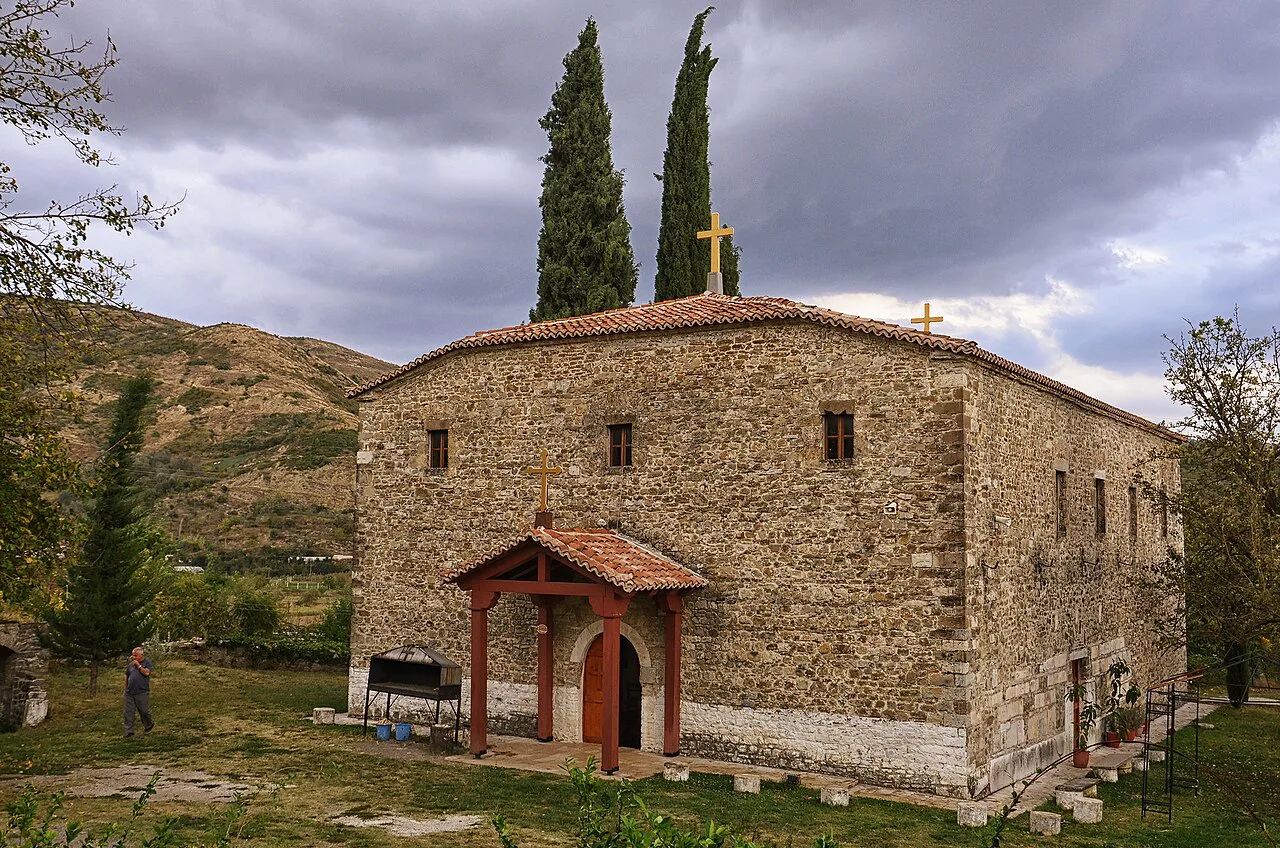
The Orthodox Church of the Virgin Mary, Kisha e Shën Marisë, stands on the site of an earlier church from 1486; the present three-aisled building went up at the start of the nineteenth century. Its carved iconostasis is the detail to look for inside. The church is said to have survived the anti-clerical campaign only because the adjoining lanes were too narrow for bulldozers to reach it, which tells you something about how tightly the old streets are packed.
In front of the church is the tomb of Konstantine Kristoforidhi, a Renaissance scholar who first translated the New Testament and the Psalms into Albanian in the nineteenth century. The tomb is a short stop on the same walk, not a separate excursion, and pairs naturally with the mosque a few minutes away. Dress respectfully, and keep voices low if a service is under way.
The walls, towers and passages
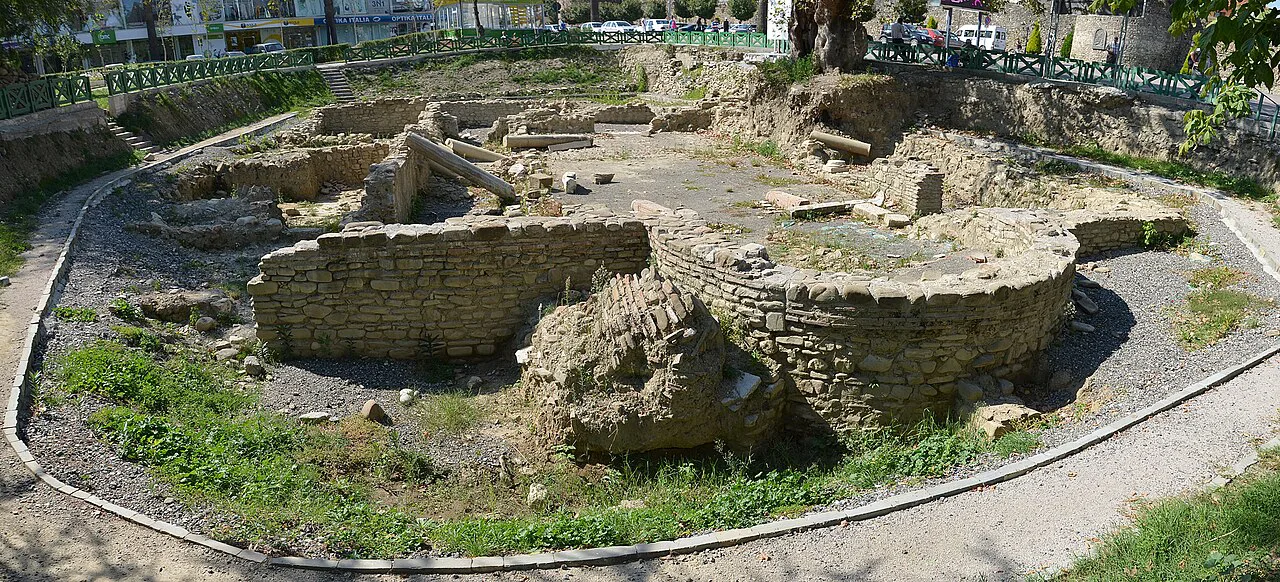
Four passages pierce the walls into the old town, so you have several ways in and out rather than one formal entrance. One of them leads directly to the Real Scampis hotel, where a few steps down bring you to an archaeological site uncovered during the building work. The excavation now sits under the hotel terrace, and the garden holds a restored Roman theatre.
Treat the Roman remains as something you see from the hotel terrace or garden rather than a public monument with its own gate and staff. They are worth a pause if you are passing, but they are not the reason to come. The western and southern towers remain the more substantial piece of ancient fabric.
The Turkish baths on Aqif Pasha Street
Just outside the old town walls on Aqif Pasha Street stands the building of the historic Turkish baths (hammam), put up in the nineteenth century on a site where steam baths had operated since the 1770s. It is a street-level landmark on the way in or out, not a working bath today. A café now occupies the house, and asking the owner is the usual way to see inside.
Pair it with the gate on Aqif Pasha Boulevard, since both sit on the same edge of the quarter. If you are hungry after the walk, the streets around the old town are where to look, and the best restaurants in Elbasan are a short way beyond the walls rather than inside them.
How long the old town needs
Allow about two hours to walk in through the bazaar gate, follow Xhaferr Kongoli Street to the King Mosque and the church, and loop the western and southern walls. The quarter is compact, so the constraint is how long you spend inside the mosque and church, not the distance between them. Add time if you want to eat nearby or look for the ethnographic museum.
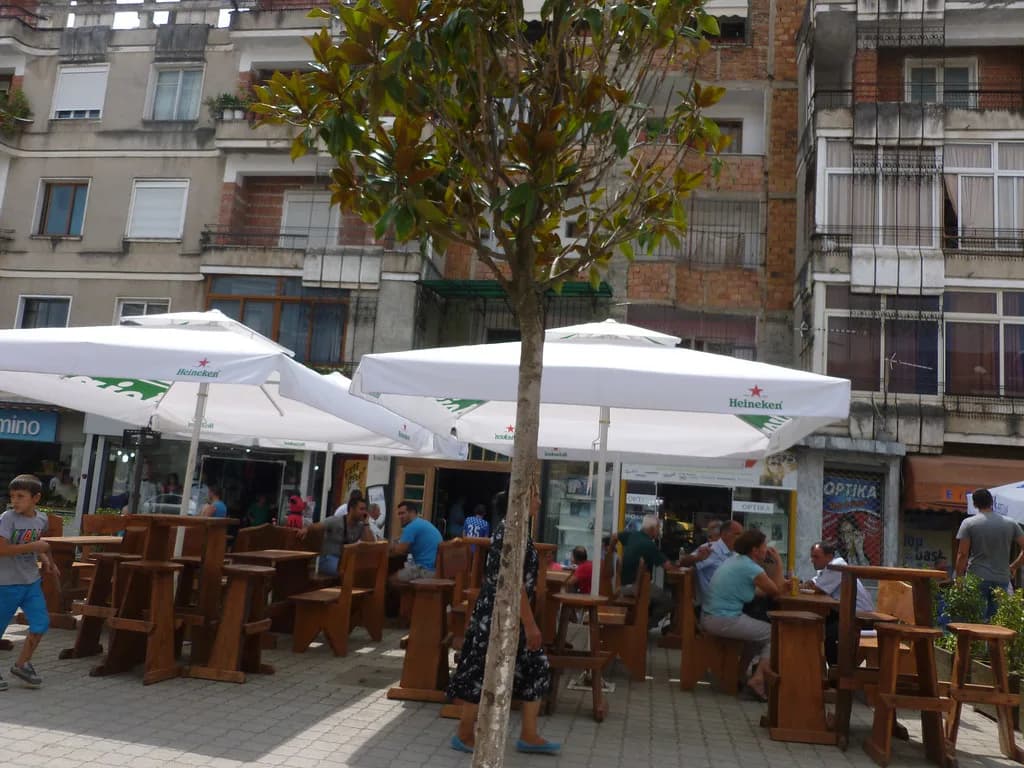
Come in the morning if you want cooler air, since the walled streets offer little shade at midday in summer. Cobbles and steps at the gates make sturdy shoes the sensible choice, and the lanes are narrow enough that a pushchair becomes awkward. The surrounding neighbourhoods are busier and more modern, so the old town feels quieter by contrast.
Getting to Elbasan and finding the old town
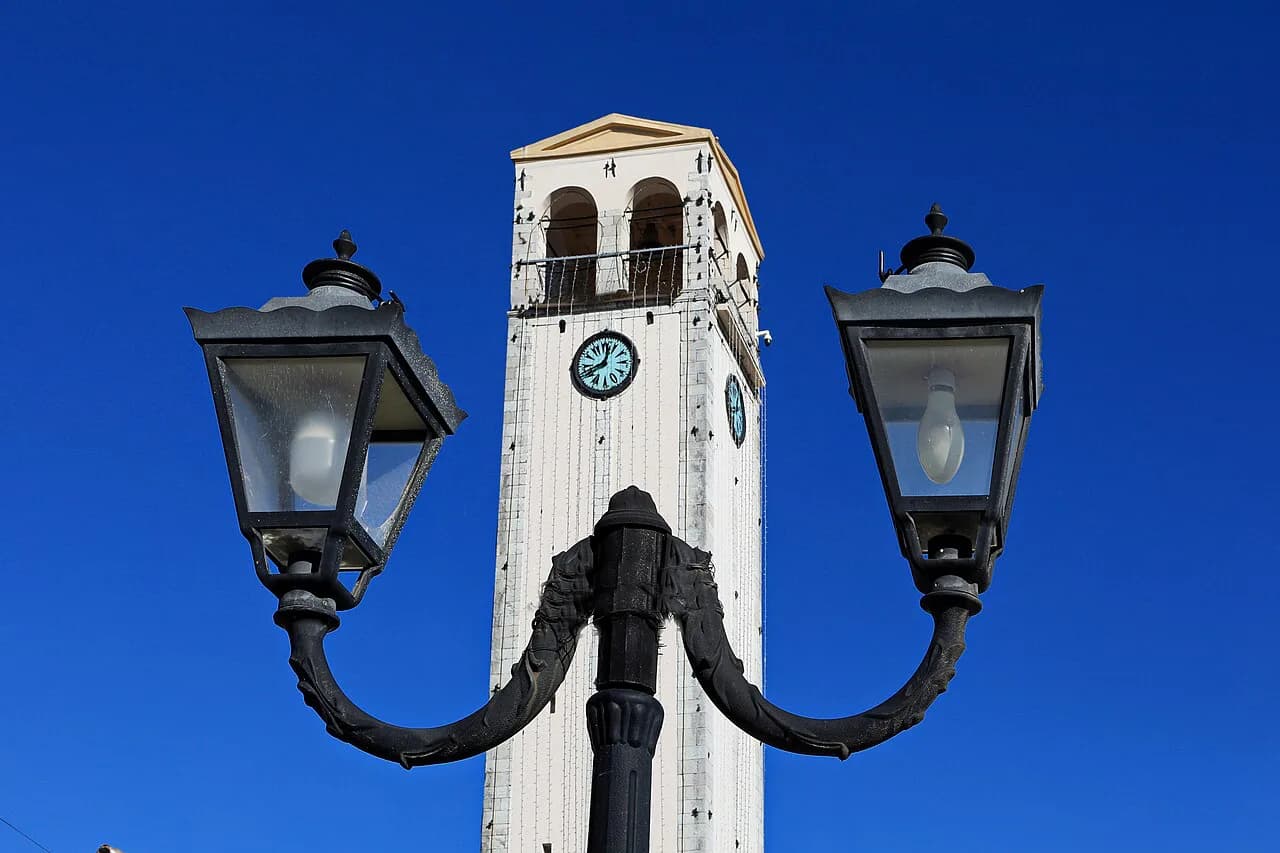
Elbasan lies on the route between Tirana and the south, which makes it an easy stop by car or bus on the way to Berat or Korçë. On arrival, head for Aqif Pasha Boulevard and the bazaar gate rather than aiming at the modern centre. Landmarks such as the Elbasan clock tower help you orient yourself once you are close.
Timetables and fares for services from Tirana change, so confirm them locally or with the bus company before you travel rather than relying on a posted schedule. Once in town, the walls are visible enough to walk towards on foot from the main streets. The old town is the obvious first stop, and the rest of Elbasan spreads out around it.
What else to see around the walls
Beyond the old town, the ethnographic museum is the main indoor sight if you want context on how the region lived. Elbasan has a wider set of attractions, and the castle walls themselves are the anchor for most of them. If you are deciding how to split a day, give the walled quarter the first half and the town beyond it the second.
With a car, Elbasan works as a half-day stop on the road east or south, but the drive on to Berat or Korçë deserves its own time. Guided day trips from Tirana also cover the district, though many combine Elbasan with Berat rather than concentrating on the old town. Read the itinerary before booking so you know how long you actually get inside the walls.
Is the old town worth a stop between Tirana and the south?
Yes, if you are already passing: two hours gets you the bazaar gate, the King Mosque, the church and a circuit of the western and southern towers. It is a modest quarter rather than a preserved Ottoman showpiece, so come for the walls and the two buildings, not for a bazaar full of stalls.
Build the stop around the gate on Aqif Pasha Boulevard, walk in on Xhaferr Kongoli Street, and leave the hammam building for the way out. Elbasan: Albania's Fortress City on the Shkumbin covers the city around the walls, and Elbasan Castle has more on the fortifications. Confirm opening times for the mosque and church before you set out.
Explore more Elbasan guides
Frequently Asked Questions
Can you walk Elbasan old town in an afternoon?
Yes. The walled quarter is compact, with two main streets crossing at the centre and the King Mosque a short walk from the bazaar gate. Two hours covers the main buildings and a circuit of the west and south walls, leaving room for the town beyond.
What should I wear to visit the King Mosque and the Orthodox Church of the Virgin Mary?
Dress modestly at both: cover shoulders and legs, and women should carry a scarf for the mosque. These are religious buildings rather than monuments, so keep voices low if a service is taking place.
Sources
Notes for your Albania trip
Optional updates to our Albania town guides.
You might also like
Continue reading
More guides you'll find useful