Benja Thermal Baths, Përmet: What to Expect and How to Get There
Plan a trip to the Bënja thermal baths near Përmet: the sulphur pools, the Katiu Bridge, water temperatures, driving from town and how long to allow.
On this page
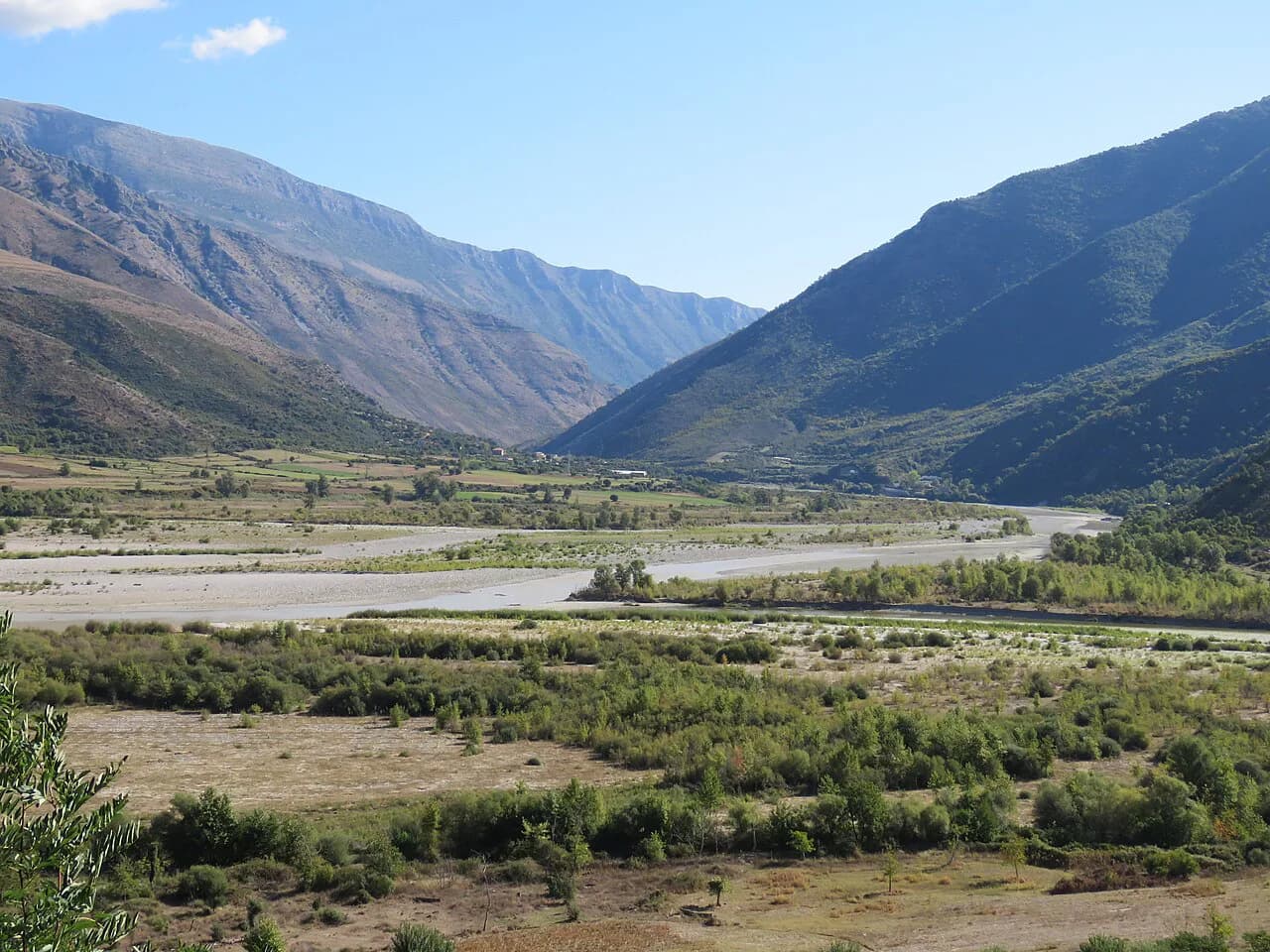
The Bënja thermal baths are a cluster of warm sulphur springs in the Langarica valley roughly 13 km from the centre of Përmet, and they work best as a half-day outing rather than a spa visit. You come for a short soak in the stone pools, a look at the Ottoman bridge beside them and the canyon walls above, then carry on. This guide covers what the pools are, the water temperatures the sources give, the drive from town and what to pair with the stop.
Treat the baths as one stop with the Katiu Bridge and the Langarica canyon rather than three separate excursions; the three sit in the same stretch of valley. For the wider town picture, including food and where the valley roads lead, see the guide to Përmet, Albania.
What the Bënja thermal baths are and where they sit
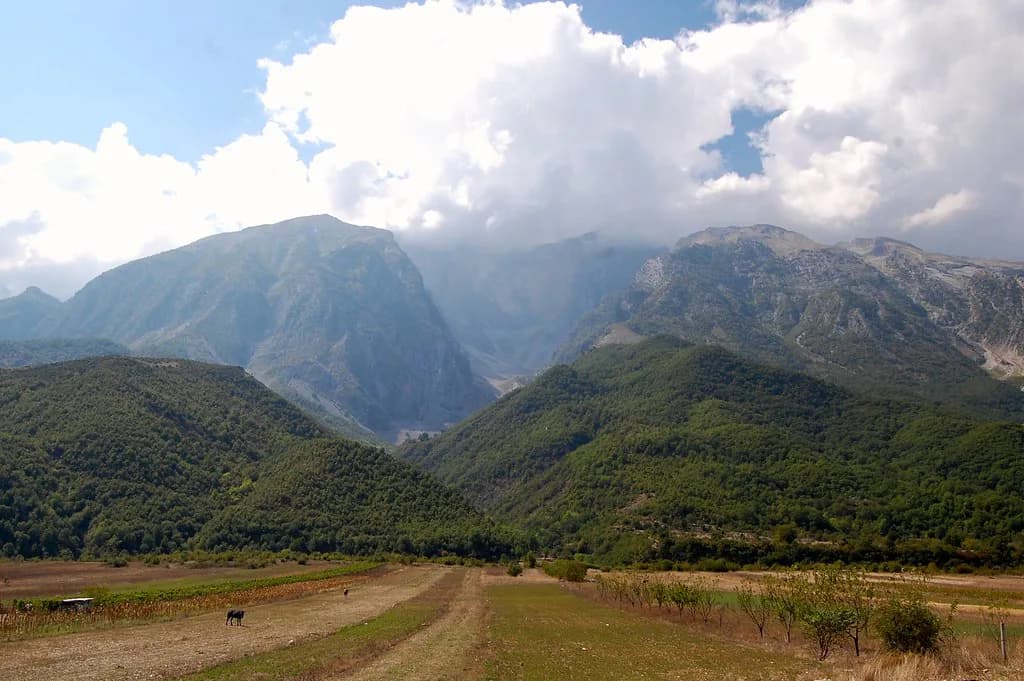
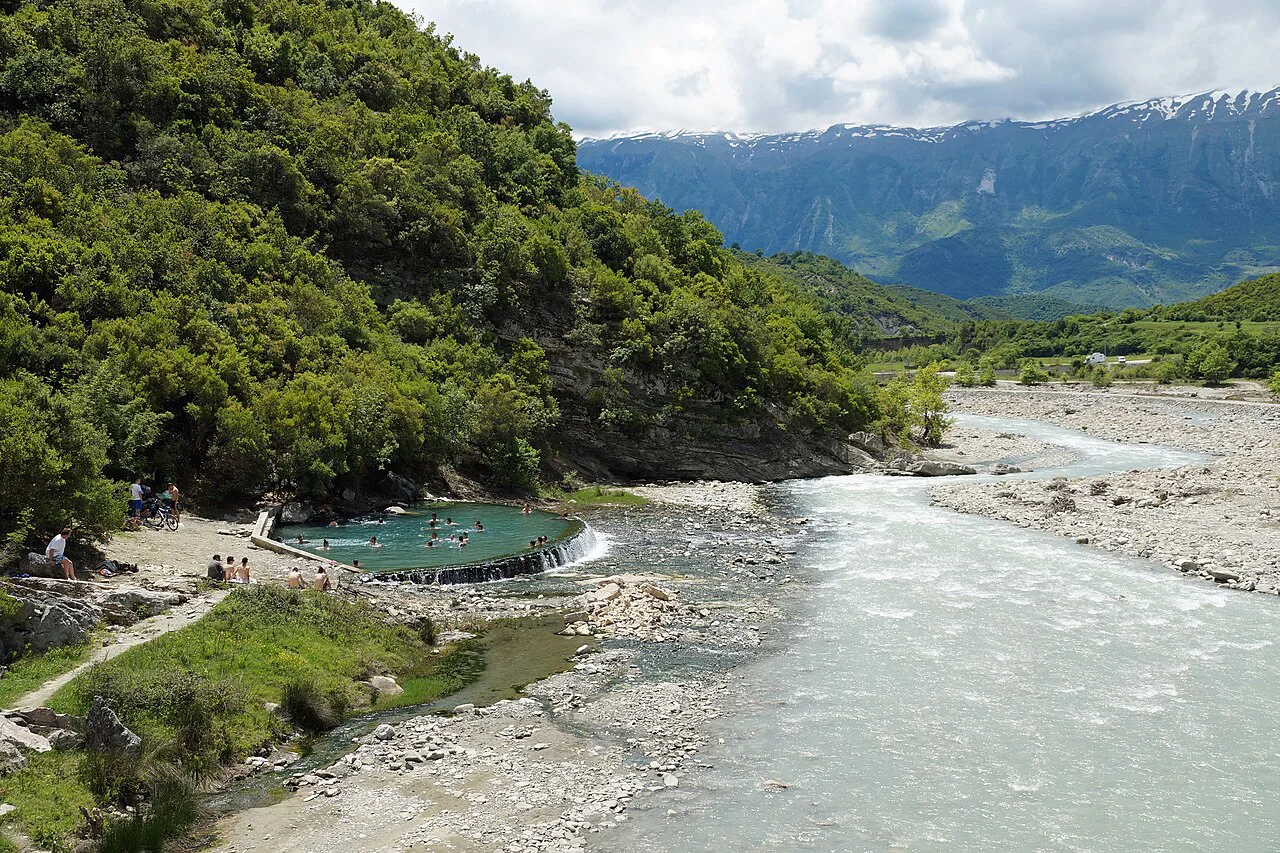
Bënja (also written Benja or Banjat e Bënjës) is a set of thermal springs in the Përmet district, valued for sulphur-rich water that is associated with help for rheumatic and skin complaints. The pools sit in a calm, green valley setting below the Langarica canyon, with mountain air and river scenery around them. In Albanian the springs are called llixha, the ordinary word for a thermal bath.
The site is a natural feature, not a built complex: you are bathing in and beside a stream in the open. Plan around that — there is no ticketed entrance hall to organise your visit. The wider regional context, including how the springs fit Albania's geothermal map, is set out in a guide to thermal baths in Albania.
The stone pools and the Katiu Bridge
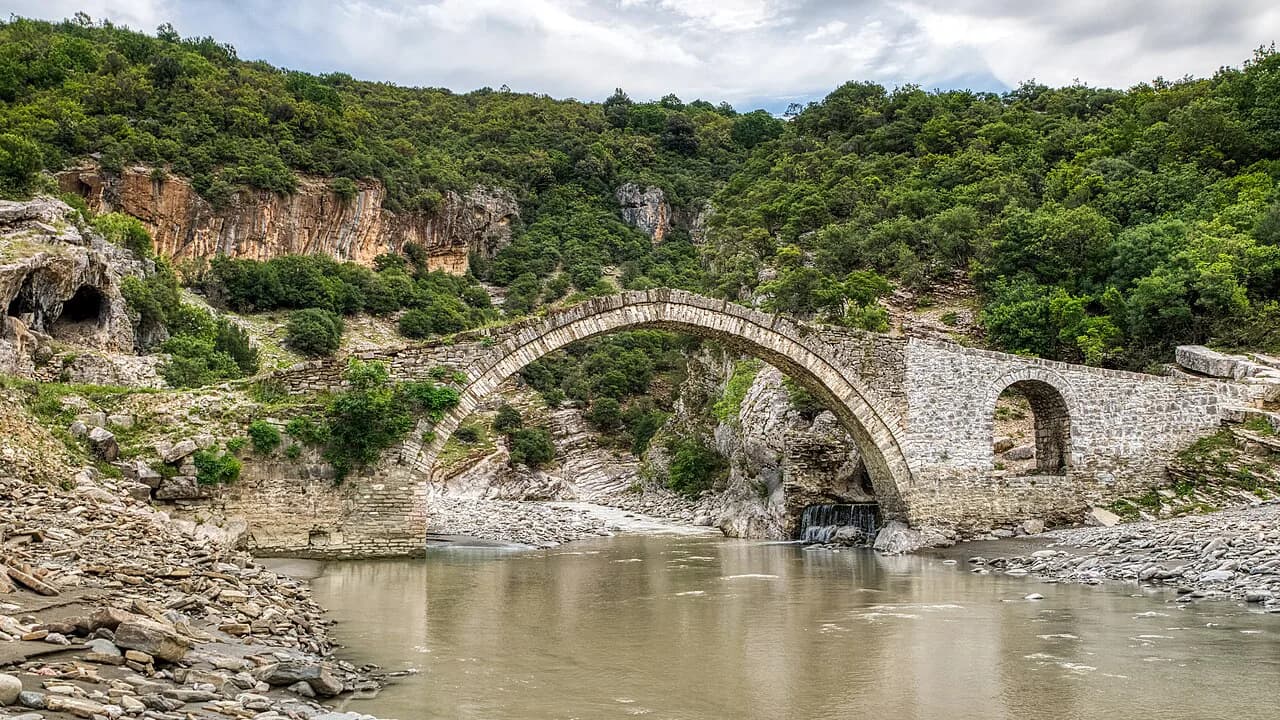
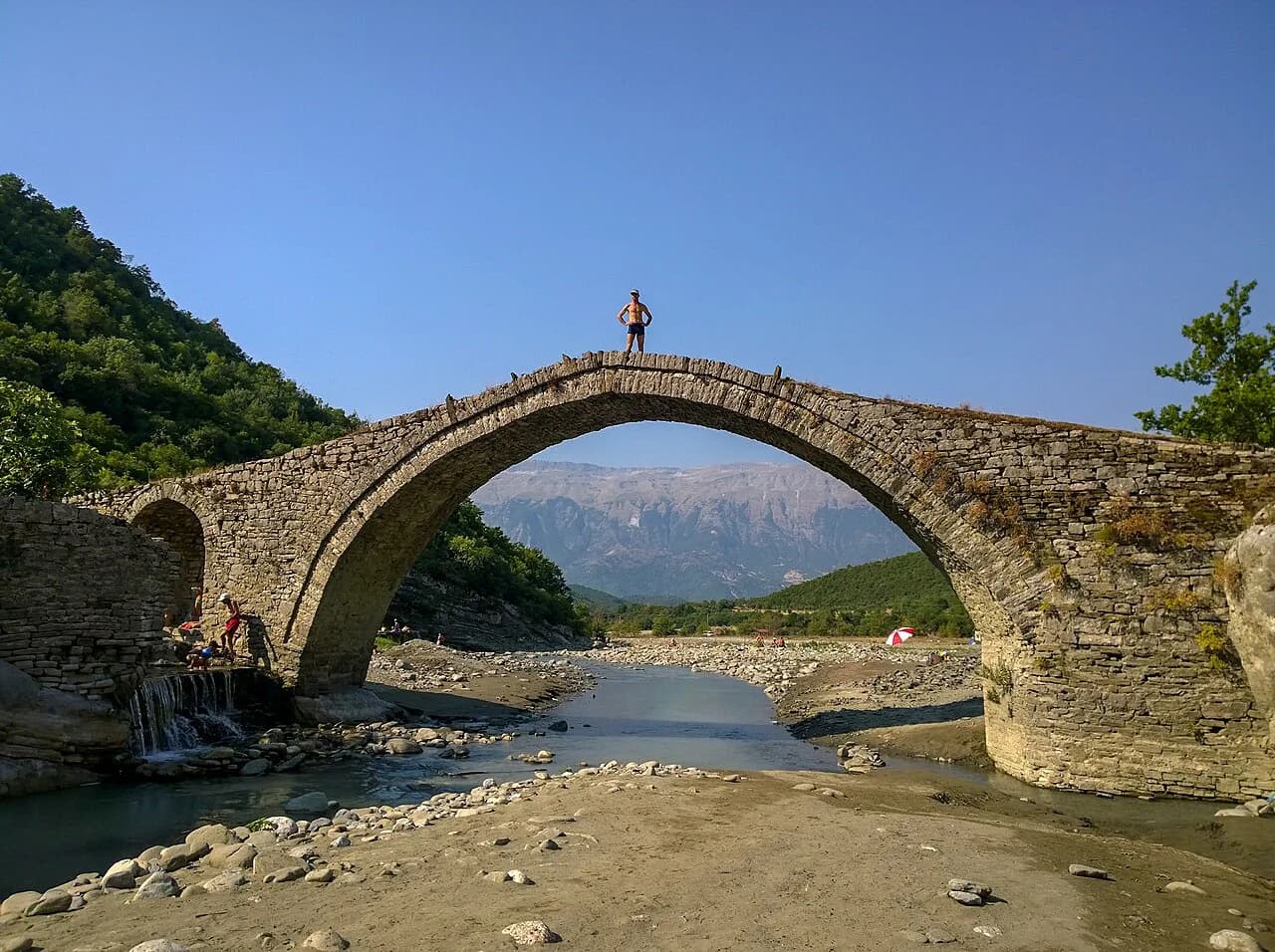
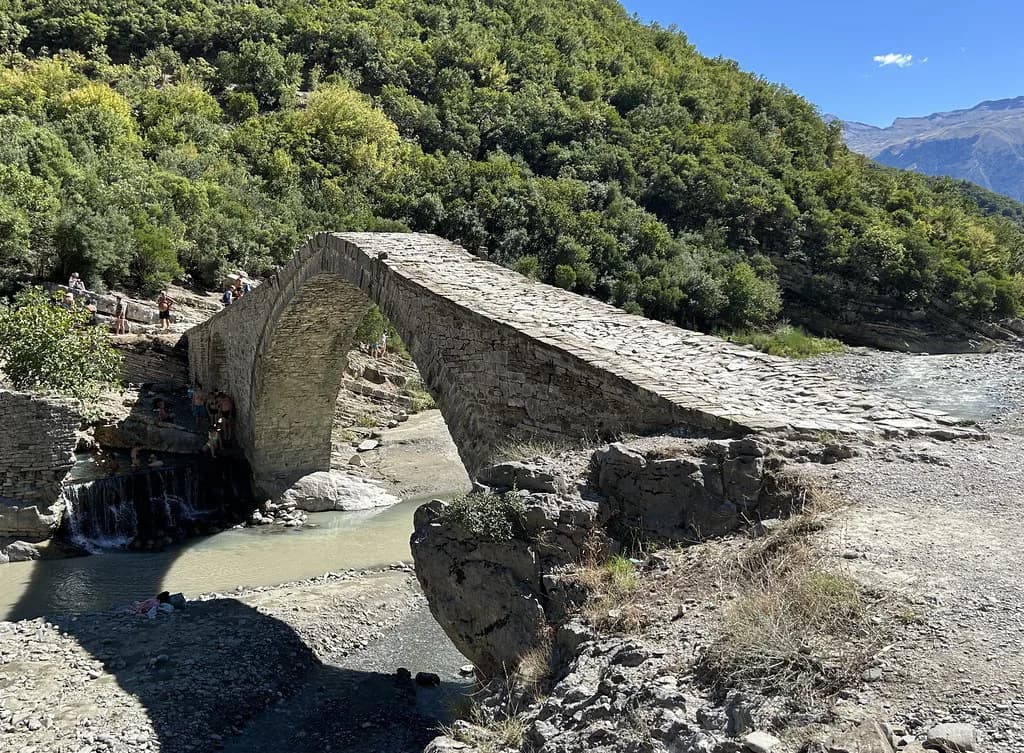
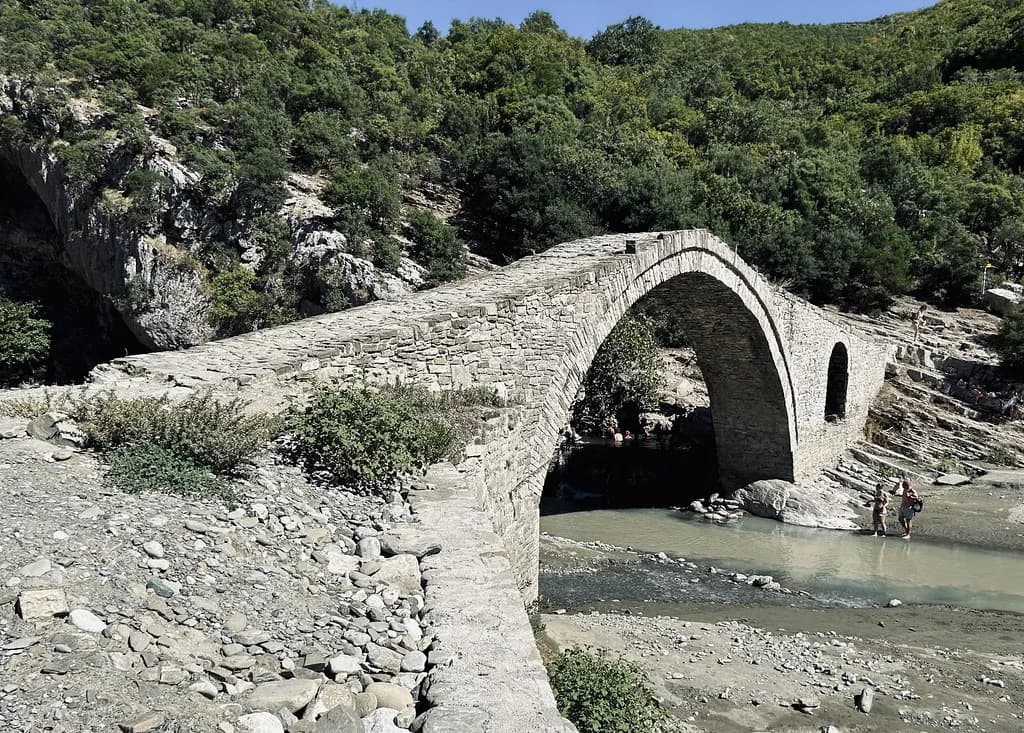
The stone baths are the most authentic of the pools and draw visitors throughout the year. Two of the largest and most popular sit at the foot of the Katiu Bridge, the old Ottoman crossing also known as the Judge's Bridge, and those are the ones traditionally associated with gastric and rheumatic complaints. The bridge itself is worth a few minutes before or after the soak.
Expect people daubed in the dark mud that settles around the springs; the deposits are part of the ritual here rather than a novelty. Bring a towel you do not mind staining and shoes that cope with wet, uneven stone. The pools are shallow and open to the sky, so there is no shade structure to rely on.
Water temperature and sulphur content
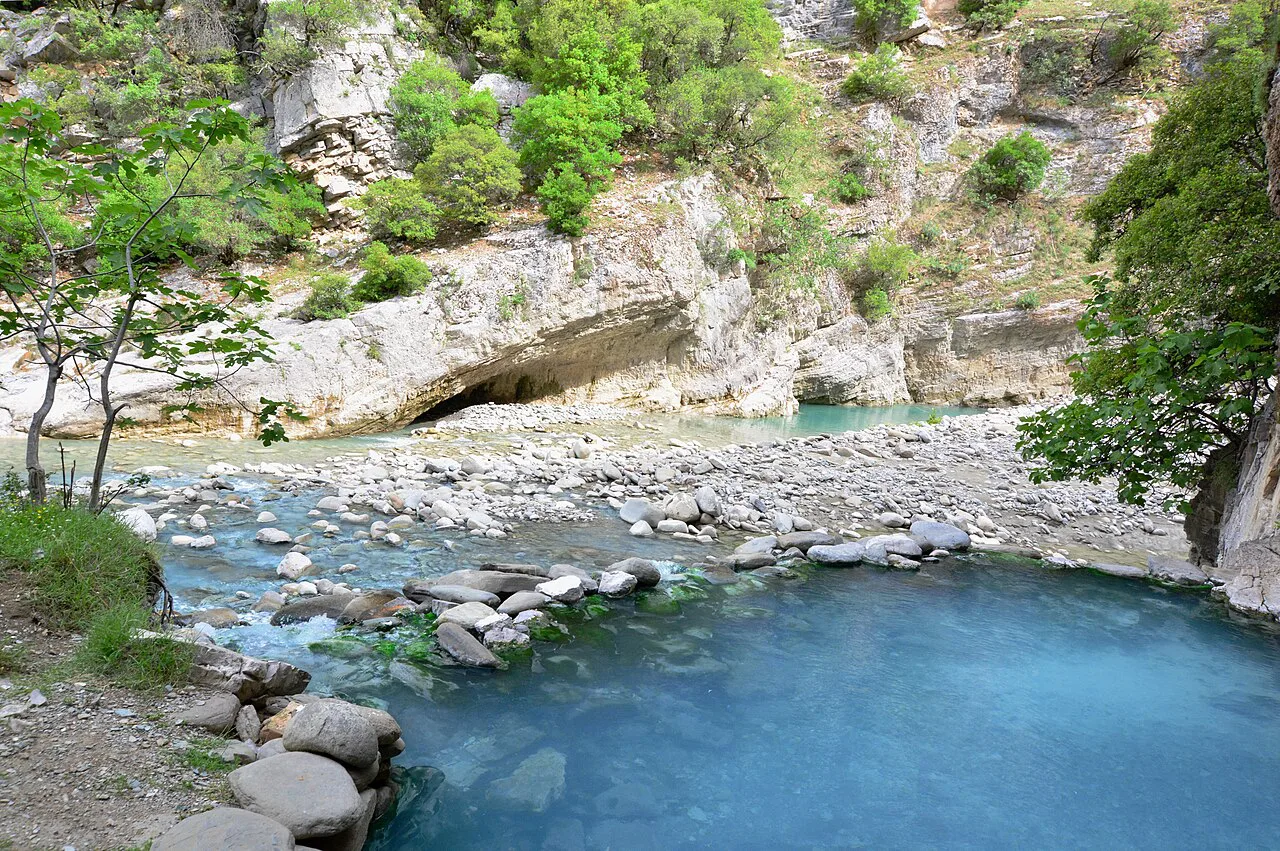
Treat any temperature figure as approximate. One account gives the water at a warming 29–30°C all year round where the warm springs meet the cold Langarica stream; a tour listing describes the ponds at 22–25°C. Either way it is a comfortable warm soak rather than a scalding hot spring.
The water carries a high sulphur content, which is what gives the valley its characteristic smell. The springs rise from the cliffs around the Langarica canyon and flow down into the river. Keep jewellery and light-coloured swimwear out of the water if you care about them.
Health claims and how long to stay in the water
Local practice links the baths with relief from rheumatism, skin and kidney ailments, and each pool is said to serve a particular purpose. The official tourism site notes the sulphur springs are known for benefits especially for rheumatic and skin problems. Treat that as the reputation the springs carry rather than medical advice.
Keep the soak short: 20–25 minutes in the pool is usually enough, and longer in highly sulphuric water can be overwhelming. Come out, cool off, and go back in later if you want more. Drink water before and after, particularly in summer.
How to get to Bënja from Përmet
The baths are about 13 km from the centre of Përmet, reached by road up the Langarica valley. There is no cited bus or furgon service to the pools, so a car, taxi or organised tour is the practical way to arrive. Ask in town about the current road condition before setting out, as the last stretch is the part that changes with weather.
Driving yourself gives you the flexibility to stop at the bridge and the canyon viewpoints on the way. Allow for a slow final approach on a narrow valley road rather than motorway speeds. If you are coming from further afield, Tepelenë on the main north–south route is the usual staging point before turning east to Përmet.
Parking, access and what to bring
Access is on foot over uneven, damp ground once you leave the car, so waterproof sandals or old trainers beat flip-flops. Pack a towel, a dry bag for phones, water and a bin bag for wet kit; none of that is something to count on finding on site. Cash in lek is worth carrying in case a small local charge applies.
The pools sit at the bottom of a steep-sided valley, so the walk down and back up is short but not flat. Anyone with limited mobility should scout the path before committing to the descent. There are no lifeguards and the river alongside runs cold and fast.
Combining Bënja with Langarica Canyon and the Katiu Bridge
The Katiu Bridge and the canyon are part of the same outing, and the caves in the canyon walls are the draw beyond the water. The Langarica river runs cold but is warmed where the springs join it, which is why the bathing spots sit where they do. Give the whole stop two to three hours including the drive from Përmet.
Back in town, Përmet is known for its kitchen, including the Slow Food Presidium work that has put local produce on the map. A soak followed by a late lunch is the natural shape of the day. See the notes on Përmet food for what to order.
When to go: winter soak versus summer heat
Winter is when the contrast works best: Përmet can drop below freezing while the pools stay warm, which makes a cold-weather soak the memorable version of this trip. Summer brings valley heat and lower, warmer river levels, so go early or late in the day. Spring and autumn split the difference and keep the drive comfortable.
The pools draw visitors all year round, and the stone baths are the busiest part of the site. Arriving early in the day is the simplest way to have the main pool to yourself for a while. Midday in August is the time to avoid.
Practical etiquette at the pools
Shower off before you get in, keep noise down and take everything you brought back out with you — this is a natural site in a working valley, not a managed lido. Change discreetly behind a towel; there are no cited changing rooms. Mud is part of the experience, so expect to leave a little dirtier than you arrived.
If a tour group arrives, wait them out rather than crowding the same pool; groups move on within the soak window. Local people use the springs too, so follow their lead on where to bathe. This is also a good moment to ask about the road onwards if you plan to continue up the valley.
Should Bënja be the main stop of your Përmet day?
No — Bënja is a short, memorable soak, not a destination in its own right. Build the day around the drive up the Langarica valley, with the pools, the Katiu Bridge and a canyon walk as the content. Two to three hours covers it comfortably, and a late lunch in Përmet rounds it off well.
Go early, bring old shoes and a towel, keep the soak to around 20–25 minutes, and carry cash in case of a small local charge. Check road conditions in town the day before, especially outside summer.
Explore more Permet guides
Sources
Notes for your Albania trip
Optional updates to our Albania town guides.
You might also like
Continue reading
More guides you'll find useful