Tirana Market Guide: Pazari i Ri & Cham Market Picks
A practical guide to Tirana's markets: Pazari i Ri for produce, cheese and street food, Tregu i Çamëve for clothing, and the city's secondhand stalls.
On this page
For a first market visit, go to Pazari i Ri, the New Bazaar, for produce, cheese, honey and street food; go to Tregu i Çamëve, the Cham Market, if you want clothing and household goods. The two sit in different parts of the centre and reward different errands, so pick by what you actually want to buy rather than trying to cover both in one sweep. This guide covers what each market sells, the morning timing that decides whether a visit works, and how to pay and bargain, and our Things to Do in Tirana guide sets the markets alongside the rest of the city.
What Tirana's markets are, and which one suits a short visit
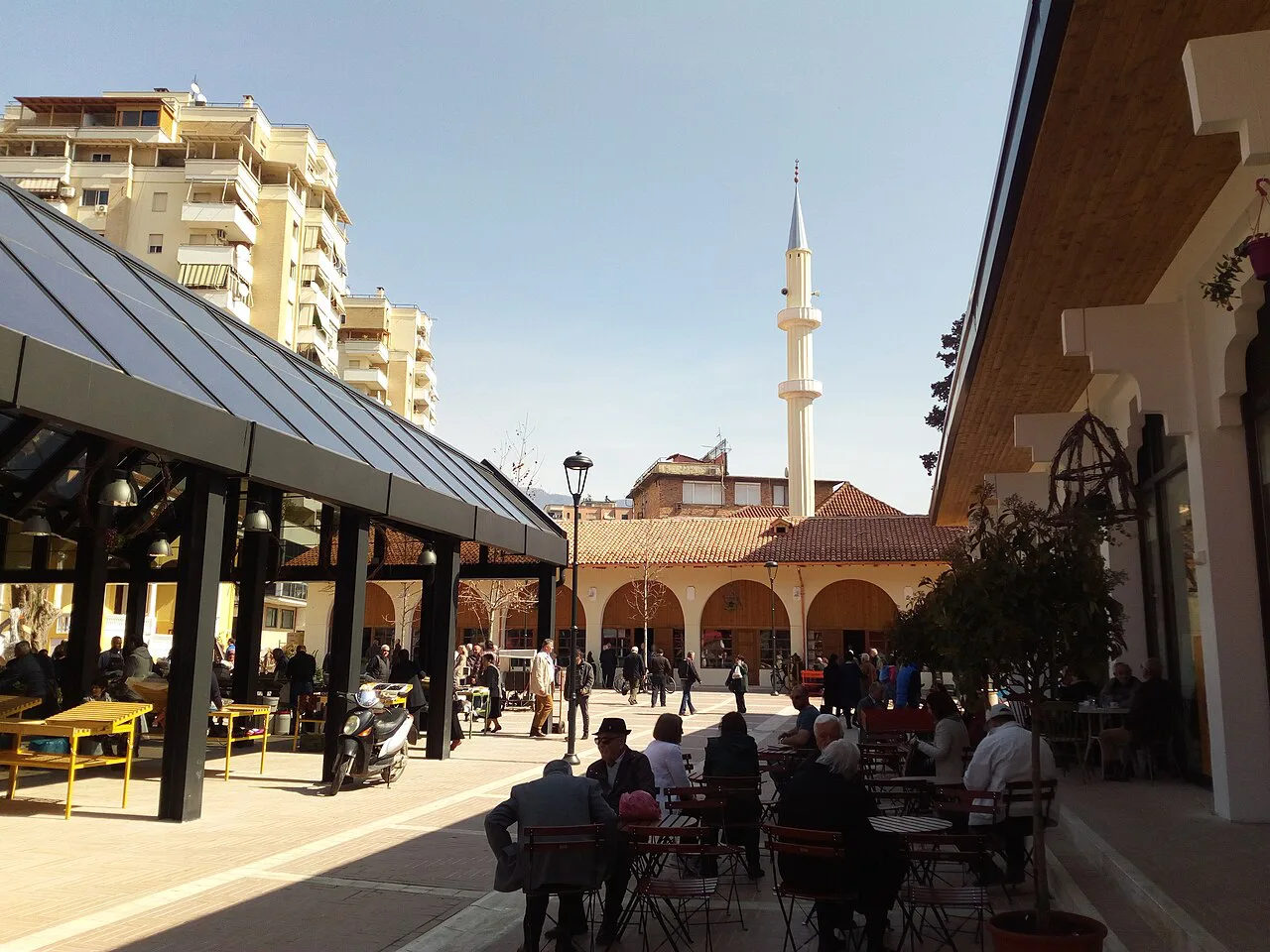
Tirana's street markets give an honest picture of how the city shops, and the fast pace of change is visible in the stalls themselves. Pazari i Ri was renovated around 2017, when the square gained a steel and Plexiglas canopy over the produce stalls and the surrounding buildings were brightened with wall paintings. With an hour to spare, take the New Bazaar; with a spare morning, add the Cham Market. Our Shopping in Tirana guide covers the wider retail picture if you need more than the markets.
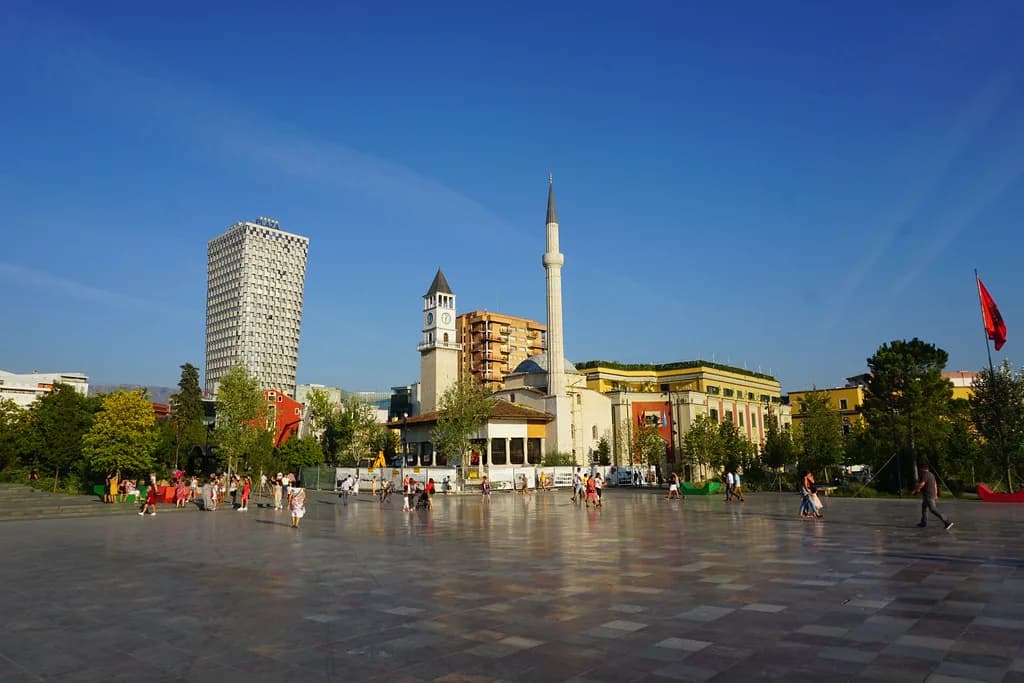
The New Bazaar sits at Sheshi Avni Rustemi, on Rruga Luigj Gurakuqi, a short walk from Skanderbeg Square, which makes it easy to fold into a morning in the centre. The Cham Market spreads along a street rather than filling a square, and one listing places it at Tregu Çam in Tiranë with clothing, household goods and tools among the stalls. Pin both on the Tirana Map before setting out, because neither market is a single signed entrance.
Pazari i Ri (the New Bazaar): produce, cheese, honey and street food
Stalls at Pazari i Ri pile fruit and vegetables high, arranged with care for colour, and many also sell snacks and prepared foods such as olives, cheese, pickled green tomatoes, fresh figs, wine and raki. The market is open daily, with peak activity Monday to Saturday between 07:00 and 18:00, while some stalls close earlier on Sundays, usually between 14:00 and 16:00. Arrive early in the morning, around 07:00 to 09:00, to see produce being laid out, and expect Saturday to be the busiest day.
Typical prices listed for the market include local tomatoes at 90 to 140 lek per kilo, potatoes at 50 to 90 lek per kilo, local cheese at 370 to 740 lek per kilo depending on ageing, and artisanal honey at 550 to 1,100 lek for a 400 g jar. Treat these as ranges rather than fixed prices, since stall position and season move them. Cheese comes in familiar forms such as kaçkavall and white cheese, and honey and jams sit alongside cured meats.
Fruit and vegetables follow the Albanian season, so a summer fruit is hard to find in winter, which affects what looks good on any given stall. If you are hunting for a specific ingredient rather than browsing, Neranxi is a local chain stocking spices, nuts, grains and items such as coconut milk and gluten-free products, and the supermarket Baronesha in the Blloku area carries British and American brands. Both are a better bet than a produce stall for a hard-to-find item.
What to eat around Pazari i Ri and what it typically costs
The small street-food stalls around the market are the reason to come hungry: byrek is typically around 60 to 140 lek a slice, qofte around 140 to 280 lek, and Turkish coffee or espresso around 70 to 140 lek, against a lek-euro rate the same guide puts at about 92 lek to the euro in October 2026. Vendors around the market generally prefer lek, and some small producers give a better price when you pay in the local currency rather than euros. Prices shift with season and stall, so read the board before ordering.
If a sit-down meal is what you want after the market, the surrounding streets have plenty of choice; our pick of the best restaurants in Tirana covers the options worth planning around. Otherwise, a byrek and a coffee at the stalls is the cheaper and faster route, and our Tirana Food guide explains the dishes to look for.
Tregu i Çamëve: the Cham Market for clothing and household goods
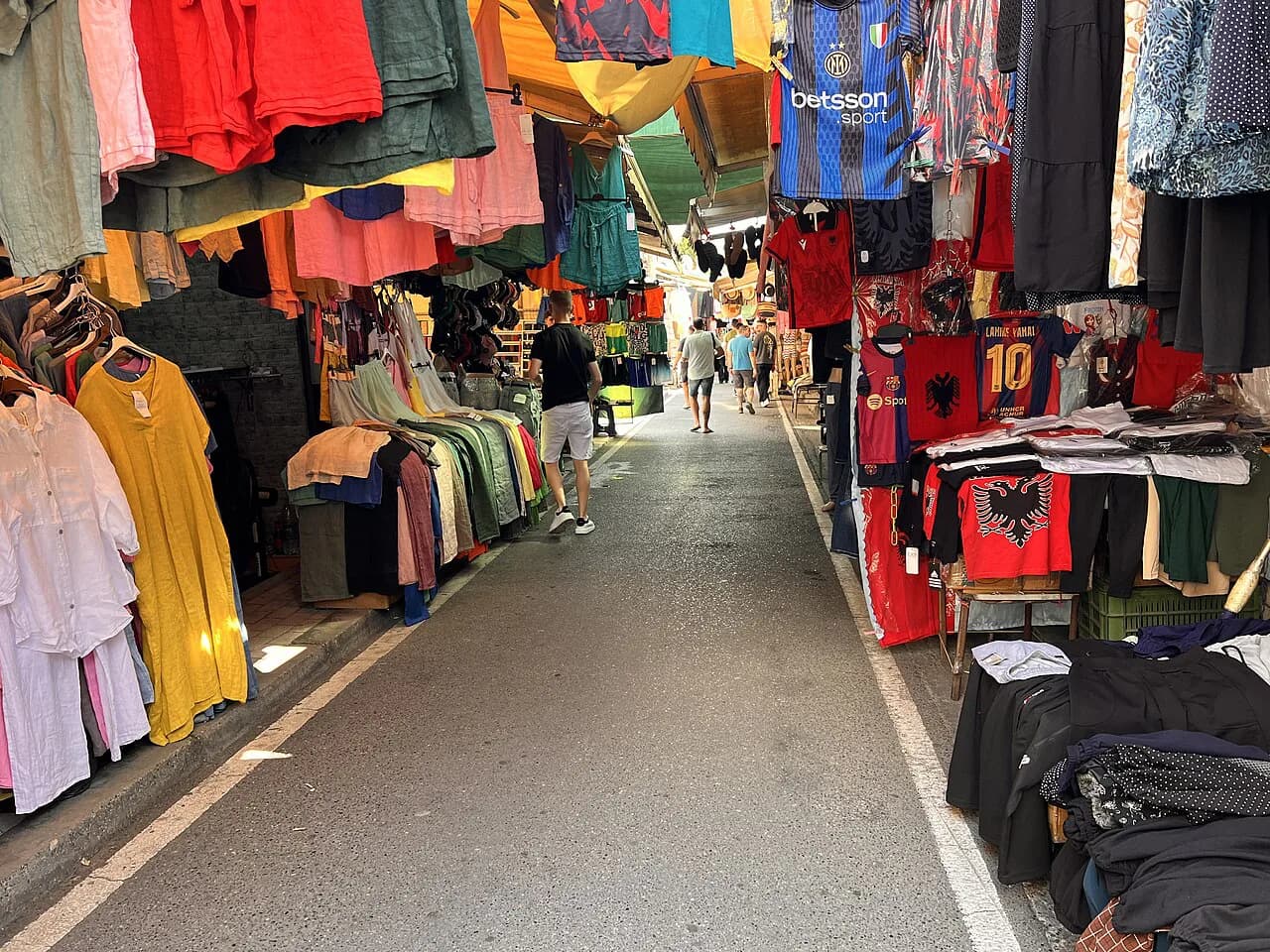
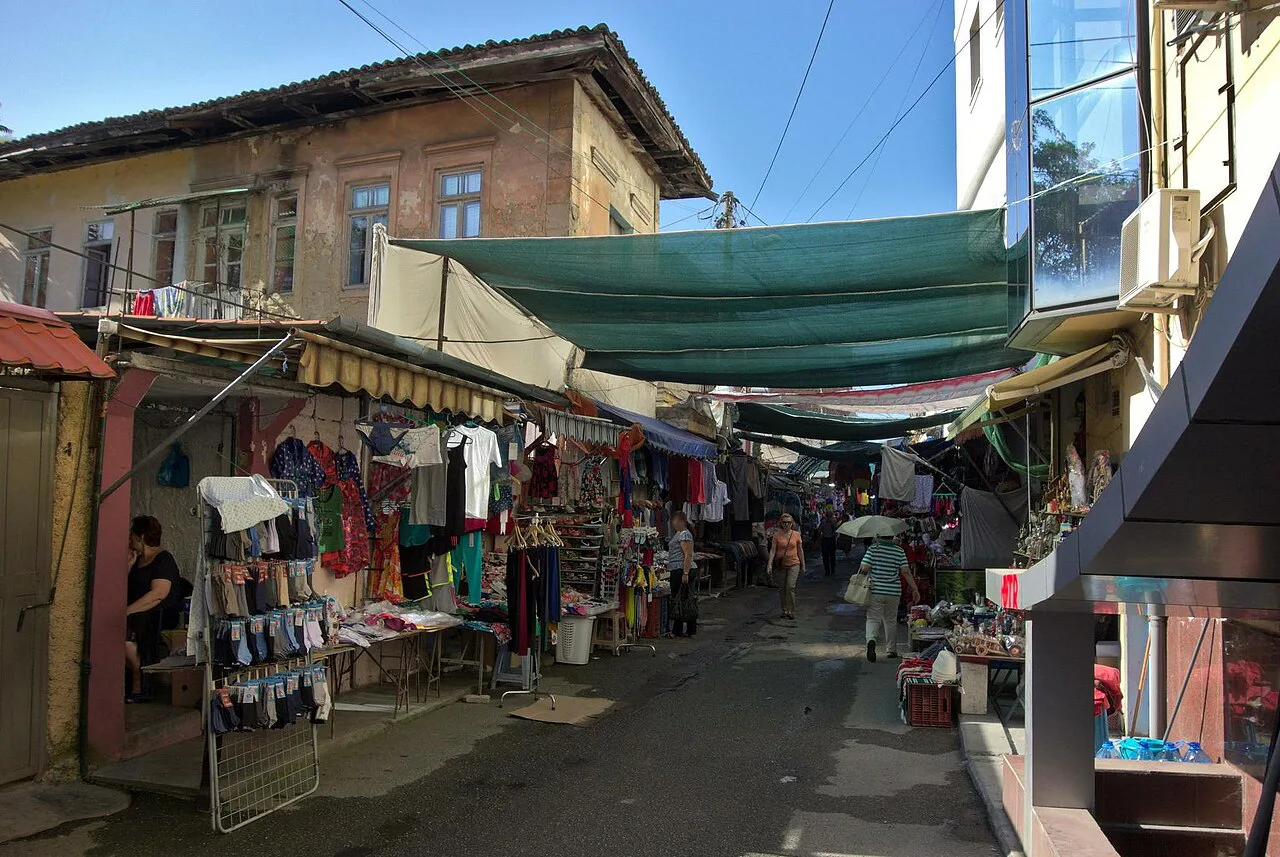
Tregu i Çamëve is the city's main market for clothing and assorted objects, filling a street for a few hundred metres with stalls that range from proper traders to someone with a box and a few items to sell. At the end of the road, Rruga Çamëria sells mobile phones, kitchenware and bicycles. It is a daily market rather than a weekend event, so it fits a weekday visit.
Come here for everyday essentials, clothing and tools rather than souvenirs, and bring cash, which vendors generally prefer even where cards are accepted. Bargaining is part of the transaction and is expected to be friendly rather than hard-nosed. Mornings and early afternoons are the busiest stretch, and the listing notes that hours can vary with the season.
Secondhand and vintage stalls: where Tirana's flea-market shopping happens
Secondhand stalls and shops have spread across Tirana, selling clothes and shoes that run from bright ski suits to floral dresses and denim. At the same markets, people from surrounding villages sell fruit and vegetables from their own gardens, home-made honey, olive oil, fresh herbs and farm eggs, so one stop can cover vintage clothing and rural produce. Two larger secondhand markets are mapped by the Tirana Backpacker Hostel, which is a useful starting point if you want to see several at once.
Bargaining here is brisk: a common approach is to open at around half the first price, keep talk to a minimum and be ready to walk away. Some sellers still quote in the old lek, which adds an extra zero to the figure, so confirm the number before agreeing. Ask how much with a simple sa, and do not show enthusiasm before the price settles.
The smaller neighbourhood produce markets
Every neighbourhood has a fruit and vegetable market for immediate needs, but the larger ones carry a wider range including nuts and herbs. The city's bigger produce markets include Pazari i Ri, the area around Shkolla e Baletit, Rruga Him Kolli between Rruga Kavajës and Rruga Myslym Shyri, Vasil Shanto school, Brryli, Komuna e Parisit and Medrese. Shop before one or two in the afternoon, when most sellers pack up, and go early for the freshest produce.
These neighbourhood markets are the practical choice if you are staying outside the centre, since they save a trip across town for a few tomatoes and some herbs. They are also where seasonal limits show most plainly: what is on offer follows the Albanian growing calendar rather than a supermarket list.
Tirana's shopping centres, if you want fixed prices and international brands
For fixed prices and familiar labels, Tirana's shopping centres do the job: Toptani, TEG, QTU, Ring Center and Kristal Center each list their shops and services online. Toptani is the central one, an eight-storey centre with round shapes and a glass ceiling that holds international brands along with bars and diners. Most international clothing stores sit in the larger centres, while Rruga Myslym Shyri is the street to walk for higher-end clothing shops.
Bargaining, cash and paying in lek
Pay in lek where you can: some businesses accept euros but at an unfavourable rate, and small shops take cash only. Many vendors will take euros from visitors, yet a little bargaining in lek can bring the price down, which is why carrying small notes matters more than carrying a card. Albanian prices are quoted in lek, so keep the mental arithmetic simple.
Bargaining at the produce market is a quieter affair than at the clothing stalls, and it helps to watch how local customers and traders settle a price before joining in. At secondhand stalls, the haggle is more direct and walking away is a legitimate move. Either way, agree the number before money changes hands.
Which market should you visit first?
Start with Pazari i Ri if you have a morning, because it combines produce, cheese, honey and street food in one walkable square near the centre, and go early to catch the stalls at their best. Add Tregu i Çamëve only if you want clothing or household goods, and save the secondhand stalls for a browse when you have time to bargain.
Market hours shift with the season and stallholders set their own closing times, so confirm the day's timing before a special trip across the city.
Explore more Tirana guides
Frequently Asked Questions
Is there a Sunday market in Tirana?
Pazari i Ri is open daily, and some stalls close earlier on Sundays, usually between 14:00 and 16:00, so a Sunday morning visit still works. The Cham Market is described as a daily market. Confirm the day's timing locally before making a special trip.
Where is Tirana's flea market for secondhand clothes?
Secondhand stalls and shops are spread across the city rather than confined to one site, selling vintage clothing and shoes alongside rural produce. The Tirana Backpacker Hostel maps the two biggest secondhand markets, which is the simplest way to plan a route.
What days are Tirana's markets held?
Pazari i Ri and the Cham Market both operate daily, with the New Bazaar busiest Monday to Saturday and quieter on Sunday afternoons. Neighbourhood produce markets are best visited in the morning or early afternoon, generally before one or two, when sellers gather and then pack up.
Is Albania cheap for clothes shopping?
Prices vary by stall and by what you are buying, and the clothing markets reward bargaining, with a common opening move around half the first price at secondhand stalls. Check the figure carefully, because some sellers still quote in the old lek with an extra zero. Shopping centres are the fixed-price alternative.
Sources
Notes for your Albania trip
Optional updates to our Albania town guides.
You might also like
Continue reading
More guides you'll find useful