
New Bazaar (Pazari i Ri): Tirana's Market Neighbourhood

The New Bazaar, Pazari i Ri in Albanian, is a compact market neighbourhood on Avni Rustemi Square, roughly an eight-minute walk from the centre of Tirana. It is a rebuilt and pedestrianised quarter rather than an old Ottoman bazaar: the name and the trading tradition carry on, the buildings and paving are new. This guide breaks the site down by its five precincts, explains what the architecture is, and says who the area suits.
The neighbourhood sits east of the central boulevard, so it slots easily into a walk out from the centre. The Visit Tirana listing gives the eight-minute walk from the centre and names Avni Rustemi Square as the address, which is all you need to set off.
Where the New Bazaar is
The New Bazaar occupies Avni Rustemi Square, a short walk from the middle of Tirana. Wikipedia places the neighbourhood east of the central boulevard, which is the easiest way to orient yourself before you leave the main square. Once you cross the boulevard, the terracotta paving and the glass market hall make the area hard to miss.
Because the whole site has been turned into a pedestrian area, you can walk the lanes between the halls and shopfronts without traffic. Arrive on foot from the centre rather than by car or taxi, and you can drift from the market into the surrounding streets.

The five precincts and what each holds
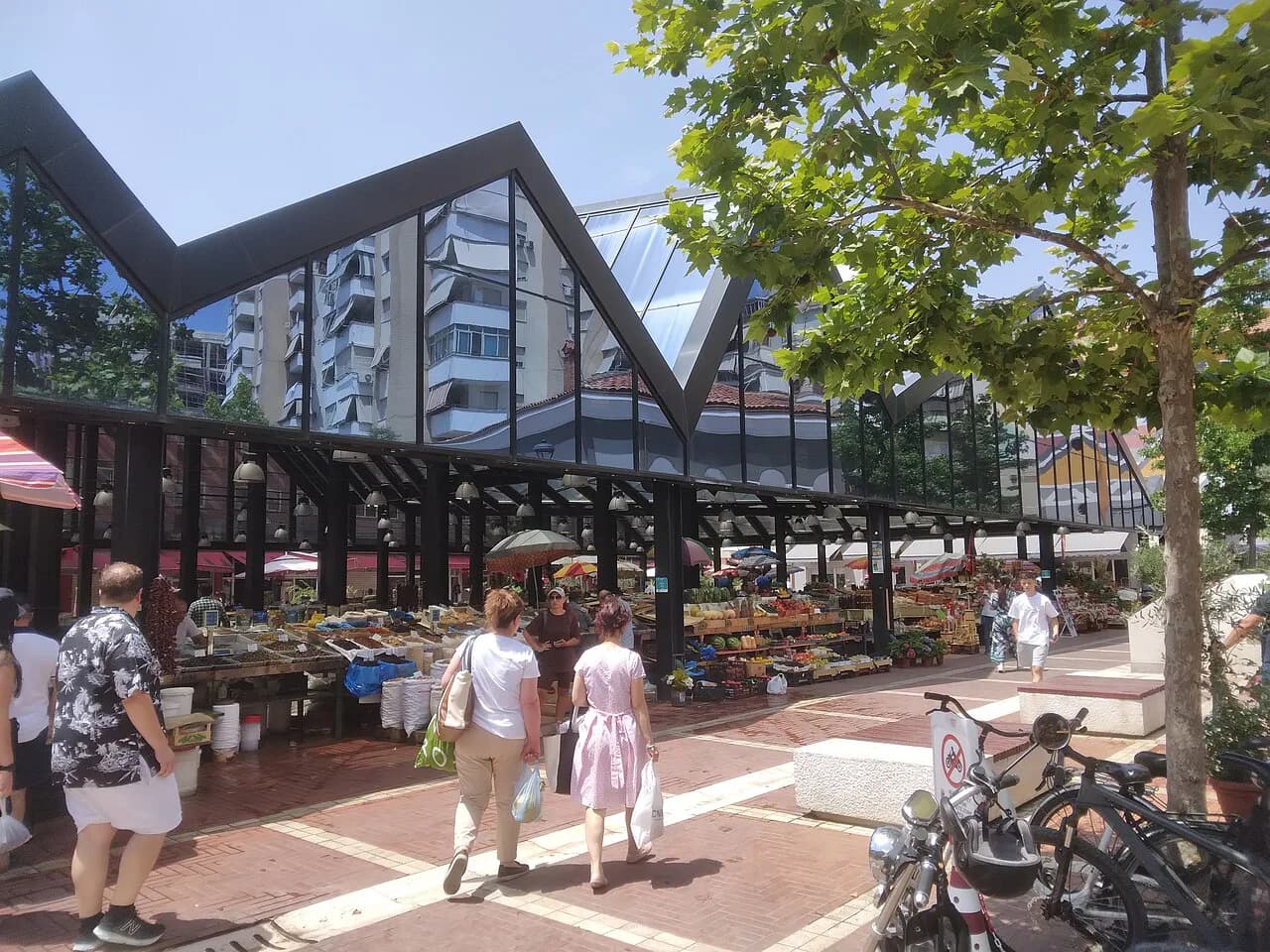
The rebuilt bazaar is divided into five clear precincts rather than one undifferentiated square. The first is the dairy and meat market, selling locally based products. The second is the green market of fruit and vegetables, run as a social market where farmers sell their own produce.
The third precinct is the neutral zone of shops at the base of the housing blocks that ring the market. The fourth is the creative area, where concerts, street art, fairs, open-air cinema and exhibitions take place. The fifth is the transit area of surrounding streets that grew up around the main site.
In practice, head for the halls first if you want produce, then wander the edges for the shops. If something is on in the creative area, it tends to be the reason people linger. Visit Tirana notes that fairs, concerts and open theatres for children are organised here at weekends.
The buildings and the market hall
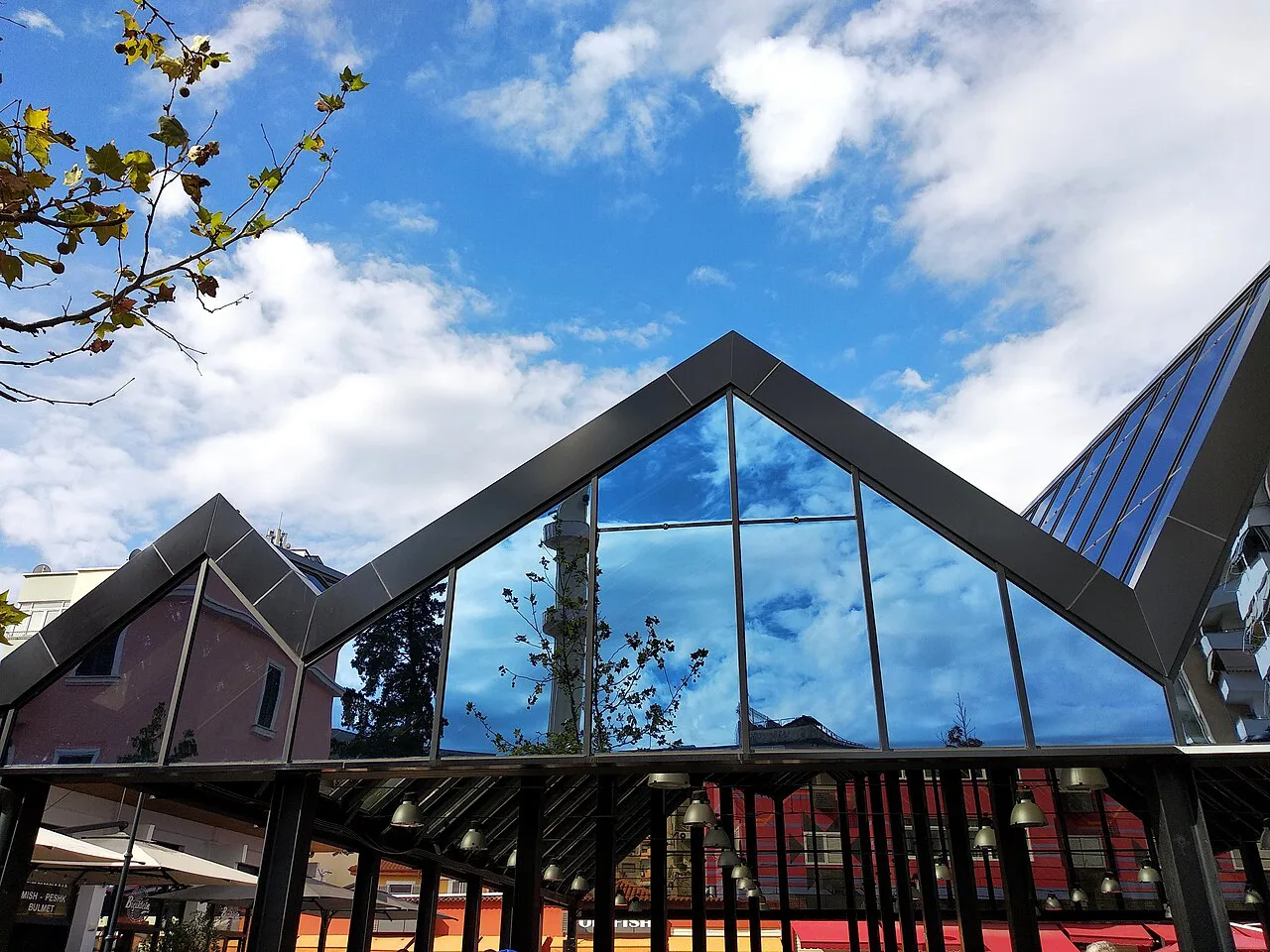
The redevelopment kept 15 cultural heritage buildings that had been hidden behind an unappealing commercial space. The facades keep their Italian architectural style, picked out with Albanian motifs, and the square is paved in terracotta that recalls Tirana's older clay-walled, tile-roofed neighbourhoods.
The centrepiece is the fruit-and-vegetable pavilion, a steel-and-glass structure designed by Atelier 4. Its coated glass roof is built to keep the hall cool under the sun, and the roof carries traditional carpet motifs. Look up when you are inside: the patterned ceiling is the part most visitors photograph.
The pavement is treated as part of the design rather than plain ground, shifting from terracotta outside to a wood-like surface inside the modern bazaar house. That shift marks the move from the open square into the covered market, so use it as your cue.
Eating and shopping in the bazaar
The market stalls sell fresh vegetables, fruit, seafood and meat, alongside local produce, aromatic spices and artisanal delicacies. That makes it a practical stop if you are self-catering or want to take something back. The surrounding streets hold bars, restaurants, street food and both Albanian and Mediterranean cooking.
Cafés and open bars sit around the square, which is why the area works as a coffee stop as much as a shopping errand. The Visit Tirana listing describes families and friends spending time here, and the paved square gives you room to sit out. Choose your café by eye once you arrive.
The produce side is the reason to come early in the day, while the café and restaurant side carries on through lunch. If you want a table in the shade, aim for the edge of the square rather than the middle of the halls.
What the New Bazaar suits, and what it does not
Treat the New Bazaar as an add-on to a walk through the centre, not a half-day in itself. An hour covers the halls, a coffee and a look at the facades. Come expecting a modern, rebuilt market dressed in traditional references; if you are after an intact Ottoman bazaar, this is not it.
It suits market shoppers, families and anyone who wants a low-effort pause between sights. It is less suited to travellers hunting old stone lanes, which is better served elsewhere in the city. If you want a different side of Tirana, compare this with Blloku Tirana for a more residential, café-heavy feel.
Weekend visits bring the organised fairs and concerts, so the square is livelier but busier. On a weekday you get a calmer read of the market halls and the architecture. Neither version needs a ticket; you simply walk in.
Getting there and getting around
Walk from the centre: that is the simplest route, and the Visit Tirana listing puts it at about eight minutes to Avni Rustemi Square. Head east from the centre across the central boulevard and keep going until the terracotta paving starts. The streets inside are pedestrianised, so you can loop the halls and shopfronts on foot without doubling back for traffic.
Coming from further out, aim for the square by name rather than a street number, since the market spreads across the whole block. The neighbourhood pages for Sauk, Tirana and Kombinat cover areas well beyond walking range of the centre, so do not confuse them with this one.
Within the bazaar itself everything is on one level and close together, so you can see the dairy and meat hall, the green market and the surrounding shops in one loop. Allow extra time if an event is running in the creative area.

Should the New Bazaar be on your Tirana walk?
Yes, as a short stop rather than a headline sight. Build it into a walk east of the central boulevard, buy something from the green market, and take a coffee on the square. If you have time for a second neighbourhood, the wider Tirana Attractions guides help you choose what to pair it with.
Go in the morning for the produce and the calmer halls, or at a weekend if you want the organised events. Either way, the market sits close enough to the centre that it costs you little to include it.