
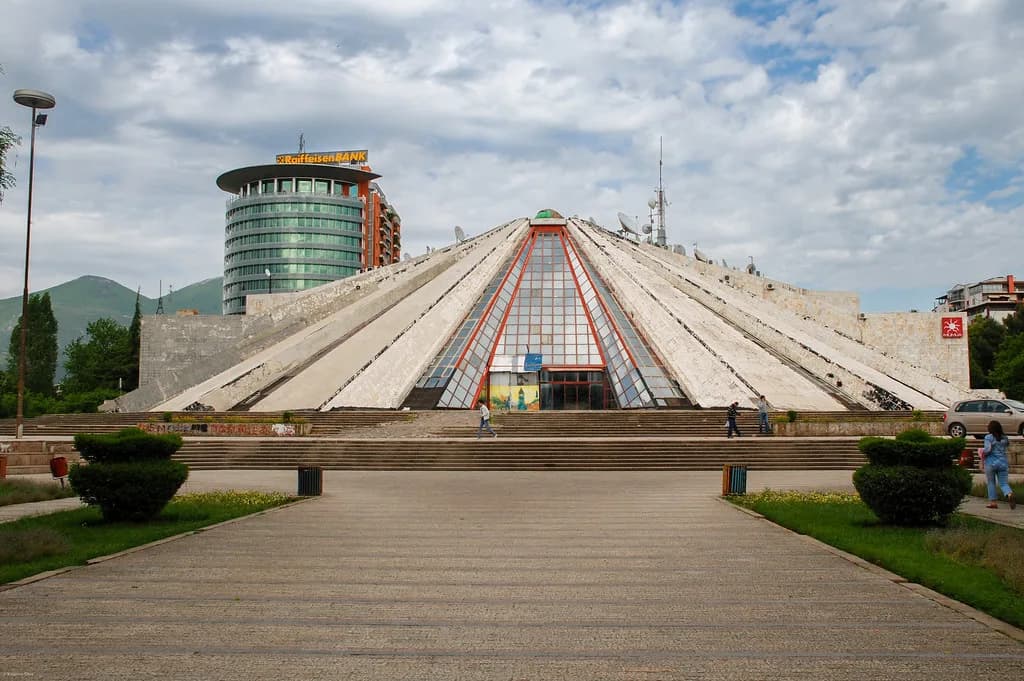
Kombinat, Tirana: the former textile workers' district
Kombinat is a peripheral residential district of Tirana, built to house workers at the Kombinat i Tekstileve Stalin, the textile combine that gave the area its name. It is not a sightseeing quarter: the factories are closed, the streets are ordinary and the draw is the industrial and social history written into the layout. This guide covers what the district is, the landmarks you can navigate by, who it suits and how to get there from the centre. For other parts of the capital, see Tirana Neighbourhoods: 5 Area Guides.
What and where Kombinat is
Kombinat sits in the south-west of Tirana, mapped at roughly 41.31°N, 19.76°E, and covers about 2.12 sq km. Building footprints make up around 16 per cent of that land, with green areas at about 3 per cent, so the impression is dense low-rise housing rather than open parkland. The site analysis behind those figures also records 1,348 buildings, most of them residential.
The district grew from the late 1940s and early 1950s as housing for a large industrial complex of mostly textile factories. Workers arrived from rural parts of Albania, new blocks, schools and shops followed over the following decades, and the area kept expanding through the socialist period. That origin explains the uniform apartment blocks and the wide industrial plots better than any map does.
After the 1990s changes the factory function disappeared and the district's social make-up shifted, with some former industrial buildings taken over for small production or trade and new housing built without formal planning. Reading that sequence before you arrive makes the mix of sheds, workshops and flats legible rather than puzzling.
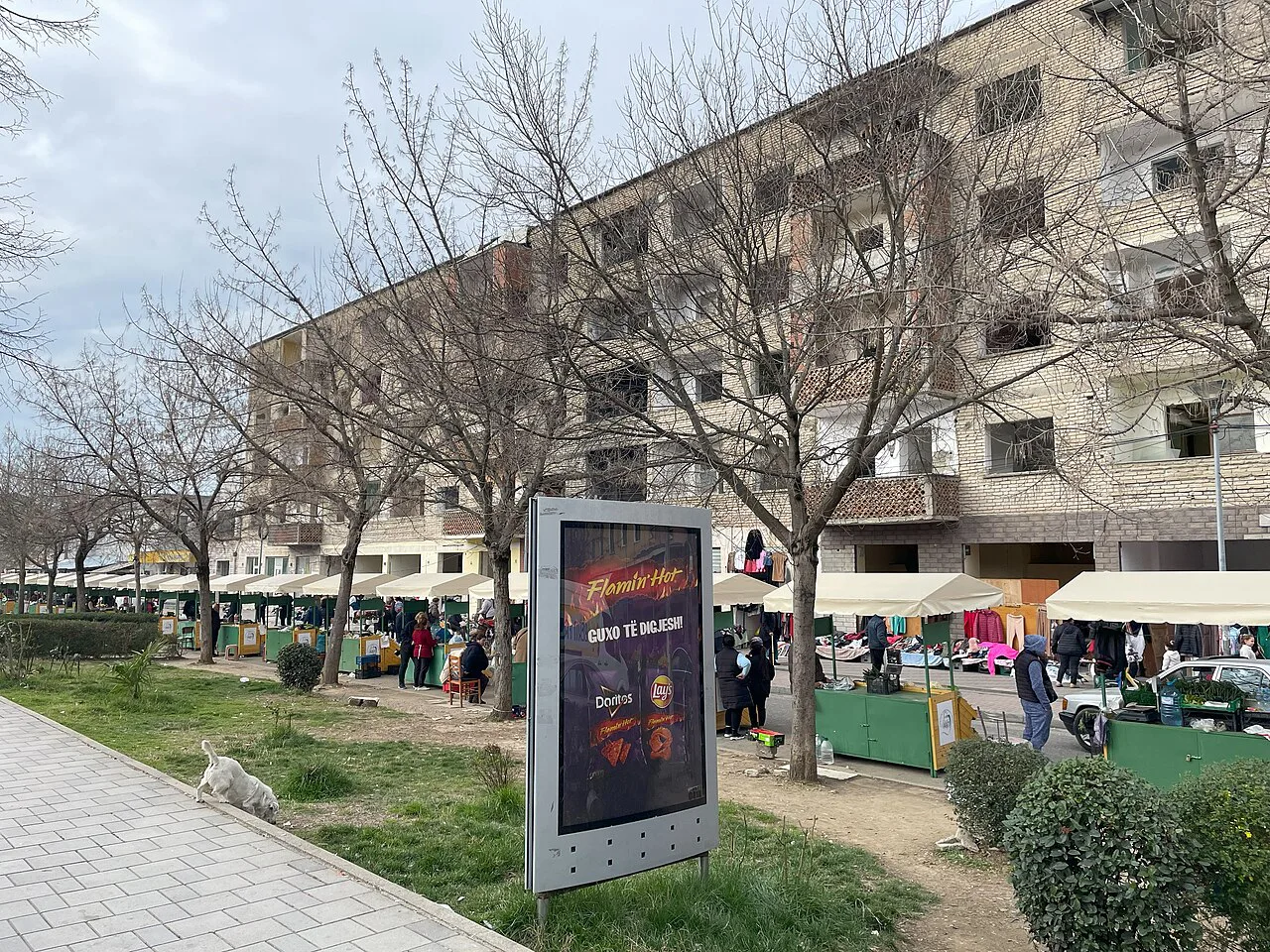

How the district was laid out: factories, the oxhak and the workers' blocks
The core of Kombinat is the former Kombinat i Tekstileve Stalin works, a group of factory buildings that anchored the neighbourhood. Around it sit the apartment blocks put up for the workforce, with the main road running past the edge of the district. If you are orienting yourself, look for the tall chimney known as the oxhak, which appears in photographic studies of the area as a marker over the surrounding roofs.
Those same studies show the texture you will actually walk through: old apartment buildings modified by residents, narrow paths between factory structures, and the Musine Kokalari school among the painted facades of the Stalin blocks. Treat these as landmarks for finding your way, not as ticketed attractions with facilities.
The Stalin textile factory today: closed sheds and reused buildings
The textile works no longer operate as factories. Some of the large sheds now house modest production or commercial activity, while other former company buildings have become homes, including for people who moved to Tirana from elsewhere in Albania. That reuse is the honest reason to come: you are looking at a working neighbourhood inside an industrial shell, not a preserved museum.
Plan on viewing the exteriors from public streets and paths, since no source gives opening times, tours or tickets for the factory buildings. Photography is the main activity here, and the chimney and long shed rooflines give the district its silhouette.
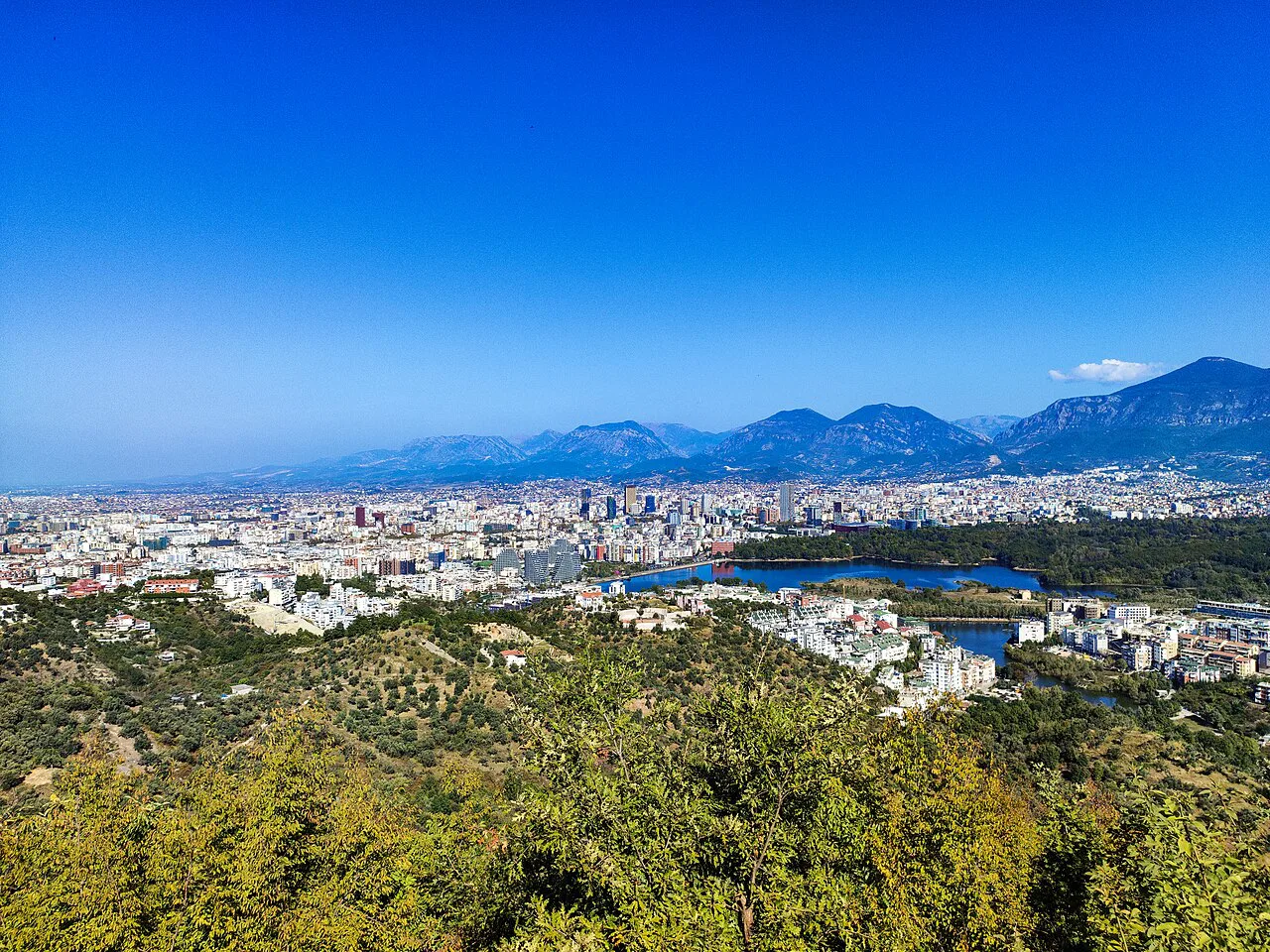

Musine Kokalari school and the painted facades of the Stalin blocks
The blocks built for textile workers are the district's everyday architecture, and residents have repainted and altered many facades over the years. The Musine Kokalari school is one of the civic buildings that give the neighbourhood its shape, and it is a useful reference point when you are walking between the housing rows and the factory edge.
The colour is uneven: some frontages are fresh, others weathered, and the photographs of the area record both. Walk slowly along the residential streets rather than expecting a single set-piece view, and keep to pavements where roads carry traffic.
The park and green space across the main road
There is a park across the main road from the neighbourhood, offering a contrast to the density inside the blocks. Green coverage across the mapped area is only about 3 per cent, so this open space matters locally and functions as an ordinary neighbourhood park rather than a visitor attraction.
Use it as a pause between walks: sit, check your map, then head back into the streets toward the oxhak chimney and the factory edge. There are no published facilities or opening hours to plan around.
Who Kombinat suits — and who should stay in the centre instead
Kombinat suits travellers with a specific interest in industrial heritage, socialist-era housing or urban change, and anyone wanting to see a Tirana that is not the polished centre. It also works for photographers who prefer ordinary streets to set-piece squares. If this is your first city break, base yourself centrally and treat Kombinat as a half-day excursion instead.
The trade-off is straightforward: visitor infrastructure is thin, the district is residential, and there is no concentration of cafés, museums or shops to fill a day. Travellers wanting an easy stroll between sights should look at Blloku, Tirana for central streets and cafés, or the New Bazaar (Pazari i Ri) for market streets and food.
Getting there: the Kombinat bus terminus and the post office landmark
Kombinat is reachable by road from central Tirana, and driving directions to the district are mapped for the area around Tiranë. The local landmark to aim for is the area around the last bus stop at Kombinat, with the Albanian post office nearby on Rruga "Llazi Miho" in municipal unit 6, as listed for the local hotel.
No source gives bus numbers, fares or journey times from the centre, so confirm the current route and departure point locally before setting out. Allow for traffic leaving the city, and carry small notes for any local transport you use.
Where to stay in Kombinat and what a room costs
Hotel "Kombinat" is a small hotel on Rruga "Llazi Miho", near the post office and the last bus stop at Kombinat, with free parking listed. Its directory entry describes air-conditioned single and double rooms with private bathrooms and television, and records an establishment date of 2002. The listing was last updated in 2017, so confirm availability and current rates directly with the hotel.
That 2017 entry lists 15 euros for a single room and 25 euros for a double, with breakfast optional. Treat those figures as directory history rather than a quote, and ask for the price in lek when you book. Most visitors will find more choice of accommodation in central Tirana, where you can walk to the main sights.
Walking around the district: what is within reach
Walking is the way to see Kombinat: the housing rows, the factory edge, the school and the chimney all sit within a compact area of just over 2 sq km. Start near the bus terminus and post office, work your way toward the oxhak, then cross the main road to the park for a break.
Surfaces are ordinary urban pavements and roads rather than cobbles, and there are no marked trails or viewpoints to follow. Wear comfortable shoes, keep an offline map loaded, and pair the visit with a central Tirana afternoon rather than expecting a full day here.
Should you add Kombinat to your Tirana days?
Add Kombinat if you want to see how a textile combine shaped a whole district and are content with streets, facades, the oxhak and closed sheds rather than exhibits. It rewards an hour or two of slow walking and a camera. Skip it if your time in Tirana is short or you want sights with set opening hours.
Explore more Tirana guides
Frequently Asked Questions
How far is Kombinat from Tirana city centre?
The district sits to the south-west of central Tirana, and the mapped site covers about 2.12 sq km on its own. No source gives a precise distance or journey time from the centre, so check a current map before you set off and allow extra time for city traffic.
Is there a bus from central Tirana to Kombinat?
The district is served by a bus terminus at Kombinat, next to the post office on Rruga "Llazi Miho". Route numbers, fares and timetables are not published in the sources here, so ask at your accommodation or check the current service before travelling.
Can you visit the Stalin textile factory buildings?
The textile works are closed as factories, and some of the old sheds are used for small production or trade while other buildings have become housing. No source lists tours, tickets or opening hours for the site, so plan to look at the buildings from public streets and paths.