Narta Lagoon: Flamingos, Zvërnec Island and How to Visit
Plan a visit to Narta Lagoon near Vlorë: where it is, how to reach it by car or bicycle, the Zvërnec Island footbridge and monastery, and birding seasons.
On this page
Narta Lagoon is a shallow Adriatic wetland north of Vlorë, reached by car or bicycle, and it rewards half a day rather than a full one unless you are birding seriously. A visit splits into two parts: the lagoon road and saltpans, where you scan for flamingos and pelicans, and Zvërnec Island, reached on foot by a wooden bridge to a small monastery.
This guide covers where the lagoon sits on the coast, how to drive and stop along it, the Zvërnec crossing, the birds and their seasons, and the conservation dispute that has put the area in the news. It also sets out what to bring and which nearby places pair naturally with the same day out.
Where Narta Lagoon sits on the coast
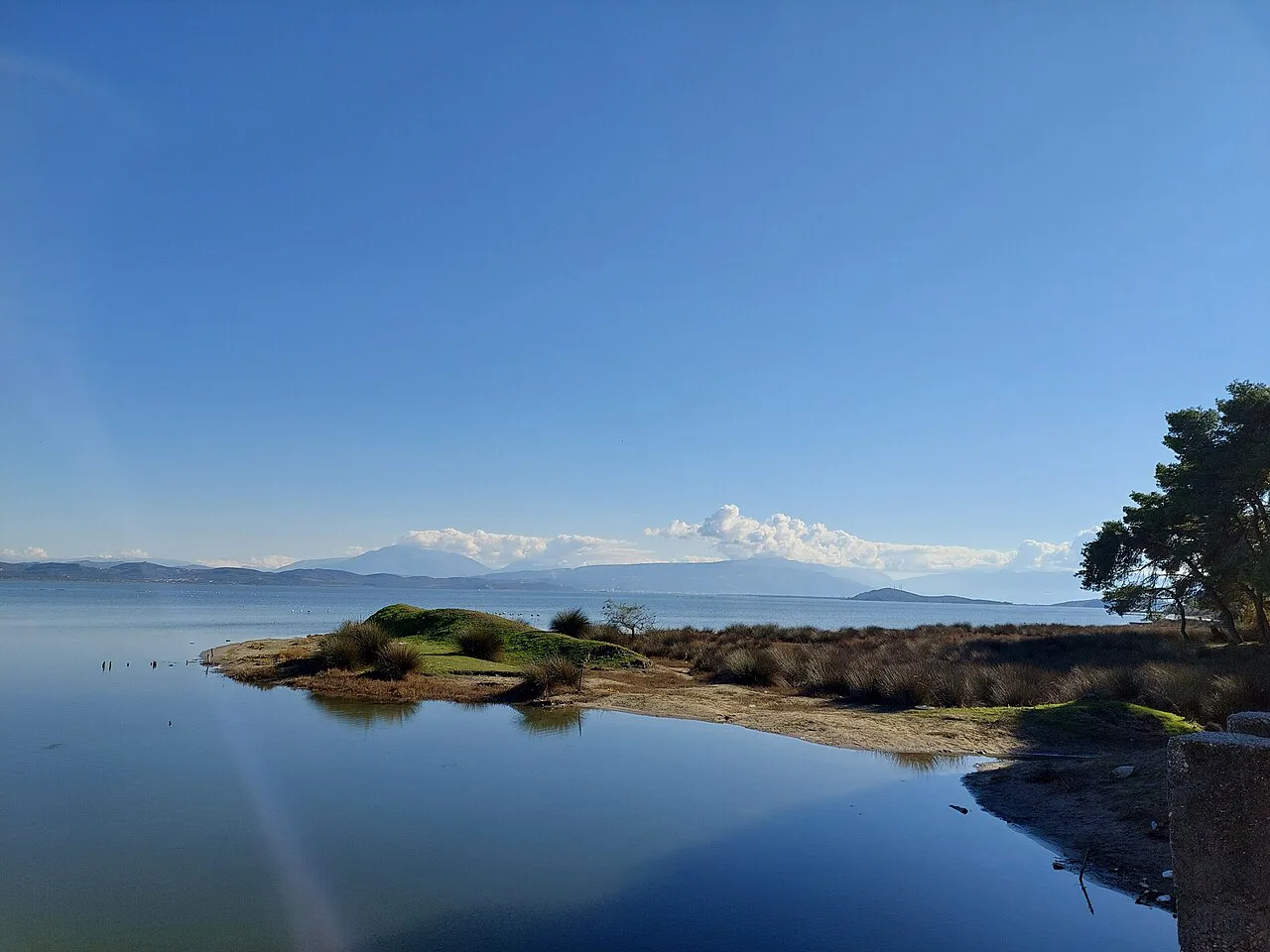
The lagoon lies on the Adriatic coast of southern Albania, extending north of the Bay of Vlorë and separated from open sea by a narrow strip of alluvial dune. It is named after Nartë, the village on its southern shore, and Zvërnec Island sits within the lagoon itself. The surrounding land is the Vjosa-Narta Protected Landscape, a coastal wetland system where the Vjosa River reaches the sea.
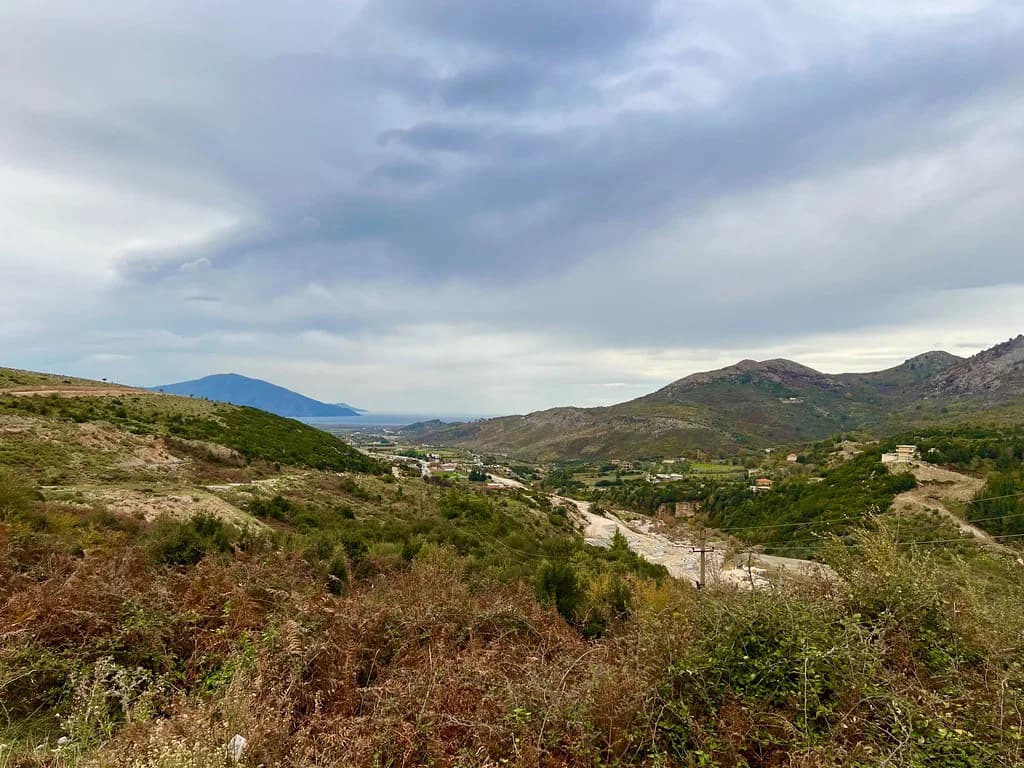
Approached from Vlorë, the lagoon is a short run north along the coast road, and the wider protected area stretches towards the river mouth. The landscape is flat and open, mixing saltpans, marshes, reedbeds, sandy dunes and patches of farmland, which is why the birdlife shifts as you move along the road. Build the day around that flatness: there is no climb and no long trail to commit to.
What the lagoon is: size, depth and habitats
The lagoon covers 41.8 sq km and reaches a maximum depth of about 1.5 m, which makes it a wide sheet of shallow water rather than a lake. Its margins are the interesting part for visitors: saltpans, mudflats, reedbeds, dunes and coastal forest edge, all inside the Vjosa-Narta Protected Landscape.
Two islands lie inside the lagoon, with Zvërnec the larger of the two. The lagoon was formed by sediment carried down by the Vjosa River, which rises in the Pindus Mountains near the Greek border. That river connection explains the mix of fresh and salt water and the volume of birdlife the wetland supports.
Getting there from Vlorë
The lagoon is easily reached by car, and much of the birding is done from the roadside: stop at intervals along the road and scan the saltpans from the car, which keeps disturbance low and lets you cover ground quickly. The mapped birding route runs about 19 km and mixes paved and unpaved sections, so treat the distance as a driving circuit rather than a walk.
The approach roads are flat and open, and the site is listed as accessible on foot, by bicycle and by car. Cyclists get the same flat going with more freedom to stop, though the unpaved stretches and soft verges matter after rain. If you are based in Vlorë without a car, use the town as your starting point and arrange transport for the lagoon and the island in one outing.
Zvërnec Island: the footbridge and the monastery
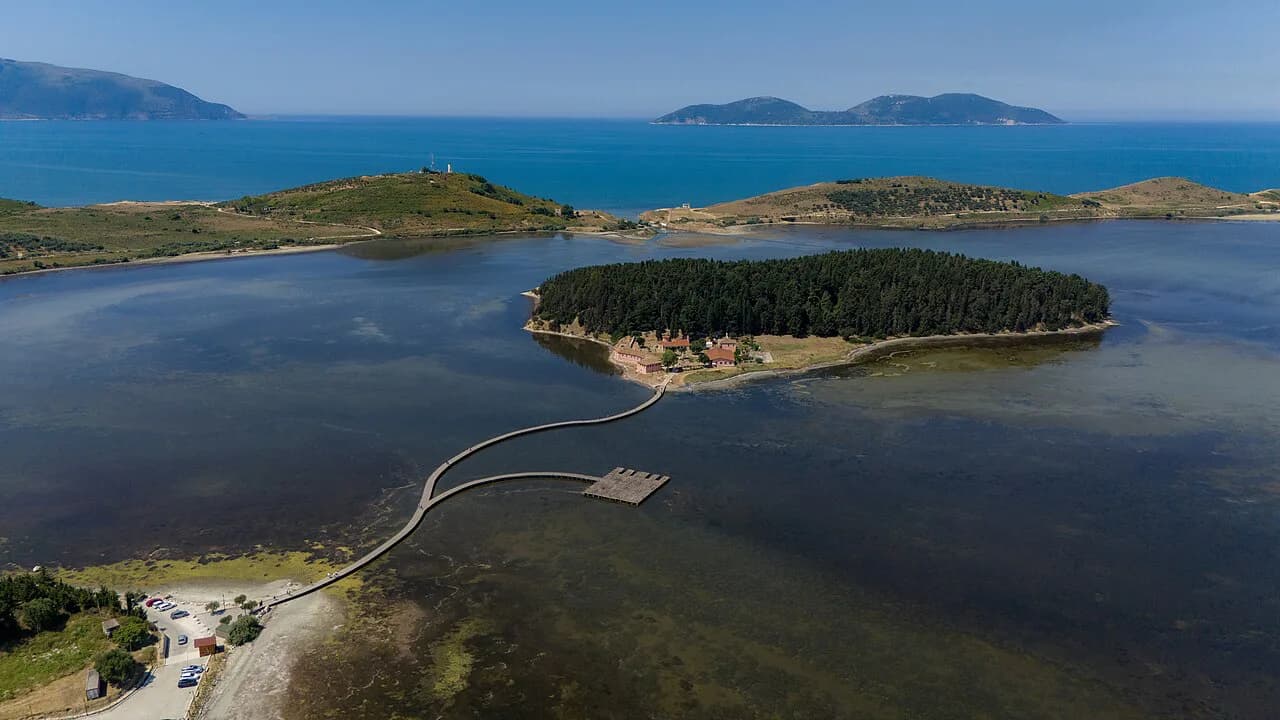
Zvërnec Island is the part of the day that needs no binoculars. A wooden footbridge connects the mainland to the island, where a 13th-century monastery stands among the trees, and the crossing is short and level enough for most visitors. Pair it with a slow look back across the lagoon, since the island sits within the water rather than on the open coast.
Treat the island as the calm half of the visit and the saltpans as the active half. The monastery is a religious site, so keep voices low and dress with sensible coverage. Time your crossing for daylight, and accept that the church interior may be closed when you arrive.
Birdwatching: flamingos, pelicans and what else to look for
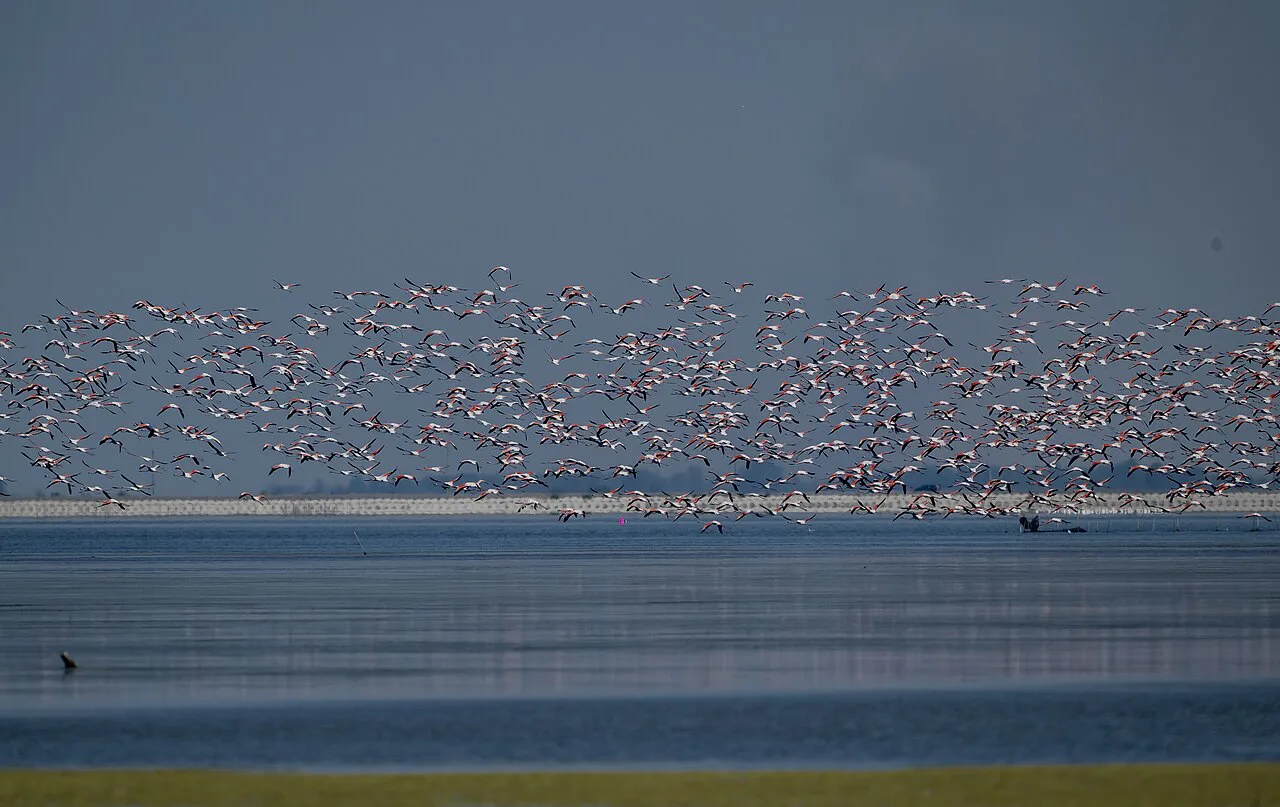
Greater Flamingo is the headline bird, and a count of 3,000 was recorded on the lagoon in May 2020. Dalmatian Pelican also uses the area, alongside Little Tern, Slender-billed Gull and Zitting Cisticola among the species birders note here. At least 34,800 wintering birds have been counted on the lagoon, which describes the wetland's capacity rather than a guaranteed spectacle on any given morning.
The wider Vjosa-Narta area is a stopover on the Adriatic Flyway between Europe and Africa, and it holds over 200 bird species, according to BirdLife International. The same wetland supports Loggerhead turtle, Monk seal and Albanian Water frog, so a visit is not only about feathers. A telescope is useful here because much of the water is wide and the birds sit far out.
When to go: migration and all-year birding
The best birding windows are spring and autumn migration, when the lagoon acts as a staging post for birds moving along the flyway. Birding is possible all year round, but a summer visit is quieter for migrants and hotter on the open road, while winter has produced counts of at least 34,800 wintering birds on the lagoon. Choose spring or autumn if birds are the purpose; choose a clear winter day if you want to combine the monastery with low, soft light.
Weather figures for the Vlorë coast are climate averages, not a forecast, so check a short-range forecast before setting out on the exposed lagoon road. Wind is the detail that most affects a day here: it ripples the shallow water, pushes birds into sheltered corners and makes the footbridge crossing less pleasant.
On foot, by bicycle and by car: how long to allow
Allow two to three hours for the saltpans road with a few stops, plus an hour for the Zvërnec crossing and a look at the monastery. Birders working the 19 km route properly should set aside half a day, especially in migration when every bend offers something new. The walking difficulty is rated average, and the terrain is flat, wet in places and open, so the constraint is wind and soft ground rather than gradient.
If you are on a bicycle, plan the unpaved sections before you commit, and keep to marked tracks rather than cutting across saltpan edges. Drivers should park well off the carriageway at each stop, since the road is used by local traffic and the verges are soft. There is a birdwatching hide or platform in the area, which gives a fixed viewpoint when the light or wind turns.
What to bring and how to watch without disturbing the birds
Bring binoculars at minimum and a telescope if you have one, plus water, sun cover and footwear that can handle wet ground. Stay in or beside the car when birds are close to the road, keep to marked trails across the saltpans, and skip playback or any attempt to move birds closer. The lagoon is a protected landscape and part of an internationally recognised site, so quiet, stationary watching is the norm.
The conservation story you will encounter
The Vjosa-Narta Protected Landscape has been at the centre of a dispute over the construction of Vlora International Airport inside its boundary. BirdLife International reported in 2023 that construction began without a valid construction permit and that the airport site was later removed from the protected area, and it warned of collision risk for large birds such as Dalmatian Pelican. Local NGOs AOS and PPNEA filed lawsuits, and the Bern Convention asked for works to be suspended pending an environmental impact assessment.
In February 2024, Wetlands International Europe published a red alert in which 53 organisations from 38 countries called on the Albanian government to follow the Bern Convention and EU recommendations and suspend construction. The site is listed as an Important Bird Area, a Key Biodiversity Area and an Emerald candidate area, with 11 habitat types and species covered by the Habitats Directive. Visitors do not need to take a side to notice the airport infrastructure near the lagoon, and the legal cases were ongoing when these accounts were published.
Nearby places to pair with the lagoon
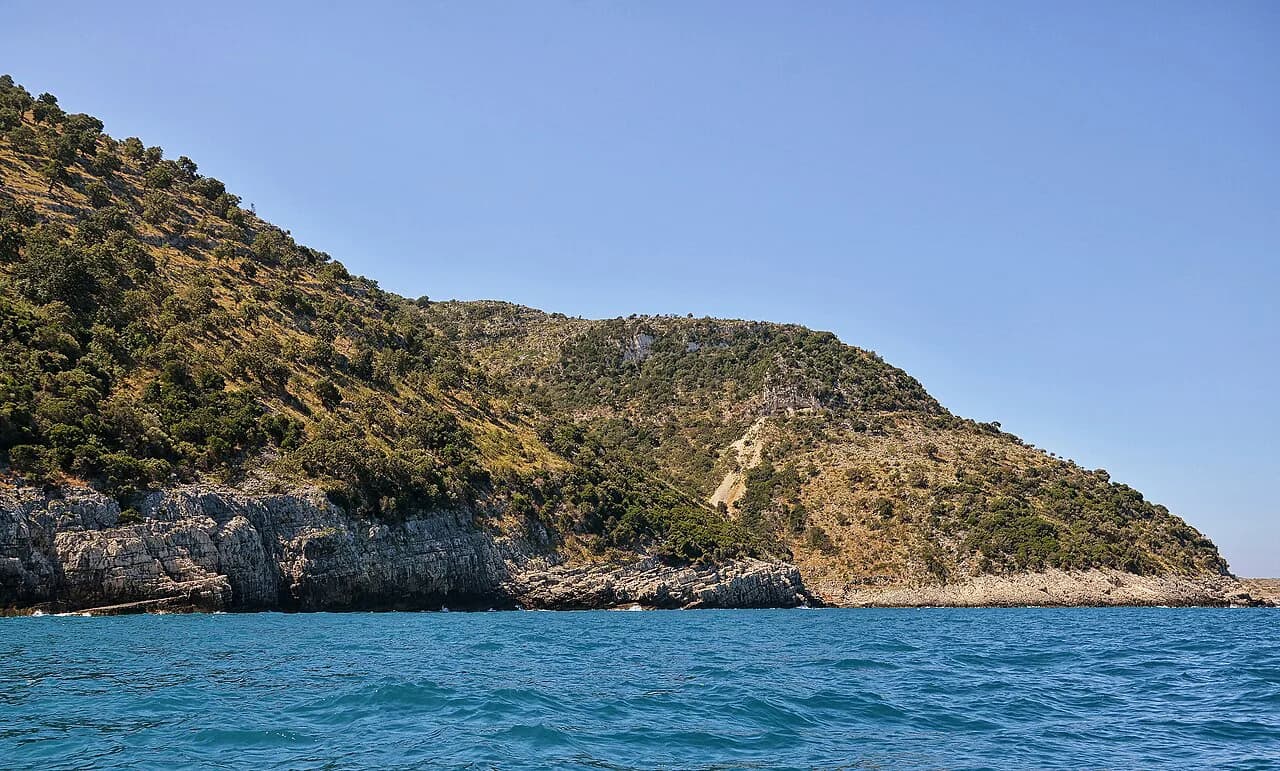
The lagoon lies north of the Bay of Vlorë and is separated from the open Adriatic by a narrow dune strip, while the Karaburun Peninsula closes the bay to the south and west of Vlorë and is a separate outing reached by road or boat. Do not try to fold the peninsula into a lagoon morning: keep the lagoon for birds and the monastery, and give the Karaburun Peninsula its own day.
Vlorë itself makes the natural base, with the lagoon road heading north and the bay front in town; use the Vlorë attractions guide to plan the rest of your time there. Nartë village on the southern shore is worth a slow pass, and the saltpans along the road give the best roadside scanning without leaving the car.
Should the lagoon be a stop or the whole day?
Make Narta Lagoon a half-day stop from Vlorë unless you are birding the migration, in which case give it a full morning and drive the saltpans road slowly. Combine it with Zvërnec Island in the same outing and keep the Karaburun Peninsula for a separate day, since the two sit on opposite sides of the bay and each needs its own transport.
Check locally in Vlorë for any current entry arrangements, fees or opening times at the lagoon and the monastery, and plan around daylight. Take binoculars, water and a windproof layer, and leave the drone and the playback at home.
Explore more Vlore guides
Frequently Asked Questions
Are there flamingos in Albania?
Yes. Greater Flamingo is recorded at Narta Lagoon, where a count of 3,000 was made in May 2020. Other wetlands on the coast also attract the species, but numbers shift with water levels and the season, so treat any count as a snapshot rather than a promise.
Can you swim at Narta Lagoon?
The lagoon is shallow, with a maximum depth of about 1.5 m, and is separated from the open Adriatic by a narrow dune strip. Ask locally before swimming anywhere in the wetland, as conditions and access vary.
Is there an entrance fee for Narta Lagoon?
The lagoon is listed as accessible on foot, by bicycle and by car, but no ticket price is published for the lagoon, the saltpans road or the Zvërnec footbridge. Confirm any current local arrangements in Vlorë before you drive out.
Sources
Notes for your Albania trip
Optional updates to our Albania town guides.
You might also like
Continue reading
More guides you'll find useful