
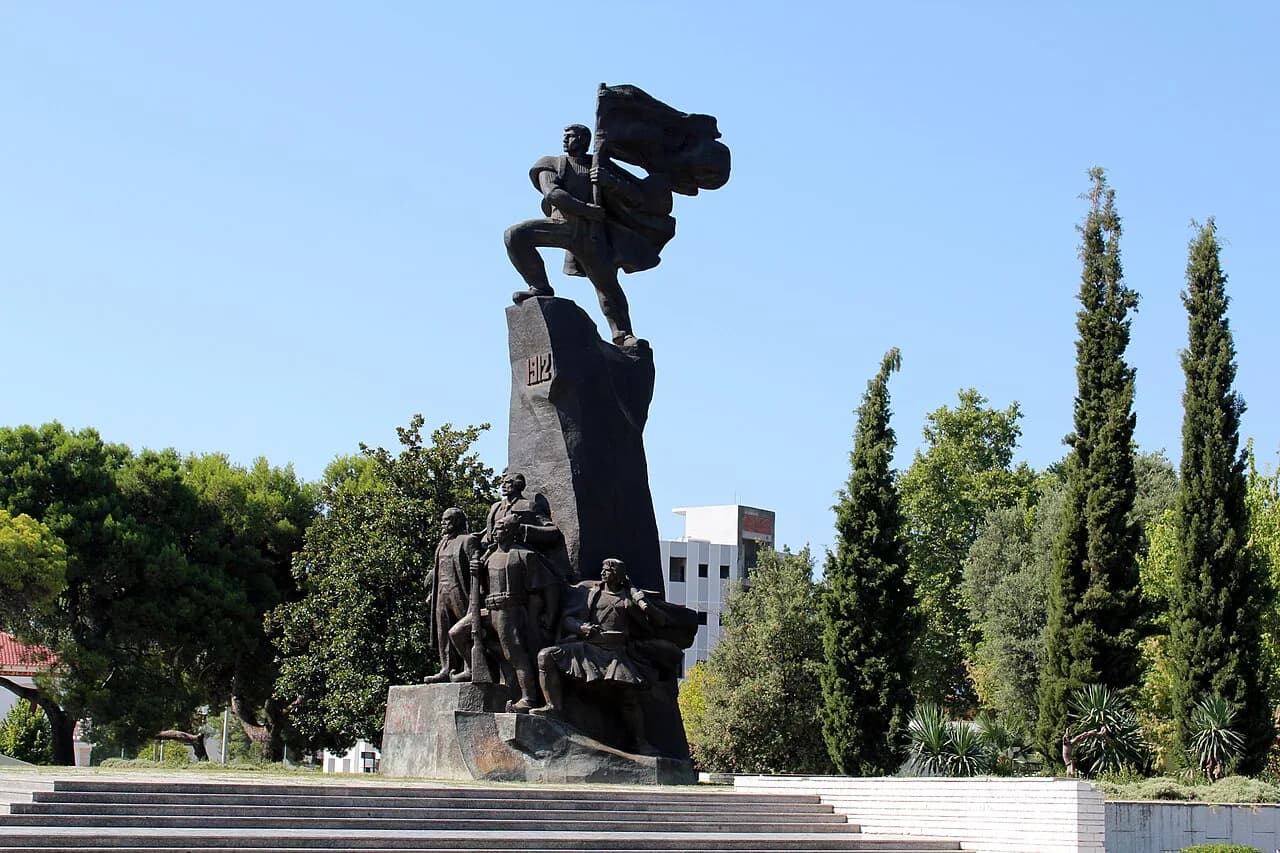
Flag Square in Vlorë: the Independence Monument and what's around it

Flag Square is a brief stop, not an afternoon out: allow 15 to 20 minutes for the monument, the obelisk and a walk around the square, then decide whether one of the two museums nearby earns the rest of your time. The square, known in Albanian as Sheshi i Flamurit, sits in central Vlorë and is the city's commemorative focal point. This guide covers what the Independence Monument commemorates, how the square is laid out, how to reach it on foot, and which nearby sights fit around it.
What Flag Square is and where it sits in Vlorë
Sheshi i Flamurit is Vlorë's flag square, a paved open space in the city centre laid out around the Independence Monument. Visitors describe the monument as standing in the Flag's Plaza, dedicated to the Albanian Declaration of Independence. Treat the square as a landmark to orient yourself by: walk in, look around and use it as a starting point for the centre rather than a ticketed attraction with a set route.
The square works best as the anchor for a central walk. Arrive, read the monument, look across the space, and then pick a direction: the waterfront on one side, the old street grid on the other. Because the square is open and central, it slots into a morning or late afternoon without needing its own slot in the plan.
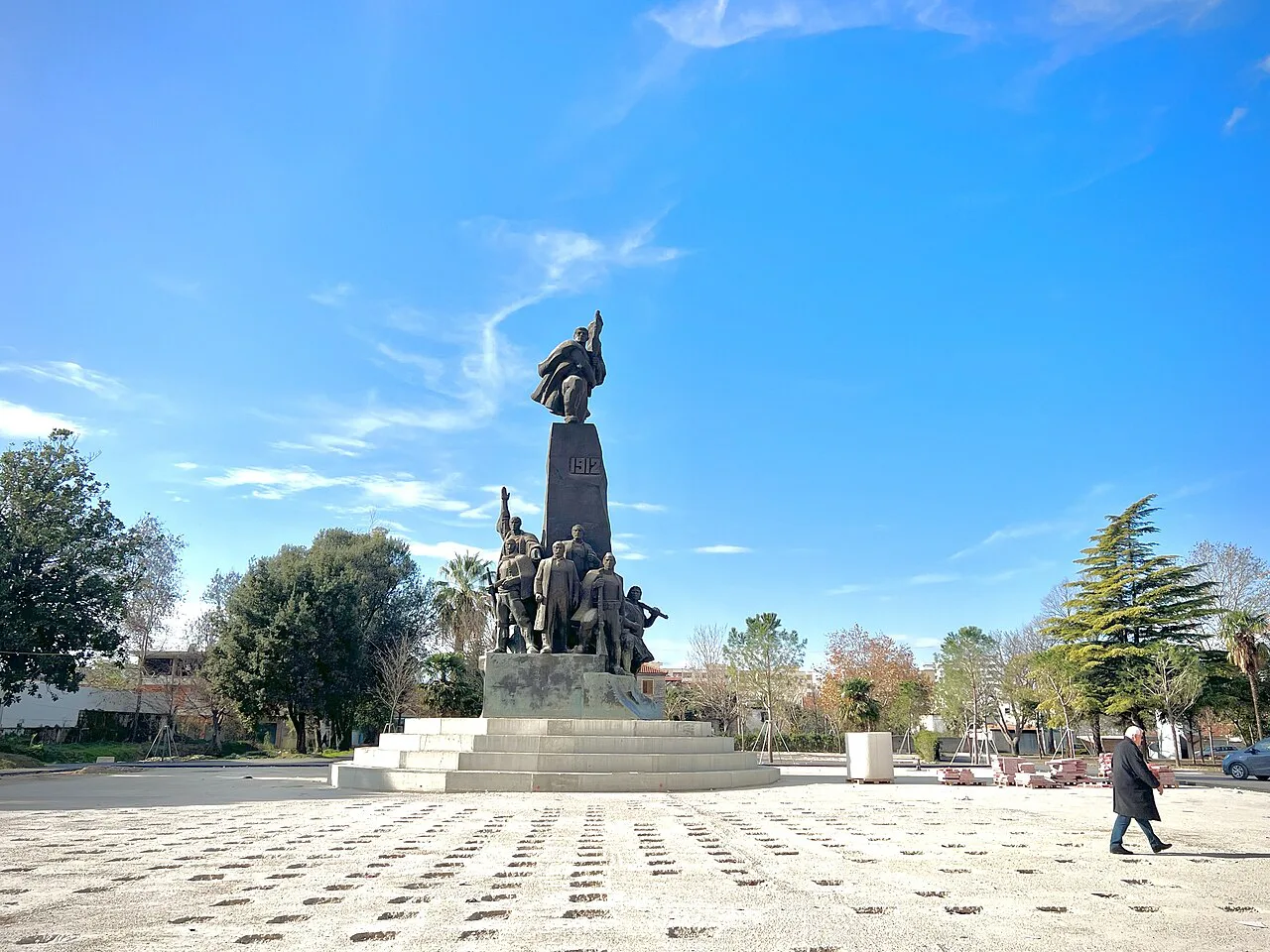

The Independence Monument: what it commemorates and how to read it
The Monument of Independence, Monumenti i Pavarësisë, commemorates the Albanian Declaration of Independence of 1912 and stands in the Flag's Square in Vlorë. That date and place are the reason the square carries the name it does: this is where the declaration is commemorated in the city.
Read the monument as a civic marker rather than an exhibit. There is no labelled collection around it, so the useful context comes from the assembly building a short walk away, where the declaration was made and the first government formed under Ismail Qemali. Visiting that building first, then the square, gives the monument its meaning; the National Museum of Independence sets out the 1912 story.
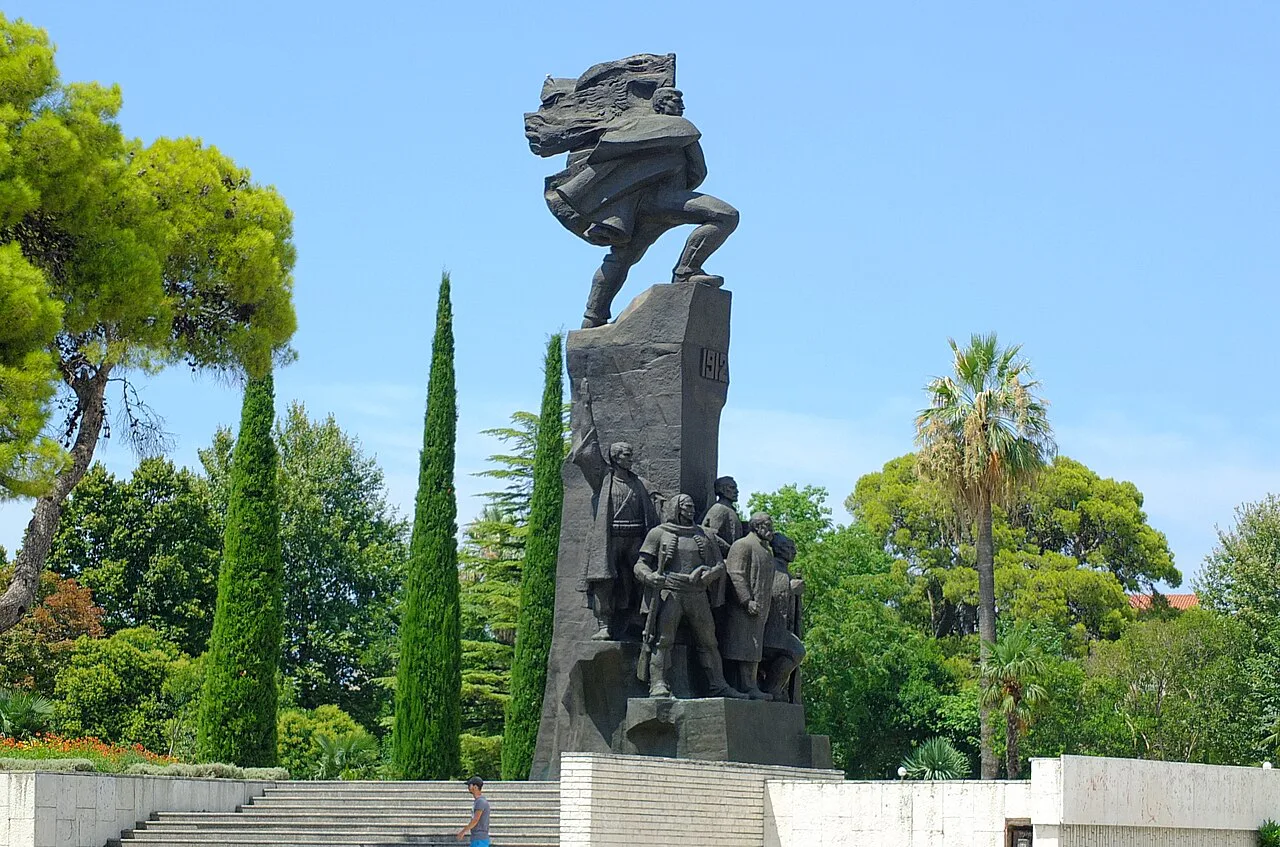

The obelisk and the rest of the square
Alongside the Independence Monument, the square holds an obelisk, and the two elements together form the commemorative core of the space. Walk the full perimeter rather than stopping at the first plinth: the layout only makes sense when you have seen the square as a whole.
There is nothing to book and no interior to see, so the square suits travellers with a spare half hour between other stops. Photographers will find the open paving and monument work best in low, angled light; the middle of a summer day flattens the stonework and leaves little shade.
Where Flag Square is and how to reach it on foot
The square is in central Vlorë, and the practical approach is on foot from wherever you are staying in the centre. Aim for the monument itself as your landmark rather than a street number, since the square is an open space that several surrounding streets feed into.
If you are coming from the wider waterfront or the old core, walk towards the commemorative space and you will arrive at the monument. Vlorë's centre is compact enough that the square is a natural waypoint between the two. Wear shoes you can walk in: the paving and surrounding streets are uneven in places.
What else is close by: the National Museum of Independence
The National Museum of Independence occupies the historic building where independence was declared on 28 November 1912 and where the first Albanian government under Ismail Qemali was established. It holds original objects from the National Renaissance and Independence period, including documents, flags, personal belongings of patriots and artworks.
The museum was established in 1936 and fully rehabilitated in 2002 for the 90th anniversary of the declaration, and a further renovation was planned for 2025 to enrich the collection and add immersive technology and educational programmes. Check the museum's current arrangements before you build a day around it, since a renovation programme can affect which rooms are open. Opening hours and ticket prices are not given on the tourism page, so confirm them at the door or by phone.
What else is close by: the Historical Museum of Vlorë
The Historical Museum of Vlorë sits in the city centre in a building that previously served local government bodies and mass organisations, and was established in 1962. Its collection covers the district's long past, from antiquity through the medieval period to the present, with archaeological finds from ancient cities including Oriku, Amantia and Kionina.
Choose between the two museums by interest rather than by size. The National Museum of Independence is tightly focused on 1912 and the founding of the state; the Historical Museum is broader, with weapons, documents and archaeological material. If your time covers one museum only, the independence building is the one that gives Flag Square its meaning.
For the wider Illyrian context behind the Historical Museum's archaeology, the Amantia Archaeological Park near the village of Ploçë in Selenica municipality preserves a stadium built in the 3rd century BC, monumental walls, the ruins of the Temple of Aphrodite, a necropolis and an acropolis on hills above the Vjosa Valley. It is a separate outing from the city, not a walk from the square.
How long to allow and when to go
Give Flag Square 15 to 20 minutes, and add an hour or more if you go into the National Museum of Independence. The square itself is open paving with no shelter, so early morning and late afternoon are more comfortable than midday in summer.
Pair the square with the rest of central Vlorë rather than treating it as a destination on its own. Two other short stops earn their place in the same walk: the Muradie Mosque (Xhamia e Muradies), Vlorë and the climb to Kuzum Baba in Vlorë for the view. Both are close enough to combine with the square in a single half day.
Nearby trip: Kaninë village and its castle
Kaninë lies about 6 km from Vlorë and is the natural half-day extension from the city. Kanina Castle, built in the 4th century BC and rebuilt by the Byzantines, stands at the centre of the village and looks out over the Bay of Vlorë, the city and the surrounding mountains.
The village keeps traditional stone houses and narrow cobbled streets, and the Church of St. Mary is the other main sight. The cobbles are steep in places, so this is not a flip-flop walk. Arrange transport for the short run out of the city, since the village is beyond comfortable walking distance.
If you want more of the city's sights before heading out, our Vlore Attractions guide keeps the options short and specific. It covers the city's named stops without padding, so you can decide what else is worth the time after the square.
Is Flag Square worth a stop?
Yes, as a short stop on a central Vlorë walk, not as a standalone outing. The monument gives the square its purpose, and the building where independence was declared gives the monument its context; together they make a focused hour or so.
If you have a spare half day after that, Kaninë and its castle are the better extension than a second loop of the centre. Build the day around what you want from it: commemoration at the square and museum, or the wider Vlorë sights around them.
Frequently Asked Questions
Is Flag Square the same as Sheshi i Flamurit?
Yes. Sheshi i Flamurit is the Albanian name for the square, and English-language sources call it Flag Square or the Flag's Plaza. The Independence Monument stands in it, and it is the square's central feature rather than a separate address.
Do I need a ticket for Flag Square or the Independence Monument?
The square is an open public space and the monument stands within it, visible from the surrounding paving. The two museums nearby are separate buildings with their own entry arrangements, and their current opening hours and ticket prices are best confirmed directly with each museum before you go.